Hot Articles
Popular Tags
Which advanced hydraulic solutions cut downtime best?
For most industrial buyers, the short answer is this: the advanced hydraulic solutions that cut downtime best are not simply the “highest-spec” components. The biggest gains usually come from a combination of condition-monitored hydraulic power units, contamination-controlled valve systems, high-cycle sealed cylinders, predictive maintenance sensors, and standardized modular assemblies that are faster to replace when failures occur. For procurement teams, the best choice depends on whether the main source of downtime is leakage, overheating, contamination, seal wear, hose rupture, or slow parts replacement.
That is the core search intent behind this question. Information researchers, procurement managers, and commercial evaluators are usually not looking for a broad definition of hydraulic technology. They want to know which solutions reduce unplanned stoppages most reliably, which options justify the investment, and how to compare suppliers on uptime impact, compliance, and supply risk. In practice, the most useful evaluation framework is to rank hydraulic solutions by failure mode, mean time between failures, serviceability, parts availability, and compatibility with reliability targets.
Which hydraulic upgrades usually deliver the fastest downtime reduction?
If the goal is to cut downtime quickly, some hydraulic upgrades consistently outperform others because they address the most common root causes of failure in industrial and mobile equipment.
1. Smart hydraulic condition monitoring
Pressure, temperature, flow, fluid cleanliness, and vibration sensors tied to alert systems can detect abnormal trends before a shutdown happens. This is often the highest-impact upgrade where equipment already runs hard and failures are discovered too late. It is especially valuable for plants managing multiple assets across construction, mining, material handling, marine, or heavy manufacturing operations.
2. Advanced filtration and contamination control
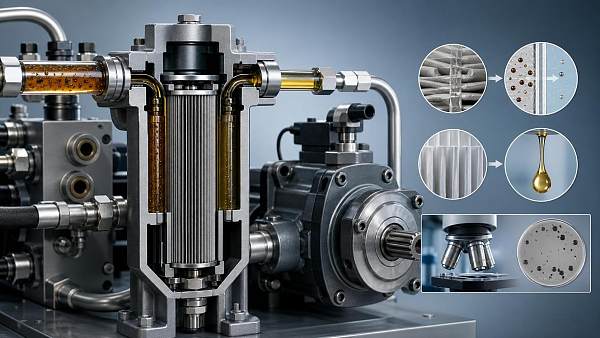
Contamination remains one of the biggest causes of hydraulic failure. Upgraded return-line filters, kidney-loop filtration, moisture control, and fluid cleanliness monitoring can significantly extend the life of pumps, valves, and seals. In many cases, contamination control produces better downtime results than replacing major hardware alone.
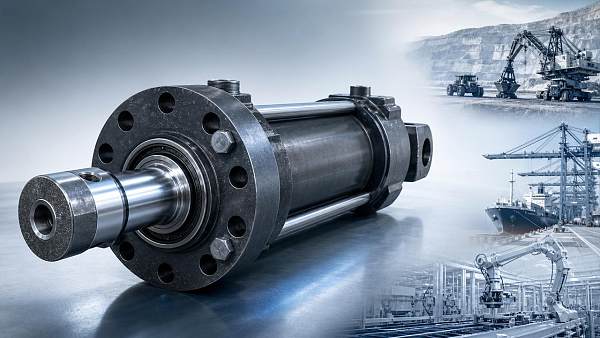
3. High-performance hydraulic cylinders with improved sealing systems
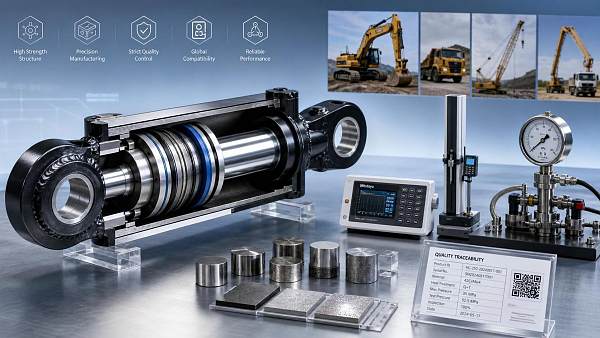
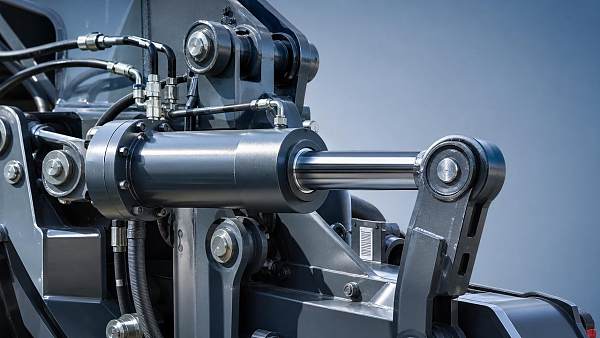
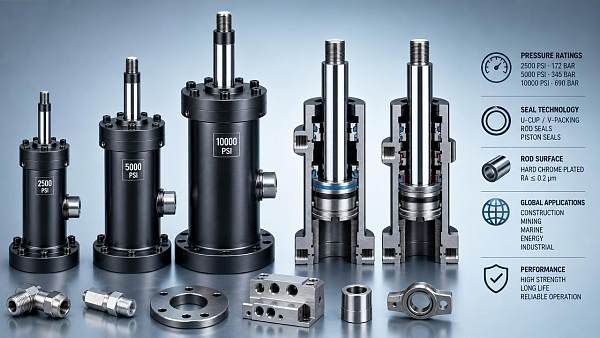
For applications with heavy cycling, shock loading, or harsh outdoor conditions, cylinder failures create immediate operational stoppages. Upgrading to high-pressure hydraulic cylinders with better rod coatings, seal geometry, side-load resistance, and corrosion protection can cut repeat failures substantially.
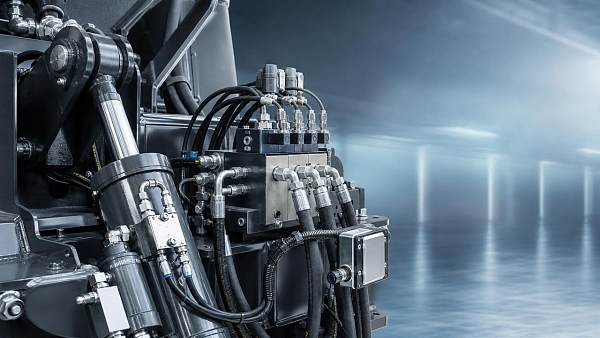
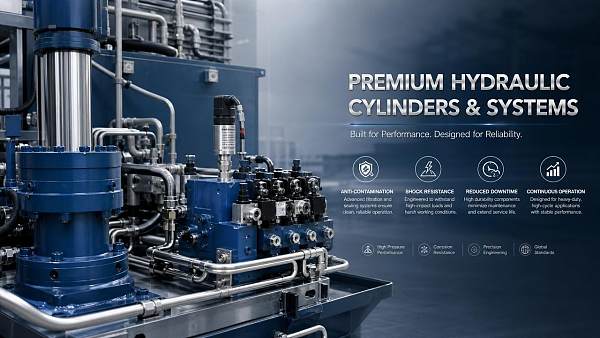
4. Modular manifold and valve assemblies
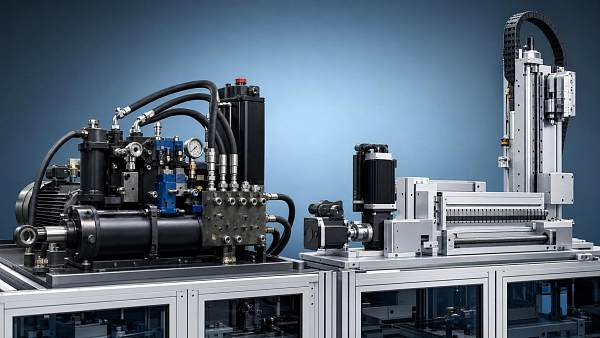
When maintenance teams can replace a pre-tested module instead of troubleshooting loose components individually, repair time drops sharply. This is one of the most overlooked ways to reduce mean time to repair.
5. Hose, fitting, and connector upgrades
Hose bursts, connection loosening, and fitting fatigue often cause sudden downtime and safety events. Better hose routing, abrasion-resistant outer covers, and vibration-resistant connectors are practical upgrades with strong ROI.
6. Predictive maintenance software linked to hydraulic data
The solution is not only hardware. Advanced hydraulic systems deliver the best value when sensor data is tied to maintenance thresholds, spare-parts planning, and supplier response processes.
What causes the most hydraulic downtime in the first place?
Buyers make better decisions when they start with the failure pattern instead of the product category. The best advanced hydraulic solution depends on what is actually stopping production.
- Fluid contamination: damages pumps, valves, seals, and actuators
- Heat buildup: reduces fluid life and accelerates seal wear
- Seal failure and leakage: causes pressure loss and environmental risk
- Shock loads and pressure spikes: shorten cylinder and hose life
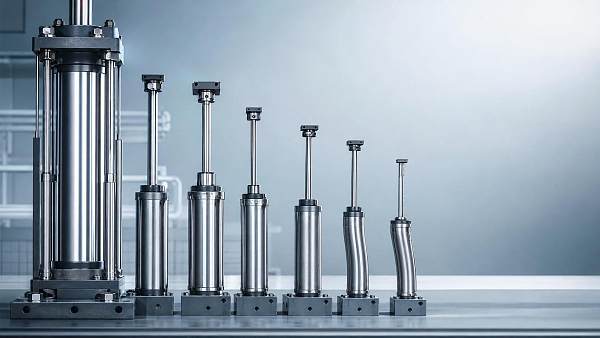
- Misalignment and side loading: accelerate rod and bearing wear
- Slow troubleshooting: extends downtime even when the failed part is inexpensive
- Poor spare-parts planning: turns routine repairs into long stoppages
This is why procurement evaluation should focus on total reliability, not just initial unit cost. A lower-priced hydraulic component may look competitive but become expensive if it fails early, requires frequent maintenance, or has long lead times.
Which advanced hydraulic solutions work best by failure mode?
A practical way to compare options is to match the solution to the downtime driver.
If contamination is the main issue:
Prioritize high-efficiency filtration, contamination indicators, fluid analysis programs, sealed reservoirs, and cleanliness-rated components. In these cases, cleaner fluid often cuts downtime more than premium actuators alone.
If cylinder leakage or wear is common:
Look for upgraded sealing systems, induction-hardened or chrome-alternative coated rods, stronger tube materials, and application-specific wiper seals. For mobile equipment or dusty environments, external contamination exclusion matters as much as pressure rating.
If overheating causes shutdowns:
Review reservoir sizing, cooling capacity, duty cycle design, fluid viscosity range, and pump efficiency. A system that runs hot will keep failing even with better individual parts.
If hose failures are frequent:
Focus on impulse-rated hoses, abrasion sleeves, proper bend radius design, routing optimization, and secure clamps. Sudden hose failures are among the most disruptive downtime events because they often trigger cleanup, safety response, and collateral component inspection.
If troubleshooting takes too long:
Invest in sensor-equipped systems, digital diagnostics, modular valve blocks, and clearer maintenance documentation. Faster fault isolation can reduce downtime even when failure frequency remains unchanged.
If spare-part delays extend outages:
Standardized components and globally supportable platforms often outperform highly customized systems in real-world uptime. This is where technical intelligence and procurement strategy become just as important as engineering specification.
How should procurement teams evaluate hydraulic solutions beyond the spec sheet?
For procurement directors and business evaluators, the most important question is not “Which hydraulic product is most advanced?” but “Which solution reduces operational risk across the full asset lifecycle?”
Use these five criteria:
- Downtime impact
Ask for evidence of reduced failure frequency, improved MTBF, and lower MTTR in similar duty cycles. - Serviceability
Prefer solutions that are easier to diagnose, isolate, and replace under field conditions. - Compliance and quality traceability
Verify alignment with relevant ISO, DIN, ASME, or application-specific requirements where applicable. - Supply continuity
Check lead times, regional inventory coverage, repair kits, and distributor support. - Total cost of ownership
Include maintenance labor, fluid losses, collateral damage risk, warranty terms, and expected service intervals.
In some sourcing workflows, buyers also compare benchmarked component data and supplier credibility through technical intelligence platforms or structured references such as 无. The point is not the listing itself, but the ability to verify whether a proposed hydraulic solution supports uptime goals under real operating conditions.
What solutions matter most for different industrial use cases?
Not every sector should prioritize the same hydraulic upgrade.
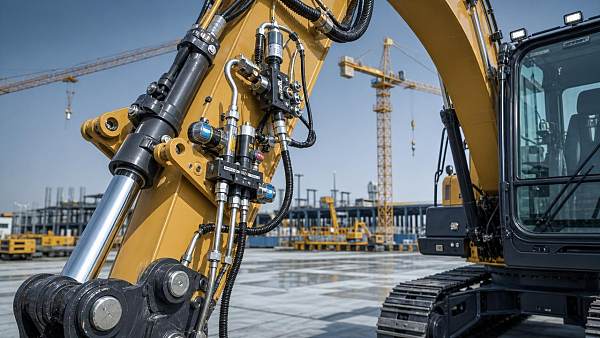
Construction and heavy mobile equipment
The biggest downtime gains often come from robust cylinders, hose protection, contamination exclusion, and rapid field-service replacement. Shock resistance and environmental sealing matter greatly.
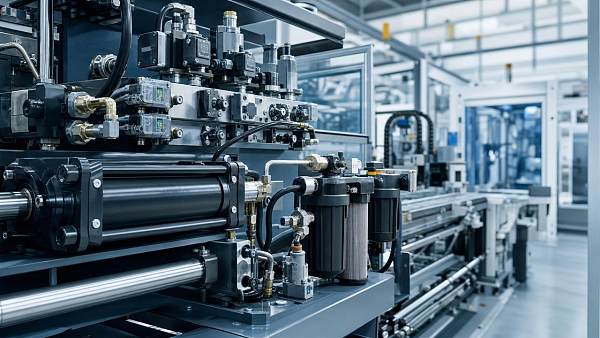
Manufacturing and processing lines
Condition monitoring, valve reliability, thermal control, and modular assemblies usually deliver the strongest uptime benefits because even short interruptions can disrupt downstream production.
Material handling and lifting systems
Focus on predictable actuator performance, leak prevention, load-holding integrity, and standardized maintenance intervals.
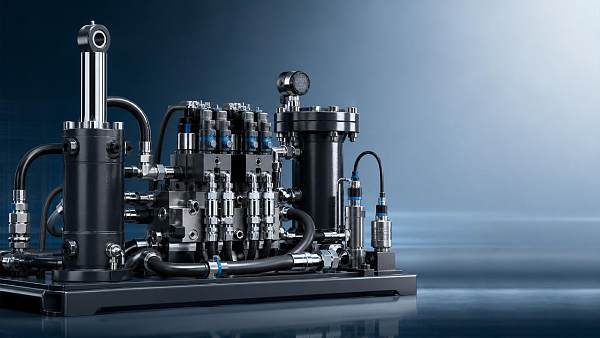
High-duty industrial power units
Fluid cleanliness, cooling, pump health monitoring, and redundancy planning are often the best investments.
Remote or hard-to-service operations
The best downtime reduction strategy is often a mix of predictive sensing, spare-parts stocking, and globally available replacement components rather than niche designs with uncertain supply support.
How can buyers tell whether a supplier’s “downtime reduction” claim is credible?
This is one of the most important concerns for commercial teams. Marketing language is easy; verified uptime performance is harder.
Ask suppliers these questions:
- What failure mode is this solution designed to reduce?
- Do you have application data from similar pressure ranges, duty cycles, and environmental conditions?
- What is the expected maintenance interval compared with standard alternatives?
- What is the replacement lead time for seals, hoses, valves, or full assemblies?
- Can maintenance teams service it with existing tools and skills?
- What are the fluid cleanliness requirements for warranty validity?
- Are there documented savings in downtime hours, repair events, or fluid loss?
Strong suppliers answer with operating data, design rationale, and service planning details. Weak suppliers stay at the level of “premium quality” and “advanced technology” without proving business impact.
Where do advanced hydraulic solutions create the best ROI?
The highest ROI usually appears where downtime costs are high, failures are repetitive, and root causes are known. Examples include:
- Production lines where one hydraulic stoppage halts multiple downstream processes
- Construction fleets where idle equipment delays contracted project milestones
- Applications with chronic cylinder seal replacement or hose rupture issues
- Plants with poor hydraulic fluid cleanliness control
- Operations where replacement part lead times are longer than acceptable outage windows
In these environments, “advanced” should mean measurable reliability improvement, not just more complex equipment. Sometimes the best investment is a smarter filtration loop; sometimes it is a better cylinder design; sometimes it is a standardized replacement architecture supported through procurement intelligence and channel visibility, including references such as 无.
Final answer: which advanced hydraulic solutions cut downtime best?
The best downtime-reducing hydraulic solutions are the ones that directly address your dominant failure mode while also improving maintainability and supply resilience. In most industrial settings, the top performers are condition monitoring systems, contamination-control upgrades, high-durability hydraulic cylinders, modular valve assemblies, and stronger hose-and-connector packages.
For buyers, the smartest path is to evaluate these options through an uptime lens: failure reduction, repair speed, compliance, and parts availability. If you do that, you will usually make better decisions than by comparing pressure ratings and purchase price alone. Advanced hydraulics create the most value when engineering performance and procurement discipline work together to protect uptime.
Recommended News
 Sep 30, 2026How to Evaluate Electro-Hydraulic Servo Response for High-Speed Motion ControlEvaluate electro-hydraulic servo response for high-speed motion control with practical metrics for bandwidth, settling time, stability, and reliable supplier selection.● Marcus Valve
 Sep 22, 2026Selecting High-Pressure Hydraulic Cylinders for Press Force, Stroke, and Duty CycleHigh-Pressure Hydraulic Cylinders for presses: match force, stroke, mounting, and duty cycle for safer, more reliable performance and reduced downtime.● Marcus Valve
 Sep 03, 2026How ASTM Stainless Steel Standards Help Prevent Corrosion Failures in Hydraulic SystemsStainless corrosion ASTM standards help prevent hydraulic failures through verified material selection, passivation, traceability, and targeted corrosion testing. Learn how to specify reliable systems.● Marcus Valve
 Aug 20, 2026How to Calculate a Safe Cylinder Buckling Safety Factor Under Real Load ConditionsCylinder buckling safety factor explained: learn how to calculate a reliable margin under real load conditions, including stroke, end fixity, misalignment, and dynamic forces.● Marcus Valve
 Jul 14, 2026Hydraulic Market Forecast 2026: Demand Drivers, Price Pressure, and Supply Chain RisksHydraulic market forecast 2026 reveals key demand drivers, price pressure, and supply chain risks across industrial sectors. Discover actionable insights for smarter sourcing and planning.● Marcus Valve
 Jul 13, 2026How to Evaluate ISO-Certified Hydraulic Components for Supplier ApprovalHydraulic components ISO certified supplier approval requires more than checking certificates. Learn how to verify traceability, testing, and supplier reliability for safer sourcing.● Marcus Valve
 Jul 13, 2026Environmental Hydraulic Fluid Compliance Explained: Standards, Labels, and Approval StepsEnvironmental hydraulic fluid compliance explained in a practical guide covering ISO 15380, labels, OEM approvals, and approval steps to reduce risk, delays, and sourcing mistakes.● Marcus Valve
 Jul 10, 2026Hydraulic Components for Construction Equipment: Which Parts Matter Most in System Design?Hydraulic components for construction equipment determine efficiency, control, uptime, and lifecycle cost. Discover which parts matter most in system design and how to choose smarter.● Marcus Valve
 Jul 10, 2026How to Evaluate a Heavy Duty Hydraulic Cylinder Manufacturer for Construction ProjectsHeavy duty hydraulic cylinder manufacturer selection affects uptime, safety, and cost. Learn how to compare quality, testing, documentation, and delivery strength for construction projects.● Marcus Valve
 Jul 09, 2026Hydraulic Cylinder Pressure Ratings Explained: How to Read PSI, Burst, and Working LimitsHydraulic cylinder pressure ratings explained clearly: learn how to read PSI, working pressure, and burst limits to choose safer, longer-lasting cylinders and avoid costly system failures.● Marcus Valve
 Jul 08, 2026What Does Filter Beta Ratio Mean in Europe and How Is It Used in Hydraulic Filtration?Filter beta ratio Europe explained: learn how beta ratings measure hydraulic filtration efficiency, support ISO-based comparisons, and help buyers choose reliable filters with confidence.● Marcus Valve
 Jul 02, 2026Steel Cylinder Buckling Load Explained: Formula, End Conditions, and Design LimitsSteel cylinder buckling load explained clearly: learn the Euler formula, end conditions, and real design limits to compare options, reduce risk, and choose safer, more reliable cylinder solutions.● Marcus Valve
 Jul 01, 2026Fluid Power vs Electric Actuation: Key Differences in Force, Control, and MaintenanceFluid Power vs electric actuation: compare force, control, energy use, and maintenance to choose the right system for uptime, precision, and lower lifecycle risk.● Marcus Valve
![]() Jun 04, 2026Hydraulic Manifold Block Factory Guide: What to Review Before Requesting a QuoteHydraulic manifold block factory selection starts before the quote. Learn what to review on machining, pressure testing, cleanliness, traceability, and lead times to compare suppliers with confidence.● Marcus Valve
Jun 04, 2026Hydraulic Manifold Block Factory Guide: What to Review Before Requesting a QuoteHydraulic manifold block factory selection starts before the quote. Learn what to review on machining, pressure testing, cleanliness, traceability, and lead times to compare suppliers with confidence.● Marcus Valve May 30, 2026Why does hydraulic automation in construction news matter?Hydraulic automation in construction news reveals how smarter equipment boosts safety, productivity, energy efficiency, and reliability—see what trends matter now.● Marcus Valve
 May 28, 2026How Advanced Hydraulic systems cut downtime in heavy useAdvanced Hydraulic systems help cut downtime in heavy-use operations by improving pressure stability, reducing wear, and enabling faster fault detection for more reliable project delivery.● Marcus Valve
 May 27, 2026How Advanced Hydraulic systems cut downtime in heavy useAdvanced Hydraulic systems reduce downtime in heavy-use operations through better pressure stability, cleaner fluid control, and predictive maintenance for higher uptime and safer performance.● Marcus Valve
 May 26, 2026How Advanced Hydraulic systems cut downtime in high-load linesAdvanced Hydraulic systems cut downtime in high-load lines by improving pressure stability, durability, and maintenance planning. Discover smarter ways to boost uptime and control project risk.● Marcus Valve
 May 25, 2026How Advanced Hydraulic systems cut downtime in heavy useAdvanced Hydraulic systems cut downtime in heavy-use operations with stable pressure, durable components, and smarter maintenance insights. Learn how to improve uptime and lower lifecycle costs.● Marcus Valve
 May 24, 2026How Advanced Hydraulic systems cut downtime in heavy useAdvanced Hydraulic systems cut downtime in heavy-use operations by improving pressure stability, filtration, and component life. See how smarter hydraulic design boosts uptime and lowers service risk.● Marcus Valve
 May 23, 2026High-Pressure Hydraulic Cylinders selection mistakes to avoidHigh-Pressure Hydraulic Cylinders selection mistakes can cause downtime, leaks, and safety risks. Learn 10 buyer-focused pitfalls to avoid for smarter sourcing and longer service life.● Marcus Valve
 May 22, 2026How to compare high-pressure hydraulic cylindersHigh-Pressure Hydraulic Cylinders comparison guide: evaluate pressure ratings, seal reliability, fatigue life, compliance, and lifecycle cost to choose safer, longer-lasting solutions.● Marcus Valve
 May 21, 2026How to judge High-Pressure Hydraulic Cylinders for safetyHigh-Pressure Hydraulic Cylinders safety starts with more than rated pressure. Learn how to assess materials, seals, fatigue, testing, and compliance for safer, longer-lasting performance.● Marcus Valve
 May 21, 2026How Advanced Hydraulic designs cut downtime in harsh dutyAdvanced Hydraulic design helps cut downtime in harsh-duty industries through better sealing, fatigue resistance, corrosion protection, and predictive maintenance insights.● Marcus Valve