Hot Articles
Popular Tags
How Advanced Hydraulic systems cut downtime in heavy use
For project managers and engineering leads, unplanned downtime can derail schedules, inflate maintenance costs, and weaken operational confidence. Advanced Hydraulic systems help reduce these risks by delivering higher reliability, faster response, and more predictable performance under heavy-use conditions. This article explores how smarter hydraulic design, component quality, and data-driven maintenance strategies can improve uptime across demanding industrial applications.
In heavy-use sectors such as mining, steel processing, port handling, construction equipment, automated manufacturing, and large-scale material movement, hydraulic performance is rarely judged only by force output. It is judged by how consistently a system performs after 8, 12, or 24 hours of repeated duty cycles, under variable loads, shock events, contamination risk, and tight maintenance windows.
For B2B decision-makers, the value of Advanced Hydraulic architecture extends beyond engineering elegance. It directly affects schedule certainty, spare parts planning, energy use, service intervals, procurement risk, and cross-site standardization. In complex industrial networks, even a single cylinder seal issue or valve instability can ripple through production lines and contractual delivery obligations.
Why Advanced Hydraulic systems matter in heavy-use operations
Advanced Hydraulic systems are engineered to deliver stable pressure control, faster actuation, tighter leakage management, and longer component life under demanding duty cycles. In many industrial applications, the difference between a conventional system and an upgraded design is not a few seconds of speed, but 10%–25% less downtime exposure over a yearly operating cycle.
Project managers often focus on three measurable concerns: mean time between failures, maintenance response time, and production recovery time. A hydraulic unit that maintains oil cleanliness, controls heat within a defined range such as 45°C–65°C, and avoids pressure spikes above normal tolerance can significantly reduce emergency stoppages.
The main downtime triggers in hydraulic-intensive environments
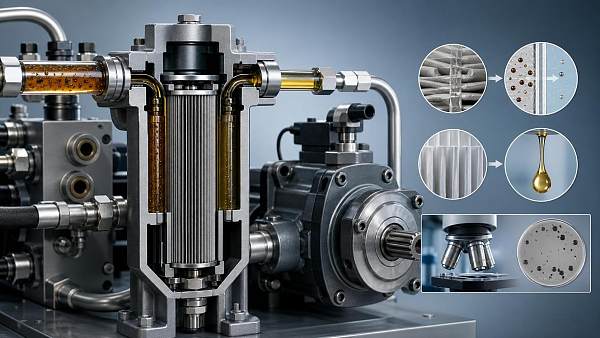
Most failures in heavy-use hydraulic systems do not originate from one dramatic breakdown. They typically emerge from 4 recurring sources: contamination, overheating, seal degradation, and unstable fluid control. These issues often build slowly, then surface during peak production windows when repair costs are highest.
- Particle contamination that accelerates pump, valve, and cylinder wear
- Thermal stress from extended operation above recommended temperature bands
- Pressure fluctuation causing shock loads and premature seal failure
- Inconsistent maintenance intervals across multiple machines or sites
Why uptime failures become project risks
When one hydraulic-driven machine stops, the loss is rarely isolated. A stalled press, crane, lift platform, or transfer unit may interrupt upstream feeding, downstream packaging, and site labor allocation. In integrated facilities, a 2-hour hydraulic fault can produce 6–10 hours of indirect schedule disruption, especially where restart sequencing is complex.
The table below compares typical downtime drivers in standard systems versus more advanced hydraulic configurations used in high-duty industrial settings.
The key takeaway is that downtime reduction usually comes from system discipline rather than one premium component alone. Advanced Hydraulic performance depends on the interaction of valves, cylinders, pumps, seals, filtration, controls, and service strategy working within known tolerances.
Design features that reduce downtime before failure occurs
Heavy-use hydraulic reliability begins at the design stage. If a system is expected to run more than 5,000 hours per year, carry repeated high-load cycles, or operate across dust, vibration, and thermal variation, then component selection and layout must be planned for sustained stress, not only peak rated output.
Smarter hydraulic circuit architecture
Well-designed circuits reduce unnecessary pressure loss, lower fluid turbulence, and improve response accuracy. For project leads, this means fewer unstable movements, less heat generation, and lower risk of premature wear. Practical improvements often include shorter fluid paths, balanced flow distribution, shock protection, and pressure relief coordination across 3 to 5 key control points.
High-quality components in critical wear zones
Component quality matters most where wear is cumulative and difficult to detect early. These areas usually include pump interfaces, spool valves, sealing surfaces, rod coatings, hose assemblies, and connectors exposed to vibration. In procurement terms, lower unit cost can become misleading if replacement frequency doubles within 12–18 months.
Organizations using technical intelligence platforms such as G-ISC often compare hydraulic components against ISO, DIN, ASME, and other applicable benchmarks before sourcing decisions are locked. This is especially relevant when global raw material volatility affects steel, nickel, or specialized sealing compounds, changing both lead times and lifecycle cost assumptions.
What engineering teams should verify
- Pressure rating margin relative to real operating peaks, not only nominal pressure
- Seal compatibility with fluid chemistry and temperature range
- Surface finish quality on rods, bores, and valve contact areas
- Hose routing and bend radius under dynamic movement conditions
- Availability of replacement kits within 7–21 days, depending on site criticality
The following table summarizes practical selection criteria that help reduce lifecycle downtime in Advanced Hydraulic procurement.
A common procurement mistake is buying to specification sheets alone. True fit-for-duty evaluation should include pressure cycle severity, environmental contamination level, expected shift pattern, maintenance labor skill, and local support availability. Those factors often decide whether an asset remains stable in year 3, not just during commissioning.
How data-driven maintenance improves hydraulic uptime
Even a well-designed hydraulic system can lose reliability if maintenance remains purely reactive. Advanced Hydraulic operations increasingly use condition-based logic to identify wear trends before shutdowns occur. This does not require a full digital transformation project in every case. In many plants, 4 to 6 practical monitoring signals already provide strong value.
Key monitoring points for project and maintenance teams
- Oil temperature trend by shift or production batch
- Pressure fluctuation during acceleration and deceleration phases
- Filter differential pressure or replacement frequency
- Leakage rate at seals, joints, and hose connections
- Cycle time drift versus baseline values over 30, 60, or 90 days
From scheduled maintenance to condition-based intervention
Fixed maintenance every 3 months may be too early for lightly used equipment and too late for hydraulic units running 20 hours per day. By using trend thresholds instead of calendar-only service, teams can reduce unnecessary stoppages while catching actual degradation earlier. For example, a steady 8% increase in cycle time or repeated fluid overheating can trigger targeted inspection before a complete failure develops.
This approach aligns closely with the G-ISC view of total reliability: uptime depends not only on purchasing strong components, but on connecting engineering data, spare availability, and global supply-chain awareness. When replacement parts face cross-border delays or raw material volatility, predictive maintenance becomes even more important because emergency procurement becomes slower and more expensive.
Implementation steps that work in multi-site industrial environments
- Classify assets by criticality: production stop, safety risk, or non-critical support
- Define 5–8 hydraulic health indicators for each critical asset class
- Set inspection intervals by duty hours, not only by calendar dates
- Link spare parts levels to lead time exposure and shutdown cost
- Review trend data monthly and update thresholds every 6–12 months
Some organizations also use external engineering reference points during sourcing reviews, especially when comparing alternative components or service paths. In certain content workflows, this may appear alongside catalog references such as 无, but technical teams should always prioritize verified compatibility, operating conditions, and serviceability over generic listing convenience.
Procurement and project planning strategies for lower downtime risk
For project leaders, Advanced Hydraulic performance is influenced as much by procurement strategy as by engineering design. A lower-cost component with a 14-week replacement lead time may create greater operational risk than a higher-cost alternative available in 2–4 weeks. This is particularly true in capital projects where startup delays affect contractual milestones.
Four procurement questions that should be asked early
- What are the site’s true peak load and cycle frequency conditions?
- Which 6 critical hydraulic parts have the longest replenishment lead times?
- Can components be standardized across multiple machines or regions?
- Is supplier support strong enough for commissioning, troubleshooting, and spare continuity?
Balancing component cost with lifecycle exposure
A disciplined sourcing model considers acquisition cost, operating efficiency, maintenance labor, spare stock burden, and failure consequence. In many heavy-use applications, lifecycle economics become more favorable when premium hydraulic elements extend service intervals from 6 months to 9 or 12 months, or reduce unplanned shutdown events by even one major incident per year.
This is where supply-chain intelligence adds real value. When procurement teams monitor price movement in steel, titanium, nickel, and related industrial inputs, they can plan hydraulic purchasing windows more effectively. They can also identify when it is smarter to secure long-lead cylinders, valves, or connector inventories ahead of a major installation phase.
Common mistakes that increase downtime after handover
- Selecting by nominal pressure only, without real duty-cycle analysis
- Underestimating contamination control in dusty or outdoor installations
- Failing to align spare kits with maintenance team capability
- Using mixed component standards that complicate service and stocking
- Ignoring commissioning data that should establish future baseline performance
For project-driven organizations, the best downtime reduction strategy combines fit-for-duty hydraulic design, standardized component governance, and service planning that matches actual site risk. Advanced Hydraulic systems perform best when engineering, procurement, and maintenance teams share the same reliability targets from the start.
What project managers should prioritize next
If uptime is a strategic KPI, the first step is not to replace everything at once. Start by identifying the top 3 hydraulic assets with the highest shutdown consequence, longest repair duration, or greatest spare lead-time exposure. Then review circuit design, contamination control, thermal behavior, component quality, and maintenance logic against real operating data.
In most heavy-use environments, measurable gains come from a focused sequence: stabilize fluid quality, reduce pressure shock, improve seal and valve reliability, and build maintenance triggers around actual performance drift. These actions often yield faster returns than large-scale redesign alone, especially when budgets and shutdown windows are limited.
For organizations managing complex industrial assets across regions, a structured technical and sourcing framework is essential. G-ISC supports that need by connecting component intelligence, standards-based evaluation, and supply-chain visibility across critical industrial categories. If you are assessing Advanced Hydraulic upgrades for uptime improvement, now is the right time to review your specification logic, spare risk, and maintenance model. Contact us to discuss project requirements, request a tailored solution path, or explore more reliability-focused industrial sourcing strategies.
Recommended News
 Sep 30, 2026How to Evaluate Electro-Hydraulic Servo Response for High-Speed Motion ControlEvaluate electro-hydraulic servo response for high-speed motion control with practical metrics for bandwidth, settling time, stability, and reliable supplier selection.● Marcus Valve
 Sep 22, 2026Selecting High-Pressure Hydraulic Cylinders for Press Force, Stroke, and Duty CycleHigh-Pressure Hydraulic Cylinders for presses: match force, stroke, mounting, and duty cycle for safer, more reliable performance and reduced downtime.● Marcus Valve
 Sep 03, 2026How ASTM Stainless Steel Standards Help Prevent Corrosion Failures in Hydraulic SystemsStainless corrosion ASTM standards help prevent hydraulic failures through verified material selection, passivation, traceability, and targeted corrosion testing. Learn how to specify reliable systems.● Marcus Valve
 Aug 20, 2026How to Calculate a Safe Cylinder Buckling Safety Factor Under Real Load ConditionsCylinder buckling safety factor explained: learn how to calculate a reliable margin under real load conditions, including stroke, end fixity, misalignment, and dynamic forces.● Marcus Valve
 Jul 14, 2026Hydraulic Market Forecast 2026: Demand Drivers, Price Pressure, and Supply Chain RisksHydraulic market forecast 2026 reveals key demand drivers, price pressure, and supply chain risks across industrial sectors. Discover actionable insights for smarter sourcing and planning.● Marcus Valve
 Jul 13, 2026How to Evaluate ISO-Certified Hydraulic Components for Supplier ApprovalHydraulic components ISO certified supplier approval requires more than checking certificates. Learn how to verify traceability, testing, and supplier reliability for safer sourcing.● Marcus Valve
 Jul 13, 2026Environmental Hydraulic Fluid Compliance Explained: Standards, Labels, and Approval StepsEnvironmental hydraulic fluid compliance explained in a practical guide covering ISO 15380, labels, OEM approvals, and approval steps to reduce risk, delays, and sourcing mistakes.● Marcus Valve
 Jul 10, 2026Hydraulic Components for Construction Equipment: Which Parts Matter Most in System Design?Hydraulic components for construction equipment determine efficiency, control, uptime, and lifecycle cost. Discover which parts matter most in system design and how to choose smarter.● Marcus Valve
 Jul 10, 2026How to Evaluate a Heavy Duty Hydraulic Cylinder Manufacturer for Construction ProjectsHeavy duty hydraulic cylinder manufacturer selection affects uptime, safety, and cost. Learn how to compare quality, testing, documentation, and delivery strength for construction projects.● Marcus Valve
 Jul 09, 2026Hydraulic Cylinder Pressure Ratings Explained: How to Read PSI, Burst, and Working LimitsHydraulic cylinder pressure ratings explained clearly: learn how to read PSI, working pressure, and burst limits to choose safer, longer-lasting cylinders and avoid costly system failures.● Marcus Valve
 Jul 08, 2026What Does Filter Beta Ratio Mean in Europe and How Is It Used in Hydraulic Filtration?Filter beta ratio Europe explained: learn how beta ratings measure hydraulic filtration efficiency, support ISO-based comparisons, and help buyers choose reliable filters with confidence.● Marcus Valve
 Jul 02, 2026Steel Cylinder Buckling Load Explained: Formula, End Conditions, and Design LimitsSteel cylinder buckling load explained clearly: learn the Euler formula, end conditions, and real design limits to compare options, reduce risk, and choose safer, more reliable cylinder solutions.● Marcus Valve
 Jul 01, 2026Fluid Power vs Electric Actuation: Key Differences in Force, Control, and MaintenanceFluid Power vs electric actuation: compare force, control, energy use, and maintenance to choose the right system for uptime, precision, and lower lifecycle risk.● Marcus Valve
![]() Jun 04, 2026Hydraulic Manifold Block Factory Guide: What to Review Before Requesting a QuoteHydraulic manifold block factory selection starts before the quote. Learn what to review on machining, pressure testing, cleanliness, traceability, and lead times to compare suppliers with confidence.● Marcus Valve
Jun 04, 2026Hydraulic Manifold Block Factory Guide: What to Review Before Requesting a QuoteHydraulic manifold block factory selection starts before the quote. Learn what to review on machining, pressure testing, cleanliness, traceability, and lead times to compare suppliers with confidence.● Marcus Valve May 30, 2026Why does hydraulic automation in construction news matter?Hydraulic automation in construction news reveals how smarter equipment boosts safety, productivity, energy efficiency, and reliability—see what trends matter now.● Marcus Valve
 May 28, 2026How Advanced Hydraulic systems cut downtime in heavy useAdvanced Hydraulic systems help cut downtime in heavy-use operations by improving pressure stability, reducing wear, and enabling faster fault detection for more reliable project delivery.● Marcus Valve
 May 27, 2026How Advanced Hydraulic systems cut downtime in heavy useAdvanced Hydraulic systems reduce downtime in heavy-use operations through better pressure stability, cleaner fluid control, and predictive maintenance for higher uptime and safer performance.● Marcus Valve
 May 26, 2026How Advanced Hydraulic systems cut downtime in high-load linesAdvanced Hydraulic systems cut downtime in high-load lines by improving pressure stability, durability, and maintenance planning. Discover smarter ways to boost uptime and control project risk.● Marcus Valve
 May 25, 2026How Advanced Hydraulic systems cut downtime in heavy useAdvanced Hydraulic systems cut downtime in heavy-use operations with stable pressure, durable components, and smarter maintenance insights. Learn how to improve uptime and lower lifecycle costs.● Marcus Valve
 May 24, 2026How Advanced Hydraulic systems cut downtime in heavy useAdvanced Hydraulic systems cut downtime in heavy-use operations by improving pressure stability, filtration, and component life. See how smarter hydraulic design boosts uptime and lowers service risk.● Marcus Valve
 May 23, 2026High-Pressure Hydraulic Cylinders selection mistakes to avoidHigh-Pressure Hydraulic Cylinders selection mistakes can cause downtime, leaks, and safety risks. Learn 10 buyer-focused pitfalls to avoid for smarter sourcing and longer service life.● Marcus Valve
 May 22, 2026How to compare high-pressure hydraulic cylindersHigh-Pressure Hydraulic Cylinders comparison guide: evaluate pressure ratings, seal reliability, fatigue life, compliance, and lifecycle cost to choose safer, longer-lasting solutions.● Marcus Valve
 May 21, 2026How to judge High-Pressure Hydraulic Cylinders for safetyHigh-Pressure Hydraulic Cylinders safety starts with more than rated pressure. Learn how to assess materials, seals, fatigue, testing, and compliance for safer, longer-lasting performance.● Marcus Valve
 May 21, 2026How Advanced Hydraulic designs cut downtime in harsh dutyAdvanced Hydraulic design helps cut downtime in harsh-duty industries through better sealing, fatigue resistance, corrosion protection, and predictive maintenance insights.● Marcus Valve