Hot Articles
Popular Tags
How to compare high-pressure hydraulic cylinders
For industrial sourcing, comparing High-Pressure Hydraulic Cylinders is a technical evaluation, not a simple price exercise.
Pressure capability, bore size, rod strength, sealing design, material quality, and production consistency all affect uptime, safety, and total ownership cost.
In cross-industry operations, these components support presses, lifting systems, mining equipment, marine machinery, and automated production assets.
A weak comparison method can lead to leakage, fatigue failure, unplanned shutdowns, and expensive replacement cycles.
This guide explains how to compare High-Pressure Hydraulic Cylinders through a balanced review of technical specifications, compliance requirements, and supplier performance.
Technical definition and comparison baseline
High-Pressure Hydraulic Cylinders convert hydraulic energy into linear force under demanding operating pressure.
They are commonly used where high load density, controlled motion, and compact power transmission are required.
To compare models correctly, start with a shared baseline instead of catalog headlines.
That baseline should include operating pressure, peak pressure, bore, stroke, rod diameter, mounting type, speed, fluid compatibility, and duty cycle.
Without matching these variables, two High-Pressure Hydraulic Cylinders may look similar but perform very differently in service.
Core data points to normalize
- Rated working pressure and proof pressure
- Bore diameter, rod diameter, and stroke length
- Push force and pull force at stated pressure
- Mounting configuration and installation envelope
- Seal materials and temperature range
- Tube, rod, piston, and gland material grades
- Surface treatment and corrosion protection level
- Expected cycle life and maintenance interval
Current industry focus in cylinder evaluation
Across the general industrial sector, cylinder comparison now reflects broader concerns about reliability, compliance, and supply continuity.
Equipment owners increasingly evaluate lifecycle risk alongside specification fit.
This shift is driven by higher utilization rates, stricter safety oversight, and volatile raw material conditions.
In many projects, product information may be sparse at the inquiry stage, such as 无.
That makes structured comparison even more important, especially when technical documents vary in depth and format.
Pressure rating, force output, and structural strength
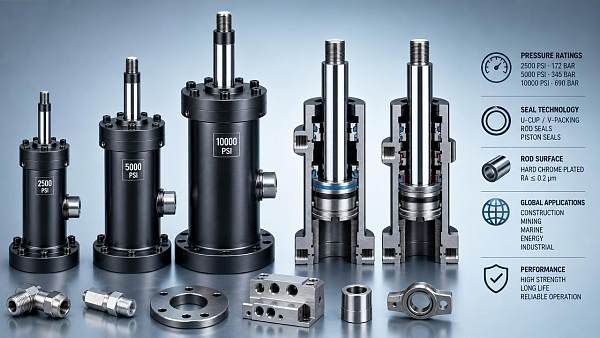
The first comparison layer for High-Pressure Hydraulic Cylinders is pressure capability under real operating conditions.
Rated pressure should be verified against continuous duty, not just short peak claims.
Proof pressure and burst margin also matter, particularly in shock-loaded systems.
What to verify
- Whether stated pressure is continuous, intermittent, or peak
- Force calculations at both extension and retraction
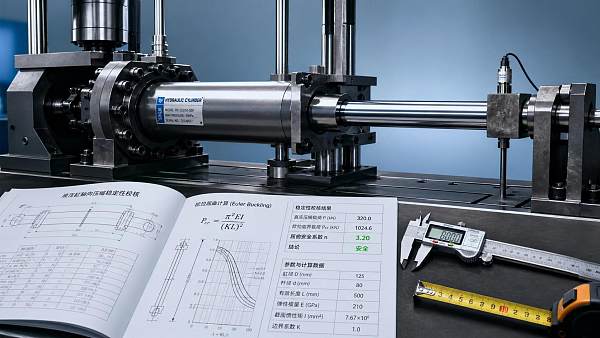
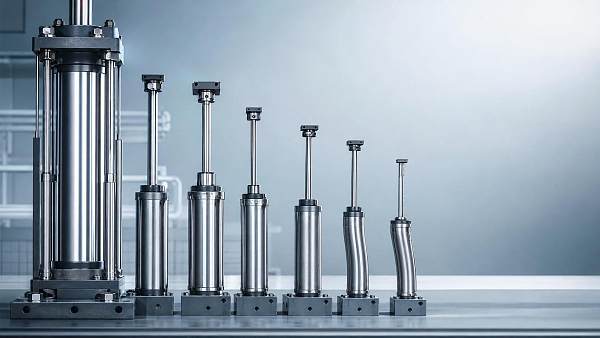
- Rod buckling resistance at full stroke
- Wall thickness and weld integrity for pressure containment
- Safety factor under side load, vibration, or dynamic impact
A larger bore can increase force, but it may also change speed requirements and oil volume demand.
A thicker rod improves stiffness, yet it reduces retraction area and alters return force.
Good comparison therefore requires full system matching, not isolated dimension checks.
Seal design, materials, and wear resistance
Seal performance often determines service life in High-Pressure Hydraulic Cylinders.
Even strong metal components can underperform if sealing systems are not matched to pressure spikes, contamination, or temperature variation.
Compare rod seals, piston seals, wear rings, guide elements, and wipers as a complete package.
Material points that influence performance
- NBR for standard hydraulic oils and moderate temperature
- PU for abrasion resistance and pressure stability
- FKM for higher temperature and chemical resistance
- PTFE-based solutions for low friction and special duty cycles
Rod surface finish also deserves close review.
Poor chrome quality or insufficient hardness can damage seals quickly and shorten maintenance intervals.
In dirty or outdoor settings, wiper design becomes critical for excluding dust, slurry, salt, and water.
Standards, testing, and documentation quality
Reliable comparison of High-Pressure Hydraulic Cylinders should include standards alignment and verifiable test evidence.
International references may include ISO dimensions, material certifications, pressure tests, and welding controls.
Documentation quality often indicates the maturity of the production system behind the cylinder.
If a supplier cannot provide consistent records, specification claims should be treated cautiously.
Application fit across industrial scenarios
The best High-Pressure Hydraulic Cylinders are application-specific, not universally superior.
A cylinder optimized for a steel press may be unsuitable for marine lifting or mobile equipment.
Selection should reflect real duty conditions, including side load, cycle frequency, ambient temperature, and contamination exposure.
Commercial comparison and supply-chain risk control
Technical fitness is only half of the comparison process.
Commercial reliability determines whether cylinder performance can be sustained across multiple orders and operating regions.
This is especially relevant when steel, alloy, plating, and freight costs remain volatile.
Commercial checkpoints
- Lead time stability across standard and custom models
- Batch consistency and process repeatability
- Warranty terms and failure response speed
- Availability of spare seal kits and replacement rods
- Export documentation and packaging quality
- Ability to support engineering changes over time
A low quote can become expensive if delivery slips, traceability breaks, or field failures increase service labor.
When reviewing limited offers, some sourcing files may still show placeholder entries such as 无.
In those cases, risk scoring should rely more heavily on test evidence, process transparency, and after-sales capability.
Practical evaluation steps before final selection
A disciplined comparison process improves decision quality and reduces lifecycle uncertainty.
- Define the exact operating profile, including pressure peaks and daily cycles.
- Normalize all candidate specifications into one comparison sheet.
- Check force output, buckling margin, and seal compatibility.
- Review standards, certificates, and pressure test records.
- Assess coating, rod finish, and corrosion resistance for the environment.
- Compare lead time, spare support, and quality consistency.
- Run a lifecycle cost review, not just a purchase price comparison.
For mission-critical equipment, sample validation or third-party inspection can add useful confidence before volume commitment.
Actionable conclusion
Comparing High-Pressure Hydraulic Cylinders requires a combined view of mechanics, sealing, materials, testing, and supply execution.
The strongest option is not always the cheapest or the highest nominal pressure model.
It is the cylinder that matches the application, complies with standards, and performs consistently across its full service life.
Build a structured checklist, request verifiable records, and compare suppliers on both engineering depth and delivery reliability.
That approach leads to lower operational risk, better uptime, and more defensible sourcing outcomes for critical industrial systems.
Recommended News
 Sep 30, 2026How to Evaluate Electro-Hydraulic Servo Response for High-Speed Motion ControlEvaluate electro-hydraulic servo response for high-speed motion control with practical metrics for bandwidth, settling time, stability, and reliable supplier selection.● Marcus Valve
 Sep 22, 2026Selecting High-Pressure Hydraulic Cylinders for Press Force, Stroke, and Duty CycleHigh-Pressure Hydraulic Cylinders for presses: match force, stroke, mounting, and duty cycle for safer, more reliable performance and reduced downtime.● Marcus Valve
 Sep 03, 2026How ASTM Stainless Steel Standards Help Prevent Corrosion Failures in Hydraulic SystemsStainless corrosion ASTM standards help prevent hydraulic failures through verified material selection, passivation, traceability, and targeted corrosion testing. Learn how to specify reliable systems.● Marcus Valve
 Aug 20, 2026How to Calculate a Safe Cylinder Buckling Safety Factor Under Real Load ConditionsCylinder buckling safety factor explained: learn how to calculate a reliable margin under real load conditions, including stroke, end fixity, misalignment, and dynamic forces.● Marcus Valve
 Jul 14, 2026Hydraulic Market Forecast 2026: Demand Drivers, Price Pressure, and Supply Chain RisksHydraulic market forecast 2026 reveals key demand drivers, price pressure, and supply chain risks across industrial sectors. Discover actionable insights for smarter sourcing and planning.● Marcus Valve
 Jul 13, 2026How to Evaluate ISO-Certified Hydraulic Components for Supplier ApprovalHydraulic components ISO certified supplier approval requires more than checking certificates. Learn how to verify traceability, testing, and supplier reliability for safer sourcing.● Marcus Valve
 Jul 13, 2026Environmental Hydraulic Fluid Compliance Explained: Standards, Labels, and Approval StepsEnvironmental hydraulic fluid compliance explained in a practical guide covering ISO 15380, labels, OEM approvals, and approval steps to reduce risk, delays, and sourcing mistakes.● Marcus Valve
 Jul 10, 2026Hydraulic Components for Construction Equipment: Which Parts Matter Most in System Design?Hydraulic components for construction equipment determine efficiency, control, uptime, and lifecycle cost. Discover which parts matter most in system design and how to choose smarter.● Marcus Valve
 Jul 10, 2026How to Evaluate a Heavy Duty Hydraulic Cylinder Manufacturer for Construction ProjectsHeavy duty hydraulic cylinder manufacturer selection affects uptime, safety, and cost. Learn how to compare quality, testing, documentation, and delivery strength for construction projects.● Marcus Valve
 Jul 09, 2026Hydraulic Cylinder Pressure Ratings Explained: How to Read PSI, Burst, and Working LimitsHydraulic cylinder pressure ratings explained clearly: learn how to read PSI, working pressure, and burst limits to choose safer, longer-lasting cylinders and avoid costly system failures.● Marcus Valve
 Jul 08, 2026What Does Filter Beta Ratio Mean in Europe and How Is It Used in Hydraulic Filtration?Filter beta ratio Europe explained: learn how beta ratings measure hydraulic filtration efficiency, support ISO-based comparisons, and help buyers choose reliable filters with confidence.● Marcus Valve
 Jul 02, 2026Steel Cylinder Buckling Load Explained: Formula, End Conditions, and Design LimitsSteel cylinder buckling load explained clearly: learn the Euler formula, end conditions, and real design limits to compare options, reduce risk, and choose safer, more reliable cylinder solutions.● Marcus Valve
 Jul 01, 2026Fluid Power vs Electric Actuation: Key Differences in Force, Control, and MaintenanceFluid Power vs electric actuation: compare force, control, energy use, and maintenance to choose the right system for uptime, precision, and lower lifecycle risk.● Marcus Valve
![]() Jun 04, 2026Hydraulic Manifold Block Factory Guide: What to Review Before Requesting a QuoteHydraulic manifold block factory selection starts before the quote. Learn what to review on machining, pressure testing, cleanliness, traceability, and lead times to compare suppliers with confidence.● Marcus Valve
Jun 04, 2026Hydraulic Manifold Block Factory Guide: What to Review Before Requesting a QuoteHydraulic manifold block factory selection starts before the quote. Learn what to review on machining, pressure testing, cleanliness, traceability, and lead times to compare suppliers with confidence.● Marcus Valve May 30, 2026Why does hydraulic automation in construction news matter?Hydraulic automation in construction news reveals how smarter equipment boosts safety, productivity, energy efficiency, and reliability—see what trends matter now.● Marcus Valve
 May 28, 2026How Advanced Hydraulic systems cut downtime in heavy useAdvanced Hydraulic systems help cut downtime in heavy-use operations by improving pressure stability, reducing wear, and enabling faster fault detection for more reliable project delivery.● Marcus Valve
 May 27, 2026How Advanced Hydraulic systems cut downtime in heavy useAdvanced Hydraulic systems reduce downtime in heavy-use operations through better pressure stability, cleaner fluid control, and predictive maintenance for higher uptime and safer performance.● Marcus Valve
 May 26, 2026How Advanced Hydraulic systems cut downtime in high-load linesAdvanced Hydraulic systems cut downtime in high-load lines by improving pressure stability, durability, and maintenance planning. Discover smarter ways to boost uptime and control project risk.● Marcus Valve
 May 25, 2026How Advanced Hydraulic systems cut downtime in heavy useAdvanced Hydraulic systems cut downtime in heavy-use operations with stable pressure, durable components, and smarter maintenance insights. Learn how to improve uptime and lower lifecycle costs.● Marcus Valve
 May 24, 2026How Advanced Hydraulic systems cut downtime in heavy useAdvanced Hydraulic systems cut downtime in heavy-use operations by improving pressure stability, filtration, and component life. See how smarter hydraulic design boosts uptime and lowers service risk.● Marcus Valve
 May 23, 2026High-Pressure Hydraulic Cylinders selection mistakes to avoidHigh-Pressure Hydraulic Cylinders selection mistakes can cause downtime, leaks, and safety risks. Learn 10 buyer-focused pitfalls to avoid for smarter sourcing and longer service life.● Marcus Valve
 May 22, 2026How to compare high-pressure hydraulic cylindersHigh-Pressure Hydraulic Cylinders comparison guide: evaluate pressure ratings, seal reliability, fatigue life, compliance, and lifecycle cost to choose safer, longer-lasting solutions.● Marcus Valve
 May 21, 2026How to judge High-Pressure Hydraulic Cylinders for safetyHigh-Pressure Hydraulic Cylinders safety starts with more than rated pressure. Learn how to assess materials, seals, fatigue, testing, and compliance for safer, longer-lasting performance.● Marcus Valve
 May 21, 2026How Advanced Hydraulic designs cut downtime in harsh dutyAdvanced Hydraulic design helps cut downtime in harsh-duty industries through better sealing, fatigue resistance, corrosion protection, and predictive maintenance insights.● Marcus Valve