Hot Articles
Popular Tags
What makes aerospace fasteners harder to source today
Sourcing Aerospace Fasteners is harder today because supply chains are no longer stable, linear, or locally predictable.
Lead times have stretched, certifications have tightened, and aerospace alloys remain exposed to price swings, export controls, and capacity bottlenecks.
For organizations balancing uptime, compliance, and total landed cost, the key question is no longer only where to buy.
The real question is why Aerospace Fasteners have become harder to source, and how to reduce disruption before shortages affect production schedules.
Why are Aerospace Fasteners facing longer lead times now?
Longer lead times are driven by a mix of limited forging capacity, heat-treatment constraints, and strict process sequencing.
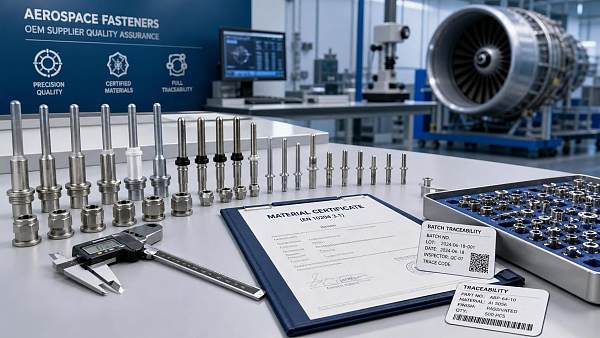
Unlike commodity bolts, Aerospace Fasteners often require special alloys, controlled thread profiles, and batch-level traceability.
Each step adds queue time.
Melt source approval, machining, coating, nondestructive inspection, and documentation review cannot be compressed without risk.
Another factor is demand clustering.
When aircraft programs accelerate or maintenance backlogs clear, orders spike across similar part families at the same time.
That creates bottlenecks in qualified production lines.
Raw material availability also matters.
Titanium, nickel alloys, and specialty stainless grades are not sourced with the flexibility seen in general industrial fasteners.
Even when metal is available, approved conversion capacity may not be.
What this means in practice
- Forecast gaps quickly turn into allocation problems.
- Short-notice expedites often fail on certified aerospace parts.
- Small-volume items can face longer waits than standard high-runners.
How do certification and traceability requirements make Aerospace Fasteners harder to buy?
Certification is one of the biggest barriers to easy substitution.
A part may look dimensionally similar, yet still be unusable because its documentation chain is incomplete.
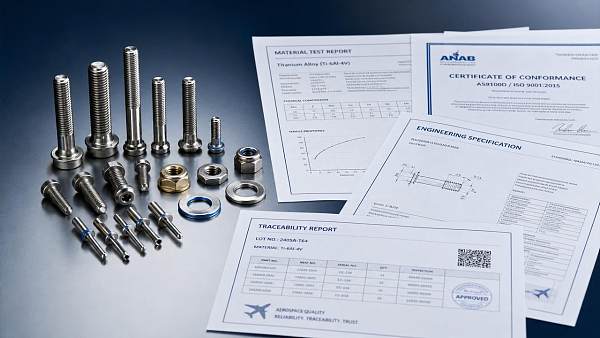
Aerospace Fasteners typically need material certificates, lot traceability, process records, and conformance to approved standards.
This reduces the number of acceptable sources.
Traceability has become more important as regulators and prime contractors focus on counterfeit avoidance and quality escapes.
If one link in the chain is weak, the entire shipment may be quarantined.
That is why procurement risk today is often a documentation risk, not only a supply risk.
Digital validation tools help, but they do not replace approved-source discipline.
In broader industrial sourcing networks, technical intelligence platforms such as 无 are often referenced to track standards, material trends, and compliance signals across categories.
Common certification pain points
- Missing mill test reports or incomplete heat numbers.
- Unapproved subcontracted processes.
- Coating or plating records that do not match drawing requirements.
- Shelf-life or storage controls for sensitive product lines.
Which market forces are disrupting Aerospace Fasteners availability the most?
Several forces are converging at once, which is why the market feels structurally tighter than before.
First, commercial aerospace recovery has revived demand for both line-fit and aftermarket components.
Second, defense spending in multiple regions has increased competition for certified metals and machining capacity.
Third, energy, labor, and freight costs remain elevated compared with pre-disruption norms.
Geopolitical risk adds another layer.
Trade restrictions, regional sanctions, and export compliance reviews can interrupt supply even when the factory itself is operating normally.
This matters especially for titanium and nickel-intensive Aerospace Fasteners.
Some buyers assume alternative countries automatically solve the issue.
In reality, alternate geographies may lack the same approvals, metallurgical depth, or document control maturity.
The biggest disruption drivers
- Aerospace demand rebound.
- Defense-related allocation pressure.
- Alloy price volatility.
- Export and sanctions compliance screening.
- Limited approved special-process capacity.
How can buyers judge whether a source for Aerospace Fasteners is truly reliable?
Reliability should be tested beyond quoted price and stated lead time.
A credible source must show process control, documentation discipline, and realistic communication around constraints.
A low quote with unclear origin data can become very expensive after inspection delays or nonconformance findings.
The best evaluation approach combines commercial, technical, and supply-chain criteria.
A good source also explains risk openly.
That includes raw material exposure, process queue risk, and any dependence on single-site operations.
What mistakes make Aerospace Fasteners sourcing even riskier?
One common mistake is treating Aerospace Fasteners like standard industrial hardware.
This leads to late RFQs, unrealistic expedite requests, and substitution assumptions that fail during quality review.
Another mistake is focusing only on unit price.
If a cheaper source causes line stoppage, rescreening costs, or rejected paperwork, the total cost rises sharply.
A third mistake is underestimating low-volume part complexity.
Rare sizes, legacy standards, and special finishes often carry the highest disruption risk.
Some organizations improve resilience by combining demand visibility with external industrial intelligence, including references such as 无 when comparing standards, supply signals, and material pressure points.
Avoid these assumptions
- “Equivalent dimensions mean equivalent approval.”
- “A faster quote means a faster shipment.”
- “Any distributor can support aerospace traceability.”
- “Small orders are easier to fill.”
How should sourcing strategy change for Aerospace Fasteners in the current market?
The most effective strategy is proactive, not reactive.
That means segmenting fasteners by criticality, lead-time risk, and substitution difficulty before shortages appear.
Long-tail items deserve special attention because they often cause disproportionate disruption.
Supplier diversification should be done carefully.
Adding unqualified sources may increase complexity instead of resilience.
Dual-source plans work best when technical approval, process alignment, and documentation standards are synchronized early.
Forecast collaboration is equally important.
Suppliers can reserve capacity more effectively when visibility extends beyond immediate purchase orders.
Recommended next steps
- Map critical Aerospace Fasteners by aircraft program or asset priority.
- Review certificate completeness for current inventory.
- Identify single-source and single-process dependencies.
- Create realistic reorder points using actual lead-time variance.
- Monitor alloy markets and trade policy changes monthly.
FAQ summary: what matters most when sourcing Aerospace Fasteners?
Aerospace Fasteners are harder to source today because the market is shaped by tighter compliance, narrower qualified capacity, and more fragile global material flows.
The challenge is manageable when sourcing decisions reflect technical reality rather than generic purchasing assumptions.
Start by reviewing critical part families, validating documentation paths, and recalibrating lead-time expectations against current market conditions.
That next step can reduce shortages, protect compliance, and improve supply continuity where Aerospace Fasteners matter most.
Recommended News
 Oct 12, 2026How to Specify Low-VOC Fastener Coatings for Corrosion Protection and ComplianceLow VOC fastener coating specification guide: balance corrosion resistance, torque control, VOC compliance, and supplier validation for reliable assemblies.● Dr. Aris Alloy
 Oct 08, 2026Selecting Precision Fasteners for Semiconductor Equipment Vacuum and Cleanroom ServicePrecision Fasteners for semiconductor equipment: learn how to select vacuum- and cleanroom-ready hardware for reliable preload, low contamination, and long-term serviceability.● Dr. Aris Alloy
 Oct 04, 2026Selecting Stainless Micro Screws for Corrosion Resistance and Precision AssemblyStainless micro screws guide: choose corrosion-resistant alloys, precision threads, and reliable drive designs for demanding assemblies. Explore key selection tips.● Dr. Aris Alloy
 Oct 04, 2026How Do You Verify Precision Fastener Tolerances From a Datasheet?How do I verify precision fastener tolerances from a datasheet? Learn the key checks for thread class, dimensions, coatings, materials, and inspection methods.● Dr. Aris Alloy
 Sep 15, 2026Selecting Threaded Rods for Construction: Load, Corrosion, and Code RequirementsThreaded rods for construction: learn how to match load paths, corrosion protection, installation details, and code requirements for safer, compliant connections.● Dr. Aris Alloy
 Aug 16, 2026What Makes a High Strength Alloy Suitable for Aerospace Parts?High strength alloy for aerospace selection depends on more than tensile strength. Learn how fatigue, corrosion, heat, and manufacturability determine safer, lighter parts.● Dr. Aris Alloy
 Jul 26, 2026How Strong Are 3D Printed Fasteners in Load-Bearing Assemblies?3d printed fastener strength explained for load-bearing assemblies: learn where printed bolts work, where they fail, and how to choose safer, smarter fastening options.● Dr. Aris Alloy
 Jul 22, 2026How to Evaluate a Blind Bolt Custom OEM Partner for Aerospace Fastener ProjectsBlind bolt custom OEM sourcing for aerospace demands more than price. Learn how to assess quality systems, material traceability, engineering support, and supply stability before choosing a partner.● Dr. Aris Alloy
 Jul 18, 2026Salt Spray Hours for Fasteners: How to Compare Coatings and Corrosion ResistanceSalt spray hours fasteners explained: compare coatings, test limits, and real corrosion resistance to choose the right finish for longer service life and smarter sourcing.● Dr. Aris Alloy
 Jul 15, 2026Precision Fasteners Cost Factors: Materials, Tolerances, Finishes, and Order VolumePrecision Fasteners cost factors explained: compare materials, tolerances, finishes, and order volume to reduce sourcing risk, control total cost, and make smarter buying decisions.● Dr. Aris Alloy
 Jul 14, 2026How to Read a Titanium Alloy Weight Chart for Fastener and Aerospace Part SelectionTitanium alloy weight chart guide for fastener and aerospace part selection. Learn how to compare grade, density, dimensions, and standards to reduce sourcing risk.● Dr. Aris Alloy
 Jul 12, 2026How to Read Fastener Vibration Test Data for Joint Reliability DecisionsFastener vibration test data explained for smarter joint reliability decisions. Learn how to assess preload loss, residual clamp load, and test validity before sourcing or design approval.● Dr. Aris Alloy
 Jul 09, 2026Fastener Coating Cost Breakdown: What Changes Price by Material, Finish, and VolumeFastener coating cost explained: see how material, finish, volume, geometry, and compliance affect pricing, and learn how to compare quotes smarter while controlling total sourcing cost.● Dr. Aris Alloy
 Jul 06, 2026Self Tapping Industrial Screws: Types, Materials, and When to Use EachSelf tapping Industrial Screws guide: compare thread-forming, thread-cutting, and self-drilling types, materials, and best-use scenarios to choose faster, stronger, more reliable assemblies.● Dr. Aris Alloy
 Jul 05, 2026High-Tensile Bolts ASTM: How to Read Grades, Strength Classes, and Spec RequirementsHigh-Tensile Bolts ASTM guide: learn how to read grades, strength classes, specs, markings, and certificates to avoid sourcing mistakes and choose compliant bolts with confidence.● Dr. Aris Alloy
 Jul 04, 2026Stainless Automotive Fasteners Manufacturer: What Certifications and Materials Matter Most?Stainless automotive fasteners manufacturer selection starts with certifications, traceability, and the right alloys. Learn what matters most for reliable, compliant sourcing.● Dr. Aris Alloy
 Jul 03, 2026Fastener Price Trend 2026: What Steel Costs, Freight, and Demand Mean for BuyersFastener price trend 2026 explained: see how steel costs, freight volatility, and uneven demand may affect budgets, lead times, and sourcing decisions—so buyers can plan smarter.● Dr. Aris Alloy
 Jul 02, 2026Why Smart Fastener Battery Life Drops Early and How to Extend Service IntervalsSmart fastener battery life dropping too soon? Learn the real causes behind early drain and discover practical ways to extend service intervals without sacrificing monitoring accuracy.● Dr. Aris Alloy
 Jun 28, 2026Marine Grade Stainless Corrosion: What Causes It and How to Prevent Tea StainingMarine grade stainless corrosion often starts with tea staining. Learn the real causes, high-risk environments, and practical prevention steps to protect performance and cut lifecycle costs.● Dr. Aris Alloy
 Jun 26, 2026How to Choose Vibration-Resistant Fasteners for Aerospace AssembliesVibration-Resistant Fasteners for aerospace help protect critical assemblies from loosening, corrosion, and fatigue. Learn how to choose the right solution for safer, longer-lasting performance.● Dr. Aris Alloy
 Jun 23, 2026Fastener Hardness Explained: When to Use Rockwell vs Vickers TestingFastener hardness (Rockwell/Vickers) explained: learn when to use Rockwell for fast production checks and Vickers for precise surface analysis to improve quality, compliance, and reliability.● Dr. Aris Alloy
 Jun 15, 2026Wholesale Aerospace Fasteners: Specs, Materials, and Certifications Buyers Should CheckWholesale aerospace fasteners buyers should verify specs, material traceability, and certifications before ordering. Learn the key checks to reduce risk and source with confidence.● Dr. Aris Alloy
 Jun 07, 2026Instrument Cases Buying Guide: Hard vs Soft Cases, Protection Ratings, and FitInstrument cases buying guide: compare hard vs soft cases, understand IP protection ratings, and choose the right fit to protect sensitive equipment, reduce downtime, and buy with confidence.● Dr. Aris Alloy
 Jun 06, 2026How Global Construction Fastener Tenders Work: Bid Requirements, Specs, and Common RisksGlobal construction fastener tenders explained: learn bid requirements, key specs, compliance checks, and common risks to improve tender decisions and avoid costly project delays.● Dr. Aris Alloy