Hot Articles
Popular Tags
What makes Aerospace Fasteners different in critical joints?
In critical joints, Aerospace Fasteners are different because they are designed for consequence, not convenience. When a joint must survive vibration, thermal cycling, pressure shifts, fatigue loading, and strict certification demands, standard industrial fasteners are often insufficient. Aerospace-grade designs prioritize predictable clamp load, material integrity, precision manufacturing, and full traceability.
For information researchers, the practical takeaway is clear: the difference is not a marketing label. It lies in how these fasteners are specified, manufactured, tested, documented, and maintained across the entire lifecycle of a safety-critical assembly. That is what determines reliability, audit readiness, and long-term risk.
What is the real difference between Aerospace Fasteners and standard fasteners?
The most important distinction is that aerospace joints are engineered around failure prevention under extreme service conditions. In many industrial applications, a fastener mainly holds parts together. In aerospace, the fastener is often treated as a structural system element whose behavior must remain stable throughout a mission profile.
That changes everything. Material selection becomes more demanding, dimensional tolerances become tighter, locking features become more robust, and testing requirements become more comprehensive. In addition, documentation, lot control, and regulatory compliance are not optional extras. They are part of the product’s functional value.
Standard commercial fasteners may perform well in general machinery, buildings, or light equipment. But critical aerospace joints face combined loads, repeated vibration, aggressive temperature changes, corrosion exposure, and strict weight limits. Aerospace Fasteners are developed specifically to perform consistently in that more punishing environment.
Why are critical joints so demanding?
A critical joint is one where fastener failure can lead to loss of function, cascading damage, major maintenance burden, or direct safety consequences. These joints appear in airframes, engines, control systems, landing gear, hydraulic assemblies, avionics mounts, and other areas where integrity must be maintained over long service intervals.
Unlike static joints in benign conditions, critical joints often experience dynamic loading. The fastener is not simply loaded once and left alone. It may be exposed to vibration, bending, shock, preload relaxation, thermal expansion mismatch, pressure pulses, and cyclic fatigue for thousands of hours or repeated mission cycles.
This is why a low-cost substitute can become a high-cost failure. If a fastener loses clamp load, rotates loose, galls during installation, cracks from fatigue, or corrodes unexpectedly, the resulting downtime, inspection burden, and certification exposure can far outweigh the original purchase price.
How do materials make Aerospace Fasteners different?
Materials are one of the clearest differentiators. Aerospace Fasteners commonly use high-performance alloys such as titanium, nickel-based alloys, alloy steels, stainless grades, and specialized heat-treated materials chosen for strength-to-weight ratio, corrosion resistance, high-temperature performance, and fatigue behavior.
In standard applications, a buyer might compare tensile strength and price. In aerospace, that is only the start. Engineers also assess fracture toughness, stress-corrosion cracking resistance, galvanic compatibility, creep resistance, embrittlement risk, and performance across the full operating temperature range.
Titanium is a useful example. It offers excellent strength-to-weight advantages and corrosion resistance, which is highly valuable in aircraft structures. Yet titanium also requires careful control because galling, surface interaction, and installation procedure can affect field performance. Material choice is therefore inseparable from joint design and maintenance practice.
The same applies to high-strength alloy steel fasteners. They can deliver exceptional mechanical strength, but coating systems, hydrogen embrittlement controls, and environmental compatibility must be managed carefully. Aerospace-grade performance depends not only on the base alloy, but on the full manufacturing and finishing route.
Why do precision tolerances matter so much?
Precision is critical because the performance of a fastener depends on geometry as much as on strength. Thread form, shank diameter, concentricity, head dimensions, surface finish, and hole fit all influence clamp load consistency, fatigue resistance, and installation reliability.
In critical joints, small dimensional variations can create uneven load distribution or stress concentration. A slightly poor fit may allow movement, fretting, or accelerated wear. In a dynamic assembly, that can shorten fatigue life significantly even if the fastener’s nominal strength appears acceptable on paper.
Aerospace Fasteners are typically produced to tighter tolerances and more disciplined quality controls than general industrial parts. This helps ensure that preload targets can be reached predictably, that locking features engage properly, and that each fastener behaves consistently from batch to batch.
For researchers comparing suppliers, this is a major decision point. A fastener that meets a headline strength value but lacks tolerance discipline can create hidden reliability risk. In critical joints, repeatability is part of performance.
How is locking performance different in aerospace applications?
In a critical joint, retaining preload is often more important than achieving initial torque. Many joint failures begin not with immediate fracture, but with gradual loosening, micro-movement, and preload loss under vibration or thermal cycling. Aerospace Fasteners are therefore designed with anti-loosening performance in mind.
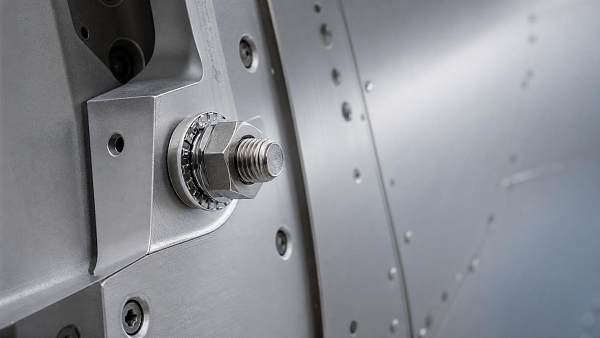
This may involve self-locking nuts, prevailing torque features, safety wire provisions, castellated arrangements, thread-locking systems, or specialized washers and retention devices. The goal is not merely to resist rotation at assembly, but to preserve joint integrity through operational stress.
Importantly, aerospace locking solutions are selected based on application environment. A locking method suitable for a moderate-temperature structure may not work near an engine or in a highly maintainable access zone. Some systems are optimized for reusability, others for maximum security, and others for inspection visibility.
That is why evaluating locking performance requires more than asking whether a fastener is “vibration resistant.” Decision-makers should ask how the locking method behaves under temperature extremes, repeated maintenance cycles, lubricant variation, and long-term service exposure.
What role do fatigue and thermal cycling play?
Fatigue is one of the defining reasons Aerospace Fasteners are different. A fastener may never see a load high enough to cause immediate overload failure, yet still crack over time due to repeated stress cycles. This is especially relevant in aircraft structures and propulsion-related assemblies.
The joint design must therefore control preload, stress distribution, fit, and movement to reduce cyclic damage. Aerospace-grade fasteners are often selected and tested with fatigue performance as a central concern rather than a secondary consideration.
Thermal cycling adds another layer of complexity. Different materials expand and contract at different rates. If the fastener and the clamped components respond differently to temperature swings, preload can change substantially. In extreme cases, the joint may become too loose or overstressed.
This is why application-specific engineering matters. Aerospace Fasteners are often chosen not just for room-temperature strength, but for stable behavior across cold-soak conditions, elevated service temperatures, and repeated heating-cooling cycles over the operational life of the platform.
Why is traceability and certification such a big part of the value?
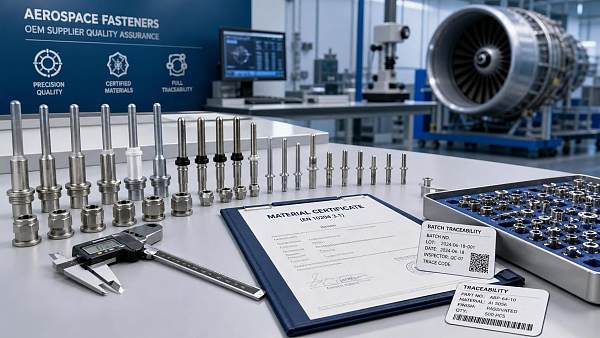
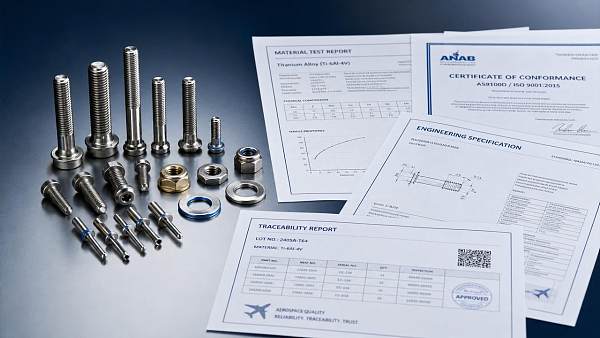
For critical components, traceability is not administrative paperwork. It is a risk-control mechanism. Aerospace Fasteners are expected to come with verifiable material certifications, process records, lot identification, inspection data, and compliance documentation linked to relevant standards and customer requirements.
If a field issue emerges, traceability allows users to isolate affected batches, review process history, assess root cause, and limit system-wide exposure. Without that documentation, even a minor anomaly can trigger costly uncertainty, broader inspections, or conservative replacement decisions.
Certification also supports qualification and procurement confidence. In highly regulated sectors, buyers need evidence that the fastener conforms to specified mechanical properties, dimensional requirements, finishing processes, and applicable aerospace or international standards.
For procurement and technical evaluation teams, this means the value of Aerospace Fasteners includes audit readiness. A cheaper part with weak documentation can become more expensive when program approval, customer acceptance, or post-incident investigation requires defensible records.
How should researchers evaluate Aerospace Fasteners for critical joints?
If the goal is meaningful comparison, start with the joint function rather than the catalog description. Ask what happens if preload drifts, if temperature rises, if corrosion begins, or if the assembly is opened and reinstalled multiple times. A suitable fastener must match the real service profile, not just the drawing dimensions.
Next, review the technical stack behind the part. This includes base material, heat treatment, coating or surface finish, dimensional tolerance class, locking method, fatigue considerations, and installation requirements. A strong result in one category cannot compensate for a weakness in another.
Then assess supplier discipline. Can the supplier provide lot traceability, conformity records, inspection consistency, and standard alignment? Do they understand aerospace application risk, or are they simply offering a high-strength fastener into an aerospace conversation?
Finally, evaluate lifecycle economics. Aerospace Fasteners often cost more upfront, but the relevant comparison is not unit price alone. It is the total cost of reliability: reduced inspection burden, lower rework risk, less unscheduled downtime, stronger certification support, and fewer field failures.
What are common mistakes when comparing fasteners for high-reliability assemblies?
One common mistake is treating tensile strength as the main indicator of suitability. Strength matters, but critical-joint performance depends equally on fatigue resistance, preload retention, environmental compatibility, and installation behavior. A stronger fastener on paper may still be the wrong technical choice.
Another mistake is overlooking the interaction between fastener, coating, and joint material. Galvanic corrosion, galling, and lubricant sensitivity can all affect long-term performance. These issues may not appear in a simple specification table, but they strongly influence real-world reliability.
Buyers also sometimes underestimate the value of process control and traceability. Two parts with similar dimensions may look interchangeable, yet differ significantly in heat-treatment consistency, surface integrity, inspection rigor, and documentation quality. In critical joints, those differences matter.
A final mistake is focusing only on procurement convenience. In aerospace and adjacent high-consequence sectors, component decisions should be made with engineering, quality, and compliance input. Fastener selection is rarely just a sourcing exercise when the joint is critical.
Why this matters beyond aerospace alone
Although the term Aerospace Fasteners points to aircraft and space systems, the lessons apply broadly to any high-consequence environment. Industries such as defense, advanced hydraulics, energy, precision automation, and high-performance transportation also rely on joints where failure tolerance is extremely low.
That is why aerospace-grade thinking has become increasingly relevant across global manufacturing. As supply chains fragment and uptime targets rise, more organizations are using aerospace-level criteria to evaluate fasteners for vibration-heavy, high-pressure, or safety-sensitive assemblies.
For technical researchers, this makes aerospace fastener knowledge especially useful. It provides a disciplined framework for comparing not only products, but also suppliers, quality systems, and long-term reliability strategies in any mission-critical procurement context.
Conclusion: what truly makes Aerospace Fasteners different?
Aerospace Fasteners are different because they are engineered for controlled performance in joints where uncertainty is unacceptable. Their distinction comes from the combination of advanced materials, tight tolerances, reliable locking behavior, fatigue-aware design, environmental resistance, and full traceability.
For critical joints, the question is not whether a fastener can simply fit or hold at installation. The question is whether it can maintain clamp load, resist degradation, support certification, and perform predictably over time under real operating stress. That is the standard aerospace applications demand.
For information-led decision-makers, the best evaluation approach is to look beyond unit cost and headline strength. Compare the entire reliability package: material system, manufacturing precision, compliance evidence, and lifecycle risk. That is where the true value of Aerospace Fasteners becomes visible.
Recommended News
 Oct 12, 2026How to Specify Low-VOC Fastener Coatings for Corrosion Protection and ComplianceLow VOC fastener coating specification guide: balance corrosion resistance, torque control, VOC compliance, and supplier validation for reliable assemblies.● Dr. Aris Alloy
 Oct 08, 2026Selecting Precision Fasteners for Semiconductor Equipment Vacuum and Cleanroom ServicePrecision Fasteners for semiconductor equipment: learn how to select vacuum- and cleanroom-ready hardware for reliable preload, low contamination, and long-term serviceability.● Dr. Aris Alloy
 Oct 04, 2026Selecting Stainless Micro Screws for Corrosion Resistance and Precision AssemblyStainless micro screws guide: choose corrosion-resistant alloys, precision threads, and reliable drive designs for demanding assemblies. Explore key selection tips.● Dr. Aris Alloy
 Oct 04, 2026How Do You Verify Precision Fastener Tolerances From a Datasheet?How do I verify precision fastener tolerances from a datasheet? Learn the key checks for thread class, dimensions, coatings, materials, and inspection methods.● Dr. Aris Alloy
 Sep 15, 2026Selecting Threaded Rods for Construction: Load, Corrosion, and Code RequirementsThreaded rods for construction: learn how to match load paths, corrosion protection, installation details, and code requirements for safer, compliant connections.● Dr. Aris Alloy
 Aug 16, 2026What Makes a High Strength Alloy Suitable for Aerospace Parts?High strength alloy for aerospace selection depends on more than tensile strength. Learn how fatigue, corrosion, heat, and manufacturability determine safer, lighter parts.● Dr. Aris Alloy
 Jul 26, 2026How Strong Are 3D Printed Fasteners in Load-Bearing Assemblies?3d printed fastener strength explained for load-bearing assemblies: learn where printed bolts work, where they fail, and how to choose safer, smarter fastening options.● Dr. Aris Alloy
 Jul 22, 2026How to Evaluate a Blind Bolt Custom OEM Partner for Aerospace Fastener ProjectsBlind bolt custom OEM sourcing for aerospace demands more than price. Learn how to assess quality systems, material traceability, engineering support, and supply stability before choosing a partner.● Dr. Aris Alloy
 Jul 18, 2026Salt Spray Hours for Fasteners: How to Compare Coatings and Corrosion ResistanceSalt spray hours fasteners explained: compare coatings, test limits, and real corrosion resistance to choose the right finish for longer service life and smarter sourcing.● Dr. Aris Alloy
 Jul 15, 2026Precision Fasteners Cost Factors: Materials, Tolerances, Finishes, and Order VolumePrecision Fasteners cost factors explained: compare materials, tolerances, finishes, and order volume to reduce sourcing risk, control total cost, and make smarter buying decisions.● Dr. Aris Alloy
 Jul 14, 2026How to Read a Titanium Alloy Weight Chart for Fastener and Aerospace Part SelectionTitanium alloy weight chart guide for fastener and aerospace part selection. Learn how to compare grade, density, dimensions, and standards to reduce sourcing risk.● Dr. Aris Alloy
 Jul 12, 2026How to Read Fastener Vibration Test Data for Joint Reliability DecisionsFastener vibration test data explained for smarter joint reliability decisions. Learn how to assess preload loss, residual clamp load, and test validity before sourcing or design approval.● Dr. Aris Alloy
 Jul 09, 2026Fastener Coating Cost Breakdown: What Changes Price by Material, Finish, and VolumeFastener coating cost explained: see how material, finish, volume, geometry, and compliance affect pricing, and learn how to compare quotes smarter while controlling total sourcing cost.● Dr. Aris Alloy
 Jul 06, 2026Self Tapping Industrial Screws: Types, Materials, and When to Use EachSelf tapping Industrial Screws guide: compare thread-forming, thread-cutting, and self-drilling types, materials, and best-use scenarios to choose faster, stronger, more reliable assemblies.● Dr. Aris Alloy
 Jul 05, 2026High-Tensile Bolts ASTM: How to Read Grades, Strength Classes, and Spec RequirementsHigh-Tensile Bolts ASTM guide: learn how to read grades, strength classes, specs, markings, and certificates to avoid sourcing mistakes and choose compliant bolts with confidence.● Dr. Aris Alloy
 Jul 04, 2026Stainless Automotive Fasteners Manufacturer: What Certifications and Materials Matter Most?Stainless automotive fasteners manufacturer selection starts with certifications, traceability, and the right alloys. Learn what matters most for reliable, compliant sourcing.● Dr. Aris Alloy
 Jul 03, 2026Fastener Price Trend 2026: What Steel Costs, Freight, and Demand Mean for BuyersFastener price trend 2026 explained: see how steel costs, freight volatility, and uneven demand may affect budgets, lead times, and sourcing decisions—so buyers can plan smarter.● Dr. Aris Alloy
 Jul 02, 2026Why Smart Fastener Battery Life Drops Early and How to Extend Service IntervalsSmart fastener battery life dropping too soon? Learn the real causes behind early drain and discover practical ways to extend service intervals without sacrificing monitoring accuracy.● Dr. Aris Alloy
 Jun 28, 2026Marine Grade Stainless Corrosion: What Causes It and How to Prevent Tea StainingMarine grade stainless corrosion often starts with tea staining. Learn the real causes, high-risk environments, and practical prevention steps to protect performance and cut lifecycle costs.● Dr. Aris Alloy
 Jun 26, 2026How to Choose Vibration-Resistant Fasteners for Aerospace AssembliesVibration-Resistant Fasteners for aerospace help protect critical assemblies from loosening, corrosion, and fatigue. Learn how to choose the right solution for safer, longer-lasting performance.● Dr. Aris Alloy
 Jun 23, 2026Fastener Hardness Explained: When to Use Rockwell vs Vickers TestingFastener hardness (Rockwell/Vickers) explained: learn when to use Rockwell for fast production checks and Vickers for precise surface analysis to improve quality, compliance, and reliability.● Dr. Aris Alloy
 Jun 15, 2026Wholesale Aerospace Fasteners: Specs, Materials, and Certifications Buyers Should CheckWholesale aerospace fasteners buyers should verify specs, material traceability, and certifications before ordering. Learn the key checks to reduce risk and source with confidence.● Dr. Aris Alloy
 Jun 07, 2026Instrument Cases Buying Guide: Hard vs Soft Cases, Protection Ratings, and FitInstrument cases buying guide: compare hard vs soft cases, understand IP protection ratings, and choose the right fit to protect sensitive equipment, reduce downtime, and buy with confidence.● Dr. Aris Alloy
 Jun 06, 2026How Global Construction Fastener Tenders Work: Bid Requirements, Specs, and Common RisksGlobal construction fastener tenders explained: learn bid requirements, key specs, compliance checks, and common risks to improve tender decisions and avoid costly project delays.● Dr. Aris Alloy