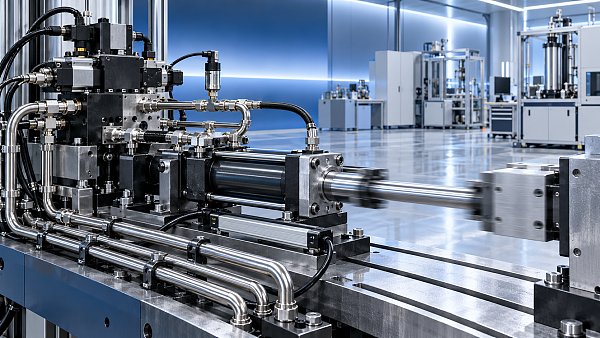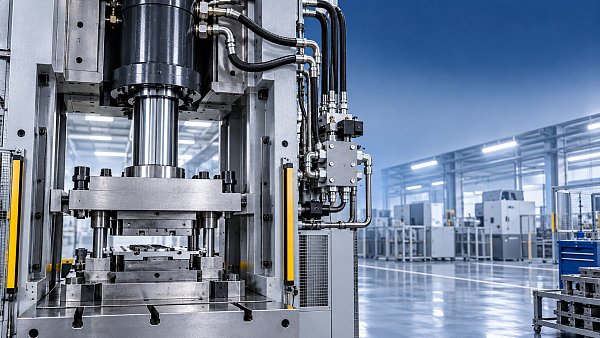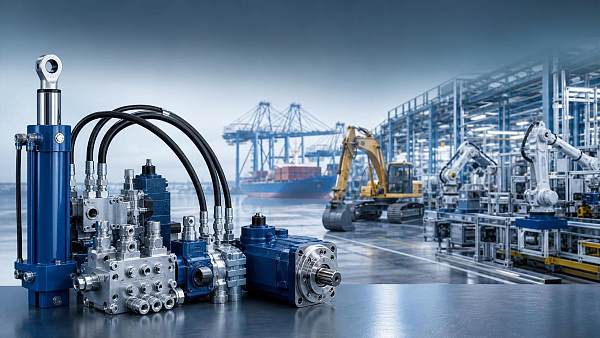
Hydraulic automation in construction news matters because it signals how job sites are becoming safer, faster, and more data-driven.
For information researchers tracking industrial transformation, these updates reveal more than equipment trends or isolated machinery announcements.
They highlight shifts in supply-chain resilience, component reliability, energy efficiency, compliance expectations, and critical infrastructure delivery models.
From intelligent hydraulic cylinders to automated lifting and earthmoving systems, each development reflects broader changes in global construction ecosystems.
What Searchers Really Want to Understand
Most readers searching for hydraulic automation in construction news are not looking for a basic definition of hydraulics.
They want to know why recent developments matter, which technologies are maturing, and how these changes affect operational decisions.
Information researchers often compare suppliers, monitor industrial risk, track regulatory movement, and identify technologies approaching commercial adoption.
Their core question is practical: does hydraulic automation indicate a meaningful shift in construction productivity and asset reliability?
The short answer is yes, but the value depends on component quality, integration depth, data capability, and maintenance readiness.
Hydraulic automation is not simply about replacing manual control with electronic commands or software-enabled machine movement.
It combines fluid power, sensors, controllers, predictive analytics, machine safety systems, and increasingly connected supply-chain intelligence.
That combination makes construction equipment more precise, more measurable, and potentially more resilient under demanding site conditions.
Why Hydraulic Automation Has Become a Construction Signal
Construction has historically relied on powerful hydraulic systems because they deliver high force density in compact mechanical designs.
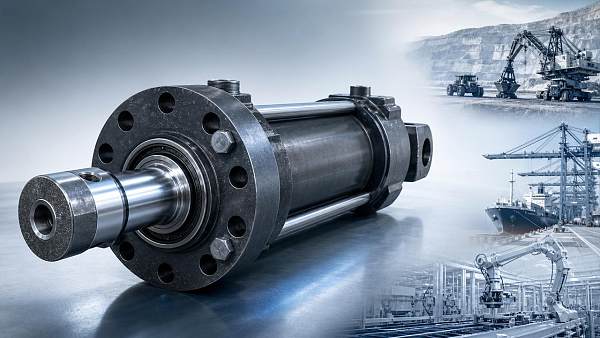
Excavators, cranes, loaders, piling rigs, tunnel-boring support systems, and lifting platforms all depend on hydraulic performance.
What is changing now is the intelligence layer being added to these traditionally rugged systems.
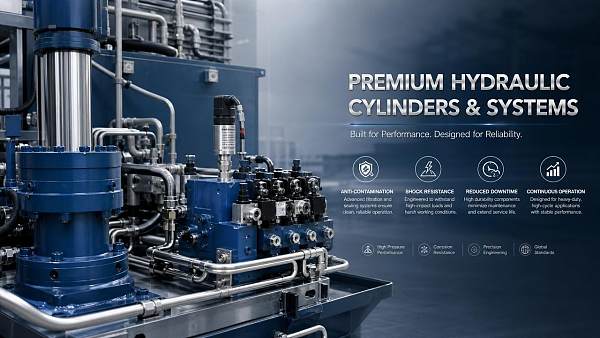
Automated valves, smart cylinders, pressure sensors, electronic control units, and remote diagnostics are turning hydraulic assets into data sources.
This matters because construction projects face tighter schedules, labor constraints, safety demands, and stricter documentation requirements.
Automated hydraulic systems can support repeatable motion, controlled load handling, improved positioning, and condition-based maintenance planning.
For researchers, news about these systems often indicates where the construction industry is investing beyond conventional fleet expansion.
It also reveals which manufacturers, component suppliers, and system integrators are positioning themselves for next-generation infrastructure work.
The Safety Value Behind the Headlines
Safety is one of the strongest reasons hydraulic automation in construction news deserves serious attention.
Many construction injuries occur during lifting, excavation, repetitive positioning, heavy material movement, or work near unstable loads.
Automated hydraulic controls can reduce operator exposure by improving precision and enabling remote or semi-autonomous operation.
Load-sensing circuits, overload protection, automatic leveling, collision avoidance, and emergency shutdown logic all reduce uncontrolled movement risks.
These improvements are especially relevant in cranes, aerial platforms, demolition equipment, and underground construction machinery.
However, safety benefits depend on more than adding sensors or software to existing hydraulic equipment.
Systems must be engineered with functional safety principles, fail-safe modes, validated controls, and proper operator training.
Researchers should therefore evaluate whether news reports mention standards, testing, certification, and field performance data.
A headline announcing automation is less meaningful than evidence showing reduced incidents, improved control accuracy, or verified safety compliance.
Productivity Gains Are Real, but They Are Not Automatic
Productivity is another reason construction stakeholders follow hydraulic automation developments closely.
Automated hydraulic functions can shorten cycle times, improve grading accuracy, stabilize lifting operations, and reduce rework.
In earthmoving, automated blade or bucket control can help operators reach target profiles with fewer passes.
In lifting applications, automated hydraulic synchronization can improve load balance and reduce time spent on manual adjustment.
In tunneling or foundation work, controlled hydraulic pressure and movement help maintain repeatability under variable ground conditions.
Yet productivity gains are not guaranteed simply because a machine includes automated hydraulic features.
Benefits depend on site planning, operator acceptance, machine calibration, hydraulic cleanliness, component durability, and software reliability.
Researchers should look for data on fuel consumption, project cycle time, downtime, labor allocation, and quality outcomes.
The most valuable news connects technical features with measurable field results rather than relying on promotional claims.
Component Reliability Is the Hidden Story
Behind every automated hydraulic system is a chain of critical components that determine whether automation performs consistently.
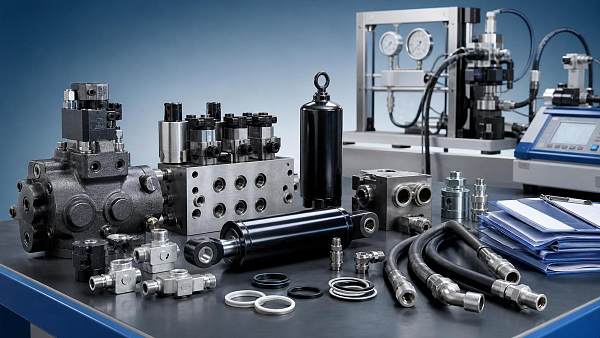
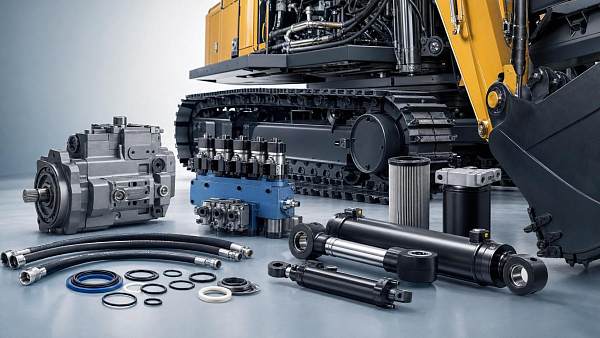
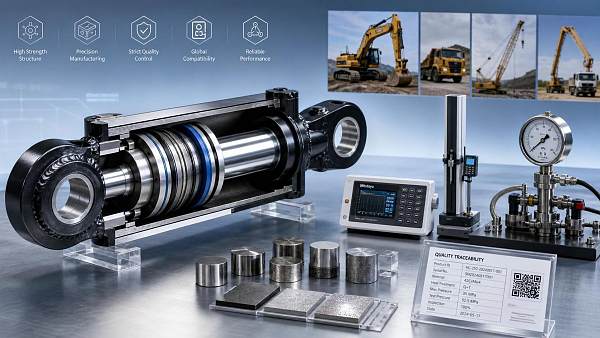
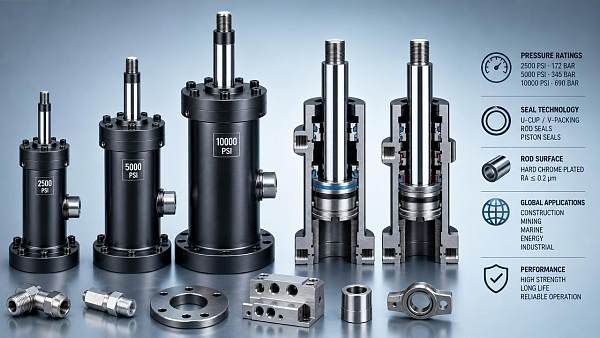
High-pressure cylinders, proportional valves, servo valves, pumps, hoses, seals, accumulators, sensors, connectors, and controllers all matter.
If one component fails, the automated function may lose precision, stop operating, or create operational risk.
This is why component reliability is central to interpreting hydraulic automation in construction news.
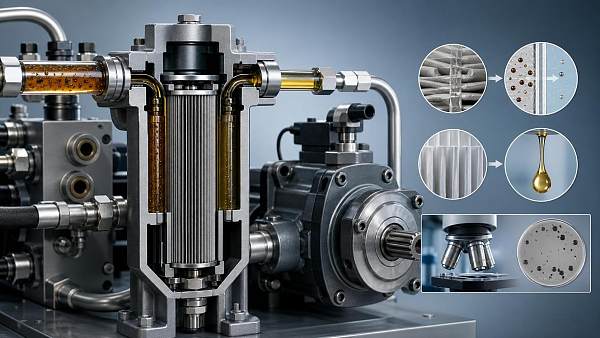
Automation increases performance expectations, but it can also increase sensitivity to contamination, heat, vibration, and poor maintenance.
For example, proportional valves may deliver excellent control, yet require stable fluid cleanliness and correct calibration.
Smart cylinders may provide valuable position feedback, but sensor robustness must match shock, moisture, and temperature exposure.
Information researchers should investigate supplier track records, international standards, failure modes, and spare parts availability.
In high-value construction projects, the reliability of micro-components often shapes the uptime of entire work packages.
Why Supply-Chain Intelligence Matters
Hydraulic automation also matters because construction equipment increasingly depends on specialized global supply chains.
Advanced valves, electronic controllers, aerospace-grade fasteners, sealing materials, and precision machined parts may cross multiple borders.
Trade restrictions, raw material price volatility, semiconductor shortages, and logistics delays can affect equipment delivery schedules.
For large infrastructure projects, delayed hydraulic components can create expensive downstream consequences.
This makes hydraulic automation in construction news relevant to procurement directors and strategic sourcing teams.
They need to know which suppliers have resilient manufacturing capacity, quality systems, and regional service networks.
They also need visibility into steel, nickel, titanium, rubber compound, and electronic component markets.
Automation may improve site performance, but only if the supply chain can support installation, maintenance, and replacement parts.
Reliable reporting should therefore examine supplier depth, certification status, inventory strategy, and geopolitical exposure.
Energy Efficiency and Emissions Are Becoming Decisive
Hydraulic systems are powerful, but traditional designs can waste energy through throttling losses, heat generation, and inefficient duty cycles.
Automation creates opportunities to reduce these losses by matching flow, pressure, and actuator movement more intelligently.
Load-sensing hydraulics, electro-hydraulic control, variable displacement pumps, energy recovery, and optimized duty cycles can improve efficiency.
These improvements matter as construction companies face fuel costs, emissions targets, and environmental reporting requirements.
Hydraulic automation can also support hybrid and electric construction equipment by improving power management.
When battery capacity is limited, efficient hydraulic control becomes crucial for practical operating time.
News about automated hydraulic systems should therefore be evaluated against real energy data, not only engineering ambition.
Useful indicators include lower idle time, reduced fuel consumption, thermal stability, longer maintenance intervals, and improved energy recovery.
Compliance, Standards, and Documentation Are Raising the Bar
Construction automation is increasingly shaped by safety standards, machine directives, emissions rules, and digital documentation expectations.
Hydraulic automation intersects with mechanical safety, electrical control, software validation, pressure equipment requirements, and operator training.
This creates a compliance environment more complex than conventional hydraulic machinery procurement.
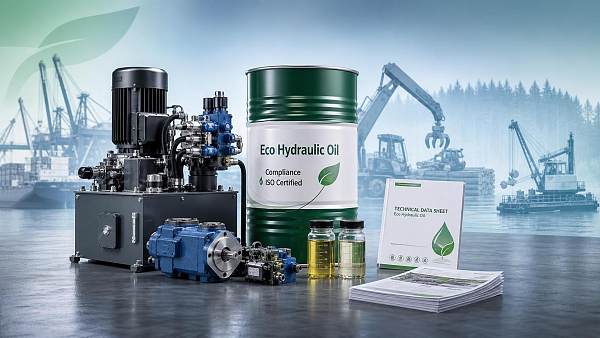
Researchers should look for references to ISO, DIN, ASME, IEC, SAE, and regional safety regulations.
They should also assess whether manufacturers provide traceability for critical components and validated test data.
Digital maintenance records, pressure logs, fault histories, and software version control are becoming increasingly important.
For contractors working on public infrastructure, documentation can influence insurance, audits, warranty claims, and project acceptance.
A supplier offering automation without transparent compliance evidence may create hidden risk for buyers and integrators.
How to Read Hydraulic Automation News Critically
Not every announcement deserves equal weight, so information researchers need a structured way to judge relevance.
The first question is whether the reported development is commercial, pilot-stage, prototype-based, or only conceptual.
The second question is whether the automation improves safety, productivity, efficiency, reliability, or compliance in measurable ways.
The third question is whether the system depends on proprietary components that may create sourcing limitations.
The fourth question is whether field data supports claims made by manufacturers, contractors, or technology vendors.
Strong news usually includes operational metrics, named project applications, test conditions, standards alignment, and supplier accountability.
Weak news often relies on broad promises, vague sustainability language, or generic references to artificial intelligence.
A critical reading approach helps separate genuine industrial transformation from routine product marketing.
What Technologies Deserve Close Monitoring
Several technology areas are especially important for researchers tracking hydraulic automation in construction news.
Electro-hydraulic control is central because it bridges hydraulic force with digital command and feedback systems.
Smart cylinders with integrated position sensing are important for automated grading, lifting synchronization, and repeatable movement control.
Proportional and servo valves matter because they influence precision, response speed, stability, and overall control quality.
Predictive maintenance platforms are also significant because they translate pressure, temperature, vibration, and flow data into maintenance decisions.
Remote operation and semi-autonomous machine control deserve attention where labor shortages or hazardous conditions are persistent challenges.
Hydraulic energy recovery systems are increasingly relevant as electrification reshapes expectations for heavy equipment performance.
Researchers should track not only headline technologies, but also enabling components that determine real-world reliability.
Implications for Contractors and Project Owners
For contractors, hydraulic automation can improve bidding confidence when productivity and safety gains are credible.
More predictable machine performance can support tighter schedules, better resource planning, and reduced dependence on highly specialized operators.
For project owners, automation may improve documentation, quality control, and risk management across complex infrastructure programs.
However, adoption requires careful assessment of total cost, workforce readiness, maintenance capability, and supplier support.
Equipment with advanced hydraulic automation may cost more upfront, especially when integrated with digital control systems.
The return on investment depends on utilization rate, downtime reduction, fuel savings, labor efficiency, and avoided rework.
High-repeatability applications usually offer stronger value than occasional or highly variable tasks with limited machine hours.
Decision-makers should match automation investment to project type, operating environment, and long-term fleet strategy.
Implications for Suppliers and System Integrators
For suppliers, hydraulic automation creates opportunities, but also raises expectations for engineering credibility.
Component manufacturers must demonstrate precision, durability, contamination resistance, pressure stability, and compatibility with digital controls.
System integrators must ensure mechanical, hydraulic, electronic, and software elements work together under site conditions.
They also need to support diagnostics, training, commissioning, and lifecycle service rather than only selling equipment packages.
In a fragmented supply environment, buyers will favor partners with verified quality systems and transparent technical documentation.
Suppliers able to benchmark products against international standards will gain credibility with global industrial clients.
The strongest market positions will belong to companies combining rugged hardware, intelligent software, and dependable service networks.
Hydraulic automation news therefore provides useful clues about which firms are building durable competitive advantages.
Common Risks That Should Not Be Ignored
Hydraulic automation introduces risks that must be managed from design through operation.
Cybersecurity becomes relevant when equipment connects to remote monitoring platforms or cloud-based fleet systems.
Software faults, sensor drift, poor calibration, contaminated fluid, and untrained operators can undermine promised benefits.
Overdependence on a single proprietary supplier can also create spare parts and service vulnerabilities.
Another concern is mismatch between automation complexity and the realities of harsh construction environments.
Dust, mud, impact loads, temperature swings, water ingress, and irregular maintenance can challenge delicate electronic subsystems.
Successful implementation requires robust design, field testing, preventive maintenance, and practical operator interfaces.
News coverage is most useful when it acknowledges these risks instead of presenting automation as effortless progress.
What Information Researchers Should Track Next
Researchers should monitor equipment launches, field trials, component partnerships, standards updates, and infrastructure project deployments.
They should compare regional adoption patterns because labor markets, regulations, emissions targets, and capital availability differ widely.
It is also useful to track mergers, supplier expansions, and strategic agreements between hydraulic firms and automation software providers.
Raw material trends deserve attention because hydraulic systems depend on metals, elastomers, precision machining, and electronics.
Patent activity can reveal where companies are investing in control algorithms, actuator design, and energy recovery systems.
Service network announcements can be as important as product launches because uptime depends on local technical support.
Researchers should create a framework linking technology maturity, commercial adoption, component risk, and measurable project value.
This approach turns scattered news into actionable intelligence for procurement, strategy, and industrial benchmarking.
Conclusion: Why This News Deserves Serious Attention
Hydraulic automation in construction news matters because it reflects a deeper transformation in how heavy work is planned and executed.
It connects machinery performance with safety, productivity, energy efficiency, compliance, supply-chain resilience, and digital decision-making.
For information researchers, the real value lies in interpreting what each development reveals about industrial readiness.
The most important stories are not merely about smarter machines, but about reliable systems operating under demanding conditions.
Readers should focus on evidence, standards, component quality, supplier capability, and measurable field outcomes.
When assessed carefully, hydraulic automation news becomes a strategic lens into the future of construction infrastructure delivery.