Hot Articles
Popular Tags
Do rotating jewelry displays really boost sales?
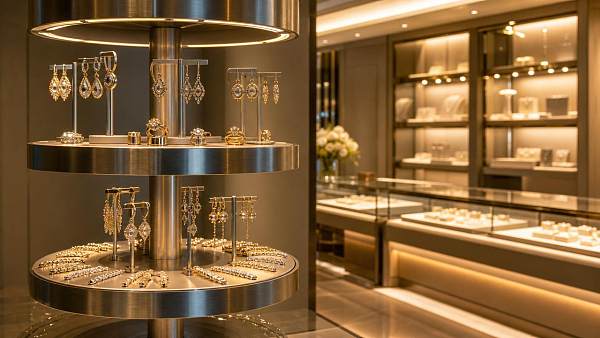
Do rotating jewelry displays really boost sales, or are they just an attractive retail accessory? The answer depends on visibility, behavior, layout, and product positioning.
Rotating jewelry displays can increase exposure by presenting many items in a compact footprint. They also encourage browsing and impulse interest.
Their value becomes measurable when display design matches shopper flow, lighting, inventory strategy, and category margins.
When rotating jewelry displays create real sales lift
Rotating jewelry displays work best when customers need fast visual comparison. Earrings, charms, rings, bracelets, and small gift items benefit most.
The rotating motion reveals more stock without asking customers to open drawers, request trays, or wait for assistance.
This matters in busy retail spaces where attention is short. A compact display can turn passive foot traffic into active browsing.
However, rotating jewelry displays do not automatically increase revenue. Poor lighting, overcrowded hooks, and confusing price zones can reduce trust.
The strongest results appear when the display supports a clear buying journey, not just a decorative store corner.
Scene background: why merchandising context changes the answer
Sales impact varies because jewelry purchases are emotional, visual, and highly comparison-driven. Small changes in access can change selection behavior.
Rotating jewelry displays create a miniature discovery system. They can compress assortment depth into a smaller selling zone.
In a mall kiosk, that compactness may increase transactions. In a luxury boutique, the same approach may lower perceived exclusivity.
A useful evaluation starts with the scene. The question is not whether movement sells, but where movement supports decision-making.
This scene-based view also reflects broader commercial intelligence. Space, inventory turnover, labor availability, and product reliability must align.
Gift-focused counters: where browsing speed matters
Gift shoppers often enter with loose intent. They may know the budget, but not the exact item.
Rotating jewelry displays help by showing many styles quickly. The customer can compare colors, shapes, and price points in seconds.
This scene favors accessible items such as birthstone earrings, pendant cards, charm sets, and seasonal pieces.
The core judgment point is choice clarity. Too many mixed categories can make the display feel like clearance rather than curated gifting.
For gift zones, rotating jewelry displays should group items by occasion, price band, or recipient style.
Impulse zones: when movement increases stopping power
Checkout lines, entrance tables, and waiting areas often reward compact presentation. These spaces depend on quick attraction.
Rotating jewelry displays can capture peripheral attention because movement breaks visual stillness. Customers notice shape changes as the fixture turns.
The best products are affordable, easy to understand, and low-risk. Stud earrings, hair accessories, and stackable rings fit this scene.
The judgment point is friction. If customers must ask too many questions, impulse momentum disappears.
Use simple price tags, visible materials, and clear return messaging. Rotating jewelry displays should reduce hesitation, not create inspection anxiety.
Boutique storytelling: when rotation should be selective
Boutiques need atmosphere, not only exposure. Here, rotating jewelry displays must support a story of craftsmanship and taste.
A slow-turning display can highlight a capsule collection, designer theme, or material story. It gives the eye time to appreciate detail.
Fast, crowded rotation may damage premium perception. Expensive pieces need breathing room, focused lighting, and controlled touch access.
The core judgment point is brand fit. Rotating jewelry displays should feel intentional, not like a convenience rack.
For boutique scenes, choose fewer items per tier. Pair rotation with cards explaining stones, finishes, or limited availability.
Trade shows and pop-ups: when compact exposure is critical
Temporary retail has a different constraint: limited time, limited space, and unpredictable visitor flow.
Rotating jewelry displays are useful because they create vertical assortment without requiring large counters or permanent fixtures.
At trade shows, the display can support quick scanning. Visitors understand variety before deciding whether to stop.
The judgment point is transport durability. A fixture that wobbles, scratches, or jams can damage both products and confidence.
Reliable bearings, stable bases, replaceable hooks, and secure packaging matter. These details connect merchandising to broader component quality.
Self-service retail: when access must balance security
Self-service jewelry selling needs access, but also loss control. The fixture must invite browsing without exposing excessive risk.
Rotating jewelry displays can organize many SKUs while keeping sightlines open. Staff can monitor movement from several angles.
Lockable rotating cases work for higher-value items. Open spinners fit lower-value accessories with high turnover.
The judgment point is product value versus handling need. Touch improves confidence, but uncontrolled access can increase shrinkage.
Use open rotating jewelry displays for affordable fashion pieces. Use covered or assisted formats for fine jewelry and limited editions.
Different scene requirements for rotating jewelry displays
How to judge whether the display is improving sales
A sales lift should be measured, not assumed. Rotating jewelry displays need the same discipline used for any retail asset.
Track performance before and after placement. Compare the same category, price band, and traffic period.
- Sales per square foot or per fixture footprint.
- Units sold per displayed SKU.
- Customer dwell time near the display.
- Attachment rate with other purchases.
- Stockout frequency and replenishment speed.
Rotating jewelry displays often look successful because they attract attention. Revenue data confirms whether attention becomes conversion.
Scene adaptation recommendations that improve results
Start with the role of the merchandise. Do not place every jewelry category on the same spinning fixture.
- Use vertical rotation for lightweight earrings, charms, and carded accessories.
- Use enclosed rotation for higher-value rings, pendants, or limited pieces.
- Keep premium products spaced apart to protect perceived value.
- Place high-margin items at eye level and hand level.
- Align lighting so sparkle appears from multiple viewing angles.
Rotating jewelry displays also need operational planning. Replenishment, cleaning, security checks, and SKU rotation should be scheduled.
A display that is half empty suggests weak demand. A crowded display suggests low curation.
Common misjudgments that weaken performance
The first mistake is treating rotating jewelry displays as universal solutions. They help visibility, but cannot fix weak product-market fit.
The second mistake is ignoring fixture mechanics. Uneven rotation, noisy movement, unstable bases, and poor hook spacing reduce confidence.
The third mistake is using rotation where stillness performs better. Luxury items often need calm presentation and guided explanation.
The fourth mistake is mixing incompatible price levels. A premium necklace beside very cheap accessories can weaken perceived value.
The fifth mistake is failing to connect display data with inventory decisions. Strong browsing without replenishment creates missed revenue.
Operational details that connect displays with supply reliability
Retail fixtures are part of a wider commercial system. Their performance depends on materials, hardware, logistics, and maintenance quality.
Stable bearings, durable coatings, precise joints, and strong fasteners influence daily reliability. Poor components create downtime and product damage.
For rotating jewelry displays used across multiple locations, standardization matters. Consistent fixture dimensions simplify packaging, stocking, and visual merchandising.
Data also matters. Sales by display position can reveal which tiers, colors, materials, and price bands perform best.
This connects merchandising with intelligent supply-chain thinking. The display becomes a source of demand signals, not just a shelf.
So, do rotating jewelry displays really boost sales?
Yes, rotating jewelry displays can boost sales when they solve a specific scene problem. They improve exposure, access, and comparison speed.
They are most effective for compact assortments, impulse categories, gifting zones, and temporary selling environments.
They are less effective when they overcrowd premium products, create security risks, or distract from a refined brand experience.
The practical answer is conditional. Rotating jewelry displays boost sales when the fixture, product, traffic path, and measurement method align.
Action guide for the next merchandising decision
Before investing, select one target scene and one category. Test rotating jewelry displays against a static alternative for a defined period.
Measure sales, dwell time, replenishment frequency, and shrinkage. Review whether the display improves both engagement and operational control.
If results are positive, expand gradually by category and location. Keep design standards consistent while adapting assortment to each scene.
The strongest strategy treats rotating jewelry displays as measurable retail infrastructure. When matched to the right scenario, they can become a reliable sales driver.
Recommended News
 Sep 29, 2026Dense-Phase Pneumatic Conveying Applications: Build the Line Around the Material, Not the PipeAn application guide to dense-phase pneumatic conveying, covering bulk-material behavior, routing, air supply, feed and discharge points, wear control, commissioning, and operating records.● Dr. Victor Gear
 Oct 09, 2026When smart conveyance improves throughput in mixed-product linesSmart conveyance boosts mixed-product line throughput with dynamic routing, smarter buffers, and real-time production data. Discover when it delivers measurable results.● Dr. Victor Gear
 Oct 05, 2026Which IEEE Standards Matter for Industrial Automation Projects?Which IEEE standards matter for industrial automation projects? Explore key standards for Ethernet, Wi-Fi, cybersecurity, timing, and power quality to reduce risk.● Dr. Victor Gear
 Sep 18, 2026Selecting an Overhead Conveyor System for North American Plant LayoutsOverhead conveyor North America guide: choose the right system for plant layouts, throughput, safety, maintenance access, and scalable growth.● Dr. Victor Gear
 Sep 11, 2026How to Specify an Automated Sorting System for E-Commerce Peak-Season ThroughputAutomated sorting system for ecommerce: learn how to specify peak-season throughput, parcel flow, induction, exceptions, and resilience to protect carrier cut-offs.● Dr. Victor Gear
 Sep 07, 2026Application Guidance for Smart Devices in Industrial Automation ProjectsApplication Guidance for smart devices in industrial automation: select, integrate, secure, and maintain connected equipment for reliable control and measurable performance.● Dr. Victor Gear
 Aug 29, 2026How to Qualify an Overhead Conveyor Supplier for a New Production LineOverhead conveyor supplier qualification guide: assess capacity, safety, controls, installed scope, and lifecycle support to reduce production-line risk.● Dr. Victor Gear
 Jul 20, 2026How to Choose an Overhead Conveyor for Assembly Lines: Key Factors and Use CasesOverhead conveyor for assembly selection starts with load, layout, buffering, and maintenance. Explore key factors and real use cases to choose a safer, more efficient assembly line system.● Dr. Victor Gear
 Jul 13, 2026Warehouse Execution Systems for Distribution Centers: Key Functions and Fit CriteriaWarehouse Execution Systems for distribution centers: explore key functions, WMS vs. WES differences, fit criteria, and how to improve flow, labor balance, and automation performance.● Dr. Victor Gear
 Jul 06, 2026Pallet Shuttle Systems Radio Shuttle vs Forklift Racking: Which Saves More Space?Pallet Shuttle Systems radio shuttle vs forklift racking: discover which saves more warehouse space, boosts density, and delivers better ROI for your storage model.● Dr. Victor Gear
 Jul 05, 2026Automated Sorting System Price Breakdown: What Drives Cost in Warehouse Projects?Automated sorting system price explained: discover the real warehouse cost drivers, hidden risks, and how to compare quotes wisely before you invest.● Dr. Victor Gear
 Jul 02, 2026How to Choose a Spiral Conveyor in the Middle East for Food and Beverage PlantsSpiral conveyor Middle East selection guide for food and beverage plants: compare hygiene, heat resistance, throughput, and local service to choose a reliable, space-saving solution.● Dr. Victor Gear
 Jun 27, 2026How to Choose a Spiral Conveyor Supplier for Food, Packaging, and Warehouse LinesSpiral conveyor supplier selection guide for food, packaging, and warehouse lines. Compare hygiene, engineering, integration, and lifecycle cost to choose with confidence.● Dr. Victor Gear
 Jun 23, 2026Modular Office Workstations: How to Plan Layouts for Growing TeamsModular office workstations help growing teams plan flexible layouts that improve workflow, save space, and support future expansion with less disruption.● Dr. Victor Gear
 Jun 21, 2026Commercial Food Processors Explained: Types, Capacities, and Best Uses by Kitchen VolumeCommercial food processors explained by type, capacity, and kitchen volume. Compare batch, continuous-feed, and combo models to choose the best fit for faster, smarter prep.● Dr. Victor Gear
 Jun 20, 2026How to Choose Commercial Floor Scrubbers for Warehouses, Retail Stores, and FacilitiesCommercial floor scrubbers buying guide for warehouses, retail stores, and facilities. Compare types, runtime, drying, maintenance, and sourcing factors to choose the right model.● Dr. Victor Gear
 Jun 12, 2026What Is System Integration for Smart Factories and Which Processes Should Be Connected First?System Integration for smart factories: learn which processes to connect first for faster decisions, less downtime, stronger traceability, and measurable ROI.● Dr. Victor Gear
 Jun 02, 2026System Integration Solutions for Factories: Scope, Risks, and ROI ChecksSystem Integration solutions for factories: define scope, reduce technical and commercial risks, and verify ROI before modernization spending accelerates.● Dr. Victor Gear
 May 31, 2026How to avoid hidden costs in conveyor rollers wholesaleConveyor rollers wholesale buyers: learn how to spot hidden costs in specs, bearings, freight, compliance, and suppliers to protect budget and uptime.● Dr. Victor Gear
 May 29, 2026Do rotating jewelry displays really boost sales?rotating jewelry displays can boost sales when matched to shopper flow, lighting, and product mix. Learn where they drive impulse buys, gifting, and retail ROI.● Dr. Victor Gear
 May 05, 2026What warehouse throughput efficiency data often gets wrongwarehouse throughput efficiency data often misses labor, compliance, and infrastructure risks. Learn how Strategic Sourcing best practices and ISO Compliance certification reshape smarter evaluations.● Dr. Victor Gear
 May 04, 2026How will 5G change real-time tracking systems in 2026?Impact of 5G on real-time tracking systems in 2026: see how Supply-Chain Orchestration tools drive Operational Uptime improvement, stronger Total Reliability standards, and smarter industrial visibility.● Dr. Victor Gear
![]() May 01, 2026Is 5G Real-Time Tracking Worth the Cost in Logistics?Impact of 5G on real-time tracking in logistics: assess cost, risk, and ROI with Supply-Chain Orchestration for manufacturing and Global Supply Chain management software.● Dr. Victor Gear
May 01, 2026Is 5G Real-Time Tracking Worth the Cost in Logistics?Impact of 5G on real-time tracking in logistics: assess cost, risk, and ROI with Supply-Chain Orchestration for manufacturing and Global Supply Chain management software.● Dr. Victor Gear![]() Apr 21, 2026Can 5G real-time tracking reduce loss in fast-moving goods?Impact of 5G on real-time tracking technology can cut loss in fast-moving goods by improving Operational Uptime, Supply-Chain Orchestration tools, and predictive response. Explore the ROI.● Dr. Victor Gear
Apr 21, 2026Can 5G real-time tracking reduce loss in fast-moving goods?Impact of 5G on real-time tracking technology can cut loss in fast-moving goods by improving Operational Uptime, Supply-Chain Orchestration tools, and predictive response. Explore the ROI.● Dr. Victor Gear