Hot Articles
Popular Tags
Industrial Manufacturing Bottlenecks That Hide in Plain Sight
In Industrial Manufacturing, the most costly disruptions often come from bottlenecks hidden inside System Integration, Flow Control, and overlooked compliance gaps in Industrial Standards. From High-Tensile Bolts to Autonomous Mobile Robots, small component failures can ripple across the Global Supply Chain, affecting Strategic Sourcing, uptime, and risk exposure. This article explores where these invisible constraints emerge and how ASME Standards and IEEE Standards help decision-makers detect, prevent, and outmaneuver them.
For researchers, operators, procurement teams, and enterprise leaders, the challenge is rarely a single dramatic breakdown. More often, hidden constraints build gradually across interfaces, tolerances, inspection routines, firmware compatibility, supplier substitutions, and incomplete documentation. A 2 mm alignment error, a delayed valve response of 150 ms, or a fastener delivered without full traceability can trigger downtime measured in hours, not minutes.
Across hydraulic systems, industrial fasteners, AMH fleets, flow metering assemblies, and AI-driven orchestration software, the same pattern appears: bottlenecks stay invisible until throughput drops, maintenance frequency rises, or compliance review stalls a shipment. That is why industrial resilience now depends on looking deeper than the main machine and auditing the supporting component ecosystem with equal discipline.
Where Hidden Manufacturing Bottlenecks Usually Begin
[[IMG:img_01]]Most bottlenecks do not originate at the largest asset on the production floor. They start at connection points between subsystems: a hydraulic actuator paired with an underspecified seal, an AMR fleet operating with unstable wireless handoff, or a metering device installed without recalibration after a pipe redesign. These issues often remain undetected during normal load but emerge when utilization exceeds 70% to 85% of line capacity.
In multi-vendor environments, each supplier may meet its own specification while the integrated system still underperforms. A cylinder may satisfy pressure requirements, a bolt may meet tensile strength targets, and a controller may pass bench testing, yet the combined assembly introduces vibration, signal lag, or uneven torque distribution. Industrial bottlenecks are frequently integration failures disguised as component compliance.
Another common source is the gap between design intent and operational reality. Engineers may design around nominal flow rates, but daily operations involve contamination, pressure spikes, variable ambient temperatures, and human handling differences. When a line designed for 120 units per hour repeatedly runs at 92 to 98 units, the bottleneck is often hidden in support systems rather than in the primary machine.
For procurement teams, the risk increases when sourcing decisions focus on unit price without lifecycle fit. A lower-cost connector with wider tolerance variation, or a substituted alloy exposed to corrosive washdown cycles, can shorten maintenance intervals from 12 months to 4 or 6 months. The immediate savings then become indirect losses through unplanned stoppage, excess inventory, and emergency replacement freight.
Typical hidden bottleneck zones
- Mechanical interfaces where torque, preload, vibration, and thermal expansion interact across 3 or more joined parts.
- Hydraulic and flow-control loops where contamination above acceptable micron levels reduces valve response and actuator precision.
- Digital communication layers where PLCs, sensors, AMRs, and orchestration software update at different rates, creating latency or data gaps.
- Compliance checkpoints where missing ASME, ISO, DIN, or IEEE documentation delays approval, export, installation, or insurance review.
The table below summarizes common bottleneck categories and the operational signals that usually appear before failure becomes visible.
The key conclusion is simple: hidden bottlenecks rarely announce themselves through a single catastrophic event. They first appear as small timing losses, inspection exceptions, or repeat maintenance tasks. Organizations that monitor these weak signals early are better positioned to preserve uptime and negotiate sourcing decisions from a position of control rather than urgency.
System Integration Failures That Look Like Ordinary Downtime
System integration is where industrial complexity becomes expensive. A production line may include hydraulic power units, precision fasteners, robotic transfer points, sensors, edge gateways, and scheduling software from 5 to 12 suppliers. Each layer can pass factory acceptance testing, yet the assembled line still suffers micro-stoppages, handoff errors, or repeated alarms that operators learn to ignore until output falls by 8% to 15%.
These failures are especially common in retrofit environments. Legacy equipment often runs on older communication protocols, fixed mechanical tolerances, and maintenance assumptions built around manual handling. When AMRs, intelligent meters, or predictive planning platforms are added without updating the full integration logic, a new bottleneck forms at the digital-mechanical boundary.
A typical example is buffer mismatch. If upstream equipment produces material every 40 seconds but downstream transfer logic only clears pallets every 55 seconds, inventory congestion grows silently. The issue is not machine speed in isolation; it is cycle synchronization. Similar mismatches happen when software batches updates every 5 minutes while shop-floor conditions change every 20 to 30 seconds.
For enterprise decision-makers, the practical question is not whether integration risk exists but where to inspect first. The highest-yield audit points are usually interfaces, not assets: signal conversion, handoff timing, alignment, material queue rules, fail-safe states, and change management after supplier substitution.
A 4-step integration audit approach
- Map every critical interface from mechanical connection to data exchange, including revisions and firmware dependencies.
- Measure actual cycle time, queue time, and response lag over at least 3 shifts rather than relying on nominal design values.
- Verify compatibility after every substitution in sensors, fasteners, seals, controllers, and communication modules.
- Document failure thresholds such as temperature rise, leakage rate, packet delay, or torque loss before they trigger stoppage.
Why operators and procurement teams must share data
Operators see recurring alarms, manual overrides, and recurring jams long before those patterns appear in procurement reports. Procurement teams, meanwhile, see late deliveries, supplier variation, material substitutions, and documentation gaps. When these data streams remain separate, integration failures are misclassified as isolated maintenance events. A joint review every 30 days can reveal whether downtime is driven by design fit, source quality, or software orchestration.
The most effective organizations treat integration data as a sourcing input. If a lower-cost component adds 20 minutes of troubleshooting per week, it is no longer a low-cost option. Total value must include maintenance labor, lost throughput, spare inventory exposure, and compliance risk during audits or customer qualification.
Flow Control, Fasteners, and the Small Parts That Disrupt Big Systems
Many industrial bottlenecks can be traced to “ordinary” components that receive too little engineering attention because they are comparatively small or familiar. Flow meters, proportional valves, seals, couplings, bolts, washers, and connectors often account for the last 5% of technical discussion but can drive 50% of repeated service calls. In high-duty environments, variation at these points multiplies across the entire line.
Fasteners are a strong example. A high-tensile bolt may meet strength requirements on paper, but if preload consistency, surface treatment, thread condition, and vibration resistance are not matched to the application, joint reliability suffers. In conveyors, presses, robotic frames, and mobile platforms, loss of clamp force can lead to misalignment, increased wear, and sensor drift within weeks.
Flow-control components present a similar risk. A valve with excellent laboratory performance may still struggle in actual plant conditions if fluid cleanliness is poor, viscosity changes seasonally, or pulsation dampening is inadequate. A meter selected for average flow rather than minimum and maximum operating ranges may lose useful accuracy during startup, low-load operation, or cleaning cycles.
This is why critical components should be sourced as system-fit items, not catalog items. The buyer should understand pressure range, media compatibility, expected shock load, duty cycle, acceptable leakage, calibration interval, and installation geometry before comparing price. A procurement checklist with 6 to 8 application-specific criteria often reduces replacement risk more effectively than a larger approved vendor list.
Component selection criteria that often prevent hidden bottlenecks
The table below highlights how selection criteria differ when the goal is stable throughput rather than only initial purchase compliance.
A useful purchasing insight is that component reliability is rarely defined by a single specification. It depends on the interaction between the component, the installation condition, and the maintenance discipline. When those three factors are aligned, the same product category can deliver a service interval of 9 to 18 months instead of 3 to 6 months in demanding use.
Common sourcing mistakes
- Selecting by nominal rating without checking real operating range and fluctuation.
- Accepting incomplete material or inspection records on “non-critical” hardware.
- Changing suppliers without validating torque procedure, calibration method, or communication compatibility.
- Assuming identical dimensions mean identical lifecycle performance under vibration, heat, or corrosive exposure.
For cross-border sourcing, these checks matter even more. Lead times can shift from 2 weeks to 8 weeks when alloy availability, coating restrictions, or trade policy changes affect supply. A technically acceptable substitute is only valuable if it can be validated quickly and documented clearly for the receiving site.
Why ASME Standards and IEEE Standards Matter in Bottleneck Prevention
Standards do more than satisfy auditors. In industrial manufacturing, they provide a shared language for evaluating fit, safety, documentation quality, and interoperability. ASME Standards are especially relevant in pressure systems, mechanical integrity, piping, and equipment design reviews. IEEE Standards become critical wherever sensors, communication reliability, signal quality, electrical integration, or digital architecture influence production continuity.
When hidden bottlenecks are rooted in ambiguity, standards reduce ambiguity. They establish reference points for material performance, test methods, tolerances, verification procedures, and documentation discipline. That matters because many industrial failures occur not from obvious noncompliance, but from partially documented compliance that leaves room for installation error, incompatible revisions, or false assumptions during maintenance.
For example, a pressure-related assembly may appear mechanically sound but still face approval or safety concerns if records do not align with the relevant inspection, fabrication, or test expectations. On the digital side, sensor networks and control elements may function individually while producing intermittent communication issues if network behavior, electromagnetic conditions, or interface assumptions are not validated according to accepted engineering practice.
In practical terms, standards-driven procurement shortens troubleshooting. Instead of debating whether a failure came from installation, sourcing, design, or software, teams can compare the delivered item and process against documented criteria. That can reduce root-cause time from several days to a single structured review meeting supported by test records and revision control.
How standards support different decision-makers
- Researchers use standards to compare suppliers on equivalent technical baselines rather than marketing claims.
- Operators benefit from clearer installation limits, inspection intervals, and allowable performance deviation.
- Procurement teams gain stronger supplier qualification, bid comparison, and nonconformance handling.
- Executives reduce exposure tied to safety incidents, warranty disputes, delayed commissioning, and regulatory scrutiny.
Minimum documentation package worth requesting
For critical components and integrated systems, buyers should routinely request at least 5 documentation elements: material or specification records, inspection or test results, dimensional confirmation where relevant, revision-controlled manuals or wiring data, and traceability linked to the delivered lot. For higher-risk applications, add calibration records, pressure test evidence, and communication compatibility notes. This small discipline prevents many large delays.
The broader lesson is that ASME and IEEE alignment is not a paperwork burden; it is an operational filter. It helps identify weak points before those weak points become line stops, customer complaints, or emergency sourcing events.
Procurement and Operational Strategies to Expose Bottlenecks Earlier
Industrial manufacturers that consistently avoid hidden bottlenecks usually combine 3 disciplines: component intelligence, supplier monitoring, and operational feedback. They do not wait for failure to define what is critical. Instead, they rank components by impact on uptime, safety, restart time, and sourcing complexity. In many plants, fewer than 15% of stocked items account for more than 70% of disruption risk.
A strong strategy begins with segmentation. Components used in pressure retention, motion control, autonomous handling, and process measurement should be classified separately from routine consumables. Each critical group needs its own approval rules, alternate-source policy, and inspection depth. This makes sourcing faster during disruption without lowering the technical threshold.
The second discipline is lead-time realism. Procurement plans built on ideal lead times often fail when raw materials such as steel, nickel, or titanium shift in price or availability. For certain precision components, normal delivery can move from 4 weeks to 10 weeks depending on machining load, finishing capacity, or export review. Dual qualification and forward visibility into tenders can protect against these swings.
The third discipline is feedback closure. If field teams repeatedly observe leakage, sensor fault, thread damage, communication dropouts, or mobile robot traffic congestion, that information must change sourcing decisions. Otherwise, the company keeps buying to specification while operating against reality.
A practical procurement decision matrix
The matrix below can be used to prioritize sourcing action for components most likely to hide bottlenecks in industrial manufacturing.
Components that fall into two or more high-risk columns should receive tighter sourcing governance, higher safety stock, or alternate-source development. This is especially relevant for high-pressure hydraulic items, precision connectors, AMR control modules, and metering assemblies tied to product quality or billing accuracy.
Recommended operating practices
- Review top critical components every quarter using downtime impact, lead-time variation, and compliance completeness.
- Set trigger thresholds such as repeat failure within 90 days, calibration drift beyond process tolerance, or more than 2 supplier deviations per quarter.
- Link maintenance findings directly to supplier scorecards and resourcing decisions.
- Use cross-functional review teams that include engineering, operations, sourcing, and quality rather than leaving bottleneck analysis to one function.
Organizations that follow this model generally gain earlier visibility into bottlenecks, fewer emergency purchases, and more confidence when expanding production, upgrading automation, or entering cross-border supply agreements.
FAQ: What Decision-Makers Commonly Ask Before Bottlenecks Escalate
How can we tell whether a bottleneck is caused by a component or by system integration?
Start by comparing isolated component performance with in-line performance. If a part passes bench testing but fails under actual sequence timing, load transfer, contamination, vibration, or network traffic, the issue is likely integration-related. Review at least 3 operating shifts, measure queue times and response delays, and check whether failures cluster around handoff points rather than around a single device.
Which components deserve the strictest sourcing controls?
Prioritize components with line-wide impact, long replacement times, safety relevance, or difficult qualification. In most industrial settings, this includes pressure-critical hydraulic parts, precision fasteners in high-vibration assemblies, flow meters tied to quality or custody transfer, and AMR control or sensing components that affect routing and collision logic.
How often should standards and documentation be reviewed?
For critical equipment, review documentation at each major purchase, supplier change, engineering revision, and commissioning event. As a baseline, quarterly checks are useful for high-risk categories, while annual reviews may be enough for stable, low-variation items. Any unexplained drift, repeated failure, or audit finding should trigger an immediate documentation check.
What is the biggest mistake in strategic sourcing for manufacturing uptime?
Treating technical equivalence as dimensional equivalence. Two components that look interchangeable may differ in surface treatment, contamination tolerance, firmware behavior, or traceability quality. The result is hidden performance loss that only appears after installation. Strategic sourcing works best when lifecycle fit, standards alignment, and operational feedback are evaluated together.
Hidden bottlenecks in industrial manufacturing are rarely accidental; they are usually the result of small disconnects between design, sourcing, operation, and compliance. By examining interfaces, tightening component selection criteria, and using ASME Standards and IEEE Standards as decision tools rather than paperwork, manufacturers can reduce downtime risk before it becomes visible on the production report.
G-ISC supports this process by connecting technical intelligence, supply-chain visibility, critical component benchmarking, and regulatory context across hydraulic systems, fasteners, AMH, flow control, and AI-driven orchestration. If your team is evaluating hidden constraints, validating suppliers, or planning a more resilient sourcing framework, contact us to discuss your application, request a tailored solution, or explore deeper technical guidance.
Recommended News
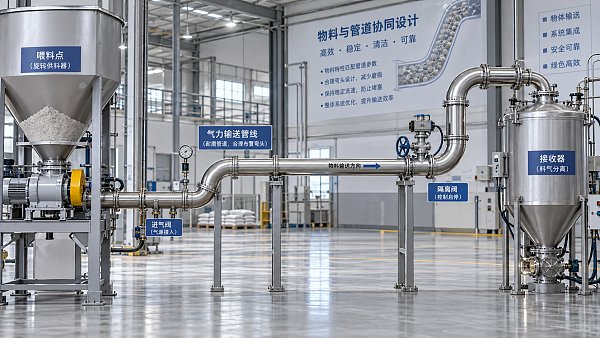
 Sep 29, 2026Dense-Phase Pneumatic Conveying Applications: Build the Line Around the Material, Not the PipeAn application guide to dense-phase pneumatic conveying, covering bulk-material behavior, routing, air supply, feed and discharge points, wear control, commissioning, and operating records.● Dr. Victor Gear
 Oct 09, 2026When smart conveyance improves throughput in mixed-product linesSmart conveyance boosts mixed-product line throughput with dynamic routing, smarter buffers, and real-time production data. Discover when it delivers measurable results.● Dr. Victor Gear
 Oct 05, 2026Which IEEE Standards Matter for Industrial Automation Projects?Which IEEE standards matter for industrial automation projects? Explore key standards for Ethernet, Wi-Fi, cybersecurity, timing, and power quality to reduce risk.● Dr. Victor Gear
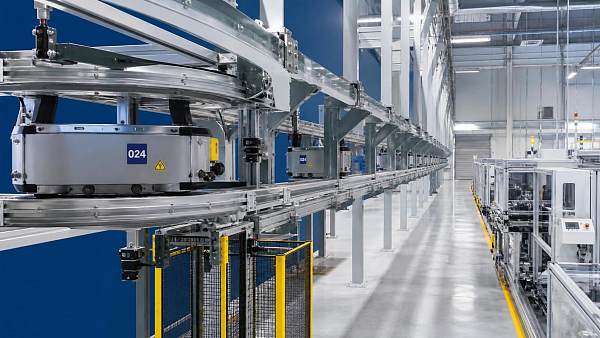
 Sep 18, 2026Selecting an Overhead Conveyor System for North American Plant LayoutsOverhead conveyor North America guide: choose the right system for plant layouts, throughput, safety, maintenance access, and scalable growth.● Dr. Victor Gear
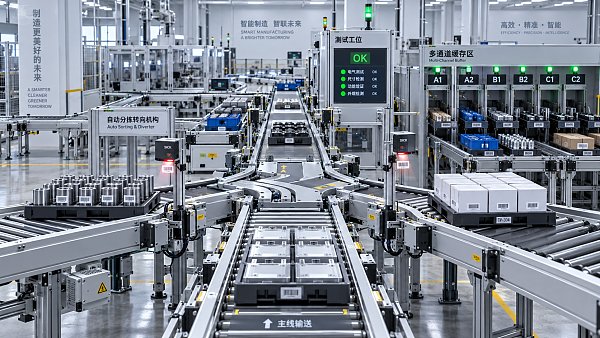
 Sep 11, 2026How to Specify an Automated Sorting System for E-Commerce Peak-Season ThroughputAutomated sorting system for ecommerce: learn how to specify peak-season throughput, parcel flow, induction, exceptions, and resilience to protect carrier cut-offs.● Dr. Victor Gear
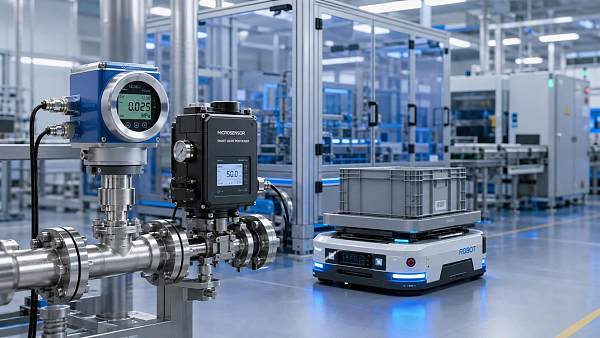
 Sep 07, 2026Application Guidance for Smart Devices in Industrial Automation ProjectsApplication Guidance for smart devices in industrial automation: select, integrate, secure, and maintain connected equipment for reliable control and measurable performance.● Dr. Victor Gear
 Aug 29, 2026How to Qualify an Overhead Conveyor Supplier for a New Production LineOverhead conveyor supplier qualification guide: assess capacity, safety, controls, installed scope, and lifecycle support to reduce production-line risk.● Dr. Victor Gear
 Jul 20, 2026How to Choose an Overhead Conveyor for Assembly Lines: Key Factors and Use CasesOverhead conveyor for assembly selection starts with load, layout, buffering, and maintenance. Explore key factors and real use cases to choose a safer, more efficient assembly line system.● Dr. Victor Gear
 Jul 13, 2026Warehouse Execution Systems for Distribution Centers: Key Functions and Fit CriteriaWarehouse Execution Systems for distribution centers: explore key functions, WMS vs. WES differences, fit criteria, and how to improve flow, labor balance, and automation performance.● Dr. Victor Gear
 Jul 06, 2026Pallet Shuttle Systems Radio Shuttle vs Forklift Racking: Which Saves More Space?Pallet Shuttle Systems radio shuttle vs forklift racking: discover which saves more warehouse space, boosts density, and delivers better ROI for your storage model.● Dr. Victor Gear
 Jul 05, 2026Automated Sorting System Price Breakdown: What Drives Cost in Warehouse Projects?Automated sorting system price explained: discover the real warehouse cost drivers, hidden risks, and how to compare quotes wisely before you invest.● Dr. Victor Gear
 Jul 02, 2026How to Choose a Spiral Conveyor in the Middle East for Food and Beverage PlantsSpiral conveyor Middle East selection guide for food and beverage plants: compare hygiene, heat resistance, throughput, and local service to choose a reliable, space-saving solution.● Dr. Victor Gear
 Jun 27, 2026How to Choose a Spiral Conveyor Supplier for Food, Packaging, and Warehouse LinesSpiral conveyor supplier selection guide for food, packaging, and warehouse lines. Compare hygiene, engineering, integration, and lifecycle cost to choose with confidence.● Dr. Victor Gear
 Jun 23, 2026Modular Office Workstations: How to Plan Layouts for Growing TeamsModular office workstations help growing teams plan flexible layouts that improve workflow, save space, and support future expansion with less disruption.● Dr. Victor Gear
 Jun 21, 2026Commercial Food Processors Explained: Types, Capacities, and Best Uses by Kitchen VolumeCommercial food processors explained by type, capacity, and kitchen volume. Compare batch, continuous-feed, and combo models to choose the best fit for faster, smarter prep.● Dr. Victor Gear
 Jun 20, 2026How to Choose Commercial Floor Scrubbers for Warehouses, Retail Stores, and FacilitiesCommercial floor scrubbers buying guide for warehouses, retail stores, and facilities. Compare types, runtime, drying, maintenance, and sourcing factors to choose the right model.● Dr. Victor Gear
 Jun 12, 2026What Is System Integration for Smart Factories and Which Processes Should Be Connected First?System Integration for smart factories: learn which processes to connect first for faster decisions, less downtime, stronger traceability, and measurable ROI.● Dr. Victor Gear
 Jun 02, 2026System Integration Solutions for Factories: Scope, Risks, and ROI ChecksSystem Integration solutions for factories: define scope, reduce technical and commercial risks, and verify ROI before modernization spending accelerates.● Dr. Victor Gear
 May 31, 2026How to avoid hidden costs in conveyor rollers wholesaleConveyor rollers wholesale buyers: learn how to spot hidden costs in specs, bearings, freight, compliance, and suppliers to protect budget and uptime.● Dr. Victor Gear
 May 29, 2026Do rotating jewelry displays really boost sales?rotating jewelry displays can boost sales when matched to shopper flow, lighting, and product mix. Learn where they drive impulse buys, gifting, and retail ROI.● Dr. Victor Gear
 May 05, 2026What warehouse throughput efficiency data often gets wrongwarehouse throughput efficiency data often misses labor, compliance, and infrastructure risks. Learn how Strategic Sourcing best practices and ISO Compliance certification reshape smarter evaluations.● Dr. Victor Gear
 May 04, 2026How will 5G change real-time tracking systems in 2026?Impact of 5G on real-time tracking systems in 2026: see how Supply-Chain Orchestration tools drive Operational Uptime improvement, stronger Total Reliability standards, and smarter industrial visibility.● Dr. Victor Gear
![]() May 01, 2026Is 5G Real-Time Tracking Worth the Cost in Logistics?Impact of 5G on real-time tracking in logistics: assess cost, risk, and ROI with Supply-Chain Orchestration for manufacturing and Global Supply Chain management software.● Dr. Victor Gear
May 01, 2026Is 5G Real-Time Tracking Worth the Cost in Logistics?Impact of 5G on real-time tracking in logistics: assess cost, risk, and ROI with Supply-Chain Orchestration for manufacturing and Global Supply Chain management software.● Dr. Victor Gear![]() Apr 21, 2026Can 5G real-time tracking reduce loss in fast-moving goods?Impact of 5G on real-time tracking technology can cut loss in fast-moving goods by improving Operational Uptime, Supply-Chain Orchestration tools, and predictive response. Explore the ROI.● Dr. Victor Gear
Apr 21, 2026Can 5G real-time tracking reduce loss in fast-moving goods?Impact of 5G on real-time tracking technology can cut loss in fast-moving goods by improving Operational Uptime, Supply-Chain Orchestration tools, and predictive response. Explore the ROI.● Dr. Victor Gear