Hot Articles
Popular Tags
How to judge High-Pressure Hydraulic Cylinders life
For technical evaluators, the service life of High-Pressure Hydraulic Cylinders is not judged by hours alone, but by load stability, seal wear, pressure cycles, material strength, and operating conditions. A precise life assessment helps reduce unplanned downtime, improve safety, and support better procurement decisions. This article outlines the key indicators and evaluation methods used to judge cylinder longevity with greater confidence.
How should technical evaluators define service life in High-Pressure Hydraulic Cylinders?
In industrial practice, service life means the period during which High-Pressure Hydraulic Cylinders continue to deliver required force, stroke accuracy, sealing performance, and structural safety within a defined operating envelope. It is a functional concept, not a simple calendar value.
For procurement and engineering teams, a cylinder that still moves but leaks excessively, drifts under load, or fails dimensional repeatability may already be at end of useful life. This distinction matters in automated lines, heavy machinery, material handling systems, and high-duty hydraulic power units.
Useful life is usually judged through a combination of factors
- Pressure cycle endurance, especially repeated operation near rated or peak pressure.
- Seal integrity, including leakage rate, abrasion, heat aging, and chemical compatibility.
- Rod and bore condition, such as scoring, corrosion, pitting, and surface finish deterioration.
- Mechanical stability under side load, shock load, vibration, and misalignment.
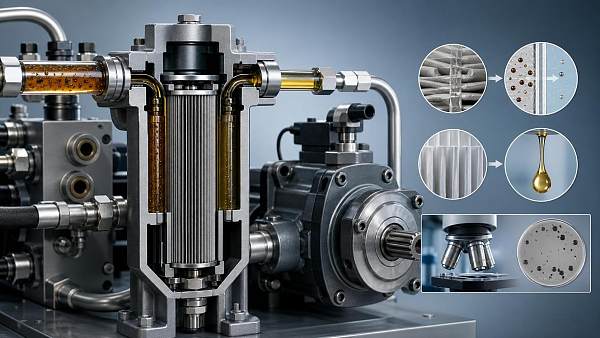
- Fluid cleanliness, lubrication condition, and contamination control across the hydraulic circuit.
This broader definition is essential in the comprehensive industrial sector, where equipment uptime links directly to production continuity, worker safety, and supply-chain reliability. G-ISC emphasizes this systems view because cylinder life rarely depends on the cylinder alone.
Which operating conditions shorten High-Pressure Hydraulic Cylinders life the fastest?
Technical evaluators often face a common problem: two cylinders with similar drawings can show very different service life in the field. The difference usually comes from operating severity rather than nominal size or pressure rating.
High-risk operating stressors
- Frequent peak-pressure cycling. Repeated pressure spikes accelerate fatigue in the barrel, end caps, threaded joints, and seals.
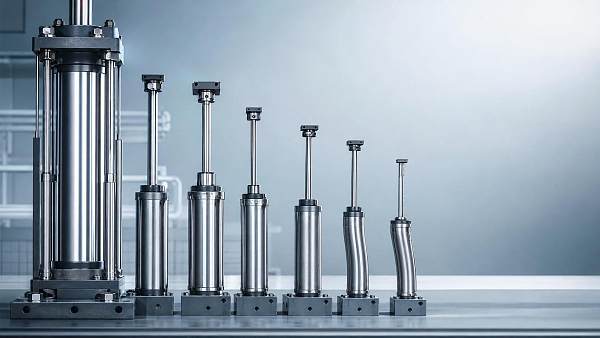
- Side loading and misalignment. Even a robust cylinder loses life quickly when the rod is forced to absorb bending instead of pure axial load.
- Dirty hydraulic oil. Hard particles damage sealing lips, scratch the rod, and increase internal leakage.
- High temperature operation. Heat hardens elastomers, reduces lubricant film stability, and changes fluid viscosity.
- Corrosive or outdoor exposure. Moisture, chemicals, and dust raise the risk of rod corrosion and seal failure.
- Shock loading and fast reversal. Abrupt motion changes increase stress concentration and dynamic seal wear.
In many procurement reviews, the hidden issue is under-specification of the real duty cycle. A cylinder selected only on bore, stroke, and maximum pressure may pass initial approval yet fail early in continuous-duty applications.
What key indicators should be checked to judge cylinder longevity?
A reliable assessment of High-Pressure Hydraulic Cylinders should combine measurable performance data with physical inspection findings. The table below helps technical evaluators structure a practical review before purchase, during commissioning, and in maintenance audits.
These indicators are useful because they connect observed symptoms to failure mechanisms. For technical evaluators, that link supports better root-cause judgment and avoids replacing a cylinder when the real problem sits elsewhere in the hydraulic system.
How to compare expected life across different application scenarios?
High-Pressure Hydraulic Cylinders in steel processing, mobile equipment, automated handling, marine systems, and industrial presses do not age in the same way. Application context changes the failure mode, the maintenance interval, and the acceptable risk threshold.
The next table compares common scenarios that technical evaluators often review when judging cylinder life and replacement risk.
This comparison shows why life judgment cannot rely on one generic benchmark. Evaluators should match the cylinder design, seal package, rod treatment, and maintenance plan to the actual scenario instead of the catalog description alone.
Which technical parameters matter most before procurement?
When procurement teams ask how to judge High-Pressure Hydraulic Cylinders life before field use, the answer starts with specification quality. A precise technical review reduces the risk of buying a cylinder that meets price targets but misses real operating needs.
Priority parameters for life-focused evaluation
- Rated working pressure and allowable peak pressure, with attention to pressure surge margin rather than steady-state pressure only.
- Bore, rod diameter, and stroke length, because slender rods and long strokes increase buckling and alignment sensitivity.
- Mounting style and load path, since poor mounting geometry creates side load and accelerates wear.
- Rod material and surface treatment, especially where corrosion resistance or abrasive environments are expected.
- Seal material compatibility with fluid type, operating temperature, speed, and contamination level.
- Cushioning, damping, and end-of-stroke energy control in high-speed or shock-prone systems.
For technical evaluators, these parameters should be reviewed alongside installation constraints, maintenance capability, and parts availability. A durable cylinder on paper can still become a weak point if seal kits or replacement rods are hard to source during a supply disruption.
How can evaluators build a more reliable life assessment process?
A structured assessment process is particularly valuable in cross-industry sourcing environments, where multiple plants may use different duty cycles, hydraulic fluids, and maintenance standards. G-ISC supports this process by connecting engineering review with supply-chain visibility and standards-based comparison.
Recommended evaluation workflow
- Define the true duty cycle, including pressure range, cycles per hour, shock events, and environmental exposure.
- Review design data, such as rod diameter, mounting, seals, material selection, and intended fluid compatibility.
- Inspect system-level conditions, including filtration, temperature control, valve behavior, and misalignment risk.
- Use failure symptoms to separate cylinder wear from external causes like pump instability or contaminated oil.
- Compare lifecycle cost, lead time, maintenance burden, and replacement availability before final sourcing decisions.
This method improves decision quality because it treats High-Pressure Hydraulic Cylinders as critical components within a larger reliability chain. That perspective is central to complex manufacturing lines, where a small cylinder failure may stop a larger, high-value process.
Why do many life predictions fail in real projects?
Many service life estimates fail because they are based on ideal assumptions. In practice, technical evaluators often inherit incomplete records, changing load conditions, and uncertain operating behavior. A cylinder selected for one production pattern may later face a different duty profile.
Common judgment errors
- Assuming rated pressure equals normal operating pressure, even when real systems regularly hit transient spikes.
- Treating leakage as a seal-only issue without checking rod finish, contamination, and alignment.
- Ignoring side loads introduced by poor fixture design or worn machine joints.
- Comparing suppliers by unit price without considering life-cycle cost and maintenance frequency.
- Overlooking raw material fluctuations and delivery risk that affect replacement strategy and spare planning.
This is where a technical intelligence platform adds value. G-ISC links component-level evaluation with global sourcing conditions, standards references, and cross-sector industrial insight, helping teams reduce both engineering risk and procurement blind spots.
What standards and compliance points should be reviewed?
High-Pressure Hydraulic Cylinders are often evaluated in projects where internal approval requires traceable design logic and recognized technical references. While exact standards vary by market and machine category, evaluators should check whether the cylinder design and documentation align with widely accepted industrial practices.
Compliance review checklist
- Dimensional and mounting compatibility with the target system or replacement position.
- Material and pressure design logic consistent with relevant ISO, DIN, ASME, or customer-specific requirements.
- Seal and fluid compatibility records for the expected temperature range and media exposure.
- Testing documentation for pressure holding, leakage behavior, and basic functional verification.
- Traceability of critical components where project governance or regulated sectors require formal records.
For multinational procurement, compliance checking also helps prevent delays caused by re-documentation, specification mismatch, or customs and project acceptance issues. A technically adequate cylinder is not enough if its paperwork cannot support project release.
FAQ: practical questions about judging High-Pressure Hydraulic Cylinders life
Is operating hours a reliable way to judge service life?
Not on its own. Operating hours become meaningful only when paired with pressure intensity, cycle count, load direction, temperature, and contamination conditions. A lightly loaded cylinder can run long hours with modest wear, while a heavily cycled high-pressure unit may age faster in fewer hours.
What is the earliest warning sign of life reduction?
Early signs often include minor leakage, load drift, unstable motion, or increased pressure needed to maintain the same output. These symptoms suggest changes in sealing, surface condition, or internal bypass before a full failure becomes visible.
Should evaluators repair or replace a worn cylinder?
That depends on wear location, downtime cost, and parts access. If damage is limited to seals and the rod and bore remain serviceable, repair may be reasonable. If there is scoring, corrosion, alignment-related damage, or repeated failure history, replacement often offers lower operational risk.
How important is hydraulic oil cleanliness to cylinder life?
It is critical. Contaminated fluid speeds up abrasive wear on seals and internal surfaces, especially in High-Pressure Hydraulic Cylinders operating with tight tolerances and frequent cycles. Oil cleanliness should be treated as a life-control variable, not just a maintenance detail.
Why choose us for technical evaluation and sourcing support?
G-ISC supports technical evaluators who need more than a product catalog. Our value lies in combining engineering scrutiny, standards-based comparison, and supply-chain intelligence across hydraulic systems and other critical industrial components. That matters when you are balancing performance, reliability, lead time, compliance, and total cost.
We can help you review High-Pressure Hydraulic Cylinders from multiple decision angles: parameter confirmation, application-fit assessment, seal and material suitability, lifecycle risk, replacement interchangeability, and project documentation readiness. We also support discussion around delivery timelines, sourcing alternatives, sample evaluation, quotation alignment, and custom solution feasibility for demanding industrial environments.
If your team is comparing suppliers, investigating early failure, or preparing a new procurement standard, contact us with your operating pressure range, stroke, load profile, installation method, fluid type, and compliance requirements. A clear technical brief allows faster and more accurate support for selection, cost evaluation, and delivery planning.
Recommended News
 Sep 30, 2026How to Evaluate Electro-Hydraulic Servo Response for High-Speed Motion ControlEvaluate electro-hydraulic servo response for high-speed motion control with practical metrics for bandwidth, settling time, stability, and reliable supplier selection.● Marcus Valve
 Sep 22, 2026Selecting High-Pressure Hydraulic Cylinders for Press Force, Stroke, and Duty CycleHigh-Pressure Hydraulic Cylinders for presses: match force, stroke, mounting, and duty cycle for safer, more reliable performance and reduced downtime.● Marcus Valve
 Sep 03, 2026How ASTM Stainless Steel Standards Help Prevent Corrosion Failures in Hydraulic SystemsStainless corrosion ASTM standards help prevent hydraulic failures through verified material selection, passivation, traceability, and targeted corrosion testing. Learn how to specify reliable systems.● Marcus Valve
 Aug 20, 2026How to Calculate a Safe Cylinder Buckling Safety Factor Under Real Load ConditionsCylinder buckling safety factor explained: learn how to calculate a reliable margin under real load conditions, including stroke, end fixity, misalignment, and dynamic forces.● Marcus Valve
 Jul 14, 2026Hydraulic Market Forecast 2026: Demand Drivers, Price Pressure, and Supply Chain RisksHydraulic market forecast 2026 reveals key demand drivers, price pressure, and supply chain risks across industrial sectors. Discover actionable insights for smarter sourcing and planning.● Marcus Valve
 Jul 13, 2026How to Evaluate ISO-Certified Hydraulic Components for Supplier ApprovalHydraulic components ISO certified supplier approval requires more than checking certificates. Learn how to verify traceability, testing, and supplier reliability for safer sourcing.● Marcus Valve
 Jul 13, 2026Environmental Hydraulic Fluid Compliance Explained: Standards, Labels, and Approval StepsEnvironmental hydraulic fluid compliance explained in a practical guide covering ISO 15380, labels, OEM approvals, and approval steps to reduce risk, delays, and sourcing mistakes.● Marcus Valve
 Jul 10, 2026Hydraulic Components for Construction Equipment: Which Parts Matter Most in System Design?Hydraulic components for construction equipment determine efficiency, control, uptime, and lifecycle cost. Discover which parts matter most in system design and how to choose smarter.● Marcus Valve
 Jul 10, 2026How to Evaluate a Heavy Duty Hydraulic Cylinder Manufacturer for Construction ProjectsHeavy duty hydraulic cylinder manufacturer selection affects uptime, safety, and cost. Learn how to compare quality, testing, documentation, and delivery strength for construction projects.● Marcus Valve
 Jul 09, 2026Hydraulic Cylinder Pressure Ratings Explained: How to Read PSI, Burst, and Working LimitsHydraulic cylinder pressure ratings explained clearly: learn how to read PSI, working pressure, and burst limits to choose safer, longer-lasting cylinders and avoid costly system failures.● Marcus Valve
 Jul 08, 2026What Does Filter Beta Ratio Mean in Europe and How Is It Used in Hydraulic Filtration?Filter beta ratio Europe explained: learn how beta ratings measure hydraulic filtration efficiency, support ISO-based comparisons, and help buyers choose reliable filters with confidence.● Marcus Valve
 Jul 02, 2026Steel Cylinder Buckling Load Explained: Formula, End Conditions, and Design LimitsSteel cylinder buckling load explained clearly: learn the Euler formula, end conditions, and real design limits to compare options, reduce risk, and choose safer, more reliable cylinder solutions.● Marcus Valve
 Jul 01, 2026Fluid Power vs Electric Actuation: Key Differences in Force, Control, and MaintenanceFluid Power vs electric actuation: compare force, control, energy use, and maintenance to choose the right system for uptime, precision, and lower lifecycle risk.● Marcus Valve
![]() Jun 04, 2026Hydraulic Manifold Block Factory Guide: What to Review Before Requesting a QuoteHydraulic manifold block factory selection starts before the quote. Learn what to review on machining, pressure testing, cleanliness, traceability, and lead times to compare suppliers with confidence.● Marcus Valve
Jun 04, 2026Hydraulic Manifold Block Factory Guide: What to Review Before Requesting a QuoteHydraulic manifold block factory selection starts before the quote. Learn what to review on machining, pressure testing, cleanliness, traceability, and lead times to compare suppliers with confidence.● Marcus Valve May 30, 2026Why does hydraulic automation in construction news matter?Hydraulic automation in construction news reveals how smarter equipment boosts safety, productivity, energy efficiency, and reliability—see what trends matter now.● Marcus Valve
 May 28, 2026How Advanced Hydraulic systems cut downtime in heavy useAdvanced Hydraulic systems help cut downtime in heavy-use operations by improving pressure stability, reducing wear, and enabling faster fault detection for more reliable project delivery.● Marcus Valve
 May 27, 2026How Advanced Hydraulic systems cut downtime in heavy useAdvanced Hydraulic systems reduce downtime in heavy-use operations through better pressure stability, cleaner fluid control, and predictive maintenance for higher uptime and safer performance.● Marcus Valve
 May 26, 2026How Advanced Hydraulic systems cut downtime in high-load linesAdvanced Hydraulic systems cut downtime in high-load lines by improving pressure stability, durability, and maintenance planning. Discover smarter ways to boost uptime and control project risk.● Marcus Valve
 May 25, 2026How Advanced Hydraulic systems cut downtime in heavy useAdvanced Hydraulic systems cut downtime in heavy-use operations with stable pressure, durable components, and smarter maintenance insights. Learn how to improve uptime and lower lifecycle costs.● Marcus Valve
 May 24, 2026How Advanced Hydraulic systems cut downtime in heavy useAdvanced Hydraulic systems cut downtime in heavy-use operations by improving pressure stability, filtration, and component life. See how smarter hydraulic design boosts uptime and lowers service risk.● Marcus Valve
 May 23, 2026High-Pressure Hydraulic Cylinders selection mistakes to avoidHigh-Pressure Hydraulic Cylinders selection mistakes can cause downtime, leaks, and safety risks. Learn 10 buyer-focused pitfalls to avoid for smarter sourcing and longer service life.● Marcus Valve
 May 22, 2026How to compare high-pressure hydraulic cylindersHigh-Pressure Hydraulic Cylinders comparison guide: evaluate pressure ratings, seal reliability, fatigue life, compliance, and lifecycle cost to choose safer, longer-lasting solutions.● Marcus Valve
 May 21, 2026How to judge High-Pressure Hydraulic Cylinders for safetyHigh-Pressure Hydraulic Cylinders safety starts with more than rated pressure. Learn how to assess materials, seals, fatigue, testing, and compliance for safer, longer-lasting performance.● Marcus Valve
 May 21, 2026How Advanced Hydraulic designs cut downtime in harsh dutyAdvanced Hydraulic design helps cut downtime in harsh-duty industries through better sealing, fatigue resistance, corrosion protection, and predictive maintenance insights.● Marcus Valve