Hot Articles
Popular Tags
Advanced Hydraulic Upgrades That Cut Downtime Costs
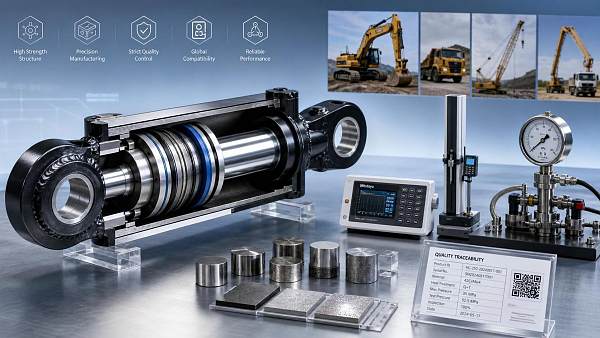
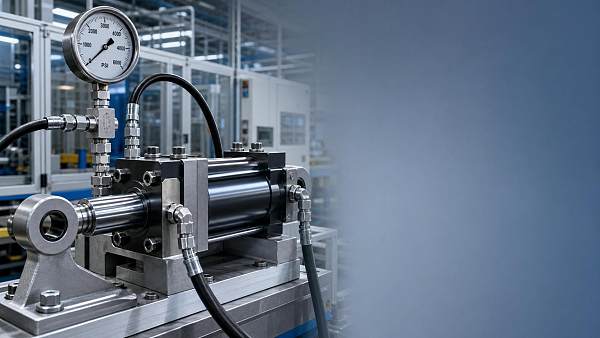
For project managers and engineering leads, downtime is never just a maintenance issue—it is a direct hit to schedules, budgets, and client confidence. Advanced Hydraulic upgrades offer a practical path to stronger system reliability, faster response, and lower lifecycle costs. By focusing on smarter components, higher-performance sealing, and data-driven maintenance strategies, teams can reduce unplanned failures and keep critical operations running with far less disruption.
In heavy manufacturing, material handling, mobile equipment, process plants, and infrastructure projects, hydraulic performance often determines whether a line runs at design speed or loses hours to pressure instability, fluid contamination, seal wear, or actuator drift.
For organizations managing multi-site assets and global sourcing risk, Advanced Hydraulic decisions are no longer limited to replacement parts. They now involve component standardization, predictive maintenance, lead-time planning, and lifecycle cost control across 12-month to 36-month operating windows.
Why Advanced Hydraulic Upgrades Matter More Than Routine Repair
Routine repair restores function, but it rarely removes the root causes of repeat downtime. An upgrade strategy addresses the performance limits of aging cylinders, valves, hoses, pumps, filtration assemblies, and sealing systems before failure cascades into broader operational delay.
In many industrial systems, a single hydraulic issue can stop 1 machine, but the business effect often spreads across 3 to 5 linked processes such as feeding, clamping, lifting, positioning, or safety interlocking. That is why project teams increasingly evaluate uptime in system terms rather than component terms.
Typical Downtime Drivers in Hydraulic Systems
- Seal degradation under high cycle counts, often beyond 500,000 to 1,000,000 strokes
- Fluid contamination above acceptable particle levels, accelerating valve and pump wear
- Pressure spikes caused by poor accumulator sizing or unstable control response
- Thermal stress from oil temperatures moving outside the common 40°C to 60°C operating range
- Supply-chain delays on non-standard parts with replacement cycles of 6 to 12 weeks
From Reactive Fixes to Reliability Engineering
An Advanced Hydraulic program is most effective when maintenance, procurement, and engineering work from the same reliability plan. Instead of replacing like-for-like, teams review duty cycle, peak pressure, ambient conditions, contamination risk, and operator usage patterns.
This approach aligns with the G-ISC model of critical-component evaluation, where performance is judged not only by nominal rating but also by standards compliance, sourcing resilience, and operational fit across high-demand industrial environments.
The table below highlights the difference between routine maintenance behavior and upgrade-led reliability planning for project-based industrial operations.
The key takeaway is that upgrades create value before a shutdown happens. For project managers, that means fewer schedule disruptions, reduced emergency freight costs, and more reliable delivery commitments to internal and external stakeholders.
The Most Effective Advanced Hydraulic Upgrades for Cost Reduction
Not every system needs a complete redesign. In many cases, 4 targeted upgrades can deliver most of the gain: better sealing, smarter sensing, improved filtration, and higher-stability control components. The right selection depends on load profile, cycle rate, contamination exposure, and replacement lead time.
1. High-Performance Sealing Systems
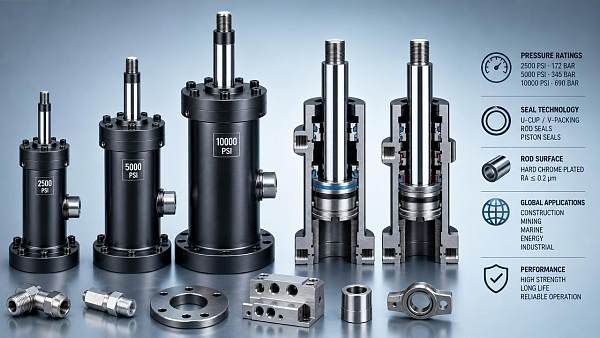
Seal upgrades are often the fastest route to measurable improvement. Advanced materials can improve compatibility with higher temperature swings, aggressive fluids, and frequent cycling. For cylinders operating in dusty or abrasive environments, upgraded rod seals and wipers can significantly reduce leak-related downtime.
Engineering teams typically assess pressure range, rod speed, side load, and fluid chemistry. Even a moderate improvement in seal life can reduce maintenance interventions from every 4 months to every 9 months in demanding duty cycles.
2. Condition Monitoring and Sensor Integration
Adding pressure, temperature, and contamination monitoring converts hidden hydraulic wear into visible maintenance data. This allows teams to identify drift trends 2 to 6 weeks before they become production failures.
For distributed operations, sensor-backed Advanced Hydraulic maintenance also supports better spare planning. Instead of holding excess inventory across every location, critical components can be staged according to measured risk and expected replacement intervals.
3. Filtration and Fluid Cleanliness Upgrades
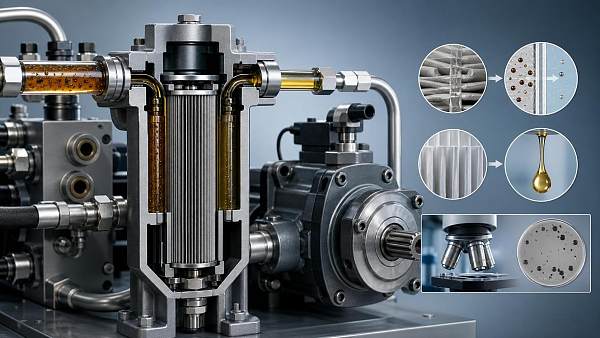
Many recurring hydraulic failures begin with fluid cleanliness issues. Upgrading return-line filters, breathers, and contamination control procedures often protects pumps, servo valves, and proportional controls more effectively than repeated component replacement.
Where systems support high-precision motion or continuous production, fluid monitoring intervals of 30 to 90 days are common. Cleaner oil reduces internal wear, stabilizes response, and extends service intervals throughout the hydraulic circuit.
4. Valves, Manifolds, and Response Control Components
Upgrading control valves can improve repeatability, response speed, and energy efficiency. In systems with pressure instability, the issue is often not raw power but inaccurate flow regulation or delayed actuation under variable loads.
For project teams comparing options, the review should include pressure rating, contamination tolerance, control precision, maintenance accessibility, and compliance with ISO, DIN, ASME, or other applicable standards. In some sourcing workflows, reference information may be tracked alongside internal listings such as 无.
The comparison below shows how common upgrade categories affect downtime, implementation effort, and lifecycle value.
In most industrial settings, the best return does not come from the most expensive upgrade. It comes from solving the dominant failure mode first, then aligning spare strategy and maintenance planning around that improvement.
How Project Managers Should Evaluate Upgrade Priorities
Project leaders often need to make hydraulic decisions under cost pressure, production deadlines, and procurement constraints. A practical framework helps separate mission-critical upgrades from nice-to-have changes.
Build a 4-Factor Review Model
- Asset criticality: Does failure stop one machine or the whole line?
- Failure frequency: Is the component causing 2 or more unplanned events per year?
- Lead time exposure: Are replacements available in 7 days or 10 weeks?
- Operational impact: Does hydraulic instability affect safety, quality, or output rate?
This method helps teams justify investment with operational logic. It also improves communication between plant engineering, sourcing teams, and finance stakeholders who may evaluate the project through different cost lenses.
Look Beyond Unit Price
The lowest part price is rarely the lowest operating cost. A lower-cost cylinder seal kit or valve assembly may seem attractive at purchase stage, but if it shortens service intervals by 30% or raises emergency labor demand, the total cost rises quickly.
Advanced Hydraulic sourcing should therefore compare at least 5 commercial variables: purchase price, expected life, downtime risk, installation labor, and replacement availability. This is especially relevant in cross-border supply chains where material prices for steel or nickel can affect replenishment timing.
Standardization Can Reduce Hidden Downtime
Sites with mixed component specifications often face longer troubleshooting and spare-part delays. Standardizing seal profiles, fitting interfaces, hose specifications, or valve families across multiple machines can reduce diagnostic time and simplify technician training.
Even reducing a spare portfolio from 40 unique hydraulic wear items to 18 can improve inventory control and lower rush-order dependency. For capital projects, standardization also supports smoother commissioning and more predictable service documentation.
Implementation Roadmap for Advanced Hydraulic Upgrades
Successful implementation depends less on broad ambition and more on sequencing. Most organizations achieve stronger results when upgrades are deployed in stages, especially across running operations where downtime windows may be limited to 8 to 24 hours.
Phase 1: Audit and Failure Mapping
Start with the assets that cause the highest production risk. Review leak points, pressure events, oil condition history, repair frequency, operator complaints, and component lead times. A 60-day failure log is often enough to identify the top recurring hydraulic constraints.
Phase 2: Component Selection and Procurement Alignment
Once the main failure mode is clear, engineering and sourcing should align on specification, interchangeability, standards, and delivery timing. If a project depends on imported components, buyers should account for customs lead times, raw material volatility, and supplier response windows.
Internal documentation may include approved sources or reference placeholders such as 无, but the real priority is maintaining technical consistency between what is specified, purchased, and installed.
Phase 3: Installation, Testing, and Maintenance Handover
After installation, teams should verify pressure stability, response time, leakage control, and thermal behavior under real load. A useful acceptance window may include 24 to 72 hours of monitored operation, followed by a 30-day review of maintenance observations.
Without this handover step, even a well-chosen upgrade can underperform because alarm thresholds, lubrication procedures, or spare planning were not updated to match the new configuration.
Common Implementation Mistakes
- Upgrading one component while leaving contamination sources untreated
- Ignoring pressure spikes that exceed nominal ratings during transient events
- Installing improved hardware without retraining technicians on inspection intervals
- Choosing non-standard parts that lengthen future replenishment cycles
Maintenance, Supply-Chain Resilience, and Long-Term Value
For global industrial operators, hydraulic reliability is now tied directly to supply-chain resilience. An excellent component with a 14-week replacement cycle can still create severe downtime risk if there is no approved alternative, no local stock strategy, and no predictive maintenance signal.
That is where the broader G-ISC perspective becomes useful. Hydraulic upgrades should be evaluated alongside sourcing continuity, standards alignment, and the critical-component ecosystem that supports manufacturing uptime across plants, contractors, and integrators.
What Strong Programs Usually Include
- Quarterly review of hydraulic failure trends and spare consumption
- Defined cleanliness and temperature thresholds for critical circuits
- Approved substitute components for selected high-risk items
- Coordination between engineering, maintenance, and procurement teams
- Documented service intervals based on actual duty cycle, not generic assumptions
When to Upgrade Immediately
Immediate action is usually justified when hydraulic failure affects safety-related motion, repeatedly interrupts customer delivery, or requires emergency repairs more than twice in a 12-month period. In those cases, delay is often more expensive than planned intervention.
Advanced Hydraulic investment works best when treated as a controlled reliability project rather than an isolated maintenance expense. For project managers, that shift improves budget visibility and protects execution timelines.
Downtime costs rarely come from one dramatic failure alone. More often, they accumulate through repeated leaks, unstable response, contaminated fluid, delayed parts, and maintenance actions that restore operation without improving resilience. Advanced Hydraulic upgrades address these issues at the system level.
For engineering leads and project managers, the practical path is clear: identify the highest-cost failure mode, prioritize upgrades with measurable lifecycle impact, align procurement with technical standards, and build maintenance routines around real operating data.
If your team is evaluating critical-component reliability, sourcing strategy, or hydraulic modernization priorities, now is the right time to review the options in detail. Contact us to get a tailored solution, discuss component selection, and explore more industrial reliability strategies.
Recommended News
 Sep 30, 2026How to Evaluate Electro-Hydraulic Servo Response for High-Speed Motion ControlEvaluate electro-hydraulic servo response for high-speed motion control with practical metrics for bandwidth, settling time, stability, and reliable supplier selection.● Marcus Valve
 Sep 22, 2026Selecting High-Pressure Hydraulic Cylinders for Press Force, Stroke, and Duty CycleHigh-Pressure Hydraulic Cylinders for presses: match force, stroke, mounting, and duty cycle for safer, more reliable performance and reduced downtime.● Marcus Valve
 Sep 03, 2026How ASTM Stainless Steel Standards Help Prevent Corrosion Failures in Hydraulic SystemsStainless corrosion ASTM standards help prevent hydraulic failures through verified material selection, passivation, traceability, and targeted corrosion testing. Learn how to specify reliable systems.● Marcus Valve
 Aug 20, 2026How to Calculate a Safe Cylinder Buckling Safety Factor Under Real Load ConditionsCylinder buckling safety factor explained: learn how to calculate a reliable margin under real load conditions, including stroke, end fixity, misalignment, and dynamic forces.● Marcus Valve
 Jul 14, 2026Hydraulic Market Forecast 2026: Demand Drivers, Price Pressure, and Supply Chain RisksHydraulic market forecast 2026 reveals key demand drivers, price pressure, and supply chain risks across industrial sectors. Discover actionable insights for smarter sourcing and planning.● Marcus Valve
 Jul 13, 2026How to Evaluate ISO-Certified Hydraulic Components for Supplier ApprovalHydraulic components ISO certified supplier approval requires more than checking certificates. Learn how to verify traceability, testing, and supplier reliability for safer sourcing.● Marcus Valve
 Jul 13, 2026Environmental Hydraulic Fluid Compliance Explained: Standards, Labels, and Approval StepsEnvironmental hydraulic fluid compliance explained in a practical guide covering ISO 15380, labels, OEM approvals, and approval steps to reduce risk, delays, and sourcing mistakes.● Marcus Valve
 Jul 10, 2026Hydraulic Components for Construction Equipment: Which Parts Matter Most in System Design?Hydraulic components for construction equipment determine efficiency, control, uptime, and lifecycle cost. Discover which parts matter most in system design and how to choose smarter.● Marcus Valve
 Jul 10, 2026How to Evaluate a Heavy Duty Hydraulic Cylinder Manufacturer for Construction ProjectsHeavy duty hydraulic cylinder manufacturer selection affects uptime, safety, and cost. Learn how to compare quality, testing, documentation, and delivery strength for construction projects.● Marcus Valve
 Jul 09, 2026Hydraulic Cylinder Pressure Ratings Explained: How to Read PSI, Burst, and Working LimitsHydraulic cylinder pressure ratings explained clearly: learn how to read PSI, working pressure, and burst limits to choose safer, longer-lasting cylinders and avoid costly system failures.● Marcus Valve
 Jul 08, 2026What Does Filter Beta Ratio Mean in Europe and How Is It Used in Hydraulic Filtration?Filter beta ratio Europe explained: learn how beta ratings measure hydraulic filtration efficiency, support ISO-based comparisons, and help buyers choose reliable filters with confidence.● Marcus Valve
 Jul 02, 2026Steel Cylinder Buckling Load Explained: Formula, End Conditions, and Design LimitsSteel cylinder buckling load explained clearly: learn the Euler formula, end conditions, and real design limits to compare options, reduce risk, and choose safer, more reliable cylinder solutions.● Marcus Valve
 Jul 01, 2026Fluid Power vs Electric Actuation: Key Differences in Force, Control, and MaintenanceFluid Power vs electric actuation: compare force, control, energy use, and maintenance to choose the right system for uptime, precision, and lower lifecycle risk.● Marcus Valve
![]() Jun 04, 2026Hydraulic Manifold Block Factory Guide: What to Review Before Requesting a QuoteHydraulic manifold block factory selection starts before the quote. Learn what to review on machining, pressure testing, cleanliness, traceability, and lead times to compare suppliers with confidence.● Marcus Valve
Jun 04, 2026Hydraulic Manifold Block Factory Guide: What to Review Before Requesting a QuoteHydraulic manifold block factory selection starts before the quote. Learn what to review on machining, pressure testing, cleanliness, traceability, and lead times to compare suppliers with confidence.● Marcus Valve May 30, 2026Why does hydraulic automation in construction news matter?Hydraulic automation in construction news reveals how smarter equipment boosts safety, productivity, energy efficiency, and reliability—see what trends matter now.● Marcus Valve
 May 28, 2026How Advanced Hydraulic systems cut downtime in heavy useAdvanced Hydraulic systems help cut downtime in heavy-use operations by improving pressure stability, reducing wear, and enabling faster fault detection for more reliable project delivery.● Marcus Valve
 May 27, 2026How Advanced Hydraulic systems cut downtime in heavy useAdvanced Hydraulic systems reduce downtime in heavy-use operations through better pressure stability, cleaner fluid control, and predictive maintenance for higher uptime and safer performance.● Marcus Valve
 May 26, 2026How Advanced Hydraulic systems cut downtime in high-load linesAdvanced Hydraulic systems cut downtime in high-load lines by improving pressure stability, durability, and maintenance planning. Discover smarter ways to boost uptime and control project risk.● Marcus Valve
 May 25, 2026How Advanced Hydraulic systems cut downtime in heavy useAdvanced Hydraulic systems cut downtime in heavy-use operations with stable pressure, durable components, and smarter maintenance insights. Learn how to improve uptime and lower lifecycle costs.● Marcus Valve
 May 24, 2026How Advanced Hydraulic systems cut downtime in heavy useAdvanced Hydraulic systems cut downtime in heavy-use operations by improving pressure stability, filtration, and component life. See how smarter hydraulic design boosts uptime and lowers service risk.● Marcus Valve
 May 23, 2026High-Pressure Hydraulic Cylinders selection mistakes to avoidHigh-Pressure Hydraulic Cylinders selection mistakes can cause downtime, leaks, and safety risks. Learn 10 buyer-focused pitfalls to avoid for smarter sourcing and longer service life.● Marcus Valve
 May 22, 2026How to compare high-pressure hydraulic cylindersHigh-Pressure Hydraulic Cylinders comparison guide: evaluate pressure ratings, seal reliability, fatigue life, compliance, and lifecycle cost to choose safer, longer-lasting solutions.● Marcus Valve
 May 21, 2026How to judge High-Pressure Hydraulic Cylinders for safetyHigh-Pressure Hydraulic Cylinders safety starts with more than rated pressure. Learn how to assess materials, seals, fatigue, testing, and compliance for safer, longer-lasting performance.● Marcus Valve
 May 21, 2026How Advanced Hydraulic designs cut downtime in harsh dutyAdvanced Hydraulic design helps cut downtime in harsh-duty industries through better sealing, fatigue resistance, corrosion protection, and predictive maintenance insights.● Marcus Valve