Hot Articles
Popular Tags
When Do High-Pressure Hydraulic Cylinders Fail Early?
High-Pressure Hydraulic Cylinders rarely fail without warning, yet many suffer premature breakdowns due to overlooked design limits, contamination, seal degradation, or incorrect load assumptions. For technical evaluators, understanding these early failure triggers is essential to reducing downtime, protecting system reliability, and making better sourcing decisions in demanding industrial applications.
Why do High-Pressure Hydraulic Cylinders fail earlier than expected?
Early failure is usually not caused by a single defect. In most industrial systems, it results from a chain of technical mismatches between operating pressure, side load, fluid cleanliness, temperature variation, mounting geometry, and maintenance discipline.
For technical evaluation teams, the real challenge is that High-Pressure Hydraulic Cylinders may pass incoming inspection and still fail prematurely once exposed to dynamic loads, shock events, poor lubrication control, or inconsistent duty cycles.
This matters across the general industrial sector, where cylinders are used in presses, lifting systems, material handling units, automated production lines, heavy fixtures, mobile equipment, and special-purpose machinery. In these settings, a cylinder does not operate in isolation; it interacts with pumps, valves, hoses, guides, sensors, seals, and the broader supply chain.
- Pressure ratings are selected too close to real peak conditions, leaving little safety margin for spikes or transient overloads.
- Rod buckling, side loading, or misalignment is underestimated during design review and field installation.
- Contaminated hydraulic fluid accelerates wear on seals, surfaces, and internal sliding interfaces.
- Seal materials are specified without enough attention to temperature, fluid chemistry, or duty frequency.
- Vendor evaluation focuses on unit price instead of lifecycle exposure, traceability, and dimensional consistency.
In complex procurement environments, G-ISC helps technical evaluators connect component performance with standards, sourcing risk, and application reality. That broader view is often what prevents repeated cylinder failures under apparently similar specifications.
The most common early failure modes
The table below summarizes how early failure tends to appear in High-Pressure Hydraulic Cylinders and what those signs usually indicate during field diagnosis and sourcing review.
For evaluators, the key point is that visible leakage or speed loss is often the final stage, not the first stage. The root cause often begins with selection assumptions made months earlier.
Which technical conditions shorten cylinder life fastest?
Pressure spikes and underestimated duty cycles
A cylinder rated for high nominal pressure may still fail early if the system experiences repeated spikes beyond calculated operating windows. This is common in fast-closing valves, stamping operations, lifting stops, and reversing motion applications.
Technical evaluators should ask not only for rated pressure, but also for surge behavior, cycle frequency, acceleration profile, and whether end-of-stroke cushioning is properly designed. A pressure graph is often more valuable than a static catalog rating.
Contamination and fluid condition
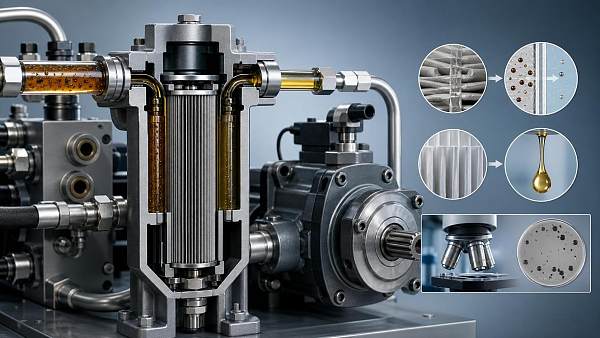
Contamination remains one of the most preventable causes of premature failure in High-Pressure Hydraulic Cylinders. Hard particles damage sealing lips, scratch rod surfaces, and accelerate bore wear. Water ingress and oxidized fluid reduce lubrication and change seal behavior.
In procurement reviews, it is not enough to specify the cylinder alone. Filter grade, reservoir cleanliness, hose assembly quality, installation practice, and maintenance intervals must be aligned with the cylinder’s precision level.
Side loading and poor mounting geometry
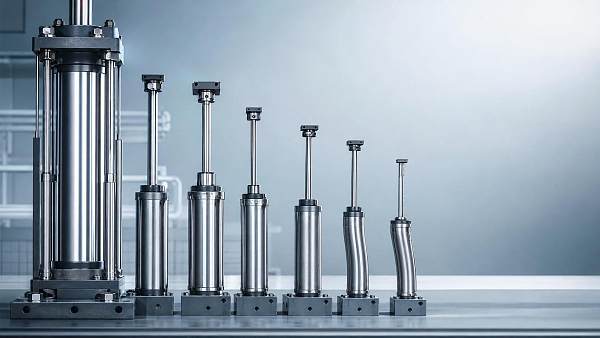
Many early failures come from mechanical layout rather than hydraulic pressure. If guides are weak, pivot points are offset, or the rod sees lateral force during extension, sealing surfaces wear rapidly and rods may bend even below theoretical axial load limits.
This is especially relevant in automated handling, platform lifting, steel processing, and custom machinery where the cylinder is used as both a force actuator and an unintended structural guide. That shortcut often becomes expensive later.
Temperature and seal compatibility
High ambient temperature, frequent thermal cycling, and incompatible hydraulic fluids can harden seals, shrink elastomers, or weaken backup rings. The result is leakage, stick-slip motion, and rising internal bypass over time.
Where operating conditions are variable, technical evaluators should confirm actual fluid temperature range, startup temperature, chemical additives, and whether the seal package is selected for continuous or intermittent exposure.
What should technical evaluators verify before sourcing High-Pressure Hydraulic Cylinders?
A reliable sourcing decision depends on translating application behavior into verifiable parameters. The following checklist is useful when comparing suppliers, especially when multiple regions, substitute materials, or urgent lead times are involved.
- Confirm working pressure, peak pressure, and expected spike frequency rather than relying only on nominal system pressure.
- Review stroke length, rod diameter, mounting style, and external guide support to assess buckling and side load risk.
- Check bore tolerance, rod surface finish, plating method, and corrosion exposure if the cylinder works in humid or contaminated environments.
- Match seal and wear ring materials to fluid chemistry, temperature band, cycle speed, and maintenance interval.
- Ask for dimensional consistency, inspection process, pressure testing scope, and documentation traceability.
In global sourcing, technical suitability and commercial continuity must be assessed together. That is one reason organizations use intelligence platforms such as G-ISC, where hardware benchmarking, standards interpretation, and supply-chain visibility support a more defensible purchasing decision.
Parameter review table for pre-purchase assessment
Before approving High-Pressure Hydraulic Cylinders, evaluators can use the following parameter table to reduce mismatch between catalog claims and real operating conditions.
This kind of structured review is especially important when buyers compare standard cylinders, semi-custom assemblies, and urgent replacement units from different suppliers or regions.
How do application scenarios change the failure risk?
Presses and forming equipment
Press applications expose cylinders to repetitive shock, high force concentration, and short-cycle thermal buildup. Early failure often follows insufficient cushioning, poor fluid cleanliness, or structural misalignment between frame and actuator.
Automated material handling and lifting systems
In AMH environments, cylinders may see frequent starts, stops, partial strokes, and side loads from unstable payloads. Here, a technically acceptable pressure rating can still fail if rod guidance and load centering are not controlled.
Outdoor or corrosive environments
Dust, water, salt exposure, and irregular maintenance intervals increase the risk of rod pitting, wiper damage, and seal contamination. For these applications, protective surface treatment and ingress management become core evaluation factors.
Some buyers initially review only dimensions and pressure class, then discover field incompatibility later. Even a placeholder sourcing trail such as 无 becomes more useful when tied to a structured application checklist instead of a simple part-number exchange.
What standards and compliance references should be considered?
Not every project needs the same documentation depth, but technical evaluators should still anchor selection decisions to recognized engineering frameworks. In the hydraulic field, ISO-related dimensional, testing, and cleanliness practices often support more consistent quality control.
Where cross-border procurement is involved, standards alignment also reduces ambiguity between suppliers using different manufacturing conventions. G-ISC’s value in this area is practical: comparing hardware and sourcing options against internationally recognized references such as ISO, DIN, ASME, and IEEE where relevant to the broader system.
- Dimensional consistency should be reviewed to prevent mounting mismatch in replacement or retrofit projects.
- Pressure test expectations should be defined clearly to avoid confusion between routine inspection and application-specific validation.
- Material traceability becomes more important where safety, uptime, or export documentation requirements are strict.
Compliance is not only a legal or documentary issue. It affects interchangeability, inspection confidence, warranty discussions, and the speed of corrective action when field performance deviates from expectation.
Common misconceptions that lead to premature failure
“If the rated pressure is high enough, the cylinder is safe.”
Rated pressure alone says little about shock loading, side load, dynamic seal wear, or fatigue accumulation. A cylinder can be oversized for pressure yet still undersized for real mechanical conditions.
“Seal replacement solves most leakage problems.”
Repeated seal replacement without rod inspection, bore review, and contamination analysis often leads to the same failure recurring. The seal is frequently the victim, not the root cause.
“Any equivalent cylinder can replace the original.”
Equivalent bore and stroke do not guarantee equivalent service life. Rod finish, seal stack, end cap design, mounting tolerance, and test process can vary enough to change performance significantly in demanding systems.
FAQ for technical evaluators reviewing High-Pressure Hydraulic Cylinders
How can I tell whether a failure is caused by contamination or overload?
Contamination usually leaves evidence such as scratched rod surfaces, abrasive seal wear, and gradual performance decline. Overload or side load more often shows up as bent rods, localized cracking, distorted mounts, or sudden seal extrusion after a shock event. In many cases, both mechanisms interact, so fluid analysis and dimensional inspection should be performed together.
What is the biggest sourcing mistake in replacement projects?
The most common mistake is matching only the visible dimensions. Evaluators should also compare pressure peaks, mount type, rod support, seal material, corrosion exposure, and maintenance history. Replacement sourcing that ignores the original failure mode often reproduces the same problem with a new supplier.
When should I request a custom rather than standard cylinder?
A custom or semi-custom approach should be considered when side load is difficult to eliminate, cycle frequency is high, temperature is unusual, media compatibility is uncertain, or dimensional envelope constraints affect rod diameter and mounting geometry. Standard parts work well in stable conditions, but demanding duty often requires application-specific adjustment.
How does supply-chain visibility affect cylinder reliability?
Reliability is influenced by raw material consistency, machining control, plating quality, seal sourcing, inspection traceability, and lead-time pressure. When procurement teams lack visibility into these factors, urgent substitutions can introduce hidden variability. This is where integrated intelligence from sourcing, standards, and component benchmarking becomes commercially valuable.
Why choose us for hydraulic component evaluation and sourcing support?
G-ISC supports technical evaluators who need more than a catalog comparison. We connect hydraulic component review with broader industrial realities: international standards, application risk, raw material shifts, multi-supplier assessment, and cross-border supply continuity.
If your team is evaluating High-Pressure Hydraulic Cylinders for new equipment, retrofit programs, or failure replacement, we can help structure the decision around practical engineering checkpoints rather than assumptions.
- Parameter confirmation for pressure, stroke, rod size, seal selection, and mounting condition.
- Supplier comparison support for traceability, inspection scope, documentation depth, and delivery risk.
- Application review for contamination exposure, side loading, thermal limits, and expected service interval.
- Coordination on lead time, sample evaluation, certification expectations, and quotation communication.
For teams that need a starting point for technical discussion, you may also reference 无 during early-stage inquiry, then align final selection with operating data, compliance needs, and lifecycle risk.
The earlier these questions are addressed, the lower the chance that a cylinder approved on paper becomes a recurring failure point in production. That is the difference between buying a component and securing dependable system uptime.
Recommended News
 Sep 30, 2026How to Evaluate Electro-Hydraulic Servo Response for High-Speed Motion ControlEvaluate electro-hydraulic servo response for high-speed motion control with practical metrics for bandwidth, settling time, stability, and reliable supplier selection.● Marcus Valve
 Sep 22, 2026Selecting High-Pressure Hydraulic Cylinders for Press Force, Stroke, and Duty CycleHigh-Pressure Hydraulic Cylinders for presses: match force, stroke, mounting, and duty cycle for safer, more reliable performance and reduced downtime.● Marcus Valve
 Sep 03, 2026How ASTM Stainless Steel Standards Help Prevent Corrosion Failures in Hydraulic SystemsStainless corrosion ASTM standards help prevent hydraulic failures through verified material selection, passivation, traceability, and targeted corrosion testing. Learn how to specify reliable systems.● Marcus Valve
 Aug 20, 2026How to Calculate a Safe Cylinder Buckling Safety Factor Under Real Load ConditionsCylinder buckling safety factor explained: learn how to calculate a reliable margin under real load conditions, including stroke, end fixity, misalignment, and dynamic forces.● Marcus Valve
 Jul 14, 2026Hydraulic Market Forecast 2026: Demand Drivers, Price Pressure, and Supply Chain RisksHydraulic market forecast 2026 reveals key demand drivers, price pressure, and supply chain risks across industrial sectors. Discover actionable insights for smarter sourcing and planning.● Marcus Valve
 Jul 13, 2026How to Evaluate ISO-Certified Hydraulic Components for Supplier ApprovalHydraulic components ISO certified supplier approval requires more than checking certificates. Learn how to verify traceability, testing, and supplier reliability for safer sourcing.● Marcus Valve
 Jul 13, 2026Environmental Hydraulic Fluid Compliance Explained: Standards, Labels, and Approval StepsEnvironmental hydraulic fluid compliance explained in a practical guide covering ISO 15380, labels, OEM approvals, and approval steps to reduce risk, delays, and sourcing mistakes.● Marcus Valve
 Jul 10, 2026Hydraulic Components for Construction Equipment: Which Parts Matter Most in System Design?Hydraulic components for construction equipment determine efficiency, control, uptime, and lifecycle cost. Discover which parts matter most in system design and how to choose smarter.● Marcus Valve
 Jul 10, 2026How to Evaluate a Heavy Duty Hydraulic Cylinder Manufacturer for Construction ProjectsHeavy duty hydraulic cylinder manufacturer selection affects uptime, safety, and cost. Learn how to compare quality, testing, documentation, and delivery strength for construction projects.● Marcus Valve
 Jul 09, 2026Hydraulic Cylinder Pressure Ratings Explained: How to Read PSI, Burst, and Working LimitsHydraulic cylinder pressure ratings explained clearly: learn how to read PSI, working pressure, and burst limits to choose safer, longer-lasting cylinders and avoid costly system failures.● Marcus Valve
 Jul 08, 2026What Does Filter Beta Ratio Mean in Europe and How Is It Used in Hydraulic Filtration?Filter beta ratio Europe explained: learn how beta ratings measure hydraulic filtration efficiency, support ISO-based comparisons, and help buyers choose reliable filters with confidence.● Marcus Valve
 Jul 02, 2026Steel Cylinder Buckling Load Explained: Formula, End Conditions, and Design LimitsSteel cylinder buckling load explained clearly: learn the Euler formula, end conditions, and real design limits to compare options, reduce risk, and choose safer, more reliable cylinder solutions.● Marcus Valve
 Jul 01, 2026Fluid Power vs Electric Actuation: Key Differences in Force, Control, and MaintenanceFluid Power vs electric actuation: compare force, control, energy use, and maintenance to choose the right system for uptime, precision, and lower lifecycle risk.● Marcus Valve
![]() Jun 04, 2026Hydraulic Manifold Block Factory Guide: What to Review Before Requesting a QuoteHydraulic manifold block factory selection starts before the quote. Learn what to review on machining, pressure testing, cleanliness, traceability, and lead times to compare suppliers with confidence.● Marcus Valve
Jun 04, 2026Hydraulic Manifold Block Factory Guide: What to Review Before Requesting a QuoteHydraulic manifold block factory selection starts before the quote. Learn what to review on machining, pressure testing, cleanliness, traceability, and lead times to compare suppliers with confidence.● Marcus Valve May 30, 2026Why does hydraulic automation in construction news matter?Hydraulic automation in construction news reveals how smarter equipment boosts safety, productivity, energy efficiency, and reliability—see what trends matter now.● Marcus Valve
 May 28, 2026How Advanced Hydraulic systems cut downtime in heavy useAdvanced Hydraulic systems help cut downtime in heavy-use operations by improving pressure stability, reducing wear, and enabling faster fault detection for more reliable project delivery.● Marcus Valve
 May 27, 2026How Advanced Hydraulic systems cut downtime in heavy useAdvanced Hydraulic systems reduce downtime in heavy-use operations through better pressure stability, cleaner fluid control, and predictive maintenance for higher uptime and safer performance.● Marcus Valve
 May 26, 2026How Advanced Hydraulic systems cut downtime in high-load linesAdvanced Hydraulic systems cut downtime in high-load lines by improving pressure stability, durability, and maintenance planning. Discover smarter ways to boost uptime and control project risk.● Marcus Valve
 May 25, 2026How Advanced Hydraulic systems cut downtime in heavy useAdvanced Hydraulic systems cut downtime in heavy-use operations with stable pressure, durable components, and smarter maintenance insights. Learn how to improve uptime and lower lifecycle costs.● Marcus Valve
 May 24, 2026How Advanced Hydraulic systems cut downtime in heavy useAdvanced Hydraulic systems cut downtime in heavy-use operations by improving pressure stability, filtration, and component life. See how smarter hydraulic design boosts uptime and lowers service risk.● Marcus Valve
 May 23, 2026High-Pressure Hydraulic Cylinders selection mistakes to avoidHigh-Pressure Hydraulic Cylinders selection mistakes can cause downtime, leaks, and safety risks. Learn 10 buyer-focused pitfalls to avoid for smarter sourcing and longer service life.● Marcus Valve
 May 22, 2026How to compare high-pressure hydraulic cylindersHigh-Pressure Hydraulic Cylinders comparison guide: evaluate pressure ratings, seal reliability, fatigue life, compliance, and lifecycle cost to choose safer, longer-lasting solutions.● Marcus Valve
 May 21, 2026How to judge High-Pressure Hydraulic Cylinders for safetyHigh-Pressure Hydraulic Cylinders safety starts with more than rated pressure. Learn how to assess materials, seals, fatigue, testing, and compliance for safer, longer-lasting performance.● Marcus Valve
 May 21, 2026How Advanced Hydraulic designs cut downtime in harsh dutyAdvanced Hydraulic design helps cut downtime in harsh-duty industries through better sealing, fatigue resistance, corrosion protection, and predictive maintenance insights.● Marcus Valve