Hot Articles
Popular Tags
How to choose high-pressure hydraulic cylinders?
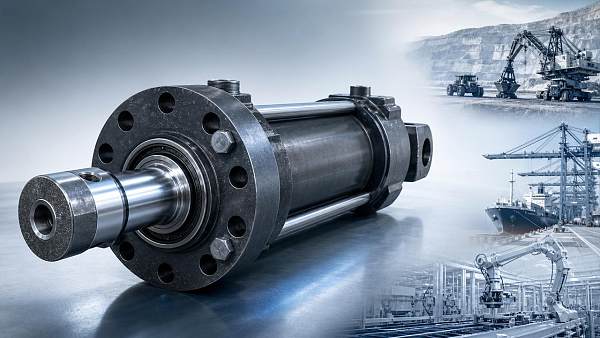
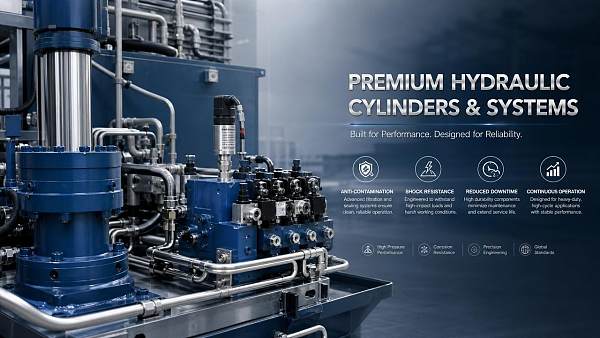
Choosing High-Pressure Hydraulic Cylinders for construction is no longer just a sizing task—it is a critical part of Industrial Procurement strategy. On a Technical Intelligence platform like G-ISC, buyers can compare Advanced Hydraulic solutions through performance data, standards alignment, and Total Reliability certification requirements. This guide helps researchers, procurement teams, and commercial evaluators reduce risk, improve uptime, and make smarter sourcing decisions in complex manufacturing and infrastructure projects.
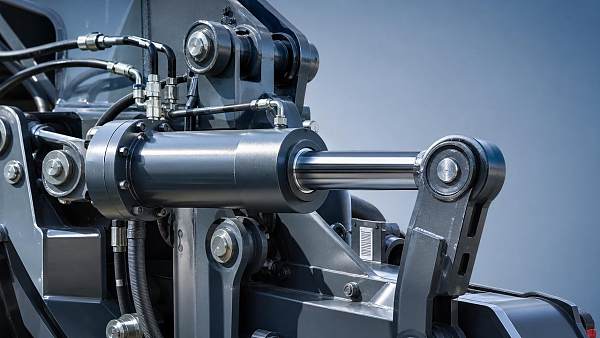
For buyers in heavy equipment, infrastructure, mining, marine, and industrial automation, a high-pressure hydraulic cylinder is both a motion component and a risk concentration point. A mismatch in pressure rating, rod coating, seal material, or mounting geometry can trigger leakage, side-load failure, unplanned downtime, or expensive rework across multiple systems.
That is why selection should move beyond brochure comparisons. Procurement teams need a structured process that links operating pressure, duty cycle, environmental exposure, standards compliance, serviceability, and supplier reliability. In a fragmented global market, technical suitability and commercial resilience must be evaluated together.
Define the Operating Envelope Before Comparing Suppliers
The first step in choosing high-pressure hydraulic cylinders is to define the real operating envelope. Many selection errors start when teams use only nominal tonnage or bore size as the decision basis. In construction and industrial applications, actual performance depends on at least 6 variables: system pressure, load profile, stroke, mounting method, operating speed, and environmental conditions.
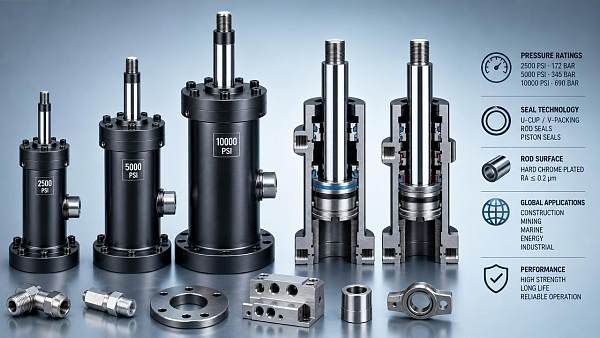
Typical high-pressure applications may run at 210 bar, 250 bar, 350 bar, or even above 400 bar in specialized systems. However, pressure alone does not tell the full story. A cylinder used for intermittent lifting 20 times per day behaves very differently from one cycling 8 to 12 times per minute in a production or material handling environment.
Procurement researchers should also separate static load from dynamic load. Shock loading, vibration, uneven mounting, contamination, and side force can reduce effective service life far faster than pressure calculations suggest. In practical sourcing reviews, this is often where lower-cost options fail first.
For decision-makers, it helps to convert the application into a specification sheet that engineering, sourcing, and quality teams can use together. This lowers the risk of buying a cylinder that looks equivalent on paper but performs differently in the field.
Key operating data to collect
- Working pressure range and maximum pressure spikes, such as 250 bar normal operation with 320 bar short-duration peaks.
- Stroke length, retracted length, and installation envelope, especially in compact machine assemblies.
- Required force in extension and retraction, including a safety margin of 15% to 25% where load variation is likely.
- Cycle frequency, expected annual operating hours, and whether the duty is continuous, intermittent, or shock-loaded.
- Ambient temperature range, such as -20°C to 80°C, and exposure to mud, salt spray, abrasive dust, or chemicals.
The table below shows how the operating envelope changes the cylinder selection path. It is useful for procurement screening before requesting supplier quotations or technical clarifications.
The key takeaway is simple: buyers who define the real operating envelope early can eliminate unsuitable suppliers faster. This reduces quotation noise, shortens technical review cycles by 1 to 2 weeks, and improves alignment between purchasing, engineering, and after-sales teams.
Evaluate Core Technical Parameters That Influence Reliability
Once the operating envelope is clear, the next step is to review the cylinder’s core technical parameters. For high-pressure hydraulic cylinders, reliability is not determined by a single number. It is shaped by the interaction between bore diameter, rod diameter, wall thickness, mounting style, seal package, and material quality across the full duty cycle.
Bore and rod sizing must match both force output and buckling resistance. A large bore may generate sufficient force, but if the rod is undersized for a long stroke, the risk of deflection increases under compression. In vertical lifting or offset-loading scenarios, this issue can become critical after only a few months of operation.
Seal selection deserves equal attention. NBR, PU, and FKM-based seal systems are common, but each has different performance in low temperature, high heat, or chemically aggressive environments. A seal package that works well at 40°C may lose effectiveness when exposed to 90°C hydraulic oil or abrasive fine dust.
Rod surface treatment also affects lifecycle cost. Hard chrome is still widely used, but in corrosive or high-wear environments, alternative coatings or upgraded surface finishes may offer longer service intervals. For fleets operating in coastal, mining, or washdown conditions, that difference can materially affect uptime over 12 to 36 months.
Technical checks procurement teams should request
Design and materials
- Cylinder tube material grade and manufacturing method, such as honed seamless tube or equivalent industrial standard.
- Piston rod material, surface hardness, coating method, and corrosion resistance expectations.
- Mounting style suitability for side load, angular motion, or vibration-heavy service.
Performance and serviceability
- Seal kit type, replacement availability, and recommended maintenance interval in hours or cycles.
- Pressure testing method, leak testing procedure, and whether fatigue or endurance validation is available.
- Rod straightness, dimensional tolerance, and interchangeability with installed equipment.
In some sourcing workflows, product references may be inserted for comparison mapping, even when the procurement team is still in early evaluation. For example, a placeholder item such as 无 may appear in internal cross-referencing to keep technical and commercial review aligned without forcing premature brand commitment.
The table below summarizes the most important technical elements and how they affect field performance and total ownership cost.
For high-pressure hydraulic cylinder selection, technical discipline protects commercial outcomes. A slightly higher unit price may be justified if it extends service intervals from 6 months to 12 months, lowers emergency replacement frequency, or reduces fluid contamination events across the wider hydraulic system.
Check Standards, Testing, and Documentation Quality
In B2B procurement, documentation quality is often the dividing line between a usable industrial component and a sourcing risk. High-pressure hydraulic cylinders should be reviewed not only by dimensions and force ratings but also by the completeness of their drawings, test records, traceability information, and standards references.
Depending on the application, buyers may need alignment with ISO, DIN, ASME, or customer-specific internal standards. The point is not to demand every possible document. The point is to verify that the supplier can clearly demonstrate what standard the cylinder follows, what pressure test it has passed, and how dimensional consistency is controlled across batches.
For critical applications, a common requirement is pressure testing above nominal operating pressure, often with a defined test duration. Procurement teams should ask whether the supplier performs routine pressure tests, leak checks, dimensional inspections, and material verification. Even if the project does not require third-party witnessing, internal quality discipline matters.
This is especially important for distributors, agents, and sourcing intermediaries. A supplier that responds quickly but cannot provide stable revision control, seal-kit references, or manufacturing tolerances may create downstream problems in installation and warranty handling.
Minimum document package for procurement review
- General arrangement drawing with bore, rod, stroke, mounting dimensions, and port details.
- Pressure rating statement including nominal working pressure and test pressure.
- Bill of main materials or at least a material summary for tube, rod, piston, and seals.
- Inspection or test record for leakage, dimensional verification, and visual finish.
- Spare parts list and seal kit identification for lifecycle support over 12 to 24 months.
The following table can be used as a practical documentation checklist during supplier comparison or RFQ clarification.
Strong documentation does not guarantee zero issues, but it greatly improves control. In multi-country procurement or dealer distribution models, clear technical records can reduce clarification loops by 20% to 30% and improve installation confidence across engineering, service, and inventory teams.
Balance Price, Lead Time, and Supply-Chain Risk
A high-pressure hydraulic cylinder should never be selected on unit price alone. In global sourcing, apparent savings can be offset by long lead times, unstable raw material supply, missing spare kits, or inconsistent quality between batches. For procurement professionals, the real question is total delivered reliability, not only purchase cost.
Lead times vary widely by specification complexity. Standardized cylinders may ship in 2 to 4 weeks, while custom heavy-duty designs can require 6 to 10 weeks or longer depending on rod material, machining load, coating process, and seal sourcing. If a project has a tight commissioning window, these differences must be surfaced early.
Raw material volatility also matters. Steel, nickel-related alloys, and specialty coatings can affect both price stability and replenishment speed. Buyers responsible for framework agreements or project tenders should ask whether quotations are valid for 15 days, 30 days, or 60 days, and whether spare parts pricing is locked or variable.
Distributors and agents should additionally evaluate packaging, export readiness, document accuracy, and claim response speed. A supplier with a competitive quote but weak packaging control or delayed corrective action can increase hidden cost across customs clearance, field failure handling, and customer satisfaction.
A practical 4-point sourcing screen
- Commercial stability: quotation validity, payment terms, and policy on raw material fluctuation.
- Delivery capability: standard lead time, custom lead time, and on-time communication discipline.
- Support readiness: spare kits, replacement parts, and response time for technical issues within 24 to 72 hours.
- Consistency control: batch traceability, repeatability, and handling of non-conformance claims.
The comparison table below helps procurement and commercial evaluation teams assess suppliers beyond the first quoted price.
For strategic buyers, the best supplier is often the one that delivers predictable quality, practical serviceability, and stable communication over repeated orders. Over a 12-month procurement cycle, these factors typically matter more than a small upfront unit-cost difference.
Common Mistakes, Implementation Tips, and FAQ for Buyers
Even experienced teams make avoidable mistakes when sourcing high-pressure hydraulic cylinders. The most common error is assuming that dimensional similarity means operational equivalence. Two cylinders with the same bore and stroke may differ significantly in rod strength, seal durability, allowable side load, and corrosion performance.
Another frequent issue is incomplete acceptance planning. Buyers may confirm dimensions and pressure rating, but overlook seal kit interchangeability, test record review, packaging protection, or installation guidance. These omissions create avoidable delays during commissioning and maintenance.
A more effective approach is to build a 3-stage procurement workflow: define the application, compare technical and commercial risk, then confirm acceptance and support conditions before release. This method works well for direct end users, sourcing agencies, and dealer channels alike.
Implementation checklist before purchase order release
- Verify working pressure, stroke, force, and installation dimensions against the final equipment drawing.
- Confirm seal material, rod finish, and environmental suitability for actual site conditions.
- Review lead time, spare kit availability, and acceptance documents before commercial approval.
- Align quality, engineering, and service teams on inspection points and replacement planning.
FAQ
How do I know whether a cylinder is truly high-pressure suitable?
Look beyond the catalog label. Check the nominal working pressure, test pressure, material details, rod size, seal package, and documented application limits. In many industrial environments, a cylinder operating above 250 bar should have clearly communicated test and design margins, not just marketing language.
What lead time should buyers expect?
For standard specifications, 2 to 4 weeks is common in stable supply conditions. For custom high-pressure hydraulic cylinders with special coatings, nonstandard mounts, or extended strokes, 6 to 10 weeks is a more realistic planning range. Always confirm whether spare seals ship separately or with the main order.
Which metric matters more: price or service life?
In most B2B environments, lifecycle value matters more. A cylinder that costs 8% to 15% more but cuts failure frequency, reduces contamination events, or extends maintenance intervals can deliver better financial results across equipment uptime, labor, and spare-part planning.
Can distributors use generic references during early evaluation?
Yes, as long as the technical baseline remains clear. Internal placeholder references such as 无 can help coordinate sourcing discussions, but final procurement should still be tied to verified drawings, test expectations, and service support commitments.
Choosing high-pressure hydraulic cylinders well means combining engineering logic with procurement discipline. Define the operating envelope, verify technical parameters, review standards and documentation, and balance cost against delivery and support risk. For researchers, buyers, evaluators, and channel partners, this approach improves uptime and reduces sourcing uncertainty. If you are reviewing a new project or replacing existing hydraulic components, contact us to discuss application details, request a tailored comparison framework, or explore more industrial sourcing solutions.
Recommended News
 Sep 30, 2026How to Evaluate Electro-Hydraulic Servo Response for High-Speed Motion ControlEvaluate electro-hydraulic servo response for high-speed motion control with practical metrics for bandwidth, settling time, stability, and reliable supplier selection.● Marcus Valve
 Sep 22, 2026Selecting High-Pressure Hydraulic Cylinders for Press Force, Stroke, and Duty CycleHigh-Pressure Hydraulic Cylinders for presses: match force, stroke, mounting, and duty cycle for safer, more reliable performance and reduced downtime.● Marcus Valve
 Sep 03, 2026How ASTM Stainless Steel Standards Help Prevent Corrosion Failures in Hydraulic SystemsStainless corrosion ASTM standards help prevent hydraulic failures through verified material selection, passivation, traceability, and targeted corrosion testing. Learn how to specify reliable systems.● Marcus Valve
 Aug 20, 2026How to Calculate a Safe Cylinder Buckling Safety Factor Under Real Load ConditionsCylinder buckling safety factor explained: learn how to calculate a reliable margin under real load conditions, including stroke, end fixity, misalignment, and dynamic forces.● Marcus Valve
 Jul 14, 2026Hydraulic Market Forecast 2026: Demand Drivers, Price Pressure, and Supply Chain RisksHydraulic market forecast 2026 reveals key demand drivers, price pressure, and supply chain risks across industrial sectors. Discover actionable insights for smarter sourcing and planning.● Marcus Valve
 Jul 13, 2026How to Evaluate ISO-Certified Hydraulic Components for Supplier ApprovalHydraulic components ISO certified supplier approval requires more than checking certificates. Learn how to verify traceability, testing, and supplier reliability for safer sourcing.● Marcus Valve
 Jul 13, 2026Environmental Hydraulic Fluid Compliance Explained: Standards, Labels, and Approval StepsEnvironmental hydraulic fluid compliance explained in a practical guide covering ISO 15380, labels, OEM approvals, and approval steps to reduce risk, delays, and sourcing mistakes.● Marcus Valve
 Jul 10, 2026Hydraulic Components for Construction Equipment: Which Parts Matter Most in System Design?Hydraulic components for construction equipment determine efficiency, control, uptime, and lifecycle cost. Discover which parts matter most in system design and how to choose smarter.● Marcus Valve
 Jul 10, 2026How to Evaluate a Heavy Duty Hydraulic Cylinder Manufacturer for Construction ProjectsHeavy duty hydraulic cylinder manufacturer selection affects uptime, safety, and cost. Learn how to compare quality, testing, documentation, and delivery strength for construction projects.● Marcus Valve
 Jul 09, 2026Hydraulic Cylinder Pressure Ratings Explained: How to Read PSI, Burst, and Working LimitsHydraulic cylinder pressure ratings explained clearly: learn how to read PSI, working pressure, and burst limits to choose safer, longer-lasting cylinders and avoid costly system failures.● Marcus Valve
 Jul 08, 2026What Does Filter Beta Ratio Mean in Europe and How Is It Used in Hydraulic Filtration?Filter beta ratio Europe explained: learn how beta ratings measure hydraulic filtration efficiency, support ISO-based comparisons, and help buyers choose reliable filters with confidence.● Marcus Valve
 Jul 02, 2026Steel Cylinder Buckling Load Explained: Formula, End Conditions, and Design LimitsSteel cylinder buckling load explained clearly: learn the Euler formula, end conditions, and real design limits to compare options, reduce risk, and choose safer, more reliable cylinder solutions.● Marcus Valve
 Jul 01, 2026Fluid Power vs Electric Actuation: Key Differences in Force, Control, and MaintenanceFluid Power vs electric actuation: compare force, control, energy use, and maintenance to choose the right system for uptime, precision, and lower lifecycle risk.● Marcus Valve
![]() Jun 04, 2026Hydraulic Manifold Block Factory Guide: What to Review Before Requesting a QuoteHydraulic manifold block factory selection starts before the quote. Learn what to review on machining, pressure testing, cleanliness, traceability, and lead times to compare suppliers with confidence.● Marcus Valve
Jun 04, 2026Hydraulic Manifold Block Factory Guide: What to Review Before Requesting a QuoteHydraulic manifold block factory selection starts before the quote. Learn what to review on machining, pressure testing, cleanliness, traceability, and lead times to compare suppliers with confidence.● Marcus Valve May 30, 2026Why does hydraulic automation in construction news matter?Hydraulic automation in construction news reveals how smarter equipment boosts safety, productivity, energy efficiency, and reliability—see what trends matter now.● Marcus Valve
 May 28, 2026How Advanced Hydraulic systems cut downtime in heavy useAdvanced Hydraulic systems help cut downtime in heavy-use operations by improving pressure stability, reducing wear, and enabling faster fault detection for more reliable project delivery.● Marcus Valve
 May 27, 2026How Advanced Hydraulic systems cut downtime in heavy useAdvanced Hydraulic systems reduce downtime in heavy-use operations through better pressure stability, cleaner fluid control, and predictive maintenance for higher uptime and safer performance.● Marcus Valve
 May 26, 2026How Advanced Hydraulic systems cut downtime in high-load linesAdvanced Hydraulic systems cut downtime in high-load lines by improving pressure stability, durability, and maintenance planning. Discover smarter ways to boost uptime and control project risk.● Marcus Valve
 May 25, 2026How Advanced Hydraulic systems cut downtime in heavy useAdvanced Hydraulic systems cut downtime in heavy-use operations with stable pressure, durable components, and smarter maintenance insights. Learn how to improve uptime and lower lifecycle costs.● Marcus Valve
 May 24, 2026How Advanced Hydraulic systems cut downtime in heavy useAdvanced Hydraulic systems cut downtime in heavy-use operations by improving pressure stability, filtration, and component life. See how smarter hydraulic design boosts uptime and lowers service risk.● Marcus Valve
 May 23, 2026High-Pressure Hydraulic Cylinders selection mistakes to avoidHigh-Pressure Hydraulic Cylinders selection mistakes can cause downtime, leaks, and safety risks. Learn 10 buyer-focused pitfalls to avoid for smarter sourcing and longer service life.● Marcus Valve
 May 22, 2026How to compare high-pressure hydraulic cylindersHigh-Pressure Hydraulic Cylinders comparison guide: evaluate pressure ratings, seal reliability, fatigue life, compliance, and lifecycle cost to choose safer, longer-lasting solutions.● Marcus Valve
 May 21, 2026How to judge High-Pressure Hydraulic Cylinders for safetyHigh-Pressure Hydraulic Cylinders safety starts with more than rated pressure. Learn how to assess materials, seals, fatigue, testing, and compliance for safer, longer-lasting performance.● Marcus Valve
 May 21, 2026How Advanced Hydraulic designs cut downtime in harsh dutyAdvanced Hydraulic design helps cut downtime in harsh-duty industries through better sealing, fatigue resistance, corrosion protection, and predictive maintenance insights.● Marcus Valve