Hot Articles
Popular Tags
How to verify Total Reliability certification in 2026?
Verifying Total Reliability certification in 2026 requires more than checking a badge—it demands traceable data, standards alignment, and a trusted Technical Intelligence platform. For buyers sourcing Advanced Hydraulic solutions, High-Pressure Hydraulic Cylinders for construction, or a Vibration-Resistant Fasteners supplier, this guide outlines practical Industrial Procurement best practices to reduce risk and strengthen Supply-Chain Orchestration for manufacturing.
For information researchers, procurement teams, commercial evaluators, and channel partners, the challenge is no longer access to documents alone. The real issue is whether a certification claim can be independently cross-checked across standards, production records, test evidence, and supply-chain behavior. In 2026, fragmented sourcing and tighter compliance expectations make verification a multi-step discipline rather than a one-click task.
This matters especially in industries where a failed component can stop an entire line within 2–6 hours, delay a project by 1–3 weeks, or trigger expensive replacement cycles. From hydraulic cylinders and precision fasteners to flow control assemblies and AMH systems, Total Reliability must be validated through engineering logic, not marketing language.
What Total Reliability certification should mean in 2026
In practical B2B terms, Total Reliability certification should indicate that a supplier or product has passed a documented verification framework covering manufacturing consistency, material traceability, inspection discipline, standards alignment, and after-sales accountability. It should not be treated as a decorative label. Buyers should expect evidence covering at least 4 layers: product conformity, process control, test records, and supply continuity.
For example, a hydraulic component used in construction or mining may need batch traceability down to raw material lot level, pressure cycle testing, dimensional tolerance records, and documented non-conformance handling. In fastener procurement, reliability often depends on tensile performance, coating stability, torque behavior, and resistance to vibration over repeated operating cycles. A credible certification check must connect these technical facts to actual deliverables.
In 2026, buyers should also distinguish between a certification scheme, a supplier self-declaration, and a third-party assessment. These are not equal. A self-issued PDF delivered within 24 hours without audit trail, revision history, or inspection method is weak evidence. By contrast, a verifiable record linked to testing dates, revision control, and applicable standards provides a much stronger procurement basis.
Key elements behind a reliable claim
A dependable Total Reliability claim usually includes standard references such as ISO, DIN, ASME, or IEEE where relevant, along with clear scope statements. Scope matters because a supplier may be certified for one process but not for every product family. A distributor handling 3 categories of components may have strong controls in one area and limited validation depth in another.
- Defined certification scope covering product type, facility, and process range
- Issue date, validity period, and revision number, often within a 12–36 month cycle
- Traceable test methods tied to material, performance, or endurance criteria
- Named issuing body or auditable approval mechanism
- Corrective action records for failures, deviations, or supplier changes
If any of these items are missing, buyers should slow the approval process. A rushed release may create hidden exposure in warranty cost, line stoppage, and field service burden.
The table below shows how procurement teams can separate strong verification signals from weak ones when reviewing a Total Reliability certification package.
The most important conclusion is simple: a certificate is only as useful as the evidence architecture behind it. Procurement teams should verify whether the claim can survive technical review, audit review, and commercial risk review at the same time.
A practical 6-step process to verify certification claims
The safest approach in 2026 is a structured 6-step verification workflow. This method is useful for direct buyers, sourcing consultants, distributors, and agents who need consistent screening across multiple suppliers. It also supports faster internal approvals because technical, quality, and procurement teams can work from the same checklist.
Step-by-step validation workflow
- Collect the full certification set, not just the cover page. Ask for scope, issue date, issuing party, audit reference, and linked test reports.
- Match the certificate scope to the exact item being sourced, such as high-pressure cylinders, vibration-resistant bolts, or metering assemblies.
- Cross-check standards cited in the document against your specification sheet, RFQ, and end-use environment.
- Request batch-level evidence for at least 1 recent shipment or production run, especially for critical components.
- Review supplier change control, including material substitution, tooling updates, and subcontractor use over the last 12 months.
- Confirm post-delivery support conditions, including response time, NCR handling, and replacement protocol.
This process typically takes 3–10 business days for a standard industrial item and 2–4 weeks for more complex assemblies or multi-country sourcing projects. If a supplier cannot provide complete files within that range, buyers should ask whether document control is weak or whether the certification claim is incomplete.
Where buyers often make mistakes
One common mistake is assuming that a recognized standard automatically confirms the current product version. In reality, product drawings may have changed, surface treatment may differ, or subcontractors may have shifted. Another error is accepting only one sample test as proof of stable process capability. For medium- to high-risk items, one-time testing rarely reflects month-to-month manufacturing consistency.
Another overlooked area is digital verification discipline. In 2026, procurement teams should expect searchable document trails, version control, and faster response visibility. Even a basic intelligence repository can reduce manual follow-up by 20%–40% when it centralizes standards references, lot records, and project-specific verification notes.
Some sourcing teams also track niche references during research and catalog comparison, including entries such as 无. When such references appear, they should still be treated as secondary sources until core certification evidence is independently validated.
The table below helps align the verification workflow with different procurement risk levels.
A risk-based method prevents over-auditing low-impact items while giving critical parts the scrutiny they require. That balance improves speed without weakening control.
How to cross-check standards, traceability, and technical evidence
Certification verification becomes stronger when it is tied directly to technical data. In industrial procurement, the most useful cross-checks connect the certificate with drawings, BOMs, material certificates, inspection plans, and application conditions. This is especially important when components operate under pressure, vibration, corrosive exposure, or continuous-duty cycles above 8–16 hours per day.
For hydraulic products, buyers should compare the certification scope with rated pressure, seal compatibility, bore tolerance, rod finish, and cycle-life evidence. For fasteners, the check should include grade, thread standard, heat treatment, corrosion resistance, coating type, and locking performance. For metering and control devices, calibration interval, response tolerance, and environmental rating are often central.
Documents worth requesting
- Material certificates tied to heat number, batch number, or melt number
- Inspection reports with dimensional, visual, and functional checkpoints
- Pressure, torque, endurance, or calibration test results where applicable
- Drawing revision history and engineering change records
- Supplier quality procedures for non-conformance and corrective action
A robust verification review should identify whether evidence is current, complete, and relevant to the supplied configuration. A certificate issued 18 months ago may still be valid on paper, yet technically weak if the product design, source mill, or subcontract plating line changed during that period.
What “traceable data” should look like
Traceability is not just having a file folder. It means the buyer can move from shipment label to batch record, from batch record to raw material evidence, and from material evidence to inspection or performance results. Ideally, this chain can be reviewed within 15–30 minutes for a single lot. If the supplier needs 2–3 days to reconstruct basic traceability, process discipline may be insufficient.
This is where technical intelligence platforms add value. They do not replace engineering judgment, but they help buyers compare standards references, detect scope mismatch, monitor raw material volatility, and document verification outcomes across multiple sourcing regions. For strategic teams managing 20, 50, or 100 suppliers, that visibility becomes a competitive advantage.
The following table summarizes cross-check priorities by industrial category.
Cross-checking technical evidence in this way helps prevent a common problem: documentation that appears complete but does not actually correspond to the delivered product.
Supplier screening criteria for buyers, evaluators, and channel partners
A verified certificate is valuable, but it is not the only factor in supplier approval. In 2026, smart buyers combine certification review with operational screening. A supplier may hold acceptable documents yet still create risk through unstable lead times, weak response discipline, poor packaging control, or unclear subcontract management.
For distributors, agents, and sourcing partners, this broader view is even more important. Their reputation depends on repeated delivery quality across multiple orders, not just one successful compliance review. A practical supplier screening model usually covers 5 dimensions: certification validity, production capability, engineering support, logistics consistency, and corrective action responsiveness.
Recommended screening checklist
- Lead time stability across the last 3–6 orders or comparable delivery cycles
- Availability of technical support within 24–72 hours for quality or drawing questions
- Ability to isolate suspect batches without recalling unaffected inventory
- Visibility of key raw material risks, especially steel, nickel, or titanium exposure
- Documented packaging and labeling controls for export, warehousing, and traceability
Commercial evaluators should also assess how suppliers behave when conditions change. If raw material cost rises by 8%–15%, does the supplier communicate clearly, offer equivalent validated options, or make undocumented substitutions? Reliability is tested most clearly under pressure, not during stable market periods.
Using intelligence platforms to improve approval quality
A technical intelligence hub such as G-ISC can support this work by combining standards benchmarks, sourcing insights, and market signals in one place. Procurement teams gain better context when they can compare specification requirements, project tender timing, regional policy changes, and material price volatility before finalizing supplier approval.
In some catalog or sourcing environments, buyers may encounter reference entries like 无 while mapping supplier data. Such entries should be treated as navigation aids only, never as substitutes for auditable certification, batch traceability, or engineering evidence.
When these screening criteria are consistently applied, channel partners can reduce dispute rates, accelerate RFQ shortlisting, and improve confidence in cross-border sourcing decisions.
Common verification risks, FAQs, and next actions
Even experienced teams can miss warning signs if verification is rushed. The most common risks include expired certificates, mismatch between scope and product family, missing lot-level records, old test data reused for new revisions, and informal substitutions by subcontractors. Each one can undermine Total Reliability even when documents appear polished.
To reduce these risks, buyers should create a repeatable approval matrix and review it every 6–12 months. This is particularly useful for critical components with high downtime impact, multi-country logistics exposure, or strict customer audit requirements. A disciplined review cycle often prevents much larger corrective costs later.
FAQ: How often should certification be re-verified?
For low-risk standard items, annual review may be enough. For critical hydraulic, fastening, or control components, re-verification every 6–12 months is more prudent, especially after a design change, plant transfer, raw material switch, or quality incident.
FAQ: What if a supplier refuses to share test reports?
That does not always mean the supplier is non-compliant, but it does raise risk. Buyers can propose controlled disclosure, redacted reports, or witness review. If no evidence path is possible, the supplier should not be approved for high-risk applications.
FAQ: Which metric matters most in industrial procurement?
There is no single metric. For most B2B projects, the best decision combines 4 indicators: scope accuracy, traceability depth, test relevance, and change-control discipline. A supplier strong in all 4 areas is usually more dependable than one offering only fast document turnaround.
Final guidance for 2026 sourcing teams
Verifying Total Reliability certification in 2026 means validating the full chain of evidence: standard alignment, production control, technical test data, and supply-chain behavior. For procurement directors, researchers, evaluators, and distributors, this approach reduces avoidable risk and improves sourcing confidence across hydraulic systems, industrial fasteners, flow control devices, and automation components.
If your team needs clearer benchmarks, better supplier comparison, or deeper technical intelligence for industrial sourcing, now is the right time to build a stronger verification framework. Contact us to discuss your requirements, obtain a tailored evaluation approach, and learn more solutions for reliable global component procurement.
Recommended News
 Oct 09, 2026How to Assess a Jade Bangles Manufacturer for Authenticity and OEM QualityAssess a jade bangles manufacturer for authenticity, treatment disclosure, OEM consistency, quality control, certification, and export-ready documentation.● Marcus Valve
 Oct 02, 2026How Aircraft Hydraulic Safety Alerts Help Detect Leaks and Pressure Loss EarlyAircraft hydraulic safety alerts detect leaks and pressure loss early through smarter monitoring of pressure, fluid quantity, temperature, pump behavior, and actuator response.● Marcus Valve
 Sep 27, 2026Hydraulic Accumulator Precharge: How to Set It for Reliable Pressure ControlHydraulic accumulator precharge guide: set nitrogen pressure accurately for stable control, usable fluid volume, safer operation, and longer system life.● Marcus Valve
 Sep 26, 2026Valve Leakage Class Data: How to Interpret Allowable Leakage for Critical ServiceValve leakage class data explained: learn how to assess allowable leakage, test media, pressure differential, seat design, and standards for critical valve service.● Marcus Valve
 Sep 21, 2026Wholesale Vending Machines: A Buyer’s Checklist for Pricing, Capacity, and Service SupportWholesale vending machines buyer’s checklist: compare delivered pricing, real product capacity, payment options, installation needs, and dependable service support.● Marcus Valve
 Sep 20, 2026How to Evaluate a Hydraulic Manifold Manufacturer for High-Pressure SystemsHydraulic Manifolds manufacturer evaluation guide: compare pressure ratings, materials, machining, testing, cleanliness, and traceability for reliable high-pressure systems.● Marcus Valve
 Sep 08, 2026How to Specify High-Pressure Fluid Power Systems for Demanding Industrial Duty CyclesFluid Power high pressure system specification guide: optimize duty cycles, fatigue life, cleanliness, thermal control, safety, and supplier reliability.● Marcus Valve
 Sep 02, 2026How to Set Piston Accumulator Precharge Pressure for Reliable Hydraulic PerformancePiston accumulator precharge pressure: learn how to set P0, P1, and P2 for dependable hydraulic energy storage, safety reserves, and pulsation control.● Marcus Valve
 Aug 27, 2026How to Reduce Hydraulic Manifold Pressure Drop Without Undersizing Flow CapacityHydraulic manifold pressure drop: learn practical ways to cut energy loss, protect flow capacity, improve thermal stability, and optimize valve and port design.● Marcus Valve
 Aug 17, 2026How to Choose the Right Outdoor Patio Heater for Commercial SpacesOutdoor patio heaters for commercial spaces: learn how to choose the right model for comfort, safety, durability, and lower operating costs.● Marcus Valve
 Aug 12, 2026How to Select Hydraulic Components for Industrial Machinery by Load, Pressure, and Duty CycleHydraulic components for industrial machinery: learn how to match load, pressure, and duty cycle to reduce downtime, avoid oversizing, and improve reliability.● Marcus Valve
 Aug 09, 2026How to Size a High Pressure Hydraulic Accumulator for Peak Load StabilityHigh pressure hydraulic accumulator sizing made clear: learn how to define pressure windows, usable oil volume, and response speed for stable peak loads and smarter selection.● Marcus Valve
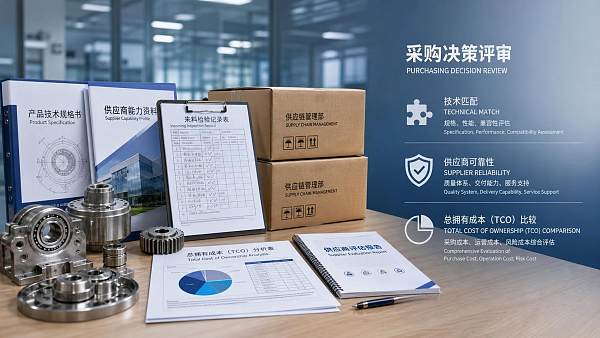
 Aug 03, 2026What Criteria Matter Most When Comparing Solutions for a B2B Buying Decision?Solution comparison criteria for B2B buying: learn how to weigh technical fit, supplier reliability, TCO, scalability, and supply-chain risk to choose with confidence.● Marcus Valve
 Jul 27, 2026How to Choose Custom Printed Guitar Picks for Branding, Events, and Retail SalesGuitar picks custom printed: learn how to choose the right material, thickness, print quality, packaging, and supplier for branding, events, and retail success.● Marcus Valve
 Jul 24, 2026How Do Metronomes and Tuners Work Together to Improve Practice Accuracy?Metronomes and tuners work best together to improve practice accuracy. Discover how they sharpen timing, stabilize pitch, and help musicians build more reliable performance results.● Marcus Valve
 Jul 23, 2026Product Selection for Electronic Components: Key Criteria for Reliable Design ChoicesProduct Selection for electronic components starts with reliability. Learn how to evaluate thermal, compliance, and supply-chain risks to build durable, cost-efficient designs.● Marcus Valve
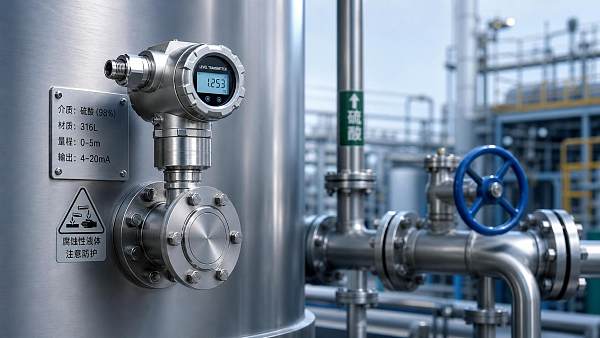
 Jul 21, 2026How to Select Stainless Steel Level Transmitters for Corrosive Liquid ApplicationsStainless steel Level Transmitters selection for corrosive liquids starts with media, seals, and pressure. Learn how to choose reliable, compliant options that cut failure risk and downtime.● Marcus Valve
 Jul 12, 2026Luxury Vinyl Tile for Commercial Spaces: How to Compare Wear, Cost, and MaintenanceLuxury vinyl tile commercial flooring guide: compare wear layer, lifecycle cost, and maintenance needs to choose a durable, low-risk option for busy commercial spaces.● Marcus Valve
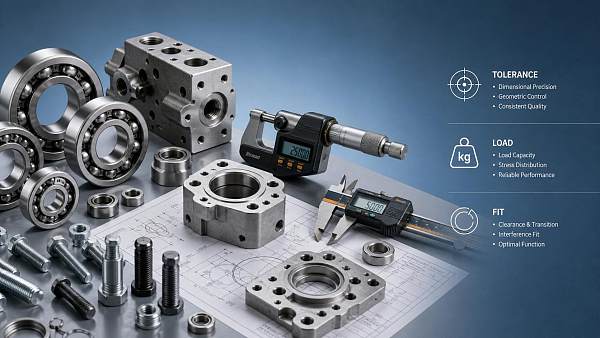
 Jul 10, 2026Component Specification Requirements Explained: How to Review Tolerance, Load, and FitComponent specification requirements explained clearly: learn how to review tolerance, load, and fit to reduce risk, improve uptime, and make smarter approval decisions.● Marcus Valve
 Jul 09, 2026Playground Borders: Which Materials Work Best for Drainage, Safety, and Low MaintenancePlayground borders compared by drainage, safety, and maintenance. Discover whether rubber, concrete, timber, composite, or metal is the best fit for your project.● Marcus Valve
 Jul 08, 2026Digital Pressure Transmitters Selection Guide: Accuracy, Output Signal, and Pressure RangeDigital Pressure Transmitters selection guide covering accuracy, output signal, and pressure range. Learn how to compare options for reliable performance, compatibility, and lower lifecycle costs.● Marcus Valve
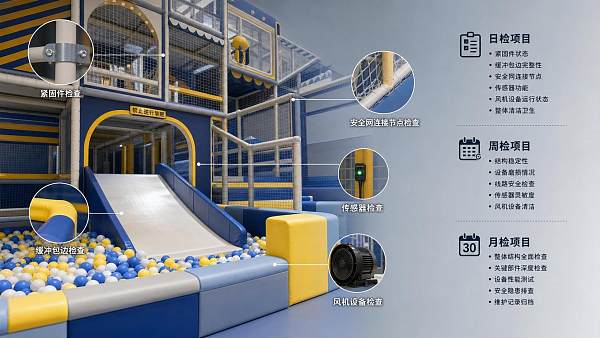
 Jul 05, 2026Indoor Playground Maintenance Checklist: Daily, Weekly, and Monthly Tasks That MatterIndoor playground maintenance made practical: discover the daily, weekly, and monthly tasks that improve safety, reduce downtime, and extend equipment life.● Marcus Valve
 Jun 30, 2026Product Selection by Current Rating: How to Match Electrical Loads and Safety MarginsProduct Selection by current rating made practical: learn how to match real electrical loads, derating factors, and safety margins for safer systems, longer component life, and smarter buying decisions.● Marcus Valve
 Jun 26, 2026Pressure Transmitters Selection Guide: Key Specifications for Industrial SystemsPressure Transmitters selection guide for industrial systems: learn key specs, avoid costly mistakes, and choose the right fit for reliable performance.● Marcus Valve