Hot Articles
Popular Tags
What Fluid Power losses reveal about hidden energy costs
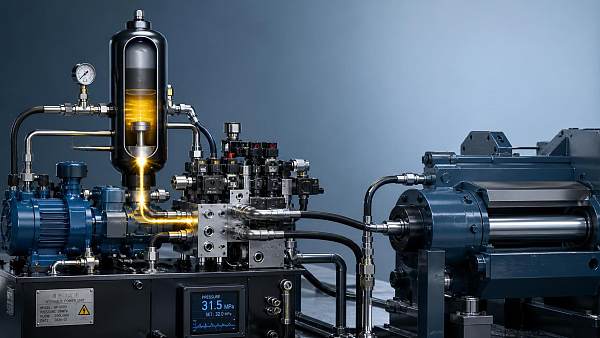
Fluid Power losses often go unnoticed, yet they quietly drain efficiency, raise operating costs, and shorten equipment life across industrial systems. For researchers and sourcing professionals, understanding where these hidden losses occur—from leakage and heat generation to pressure drops and poor component matching—offers a sharper view of true lifecycle cost. This article explores what Fluid Power losses reveal about hidden energy costs and why they matter for smarter technical and procurement decisions.
In heavy manufacturing, material handling, mobile equipment, process plants, and automated production lines, Fluid Power is valued for high force density and responsive motion control. However, the energy that does not reach the actuator still gets paid for through electricity, maintenance labor, spare parts, oil replacement, and unplanned downtime. For information researchers evaluating suppliers or technologies, these losses are often the clearest signal of whether a system is technically mature or merely adequate on paper.
Within complex supply chains, hidden energy cost is rarely caused by a single bad component. More often, it appears as a system-level problem across pumps, valves, cylinders, seals, hoses, filters, coolers, controls, and installation practices. A 2% internal leakage rate, a 10 bar avoidable pressure drop, or an oil temperature drifting from 45°C to 65°C can materially change annual operating cost. That is why Fluid Power loss analysis matters not only to engineers, but also to procurement directors, sourcing managers, and industrial reliability teams.
Where Fluid Power losses originate in real industrial systems
To understand hidden energy costs, it helps to break Fluid Power losses into a few practical categories. Most industrial systems experience losses in four main areas: volumetric loss, mechanical loss, hydraulic restriction, and thermal loss. These categories are interconnected, and one weakness often amplifies another across a duty cycle of 8, 16, or 24 hours per day.
Volumetric loss: leakage that reduces useful output
Volumetric loss occurs when pumped fluid does not become productive flow at the actuator. Internal leakage inside pumps, valves, and cylinders is common, especially as clearances widen with wear. External leakage from fittings, rods, and seals is easier to see, but both forms matter. Even a small leak path can lower efficiency by 3%–8% over time, particularly in high-pressure systems operating above 210 bar.
Why leakage matters beyond oil loss
Many buyers focus on the cost of replacing hydraulic oil, but leakage also means lost pressure stability, extra pump loading, and more heat generation. In precision applications such as clamping, lifting, or synchronized motion, leakage can lead to drift, slower cycle times, and repeated correction by control systems. That creates a second-order energy penalty that is not visible on a component datasheet.
Mechanical loss: friction inside pumps and actuators
Mechanical losses are caused by friction between moving parts such as bearings, gears, pistons, swash plates, seals, and rod surfaces. In older or poorly lubricated systems, friction can increase progressively rather than suddenly. A pump with acceptable nameplate performance may still consume noticeably more input power after 12–18 months if contamination, viscosity mismatch, or surface wear has changed internal resistance.
Pressure drop: the overlooked cost of restrictions
Pressure drop across valves, hoses, manifolds, filters, and connectors is one of the most underestimated Fluid Power losses. A pressure drop of 5–15 bar across a poorly sized line or clogged filter may seem tolerable, but in a system with multiple restrictions, total avoidable loss can become significant. That lost pressure must be compensated by more pump work, which raises motor energy use and oil temperature.
The table below shows typical sources of Fluid Power loss and what each one usually reveals to technical and procurement teams.
For sourcing professionals, the key takeaway is that Fluid Power loss is rarely isolated. If one supplier offers a lower unit price but their valve stack creates a larger pressure drop or poorer control stability, the annual energy and maintenance penalty can exceed the purchase saving within one service interval.
What hidden energy costs really include across the lifecycle
When organizations calculate the cost of Fluid Power, they often start with pump size, motor rating, and hydraulic oil volume. That baseline is necessary, but incomplete. Hidden energy cost includes all the indirect consumption and reliability losses created by inefficient power transmission. In many cases, the true cost emerges over 3–5 years rather than at commissioning.
Electricity use is only the first layer
A system running a 30 kW motor for two shifts may appear stable on average energy data, yet still waste power through bypass flow, overpressure settings, or throttling control. If useful actuator work only captures part of the hydraulic input, the remaining energy converts to heat. This means the facility pays twice: once to create the hydraulic power and again to remove the unwanted thermal load through cooling or ventilation.
Heat accelerates fluid and seal degradation
Oil temperature is one of the simplest indicators of Fluid Power loss. Many systems perform best within a moderate range such as 40°C–55°C, depending on oil grade and component design. Once temperatures rise persistently above that band, viscosity changes can reduce lubrication quality and increase internal leakage. Seal materials also age faster, turning energy loss into a spare-parts and downtime issue.
Downtime and throughput loss are economic losses too
In production environments, a 6-second cycle becoming 7 seconds may not seem dramatic. Across 20,000 cycles per month, however, that delay can materially affect output planning, labor utilization, and shipment timing. Fluid Power inefficiency often appears first as slower response, force inconsistency, or temperature alarms long before a major failure occurs.
- Higher electrical draw from pumps and motors during every operating hour
- Additional cooling demand when excess heat must be managed continuously
- Shorter oil drain intervals due to oxidation, contamination, or viscosity breakdown
- More frequent replacement of seals, filters, hoses, and wear-sensitive components
- Lower output per shift caused by slower cycles or unstable actuator performance
For buyers comparing systems from different vendors, lifecycle cost should therefore include at least 5 dimensions: energy use, maintenance frequency, consumables, uptime risk, and process stability. Looking at only purchase price can hide the real economic profile of Fluid Power equipment.
How to detect Fluid Power losses before they become procurement mistakes
Information researchers and sourcing teams do not always have full access to field data, but they can still identify risk. The most effective method is to combine component review, system architecture analysis, and application-specific operating conditions. In practice, 4 to 6 checks can reveal whether a proposed Fluid Power solution is efficient enough for long-term use.
Check the pressure path, not just rated pressure
A supplier may specify a system rated for 250 bar or 315 bar, but rated pressure alone says little about efficiency. Ask how much pressure is lost across filtration, directional control, proportional control, hose length, and return routing under normal flow. A system that wastes 12 bar in controls and 8 bar in line routing is already giving away a meaningful portion of paid energy.
Match components to the duty cycle
Fluid Power losses often come from poor matching rather than defective hardware. A pump selected for peak demand may run inefficiently for 70% of the time if the application mostly operates at partial load. Likewise, oversize valves can reduce control sensitivity, while undersize hoses increase pressure drop. Duty-cycle mapping over at least 3 operating modes is usually more revealing than static specification review.
Review contamination control and filtration strategy
Contamination does not only damage components; it also increases Fluid Power loss by accelerating wear and raising internal friction. Procurement teams should ask for filtration layout, service intervals, differential pressure guidance, and recommended cleanliness targets where relevant. In critical systems, poor filtration can turn a well-designed hydraulic package into a high-loss asset within one maintenance cycle.
The following table can be used as a practical pre-purchase checklist for evaluating hidden energy risks in Fluid Power systems.
This checklist is useful because it shifts evaluation from headline specifications to operating evidence. In B2B procurement, that change reduces the risk of selecting a compliant but inefficient system that increases ownership cost after installation.
Why Fluid Power loss analysis matters in a fragmented global supply chain
In a fragmented sourcing environment, industrial buyers are often comparing multiple regions, lead times, and quality levels at once. A lower-cost cylinder, valve, or connector may appear attractive when delivery windows are tight, but component inconsistency can increase Fluid Power losses in subtle ways. Tolerance variation, seal compound differences, surface finish quality, and material stability all affect efficiency and service life.
Component quality variation creates system-level penalties
If one batch of fittings has higher flow restriction or one seal set introduces more friction, the resulting penalty spreads across the system. Buyers managing international sourcing should therefore examine dimensional consistency, pressure rating alignment, documentation completeness, and compatibility with ISO, DIN, ASME, or application-specific requirements. In critical operations, even small deviations can increase maintenance frequency from annual service to semiannual intervention.
Technical intelligence supports better cross-functional decisions
For organizations handling advanced hydraulics, AMH systems, flow control hardware, and critical connectors, Fluid Power loss analysis supports more than energy management. It also informs sourcing strategy, spare-parts planning, vendor qualification, and risk control. That is especially relevant when raw material prices, cross-border policies, or project tender timelines put pressure on short-term buying decisions.
- Define the operating profile: pressure, flow, duty cycle, temperature band, and contamination exposure.
- Compare supplier data on efficiency-related design details, not only catalog ratings.
- Review standards alignment and documentation depth for critical components and interfaces.
- Estimate 3-year ownership impact across energy, maintenance, oil, filters, and downtime risk.
- Prioritize suppliers that can support technical review, traceability, and post-installation feedback.
This process is consistent with the needs of industrial decision-makers who require both engineering clarity and supply-chain resilience. For technical sourcing teams, the best Fluid Power decision is not simply the one with the lowest initial quote, but the one with the most predictable operating cost and the least hidden loss.
Common misconceptions that hide Fluid Power energy waste
Several recurring assumptions lead companies to underestimate Fluid Power losses. Correcting these misconceptions can improve both equipment selection and ongoing asset management.
“If there is no visible leak, efficiency is acceptable”
Visible leakage is only one part of the loss picture. Internal bypassing, control throttling, and friction losses may consume substantial energy without leaving any oil on the floor. Pressure and temperature trends are often better diagnostic indicators than visual inspection alone.
“Oversizing improves reliability”
Moderate design margin is sensible, but chronic oversizing can worsen partial-load performance and increase throttling losses. A larger pump or valve does not automatically create a better Fluid Power system if the application only uses a fraction of the installed capacity during most cycles.
“Energy cost is separate from maintenance cost”
In reality, these costs are linked. Heat created by inefficient Fluid Power transmission shortens oil life, increases seal wear, and accelerates component fatigue. What appears in one budget line as energy consumption often reappears in another as repair, consumables, or downtime.
Fluid Power losses reveal more than inefficiency. They reveal how well a system has been engineered, specified, installed, and supported across its full lifecycle. For researchers, procurement teams, and industrial operators, that insight is essential when evaluating critical components in an environment where uptime, traceability, and total reliability matter as much as price.
Organizations that assess leakage paths, thermal behavior, pressure drop, contamination control, and component matching early are better positioned to avoid hidden energy costs later. They also gain a stronger basis for supplier comparison, maintenance planning, and capital allocation across hydraulic and motion-control assets.
If you are reviewing Fluid Power systems, components, or sourcing options for demanding industrial applications, now is the right time to deepen the analysis beyond catalog specifications. Contact us to discuss technical details, request a tailored evaluation framework, or explore more supply-chain and critical-component solutions aligned with long-term operational reliability.
Recommended News
 Oct 09, 2026How to Assess a Jade Bangles Manufacturer for Authenticity and OEM QualityAssess a jade bangles manufacturer for authenticity, treatment disclosure, OEM consistency, quality control, certification, and export-ready documentation.● Marcus Valve
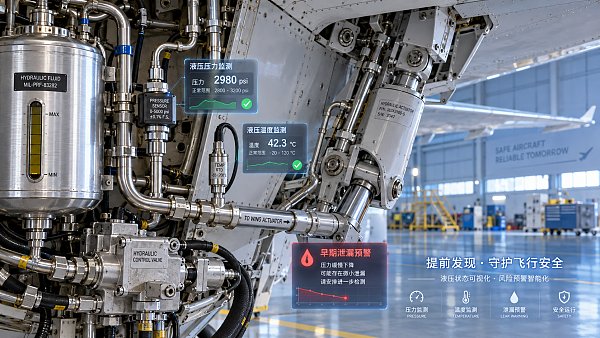
 Oct 02, 2026How Aircraft Hydraulic Safety Alerts Help Detect Leaks and Pressure Loss EarlyAircraft hydraulic safety alerts detect leaks and pressure loss early through smarter monitoring of pressure, fluid quantity, temperature, pump behavior, and actuator response.● Marcus Valve
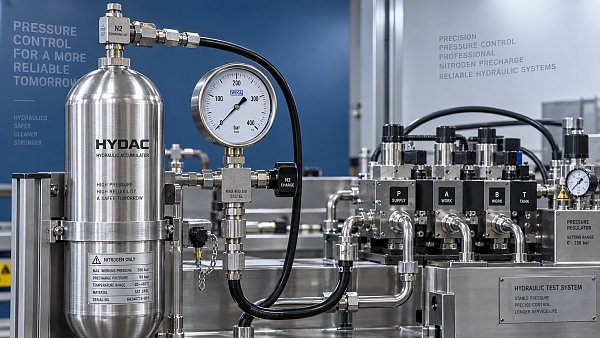
 Sep 27, 2026Hydraulic Accumulator Precharge: How to Set It for Reliable Pressure ControlHydraulic accumulator precharge guide: set nitrogen pressure accurately for stable control, usable fluid volume, safer operation, and longer system life.● Marcus Valve
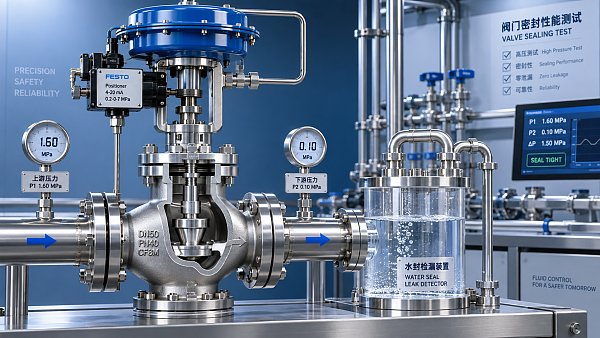
 Sep 26, 2026Valve Leakage Class Data: How to Interpret Allowable Leakage for Critical ServiceValve leakage class data explained: learn how to assess allowable leakage, test media, pressure differential, seat design, and standards for critical valve service.● Marcus Valve
 Sep 21, 2026Wholesale Vending Machines: A Buyer’s Checklist for Pricing, Capacity, and Service SupportWholesale vending machines buyer’s checklist: compare delivered pricing, real product capacity, payment options, installation needs, and dependable service support.● Marcus Valve
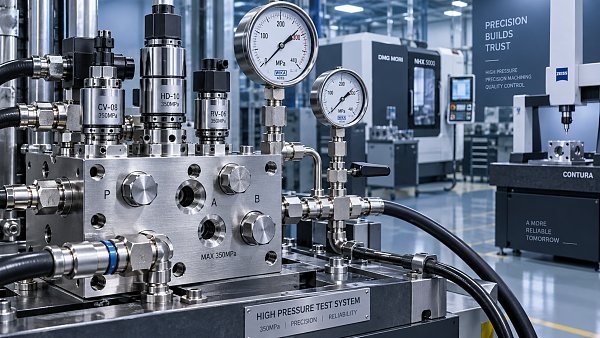
 Sep 20, 2026How to Evaluate a Hydraulic Manifold Manufacturer for High-Pressure SystemsHydraulic Manifolds manufacturer evaluation guide: compare pressure ratings, materials, machining, testing, cleanliness, and traceability for reliable high-pressure systems.● Marcus Valve
 Sep 08, 2026How to Specify High-Pressure Fluid Power Systems for Demanding Industrial Duty CyclesFluid Power high pressure system specification guide: optimize duty cycles, fatigue life, cleanliness, thermal control, safety, and supplier reliability.● Marcus Valve
 Sep 02, 2026How to Set Piston Accumulator Precharge Pressure for Reliable Hydraulic PerformancePiston accumulator precharge pressure: learn how to set P0, P1, and P2 for dependable hydraulic energy storage, safety reserves, and pulsation control.● Marcus Valve
 Aug 27, 2026How to Reduce Hydraulic Manifold Pressure Drop Without Undersizing Flow CapacityHydraulic manifold pressure drop: learn practical ways to cut energy loss, protect flow capacity, improve thermal stability, and optimize valve and port design.● Marcus Valve
 Aug 17, 2026How to Choose the Right Outdoor Patio Heater for Commercial SpacesOutdoor patio heaters for commercial spaces: learn how to choose the right model for comfort, safety, durability, and lower operating costs.● Marcus Valve
 Aug 12, 2026How to Select Hydraulic Components for Industrial Machinery by Load, Pressure, and Duty CycleHydraulic components for industrial machinery: learn how to match load, pressure, and duty cycle to reduce downtime, avoid oversizing, and improve reliability.● Marcus Valve
 Aug 09, 2026How to Size a High Pressure Hydraulic Accumulator for Peak Load StabilityHigh pressure hydraulic accumulator sizing made clear: learn how to define pressure windows, usable oil volume, and response speed for stable peak loads and smarter selection.● Marcus Valve
 Aug 03, 2026What Criteria Matter Most When Comparing Solutions for a B2B Buying Decision?Solution comparison criteria for B2B buying: learn how to weigh technical fit, supplier reliability, TCO, scalability, and supply-chain risk to choose with confidence.● Marcus Valve
 Jul 27, 2026How to Choose Custom Printed Guitar Picks for Branding, Events, and Retail SalesGuitar picks custom printed: learn how to choose the right material, thickness, print quality, packaging, and supplier for branding, events, and retail success.● Marcus Valve
 Jul 24, 2026How Do Metronomes and Tuners Work Together to Improve Practice Accuracy?Metronomes and tuners work best together to improve practice accuracy. Discover how they sharpen timing, stabilize pitch, and help musicians build more reliable performance results.● Marcus Valve
 Jul 23, 2026Product Selection for Electronic Components: Key Criteria for Reliable Design ChoicesProduct Selection for electronic components starts with reliability. Learn how to evaluate thermal, compliance, and supply-chain risks to build durable, cost-efficient designs.● Marcus Valve
 Jul 21, 2026How to Select Stainless Steel Level Transmitters for Corrosive Liquid ApplicationsStainless steel Level Transmitters selection for corrosive liquids starts with media, seals, and pressure. Learn how to choose reliable, compliant options that cut failure risk and downtime.● Marcus Valve
 Jul 12, 2026Luxury Vinyl Tile for Commercial Spaces: How to Compare Wear, Cost, and MaintenanceLuxury vinyl tile commercial flooring guide: compare wear layer, lifecycle cost, and maintenance needs to choose a durable, low-risk option for busy commercial spaces.● Marcus Valve
 Jul 10, 2026Component Specification Requirements Explained: How to Review Tolerance, Load, and FitComponent specification requirements explained clearly: learn how to review tolerance, load, and fit to reduce risk, improve uptime, and make smarter approval decisions.● Marcus Valve
 Jul 09, 2026Playground Borders: Which Materials Work Best for Drainage, Safety, and Low MaintenancePlayground borders compared by drainage, safety, and maintenance. Discover whether rubber, concrete, timber, composite, or metal is the best fit for your project.● Marcus Valve
 Jul 08, 2026Digital Pressure Transmitters Selection Guide: Accuracy, Output Signal, and Pressure RangeDigital Pressure Transmitters selection guide covering accuracy, output signal, and pressure range. Learn how to compare options for reliable performance, compatibility, and lower lifecycle costs.● Marcus Valve
 Jul 05, 2026Indoor Playground Maintenance Checklist: Daily, Weekly, and Monthly Tasks That MatterIndoor playground maintenance made practical: discover the daily, weekly, and monthly tasks that improve safety, reduce downtime, and extend equipment life.● Marcus Valve
 Jun 30, 2026Product Selection by Current Rating: How to Match Electrical Loads and Safety MarginsProduct Selection by current rating made practical: learn how to match real electrical loads, derating factors, and safety margins for safer systems, longer component life, and smarter buying decisions.● Marcus Valve
 Jun 26, 2026Pressure Transmitters Selection Guide: Key Specifications for Industrial SystemsPressure Transmitters selection guide for industrial systems: learn key specs, avoid costly mistakes, and choose the right fit for reliable performance.● Marcus Valve