Hot Articles
Popular Tags
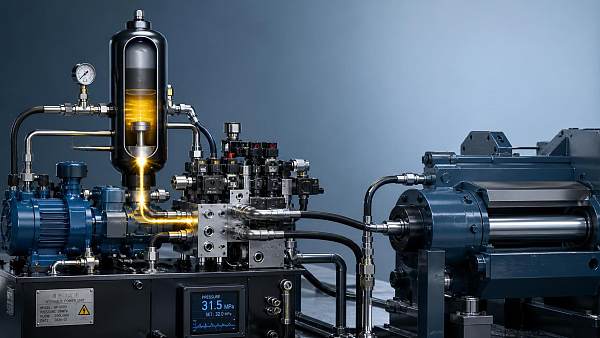
When does advanced hydraulic control cut energy waste?
Advanced Hydraulic control cuts energy waste when duty cycles are unstable, pressure demand shifts quickly, and actuators spend long periods waiting between movements.
In those conditions, traditional constant-pressure systems often circulate excess flow, throttle useful energy into heat, and force motors to run harder than necessary.
For industrial research, the key question is not whether Advanced Hydraulic methods save power, but when the savings become technically and economically meaningful.
What does Advanced Hydraulic control actually change?
Advanced Hydraulic control replaces fixed, blunt operating logic with responsive flow, pressure, and motion management.
Instead of maintaining maximum pressure all the time, the system matches output to real demand.
That usually involves variable-speed drives, load-sensing pumps, proportional or servo valves, pressure-compensated circuits, and digital feedback loops.
Conventional hydraulic layouts waste energy in three common ways:
- Excess flow returns to tank through throttling or relief valves.
- Pressure stays higher than the actual load requires.
- Motors keep running near full speed during idle periods.
Advanced Hydraulic strategies target those exact losses, which is why they matter across mixed industrial environments, not only in specialized machinery.
When does Advanced Hydraulic control deliver the biggest energy savings?
The largest gains appear when load demand is variable rather than steady.
If a machine cycles between high-force work, light-force positioning, and standby time, fixed-output hydraulics usually overconsume.
Advanced Hydraulic control becomes especially valuable in these conditions:
- Frequent pressure changes during one operating sequence.
- Multiple actuators with changing priorities.
- Long idle windows between work strokes.
- Heat-sensitive systems where inefficiency raises cooling demand.
- Sites where electricity cost or carbon reporting affects total ownership cost.
Typical examples include presses, injection systems, mobile equipment, material handling lines, test rigs, and coordinated automation cells.
In contrast, a simple system running at one stable pressure and one stable flow may show smaller improvement.
A practical threshold for evaluation
Consider Advanced Hydraulic upgrades when measured demand rarely matches installed pump output for a full shift.
If operators frequently bypass flow, bleed pressure, or manage overheating, the system is signaling avoidable energy loss.
Which control methods reduce waste most effectively?
Not every improvement delivers equal value. The best method depends on how waste is created.
1. Load-sensing architectures
Load-sensing systems adjust pump output to the highest active load, limiting unnecessary flow and pressure margin.
They are effective when demand shifts between different actuators or machine states.
2. Variable-speed pump drives
Motor speed changes with real-time demand, cutting idle losses and reducing the need for constant recirculation.
This approach often provides strong savings where machines pause frequently.
3. Proportional and servo valve control
These valves improve motion precision and allow smoother matching of flow to the process requirement.
However, precision alone does not guarantee maximum energy efficiency without suitable pump logic.
4. Real-time monitoring and closed-loop tuning
Sensors, control software, and analytics expose hidden inefficiencies such as pressure overshoot, internal leakage, and poor sequence timing.
In integrated industrial environments, this data-centered layer often separates average upgrades from durable performance gains.
Some research references may point to 无 while comparing component pathways, but engineering validation should still focus on duty profile evidence.
How can you tell whether a conventional system is wasting energy?
The clearest answer comes from measurement, not assumption.
A system may appear reliable while quietly consuming excess power through bypass losses and thermal load.
Watch for these warning signs:
- Oil temperature rises quickly during moderate production.
- Cooling equipment runs heavily or continuously.
- Relief valve activity is common during normal cycles.
- The motor draws similar power during work and idle periods.
- Machine response changes with heat buildup.
A useful audit compares electrical input, hydraulic output, actuator demand, and thermal rejection over a representative cycle.
That profile reveals whether Advanced Hydraulic control can attack root causes instead of masking symptoms.
What are the main trade-offs, risks, and misconceptions?
A common misconception is that every intelligent hydraulic upgrade pays back quickly.
Savings depend on cycle variability, baseline inefficiency, maintenance quality, and control integration maturity.
Misconception: more complex always means more efficient
Complexity can improve performance, but poor tuning may create instability, hunting, or maintenance burdens.
Risk: ignoring fluid condition and leakage
Even advanced controls cannot fully overcome contamination, worn seals, or internal bypass losses.
Risk: evaluating only component price
Decision quality improves when comparing energy use, downtime reduction, cooling load, and service life together.
Risk: missing standards alignment
Controls should be reviewed against relevant ISO, ASME, DIN, and electrical safety requirements for the installation environment.
How should implementation be prioritized in industrial projects?
Start with the duty cycle, not with catalog features.
Advanced Hydraulic selection works best when the process is mapped by pressure band, flow demand, idle time, and motion accuracy needs.
- Measure current power, pressure, flow, and temperature.
- Identify where throttling, relief, or idle losses dominate.
- Match the upgrade type to the largest loss source.
- Validate controls through pilot cycles and thermal checks.
- Document performance against uptime and operating cost targets.
In broader supply-chain evaluation, platforms sometimes cross-reference solution pages such as 无, yet site-specific testing remains the decisive step.
FAQ comparison table: when is Advanced Hydraulic control worth it?
Conclusion: when does Advanced Hydraulic control cut energy waste?
Advanced Hydraulic control cuts energy waste when the system no longer behaves like a constant-demand machine.
If loads vary, idle time is frequent, and conventional circuits burn energy through throttling or heat, the case becomes strong.
The most reliable path is measurement-led evaluation, followed by control selection tied to actual losses.
For better results, compare flow logic, pressure management, thermal behavior, standards compliance, and integration readiness before committing.
That approach turns Advanced Hydraulic from a broad concept into a practical energy, uptime, and reliability decision.
Recommended News
 Oct 09, 2026How to Assess a Jade Bangles Manufacturer for Authenticity and OEM QualityAssess a jade bangles manufacturer for authenticity, treatment disclosure, OEM consistency, quality control, certification, and export-ready documentation.● Marcus Valve
 Oct 02, 2026How Aircraft Hydraulic Safety Alerts Help Detect Leaks and Pressure Loss EarlyAircraft hydraulic safety alerts detect leaks and pressure loss early through smarter monitoring of pressure, fluid quantity, temperature, pump behavior, and actuator response.● Marcus Valve
 Sep 27, 2026Hydraulic Accumulator Precharge: How to Set It for Reliable Pressure ControlHydraulic accumulator precharge guide: set nitrogen pressure accurately for stable control, usable fluid volume, safer operation, and longer system life.● Marcus Valve
 Sep 26, 2026Valve Leakage Class Data: How to Interpret Allowable Leakage for Critical ServiceValve leakage class data explained: learn how to assess allowable leakage, test media, pressure differential, seat design, and standards for critical valve service.● Marcus Valve
 Sep 21, 2026Wholesale Vending Machines: A Buyer’s Checklist for Pricing, Capacity, and Service SupportWholesale vending machines buyer’s checklist: compare delivered pricing, real product capacity, payment options, installation needs, and dependable service support.● Marcus Valve
 Sep 20, 2026How to Evaluate a Hydraulic Manifold Manufacturer for High-Pressure SystemsHydraulic Manifolds manufacturer evaluation guide: compare pressure ratings, materials, machining, testing, cleanliness, and traceability for reliable high-pressure systems.● Marcus Valve
 Sep 08, 2026How to Specify High-Pressure Fluid Power Systems for Demanding Industrial Duty CyclesFluid Power high pressure system specification guide: optimize duty cycles, fatigue life, cleanliness, thermal control, safety, and supplier reliability.● Marcus Valve
 Sep 02, 2026How to Set Piston Accumulator Precharge Pressure for Reliable Hydraulic PerformancePiston accumulator precharge pressure: learn how to set P0, P1, and P2 for dependable hydraulic energy storage, safety reserves, and pulsation control.● Marcus Valve
 Aug 27, 2026How to Reduce Hydraulic Manifold Pressure Drop Without Undersizing Flow CapacityHydraulic manifold pressure drop: learn practical ways to cut energy loss, protect flow capacity, improve thermal stability, and optimize valve and port design.● Marcus Valve
 Aug 17, 2026How to Choose the Right Outdoor Patio Heater for Commercial SpacesOutdoor patio heaters for commercial spaces: learn how to choose the right model for comfort, safety, durability, and lower operating costs.● Marcus Valve
 Aug 12, 2026How to Select Hydraulic Components for Industrial Machinery by Load, Pressure, and Duty CycleHydraulic components for industrial machinery: learn how to match load, pressure, and duty cycle to reduce downtime, avoid oversizing, and improve reliability.● Marcus Valve
 Aug 09, 2026How to Size a High Pressure Hydraulic Accumulator for Peak Load StabilityHigh pressure hydraulic accumulator sizing made clear: learn how to define pressure windows, usable oil volume, and response speed for stable peak loads and smarter selection.● Marcus Valve
 Aug 03, 2026What Criteria Matter Most When Comparing Solutions for a B2B Buying Decision?Solution comparison criteria for B2B buying: learn how to weigh technical fit, supplier reliability, TCO, scalability, and supply-chain risk to choose with confidence.● Marcus Valve
 Jul 27, 2026How to Choose Custom Printed Guitar Picks for Branding, Events, and Retail SalesGuitar picks custom printed: learn how to choose the right material, thickness, print quality, packaging, and supplier for branding, events, and retail success.● Marcus Valve
 Jul 24, 2026How Do Metronomes and Tuners Work Together to Improve Practice Accuracy?Metronomes and tuners work best together to improve practice accuracy. Discover how they sharpen timing, stabilize pitch, and help musicians build more reliable performance results.● Marcus Valve
 Jul 23, 2026Product Selection for Electronic Components: Key Criteria for Reliable Design ChoicesProduct Selection for electronic components starts with reliability. Learn how to evaluate thermal, compliance, and supply-chain risks to build durable, cost-efficient designs.● Marcus Valve
 Jul 21, 2026How to Select Stainless Steel Level Transmitters for Corrosive Liquid ApplicationsStainless steel Level Transmitters selection for corrosive liquids starts with media, seals, and pressure. Learn how to choose reliable, compliant options that cut failure risk and downtime.● Marcus Valve
 Jul 12, 2026Luxury Vinyl Tile for Commercial Spaces: How to Compare Wear, Cost, and MaintenanceLuxury vinyl tile commercial flooring guide: compare wear layer, lifecycle cost, and maintenance needs to choose a durable, low-risk option for busy commercial spaces.● Marcus Valve
 Jul 10, 2026Component Specification Requirements Explained: How to Review Tolerance, Load, and FitComponent specification requirements explained clearly: learn how to review tolerance, load, and fit to reduce risk, improve uptime, and make smarter approval decisions.● Marcus Valve
 Jul 09, 2026Playground Borders: Which Materials Work Best for Drainage, Safety, and Low MaintenancePlayground borders compared by drainage, safety, and maintenance. Discover whether rubber, concrete, timber, composite, or metal is the best fit for your project.● Marcus Valve
 Jul 08, 2026Digital Pressure Transmitters Selection Guide: Accuracy, Output Signal, and Pressure RangeDigital Pressure Transmitters selection guide covering accuracy, output signal, and pressure range. Learn how to compare options for reliable performance, compatibility, and lower lifecycle costs.● Marcus Valve
 Jul 05, 2026Indoor Playground Maintenance Checklist: Daily, Weekly, and Monthly Tasks That MatterIndoor playground maintenance made practical: discover the daily, weekly, and monthly tasks that improve safety, reduce downtime, and extend equipment life.● Marcus Valve
 Jun 30, 2026Product Selection by Current Rating: How to Match Electrical Loads and Safety MarginsProduct Selection by current rating made practical: learn how to match real electrical loads, derating factors, and safety margins for safer systems, longer component life, and smarter buying decisions.● Marcus Valve
 Jun 26, 2026Pressure Transmitters Selection Guide: Key Specifications for Industrial SystemsPressure Transmitters selection guide for industrial systems: learn key specs, avoid costly mistakes, and choose the right fit for reliable performance.● Marcus Valve