Hot Articles
Popular Tags
Why automated system mtbf data can mislead uptime plans
Why automated system mtbf data can mislead uptime plans
For technical evaluators, automated system mtbf data often looks like a reliable shortcut for forecasting uptime, spare-part demand, and maintenance intervals.
Yet MTBF figures can hide application stress, duty-cycle variation, software faults, component sourcing differences, and real-world operating conditions.
In complex industrial environments, misreading these averages can create overconfident availability models and costly downtime exposure.
Basic meaning of automated system mtbf data
MTBF means mean time between failures. It estimates the average operating time between repairable system failures under defined assumptions.
In automated operations, the metric may cover robots, conveyors, controllers, sensors, hydraulic modules, drives, and connected software layers.
Automated system mtbf data becomes useful only when its boundary is clear. A component figure is not a full-line reliability figure.
A valve, fastener, flow meter, AMR, or PLC can show strong MTBF while the integrated cell remains fragile.
The issue is not that MTBF is useless. The issue is that averages compress many failure behaviors into one number.
A plan based only on automated system mtbf data may miss clustering, early-life defects, wear-out, installation errors, and external shocks.
Why the average can become misleading
MTBF assumes a statistical population. It rarely describes the next failure of a specific asset in a specific plant.
A published MTBF may come from laboratory testing, warranty returns, simulations, accelerated aging, or mixed installed-base records.
Each source has value. Each source also carries bias, censoring, and context loss.
Automated system mtbf data can therefore appear precise while the uncertainty behind it remains large.
Industry context behind reliability overconfidence
Modern industrial systems combine mechanical force, digital control, material handling, fluid power, and supply-chain dependencies.
That integration raises productivity. It also makes failure attribution harder and uptime planning more sensitive to hidden assumptions.
An AMH fleet may fail through battery degradation, traffic logic, wireless interference, wheel wear, or loading dock variation.
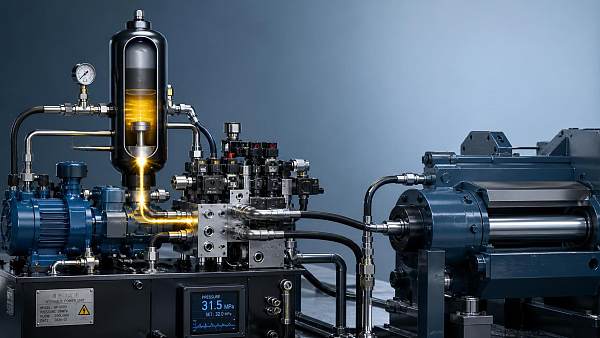
A hydraulic station may be limited by seal chemistry, oil cleanliness, pressure spikes, temperature, or cylinder alignment.
A metering and control loop may depend on calibration drift, firmware revisions, turbulence, particles, and connector integrity.
In this context, automated system mtbf data should be treated as one input, not as a complete uptime model.
Common sources of distortion in MTBF records
The first distortion is operating profile mismatch. A system tested at moderate load may face continuous peak utilization.
The second distortion is duty-cycle variation. Start-stop cycling can damage drives, seals, relays, and connectors differently from steady operation.
The third distortion is environment. Dust, vibration, humidity, washdown chemicals, temperature swings, and electromagnetic noise affect failure rates.
The fourth distortion is maintenance quality. Lubrication discipline, torque control, filter changes, calibration, and software patching change outcomes.
The fifth distortion is component sourcing. Equivalent parts may differ in metallurgy, tolerance control, firmware, seal compounds, or traceability.
- Automated system mtbf data may exclude human reset time and diagnostic delay.
- It may classify intermittent software faults differently from hardware faults.
- It may ignore upstream utility instability or compressed-air quality.
- It may combine old and new product revisions without separation.
These distortions matter because uptime plans depend on failure timing, repair duration, diagnosis speed, and parts availability.
Business value of a broader reliability framework
A rigorous framework turns automated system mtbf data into a controlled reliability assumption rather than a promise.
It connects MTBF with MTTR, availability, maintainability, redundancy, safety stock, and operational criticality.
MTTR means mean time to repair. A system with modest MTBF can perform well if repair is fast.
A system with high MTBF can still harm operations if every failure requires rare parts or specialist access.
Availability is often estimated as MTBF divided by MTBF plus MTTR. This formula is simple but incomplete.
It ignores logistics delay, restart validation, quality checks, software recovery, and production rescheduling.
Using automated system mtbf data with these related measures supports more realistic maintenance budgets and downtime contingencies.
Where the metric still helps
MTBF remains valuable for comparing similar assets under similar assumptions. It helps rank designs, vendors, and technology alternatives.
It also supports early spare modeling when field history is limited and production exposure is still growing.
The key is to document assumptions and revise them when local evidence appears.
Typical scenarios requiring careful interpretation
Different industrial pillars expose automated system mtbf data to different interpretation risks.
In each case, automated system mtbf data must be linked with failure definitions and asset boundaries.
A stopped conveyor, degraded measurement, slow robot recovery, and leaking cylinder may not be counted consistently.
Practical checks before using automated system mtbf data
A disciplined review can prevent misleading uptime plans. The following checks are practical and repeatable.
- Define the asset boundary before accepting automated system mtbf data.
- Confirm whether the figure covers component, subsystem, cell, fleet, or full process.
- Ask for the failure definition used in the calculation.
- Separate hardware failures, software faults, operator interventions, and process disturbances.
- Compare the test profile with expected load, speed, temperature, and duty cycle.
- Review the sample size, operating hours, exclusions, and confidence interval.
- Validate the number against local pilot data or comparable installations.
Confidence intervals are especially important. Two systems can share the same MTBF while carrying very different uncertainty.
If the installed base is small, automated system mtbf data should be treated as provisional.
Questions that improve reliability planning
- What events count as failures, degraded states, or nuisance stops?
- What operating hours were excluded from the data set?
- Which firmware, material revision, or component supplier was represented?
- How often did failures require external service or special tooling?
- What spare parts prevented long restoration times?
Building a more realistic uptime plan
A stronger uptime plan combines automated system mtbf data with field evidence and operational consequences.
Start by mapping critical assets to production impact. Not every failure has the same economic or safety effect.
Then assign reliability assumptions by operating mode. Peak season, night shift, washdown, and high-temperature service may need separate profiles.
Next, link each failure mode to detection, isolation, repair, restart, and verification time.
This approach exposes bottlenecks that a single MTBF average cannot show.
For example, a sensor fault may be frequent but easy to replace. A rare controller failure may stop the whole line.
Spare-part strategy should follow risk, not only frequency. Long lead-time components deserve attention even with attractive MTBF claims.
Automated system mtbf data should also be updated after commissioning, ramp-up, and process changes.
Governance, standards, and data discipline
Reliable interpretation depends on data governance. Failure records must be consistent, traceable, and linked to asset configuration.
Standards such as ISO, IEC, IEEE, DIN, and ASME can support terminology, testing discipline, and documentation structure.
However, standards do not remove the need for local operating evidence.
A useful reliability database records event time, failure mode, component revision, environment, repair action, and lost production time.
It should also distinguish corrective maintenance, preventive work, inspections, resets, and process-related interruptions.
With that discipline, automated system mtbf data becomes part of a living reliability model.
Action path for better uptime decisions
The safest next step is to audit current uptime assumptions against the data source behind each MTBF value.
Flag numbers that lack boundaries, failure definitions, confidence levels, or operating context.
Then build a reliability register that connects automated system mtbf data with MTTR, spares, diagnostics, and criticality.
Review high-impact assets first, especially AMH fleets, hydraulic power units, precision fastening points, and intelligent flow-control loops.
Finally, revise the model with field observations after installation, seasonal change, software updates, and supplier changes.
Automated system mtbf data is valuable when questioned carefully. It is risky when treated as a universal uptime guarantee.
A balanced plan uses the metric, tests its assumptions, and prepares for the failures that averages tend to hide.
Recommended News
 Oct 09, 2026How to Assess a Jade Bangles Manufacturer for Authenticity and OEM QualityAssess a jade bangles manufacturer for authenticity, treatment disclosure, OEM consistency, quality control, certification, and export-ready documentation.● Marcus Valve
 Oct 02, 2026How Aircraft Hydraulic Safety Alerts Help Detect Leaks and Pressure Loss EarlyAircraft hydraulic safety alerts detect leaks and pressure loss early through smarter monitoring of pressure, fluid quantity, temperature, pump behavior, and actuator response.● Marcus Valve
 Sep 27, 2026Hydraulic Accumulator Precharge: How to Set It for Reliable Pressure ControlHydraulic accumulator precharge guide: set nitrogen pressure accurately for stable control, usable fluid volume, safer operation, and longer system life.● Marcus Valve
 Sep 26, 2026Valve Leakage Class Data: How to Interpret Allowable Leakage for Critical ServiceValve leakage class data explained: learn how to assess allowable leakage, test media, pressure differential, seat design, and standards for critical valve service.● Marcus Valve
 Sep 21, 2026Wholesale Vending Machines: A Buyer’s Checklist for Pricing, Capacity, and Service SupportWholesale vending machines buyer’s checklist: compare delivered pricing, real product capacity, payment options, installation needs, and dependable service support.● Marcus Valve
 Sep 20, 2026How to Evaluate a Hydraulic Manifold Manufacturer for High-Pressure SystemsHydraulic Manifolds manufacturer evaluation guide: compare pressure ratings, materials, machining, testing, cleanliness, and traceability for reliable high-pressure systems.● Marcus Valve
 Sep 08, 2026How to Specify High-Pressure Fluid Power Systems for Demanding Industrial Duty CyclesFluid Power high pressure system specification guide: optimize duty cycles, fatigue life, cleanliness, thermal control, safety, and supplier reliability.● Marcus Valve
 Sep 02, 2026How to Set Piston Accumulator Precharge Pressure for Reliable Hydraulic PerformancePiston accumulator precharge pressure: learn how to set P0, P1, and P2 for dependable hydraulic energy storage, safety reserves, and pulsation control.● Marcus Valve
 Aug 27, 2026How to Reduce Hydraulic Manifold Pressure Drop Without Undersizing Flow CapacityHydraulic manifold pressure drop: learn practical ways to cut energy loss, protect flow capacity, improve thermal stability, and optimize valve and port design.● Marcus Valve
 Aug 17, 2026How to Choose the Right Outdoor Patio Heater for Commercial SpacesOutdoor patio heaters for commercial spaces: learn how to choose the right model for comfort, safety, durability, and lower operating costs.● Marcus Valve
 Aug 12, 2026How to Select Hydraulic Components for Industrial Machinery by Load, Pressure, and Duty CycleHydraulic components for industrial machinery: learn how to match load, pressure, and duty cycle to reduce downtime, avoid oversizing, and improve reliability.● Marcus Valve
 Aug 09, 2026How to Size a High Pressure Hydraulic Accumulator for Peak Load StabilityHigh pressure hydraulic accumulator sizing made clear: learn how to define pressure windows, usable oil volume, and response speed for stable peak loads and smarter selection.● Marcus Valve
 Aug 03, 2026What Criteria Matter Most When Comparing Solutions for a B2B Buying Decision?Solution comparison criteria for B2B buying: learn how to weigh technical fit, supplier reliability, TCO, scalability, and supply-chain risk to choose with confidence.● Marcus Valve
 Jul 27, 2026How to Choose Custom Printed Guitar Picks for Branding, Events, and Retail SalesGuitar picks custom printed: learn how to choose the right material, thickness, print quality, packaging, and supplier for branding, events, and retail success.● Marcus Valve
 Jul 24, 2026How Do Metronomes and Tuners Work Together to Improve Practice Accuracy?Metronomes and tuners work best together to improve practice accuracy. Discover how they sharpen timing, stabilize pitch, and help musicians build more reliable performance results.● Marcus Valve
 Jul 23, 2026Product Selection for Electronic Components: Key Criteria for Reliable Design ChoicesProduct Selection for electronic components starts with reliability. Learn how to evaluate thermal, compliance, and supply-chain risks to build durable, cost-efficient designs.● Marcus Valve
 Jul 21, 2026How to Select Stainless Steel Level Transmitters for Corrosive Liquid ApplicationsStainless steel Level Transmitters selection for corrosive liquids starts with media, seals, and pressure. Learn how to choose reliable, compliant options that cut failure risk and downtime.● Marcus Valve
 Jul 12, 2026Luxury Vinyl Tile for Commercial Spaces: How to Compare Wear, Cost, and MaintenanceLuxury vinyl tile commercial flooring guide: compare wear layer, lifecycle cost, and maintenance needs to choose a durable, low-risk option for busy commercial spaces.● Marcus Valve
 Jul 10, 2026Component Specification Requirements Explained: How to Review Tolerance, Load, and FitComponent specification requirements explained clearly: learn how to review tolerance, load, and fit to reduce risk, improve uptime, and make smarter approval decisions.● Marcus Valve
 Jul 09, 2026Playground Borders: Which Materials Work Best for Drainage, Safety, and Low MaintenancePlayground borders compared by drainage, safety, and maintenance. Discover whether rubber, concrete, timber, composite, or metal is the best fit for your project.● Marcus Valve
 Jul 08, 2026Digital Pressure Transmitters Selection Guide: Accuracy, Output Signal, and Pressure RangeDigital Pressure Transmitters selection guide covering accuracy, output signal, and pressure range. Learn how to compare options for reliable performance, compatibility, and lower lifecycle costs.● Marcus Valve
 Jul 05, 2026Indoor Playground Maintenance Checklist: Daily, Weekly, and Monthly Tasks That MatterIndoor playground maintenance made practical: discover the daily, weekly, and monthly tasks that improve safety, reduce downtime, and extend equipment life.● Marcus Valve
 Jun 30, 2026Product Selection by Current Rating: How to Match Electrical Loads and Safety MarginsProduct Selection by current rating made practical: learn how to match real electrical loads, derating factors, and safety margins for safer systems, longer component life, and smarter buying decisions.● Marcus Valve
 Jun 26, 2026Pressure Transmitters Selection Guide: Key Specifications for Industrial SystemsPressure Transmitters selection guide for industrial systems: learn key specs, avoid costly mistakes, and choose the right fit for reliable performance.● Marcus Valve