Hot Articles
Popular Tags
How to Compare a High-Pressure Hydraulic Cylinders Manufacturer
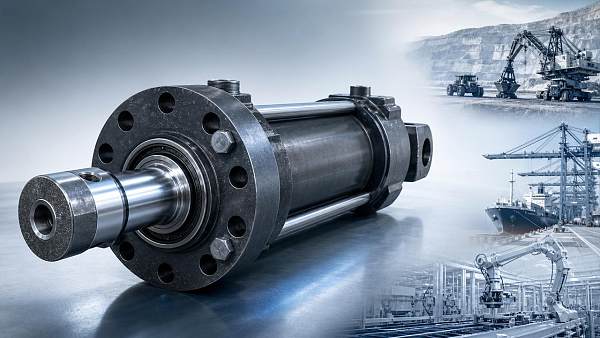
Choosing the right High-Pressure Hydraulic Cylinders manufacturer requires more than price checks. Buyers today must compare ISO Compliance requirements, Critical Components supply chain stability, and Operational Uptime monitoring capabilities to ensure Total Reliability certification goals are met. This guide helps procurement teams, researchers, and distributors evaluate technical strength, sourcing resilience, and long-term industrial value with confidence.
In industrial procurement, a hydraulic cylinder is not an isolated purchase. It directly affects machine availability, maintenance intervals, energy efficiency, and safety risk. For distributors and sourcing teams, the manufacturer behind the cylinder often matters more than the quoted unit cost, especially when operating pressures exceed 250 bar, duty cycles are continuous, or downtime penalties are measured in hours rather than days.
A reliable comparison framework should assess engineering capability, materials control, testing discipline, documentation quality, and after-sales responsiveness. It should also look beyond production and include supply-chain resilience, lead-time stability, and the manufacturer’s ability to support different application sectors such as mining, marine systems, steel processing, mobile equipment, and automated material handling.
Define the Operating Context Before Comparing Suppliers
The first mistake many buyers make is comparing manufacturers before defining the cylinder’s real operating profile. A high-pressure hydraulic cylinder for a forging line behaves differently from one used on lifting equipment or an offshore handling system. Pressure range, stroke length, side load, mounting style, duty cycle, environmental exposure, and seal compatibility all change the supplier shortlist.
For most industrial comparisons, buyers should document at least 8 baseline inputs: working pressure, peak pressure, bore size, rod diameter, stroke, mounting type, fluid type, and expected cycle frequency. In severe-duty applications, it is also useful to define ambient temperature, contamination level, corrosion exposure, and whether the cylinder must operate 24/7 or in intermittent batches of 6–10 hours per shift.
This step matters because some manufacturers are strong in standardized welded cylinders but weak in custom tie-rod or mill-duty builds. Others may offer acceptable machining quality but limited capability for chrome plating thickness control, fatigue calculation, or seal system optimization above 350 bar. Without application clarity, vendor comparison becomes superficial and price-led.
Key Application Variables to Confirm
- Pressure profile: continuous operation at 210–350 bar is different from short spikes at 420 bar.
- Motion pattern: linear push, pull, holding load, shock load, or high-frequency reversing.
- Environmental conditions: dust, slurry, salt spray, washdown, or temperature swings from -20°C to 80°C.
- Maintenance expectations: field-serviceable seals, spare kit availability, and target service life in months or cycles.
A strong manufacturer should ask these questions early. If a supplier provides a quote within 24 hours without clarifying duty conditions, that may indicate limited engineering review. In contrast, manufacturers with serious technical discipline usually request drawings, load calculations, mounting constraints, and oil cleanliness assumptions before finalizing a recommendation.
Quick Comparison Matrix for Application Fit
The table below helps buyers separate basic suppliers from manufacturers that can support complex high-pressure service requirements across multiple industrial environments.
If the supplier falls consistently into the left column, the risk of mismatch rises quickly in critical applications. For buyers targeting long-term operational uptime, manufacturer fit should be validated before unit pricing is compared.
Evaluate Engineering Quality, Materials, and Testing Standards
The next comparison layer is manufacturing competence. High-pressure hydraulic cylinders depend on machining precision, rod surface quality, weld integrity, barrel tolerances, and sealing design. Two manufacturers may quote similar bore and stroke specifications, yet deliver very different fatigue life, leakage resistance, and maintenance performance after 12 to 18 months in service.
Ask how the manufacturer controls raw materials and process consistency. Useful questions include whether they trace steel heats, verify hardness, inspect rod straightness, and document plating thickness or surface roughness. On demanding projects, procurement teams should also request hydrostatic pressure test procedures, welding qualification records where applicable, and dimensional inspection checkpoints for piston, gland, and rod interfaces.
Testing depth is a major differentiator. A manufacturer that only pressure-tests for short-duration leakage at 1.25 times working pressure may be suitable for general use, but not always for mission-critical service. More capable suppliers often combine pressure holding, function testing, seal verification, and optional endurance simulation based on customer cycle expectations.
Technical Indicators Worth Comparing
Procurement teams should compare technical evidence, not broad claims. Tolerance control at the micron level may not be necessary for every project, but repeatable bore finishing, concentricity control, and rod sealing performance have direct impact on leak rate and wear. A high-quality manufacturer should also explain material alternatives for corrosive, abrasive, or shock-loaded conditions instead of pushing one standard build for every industry.
In some sourcing workflows, buyers also review adjacent critical component intelligence to benchmark vendor maturity across categories. For example, documentation references or bundled technical links such as 无 may appear in distributor research packs, but they should never replace a full engineering validation process for hydraulic cylinders.
Manufacturer Technical Review Table
The following checklist can be used during supplier qualification calls, RFQ review, or plant audit preparation.
When these controls are documented and consistently applied, buyers gain more than confidence in the first shipment. They gain predictability over 3–5 years of support, especially where replacements, spare kits, or multi-site standardization are involved.
Compare Compliance, Documentation, and Supply-Chain Resilience
For industrial buyers, manufacturer comparison now extends well beyond the factory floor. A supplier may have acceptable machining capability but still create major risk through weak export documentation, unstable sub-supplier networks, or long raw material exposure. In high-pressure hydraulic cylinder sourcing, these weaknesses often surface during delivery disruption, replacement urgency, or compliance review.
Buyers should ask which standards the manufacturer works against in practice, not only in marketing language. Depending on region and application, relevant references may include ISO-based quality management, material verification requirements, pressure test documentation, and dimensional consistency procedures aligned with customer drawings or industry conventions. What matters is documented execution, revision control, and traceable records.
Supply-chain resilience is especially important when cylinders rely on alloy steel, seals, tubes, forgings, and surface-treatment inputs sourced from multiple regions. A serious manufacturer should be able to discuss lead-time assumptions, alternate sourcing plans, safety stock logic for common parts, and how raw material fluctuations in steel or nickel affect pricing windows over 30, 60, or 90 days.
Questions That Reveal Real Supply Stability
- What is the normal lead time for standard cylinders versus custom builds, such as 2–4 weeks compared with 6–10 weeks?
- Which components are single-source, and which have qualified backup suppliers?
- Can the supplier support rolling forecasts, blanket orders, or distributor stocking programs?
- How are nonconforming parts isolated, reported, and replaced across borders?
For distributors, these questions influence not only availability but also reputation. A missed shipment can damage downstream customer trust faster than a small price increase. This is why many sourcing teams now include logistics readiness, packaging protection, and document accuracy in the same scorecard as pressure rating and machining quality.
Compliance and Delivery Comparison
Use the table below to compare non-price factors that materially affect procurement continuity and aftermarket performance.
In practice, the preferred signals improve delivery confidence and reduce disruption costs. They also make the manufacturer easier to integrate into larger sourcing programs that involve quarterly audits, distributor planning, or multi-country project execution.
Assess Service Capability, Failure Response, and Lifecycle Value
A high-pressure hydraulic cylinders manufacturer should not be judged only by what happens before shipment. Lifecycle value often depends on response speed after installation, availability of spare seals or rods, support for root-cause analysis, and the ability to standardize future replacements. This is particularly relevant when equipment downtime costs exceed the original cylinder price within a single production stoppage.
Buyers should clarify service expectations early. Ask whether the manufacturer offers installation guidance, troubleshooting support, recommended maintenance intervals, and failure review procedures. In demanding operations, a useful benchmark is whether the supplier can provide first technical feedback within 24–48 hours and shipment options for urgent spare kits within 3–7 days, depending on region and stock status.
Lifecycle value also improves when the manufacturer supports data continuity. That includes maintaining drawing revisions, seal kit references, and service history by serial or order number. For global industrial groups and distributors, this reduces confusion across maintenance teams and helps preserve interchangeability between sites.
What Strong After-Sales Support Looks Like
- Clear spare-parts structure, including seal kits, gland assemblies, and rod replacement options.
- Failure analysis process that reviews contamination, side load, pressure spikes, and installation alignment.
- Documented maintenance recommendations, such as inspection every 1,000–2,000 operating hours in heavy-duty service.
- Support for product updates when duty conditions change, including cushioning, sensor integration, or coating upgrades.
Some buyers focus heavily on the purchase order stage and overlook service depth. Yet in many sectors, a manufacturer that is 5% higher in price but significantly faster in replacement response and technical troubleshooting can lower total ownership cost over 2–3 years.
Common Red Flags During Vendor Evaluation
There are several warning signs that deserve attention during manufacturer comparison:
- No clear distinction between standard and custom cylinder lead times.
- No documented pressure test or inspection release before shipment.
- Limited discussion of seal compatibility with fluid, temperature, or contamination level.
- No process for field failure review or unclear spare-parts identification.
During commercial review, buyers may encounter reference materials that include broad critical-components listings such as 无. These can help organize market intelligence, but final selection should still depend on documented technical fit, delivery reliability, and lifecycle support strength.
Build a Practical Procurement Scorecard and Shortlist
Once technical, compliance, and service factors are defined, procurement teams should convert them into a weighted scorecard. This helps decision-makers compare manufacturers consistently across projects and reduces the tendency to default to lowest price. A practical scorecard usually includes 5–7 categories and can be applied across RFQs, audits, and distributor reviews.
For example, engineering capability might carry 25%, quality and testing 20%, supply-chain resilience 20%, commercial terms 15%, after-sales support 10%, and documentation or communication 10%. The exact weighting should reflect the application. A mine-site cylinder with high contamination risk may deserve heavier weighting on sealing expertise and service support than on initial lead time.
Shortlisting should ideally move through 3 stages: desktop screening, technical review, and commercial validation. In the first stage, eliminate suppliers that cannot document pressure testing or application review. In the second, compare drawings, materials, and inspection methods. In the third, confirm lead times, warranty terms, response windows, and spare-parts support.
Example 6-Point Supplier Scoring Method
- Application fit: can the manufacturer address pressure, load, and environmental requirements?
- Manufacturing control: are material, machining, and testing steps traceable?
- Delivery stability: are lead times realistic and supply risks managed?
- Service response: can support be provided within defined time windows?
- Commercial clarity: are quotation scope, exclusions, and warranty terms explicit?
- Scalability: can the supplier support repeat orders, multiple sites, or distributor programs?
Teams that formalize this process often improve sourcing quality, especially when handling recurring demand across several business units. Instead of re-evaluating from zero each time, they can benchmark manufacturers against a repeatable framework and update scores as delivery and field performance data accumulate.
FAQ for Buyers, Researchers, and Distributors
The questions below reflect common search and procurement concerns when comparing a high-pressure hydraulic cylinders manufacturer.
How many manufacturers should be shortlisted?
For most B2B sourcing projects, 3 suppliers are enough for deep technical comparison, while 5 may be useful during early market mapping. More than 5 often slows evaluation without improving decision quality unless the application is highly specialized or regionally constrained.
What is a reasonable lead time benchmark?
Standard industrial cylinders may be available in 2–4 weeks, while custom high-pressure builds often range from 6–10 weeks. However, the better metric is lead-time consistency, not the shortest promise. A reliable 6-week supplier can be safer than an unstable 3-week estimate that slips repeatedly.
Which documents matter most during qualification?
At minimum, request dimensional drawings, pressure test confirmation, material information where relevant, seal specifications, and commercial scope clarification. For critical applications, add inspection records, traceability references, and service parts identification.
Comparing a high-pressure hydraulic cylinders manufacturer is ultimately about reducing operational risk while protecting long-term value. Buyers who define application conditions, verify manufacturing controls, examine compliance discipline, and score service capability will make stronger decisions than teams that compare quotes alone.
For information researchers, procurement managers, business evaluators, and distributors, the most effective path is a structured review built on technical evidence and supply continuity. If you are assessing suppliers for a current project or building a more resilient sourcing strategy, now is the right time to request a tailored comparison framework, discuss your operating requirements, and learn more solutions for critical component procurement.
Recommended News
 Sep 30, 2026How to Evaluate Electro-Hydraulic Servo Response for High-Speed Motion ControlEvaluate electro-hydraulic servo response for high-speed motion control with practical metrics for bandwidth, settling time, stability, and reliable supplier selection.● Marcus Valve
 Sep 22, 2026Selecting High-Pressure Hydraulic Cylinders for Press Force, Stroke, and Duty CycleHigh-Pressure Hydraulic Cylinders for presses: match force, stroke, mounting, and duty cycle for safer, more reliable performance and reduced downtime.● Marcus Valve
 Sep 03, 2026How ASTM Stainless Steel Standards Help Prevent Corrosion Failures in Hydraulic SystemsStainless corrosion ASTM standards help prevent hydraulic failures through verified material selection, passivation, traceability, and targeted corrosion testing. Learn how to specify reliable systems.● Marcus Valve
 Aug 20, 2026How to Calculate a Safe Cylinder Buckling Safety Factor Under Real Load ConditionsCylinder buckling safety factor explained: learn how to calculate a reliable margin under real load conditions, including stroke, end fixity, misalignment, and dynamic forces.● Marcus Valve
 Jul 14, 2026Hydraulic Market Forecast 2026: Demand Drivers, Price Pressure, and Supply Chain RisksHydraulic market forecast 2026 reveals key demand drivers, price pressure, and supply chain risks across industrial sectors. Discover actionable insights for smarter sourcing and planning.● Marcus Valve
 Jul 13, 2026How to Evaluate ISO-Certified Hydraulic Components for Supplier ApprovalHydraulic components ISO certified supplier approval requires more than checking certificates. Learn how to verify traceability, testing, and supplier reliability for safer sourcing.● Marcus Valve
 Jul 13, 2026Environmental Hydraulic Fluid Compliance Explained: Standards, Labels, and Approval StepsEnvironmental hydraulic fluid compliance explained in a practical guide covering ISO 15380, labels, OEM approvals, and approval steps to reduce risk, delays, and sourcing mistakes.● Marcus Valve
 Jul 10, 2026Hydraulic Components for Construction Equipment: Which Parts Matter Most in System Design?Hydraulic components for construction equipment determine efficiency, control, uptime, and lifecycle cost. Discover which parts matter most in system design and how to choose smarter.● Marcus Valve
 Jul 10, 2026How to Evaluate a Heavy Duty Hydraulic Cylinder Manufacturer for Construction ProjectsHeavy duty hydraulic cylinder manufacturer selection affects uptime, safety, and cost. Learn how to compare quality, testing, documentation, and delivery strength for construction projects.● Marcus Valve
 Jul 09, 2026Hydraulic Cylinder Pressure Ratings Explained: How to Read PSI, Burst, and Working LimitsHydraulic cylinder pressure ratings explained clearly: learn how to read PSI, working pressure, and burst limits to choose safer, longer-lasting cylinders and avoid costly system failures.● Marcus Valve
 Jul 08, 2026What Does Filter Beta Ratio Mean in Europe and How Is It Used in Hydraulic Filtration?Filter beta ratio Europe explained: learn how beta ratings measure hydraulic filtration efficiency, support ISO-based comparisons, and help buyers choose reliable filters with confidence.● Marcus Valve
 Jul 02, 2026Steel Cylinder Buckling Load Explained: Formula, End Conditions, and Design LimitsSteel cylinder buckling load explained clearly: learn the Euler formula, end conditions, and real design limits to compare options, reduce risk, and choose safer, more reliable cylinder solutions.● Marcus Valve
 Jul 01, 2026Fluid Power vs Electric Actuation: Key Differences in Force, Control, and MaintenanceFluid Power vs electric actuation: compare force, control, energy use, and maintenance to choose the right system for uptime, precision, and lower lifecycle risk.● Marcus Valve
![]() Jun 04, 2026Hydraulic Manifold Block Factory Guide: What to Review Before Requesting a QuoteHydraulic manifold block factory selection starts before the quote. Learn what to review on machining, pressure testing, cleanliness, traceability, and lead times to compare suppliers with confidence.● Marcus Valve
Jun 04, 2026Hydraulic Manifold Block Factory Guide: What to Review Before Requesting a QuoteHydraulic manifold block factory selection starts before the quote. Learn what to review on machining, pressure testing, cleanliness, traceability, and lead times to compare suppliers with confidence.● Marcus Valve May 30, 2026Why does hydraulic automation in construction news matter?Hydraulic automation in construction news reveals how smarter equipment boosts safety, productivity, energy efficiency, and reliability—see what trends matter now.● Marcus Valve
 May 28, 2026How Advanced Hydraulic systems cut downtime in heavy useAdvanced Hydraulic systems help cut downtime in heavy-use operations by improving pressure stability, reducing wear, and enabling faster fault detection for more reliable project delivery.● Marcus Valve
 May 27, 2026How Advanced Hydraulic systems cut downtime in heavy useAdvanced Hydraulic systems reduce downtime in heavy-use operations through better pressure stability, cleaner fluid control, and predictive maintenance for higher uptime and safer performance.● Marcus Valve
 May 26, 2026How Advanced Hydraulic systems cut downtime in high-load linesAdvanced Hydraulic systems cut downtime in high-load lines by improving pressure stability, durability, and maintenance planning. Discover smarter ways to boost uptime and control project risk.● Marcus Valve
 May 25, 2026How Advanced Hydraulic systems cut downtime in heavy useAdvanced Hydraulic systems cut downtime in heavy-use operations with stable pressure, durable components, and smarter maintenance insights. Learn how to improve uptime and lower lifecycle costs.● Marcus Valve
 May 24, 2026How Advanced Hydraulic systems cut downtime in heavy useAdvanced Hydraulic systems cut downtime in heavy-use operations by improving pressure stability, filtration, and component life. See how smarter hydraulic design boosts uptime and lowers service risk.● Marcus Valve
 May 23, 2026High-Pressure Hydraulic Cylinders selection mistakes to avoidHigh-Pressure Hydraulic Cylinders selection mistakes can cause downtime, leaks, and safety risks. Learn 10 buyer-focused pitfalls to avoid for smarter sourcing and longer service life.● Marcus Valve
 May 22, 2026How to compare high-pressure hydraulic cylindersHigh-Pressure Hydraulic Cylinders comparison guide: evaluate pressure ratings, seal reliability, fatigue life, compliance, and lifecycle cost to choose safer, longer-lasting solutions.● Marcus Valve
 May 21, 2026How to judge High-Pressure Hydraulic Cylinders for safetyHigh-Pressure Hydraulic Cylinders safety starts with more than rated pressure. Learn how to assess materials, seals, fatigue, testing, and compliance for safer, longer-lasting performance.● Marcus Valve
 May 21, 2026How Advanced Hydraulic designs cut downtime in harsh dutyAdvanced Hydraulic design helps cut downtime in harsh-duty industries through better sealing, fatigue resistance, corrosion protection, and predictive maintenance insights.● Marcus Valve