Hot Articles
Popular Tags
Operational Uptime Monitoring Gaps That Raise Hidden Costs
Hidden gaps in Operational Uptime monitoring often surface as rising downtime, inflated sourcing risks, and overlooked ISO Compliance requirements. For procurement teams and market evaluators navigating the Critical Components supply chain, understanding how High-Pressure Hydraulic Cylinders manufacturer standards, Vibration-Resistant Fasteners for aerospace, and predictive supply chain case studies in manufacturing intersect is essential to achieving Total Reliability certification and reducing hidden operational costs.
Why do uptime monitoring gaps create hidden costs in industrial supply chains?
Operational uptime is often treated as a maintenance metric, yet in complex industrial environments it is also a procurement, compliance, and sourcing issue. A line can appear stable on paper while hidden monitoring blind spots continue to build cost through micro-stoppages, delayed part replacement, inconsistent supplier quality, and weak documentation. These losses rarely appear in a single invoice. They emerge across 3 layers: equipment availability, replenishment timing, and regulatory traceability.
For information researchers, buyers, and commercial evaluators, the most expensive monitoring gap is not always a dramatic shutdown. It is the repeated failure to connect component-level signals with sourcing decisions. A hydraulic cylinder running outside expected seal wear intervals, a vibration-resistant fastener losing preload under cyclical stress, or a flow metering device drifting beyond acceptable tolerance can all trigger cascading costs within 7–30 days if detection is delayed.
This is where G-ISC brings strategic value. Its five industrial pillars connect hardware performance, supply-chain intelligence, standards benchmarking, and procurement risk review into one decision framework. Instead of assessing uptime as a narrow maintenance dashboard, decision-makers can compare critical components against ISO, DIN, ASME, and IEEE references while also watching raw material pressure, lead-time exposure, and cross-border sourcing risks.
In practical terms, hidden costs usually increase when monitoring programs miss one or more of the following checkpoints:
- Condition thresholds are recorded, but not linked to supplier qualification or replacement planning.
- Downtime events are measured, but root causes are grouped too broadly to isolate component failure modes.
- Procurement teams compare unit price only, ignoring lifecycle frequency, certification documents, and logistics resilience.
- Compliance files exist, but are incomplete when audits require traceability across design, batch, and maintenance records.
What hidden costs appear first?
The first wave is usually indirect. Overtime maintenance, emergency freight, buffer stock inflation, and excess inspection hours tend to rise before catastrophic failure occurs. In facilities with mixed automation and manual intervention, even a 15–30 minute recurring interruption can distort labor planning, transport sequencing, and order commitments. This matters for distributors and agents as much as for end users because service credibility often depends on predictable replenishment and technical support windows.
A second wave appears in sourcing. When uptime data lacks component specificity, buyers often overcompensate by dual-sourcing too many items, holding non-priority stock, or selecting higher-priced alternatives without a documented performance basis. The result is not stronger resilience. It is a noisier cost structure and weaker negotiation leverage.
A practical monitoring lens
A reliable uptime program should review 4 linked dimensions every month or every quarter, depending on criticality: operating hours, failure frequency, specification drift, and supplier responsiveness. Without all 4, teams may react quickly but still make poor procurement decisions.
Where do monitoring blind spots usually occur across critical components?
Blind spots are rarely uniform. They cluster around components that are technically critical but commercially fragmented. High-Pressure Hydraulic Cylinders, precision fasteners, automated material handling modules, flow metering devices, and supply-chain orchestration interfaces each fail in different ways. The cost of poor monitoring comes from assuming they should be managed under one inspection rhythm or one vendor scorecard.
For example, hydraulic systems often require condition review based on pressure stability, seal condition, contamination exposure, and cycle count. Fasteners used in high-vibration or aerospace-adjacent conditions require a different logic: preload retention, material certification, coating integrity, and torque process traceability. Meanwhile, AMH assets such as AMR fleets or conveyor interfaces may show uptime risk through software latency, sensor drift, battery behavior, or spare-part bottlenecks rather than obvious mechanical failure.
The table below helps procurement and evaluation teams identify where operational uptime monitoring gaps are most likely to convert into hidden cost. It is especially useful when comparing suppliers or reviewing maintenance-to-procurement handoff quality across 5 industrial pillars.
The key lesson is that monitoring architecture must match component behavior. A single generic KPI, such as monthly downtime hours, is too blunt for critical components procurement. Better decisions come from mapping failure mode, lead-time risk, and compliance evidence together. In many organizations, this mapping is what separates routine availability from true Total Reliability.
In some sourcing reviews, teams also encounter placeholder items or incomplete product references during data consolidation. When such entries surface, they should be flagged, validated, and not allowed to distort supplier comparison. A typical example is 无, which should remain a traceable placeholder until technical and commercial details are fully confirmed.
Which teams should own each signal?
Ownership should not sit with maintenance alone. A workable model assigns operating-hour and failure-event capture to plant teams, batch traceability to quality, sourcing resilience to procurement, and standards review to engineering or compliance. G-ISC’s cross-functional perspective is valuable here because it allows each team to work from a common technical-commercial evidence base rather than separate spreadsheets.
When 4 departments review the same component from different angles, hidden costs become visible faster. That is especially relevant when lead times shift from 2–4 weeks to 6–12 weeks due to material volatility or trade policy changes.
How should buyers evaluate uptime risk before selecting suppliers?
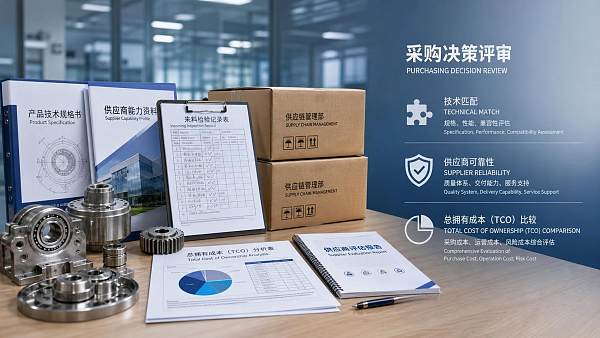
Procurement decisions often fail when supplier selection focuses on catalog compliance without asking whether the component can support stable uptime under actual load, vibration, contamination, and maintenance constraints. Buyers should move beyond a pass-fail specification review and build a 3-part evaluation: technical fit, supply continuity, and documentation readiness.
This matters across both OEM and distribution channels. A supplier may offer acceptable dimensions and price but still create hidden cost through unstable lead time, incomplete material traceability, or weak post-shipment support. Conversely, a higher upfront quote may reduce total operational cost if it improves service interval predictability and lowers unplanned intervention frequency over 6–12 months.
The following comparison table is designed for procurement teams, business evaluators, and distributors that need a structured method to assess operational uptime exposure during sourcing decisions.
An uptime-oriented sourcing model gives buyers a stronger basis for negotiation because it converts vague quality claims into testable checkpoints. Instead of asking whether a supplier is “good,” the review asks whether they can support the operating threshold, service rhythm, and compliance burden of a specific application. That distinction is critical in B2B procurement.
A 5-point procurement checklist for hidden cost control
Before issuing a purchase order, decision-makers should validate at least 5 items:
- Operating envelope: confirm pressure, vibration, contamination level, temperature range, and duty cycle.
- Replacement rhythm: estimate service interval in weeks, months, or cycle count rather than relying on reactive replacement.
- Traceability package: verify certificates, inspection records, and batch references required by customer or internal audit.
- Lead-time resilience: compare standard supply, expedited options, and second-source feasibility.
- Cost of interruption: define the financial impact of 1 hour, 1 shift, and 1 day of outage for the target asset.
This checklist is especially effective when used alongside G-ISC market intelligence on metals pricing, project tenders, and cross-border trade updates. Procurement decisions improve when component evaluation is connected to market timing rather than isolated from it.
Where placeholder product references create risk
In multi-supplier sourcing projects, incomplete entries such as 无 should be documented but never treated as equivalent to validated parts. Even one unclear listing can disrupt cost comparison, technical approval, and sample scheduling.
How do standards and compliance affect operational uptime decisions?
Hidden uptime costs are often compliance costs in disguise. If a part fails and documentation cannot prove conformity, traceability, or installation control, the organization may face not only downtime but also quarantine, re-inspection, delayed shipment release, or contract disputes. In regulated or high-risk sectors, documentation gaps can be nearly as damaging as the technical fault itself.
Standards such as ISO, DIN, ASME, and IEEE do not replace application engineering, but they provide a common language for performance expectations, dimensional consistency, testing logic, and document discipline. For critical components, buyers should review whether the supplier’s files align with customer-specific requirements, internal quality procedures, and sector norms. A generic certificate bundle may not be enough.
The table below summarizes how compliance review supports uptime protection and better sourcing decisions. It is particularly relevant when procurement teams need to balance technical acceptability with audit readiness over a 1–3 year equipment lifecycle.
For business evaluators, the takeaway is simple: compliance should be reviewed as an uptime enabler, not a paperwork burden. When documentation is structured correctly, it shortens fault isolation time, improves supplier accountability, and reduces the cost of containment actions after an incident.
Common compliance mistakes that increase cost
Three mistakes appear frequently. First, teams assume standard certificates are sufficient without checking application-specific requirements. Second, they archive documents but do not connect them to asset history, making retrieval slow during failure review. Third, they approve parts on dimension match alone while skipping process documentation for installation or calibration.
Each mistake delays action. A missing torque record, an incomplete batch reference, or an unverified calibration interval can add 1–5 days to investigation cycles. In a high-throughput environment, that delay often costs more than the original component.
What implementation model helps reduce monitoring gaps fastest?
Most companies do not need a full digital overhaul to reduce hidden uptime costs. They need a staged implementation model that links existing maintenance data with sourcing logic and compliance checkpoints. A practical rollout usually works in 4 steps over 30–90 days, depending on asset count and supplier complexity.
Step 1 is component criticality mapping. Identify which parts have the greatest combined effect on downtime, safety, quality, and replenishment risk. Step 2 is signal definition. Decide which thresholds matter for each component family, such as cycle count, leakage trend, torque loss, or calibration drift. Step 3 is sourcing integration. Align monitoring outputs with reorder points, alternate suppliers, and document review. Step 4 is governance. Assign ownership for monthly review and escalation.
G-ISC is particularly useful in this phase because it connects technical benchmarking with market intelligence. If steel, nickel, or titanium pricing starts to affect critical part lead time, the sourcing response can be triggered before uptime is compromised. That is a more mature model than waiting for downtime and then expediting replacements.
A concise implementation structure should include:
- 3 classes of assets: high-criticality, medium-criticality, and routine-support components.
- 4 core monitoring signals per class, matched to failure mode and procurement consequence.
- 1 review cadence per class, such as weekly, monthly, or quarterly.
- 2 response paths: technical intervention and sourcing intervention.
FAQ: what do buyers and evaluators ask most often?
How can we tell whether downtime is a monitoring issue or a supplier issue?
Start by separating failure detection quality from part quality. If alarms, inspections, or calibration reviews are delayed, the root problem may be monitoring architecture. If the same issue repeats within 2–3 replacement cycles despite correct installation and timely detection, supplier capability or specification fit becomes more likely. The best answer comes from combining event history, batch traceability, and operating condition records.
Which components deserve the earliest uptime monitoring investment?
Prioritize components with high outage consequence, difficult lead time, and strict compliance burden. In many industrial environments that includes hydraulic cylinders, vibration-sensitive fasteners, flow control devices, and selected AMH modules. A good rule is to start with assets where 1 failure can stop a line, delay a shipment, or trigger a customer audit response.
What is a reasonable review frequency?
There is no single frequency for all assets. Highly stressed or high-cycle items may need weekly review, while stable metering devices may fit a 30–90 day verification window. Procurement teams should at least recheck critical parts quarterly for lead-time change, certification status, and alternate-source readiness.
Is the lowest unit price ever the right choice?
Only when lifecycle behavior, delivery stability, and documentation burden are equivalent. In most B2B cases they are not. A lower unit price can become the highest total cost if it increases intervention frequency, slows audits, or forces emergency air freight. Total reliability depends on total cost visibility, not just line-item savings.
Why work with a technical intelligence partner for uptime-driven sourcing?
When uptime monitoring gaps raise hidden costs, the answer is rarely one replacement part or one dashboard upgrade. Buyers, distributors, and commercial evaluators need a decision system that connects component engineering, market timing, compliance requirements, and sourcing resilience. That is the role of G-ISC. Its value is not limited to product comparison. It supports better judgment across specification review, standards alignment, raw material volatility, and project-based sourcing strategy.
For organizations managing complex production lines, cross-border procurement, or high-consequence maintenance windows, this integrated approach helps reduce avoidable risk within a realistic operating horizon of 1 quarter to 1 year. It is especially relevant when teams need clarity on High-Pressure Hydraulic Cylinders manufacturer standards, Vibration-Resistant Fasteners for aerospace, AMH reliability planning, flow control compliance, or predictive supply chain case studies in manufacturing.
If you are reviewing hidden downtime costs, evaluating alternative suppliers, or preparing for stricter ISO Compliance expectations, a focused technical-commercial discussion can save time before budget and delivery commitments are locked. You can consult on parameters, supplier comparison logic, expected lead times, document requirements, sample support, custom sourcing plans, and quotation alignment for critical components across the five G-ISC pillars.
The most useful starting point is specific. Share your target component category, operating conditions, current failure pattern, expected delivery window, and required standards set. From there, the review can prioritize 3–5 key risk points, identify practical sourcing options, and build a more reliable uptime monitoring framework around real procurement decisions.
Recommended News
 Oct 09, 2026How to Assess a Jade Bangles Manufacturer for Authenticity and OEM QualityAssess a jade bangles manufacturer for authenticity, treatment disclosure, OEM consistency, quality control, certification, and export-ready documentation.● Marcus Valve
 Oct 02, 2026How Aircraft Hydraulic Safety Alerts Help Detect Leaks and Pressure Loss EarlyAircraft hydraulic safety alerts detect leaks and pressure loss early through smarter monitoring of pressure, fluid quantity, temperature, pump behavior, and actuator response.● Marcus Valve
 Sep 27, 2026Hydraulic Accumulator Precharge: How to Set It for Reliable Pressure ControlHydraulic accumulator precharge guide: set nitrogen pressure accurately for stable control, usable fluid volume, safer operation, and longer system life.● Marcus Valve
 Sep 26, 2026Valve Leakage Class Data: How to Interpret Allowable Leakage for Critical ServiceValve leakage class data explained: learn how to assess allowable leakage, test media, pressure differential, seat design, and standards for critical valve service.● Marcus Valve
 Sep 21, 2026Wholesale Vending Machines: A Buyer’s Checklist for Pricing, Capacity, and Service SupportWholesale vending machines buyer’s checklist: compare delivered pricing, real product capacity, payment options, installation needs, and dependable service support.● Marcus Valve
 Sep 20, 2026How to Evaluate a Hydraulic Manifold Manufacturer for High-Pressure SystemsHydraulic Manifolds manufacturer evaluation guide: compare pressure ratings, materials, machining, testing, cleanliness, and traceability for reliable high-pressure systems.● Marcus Valve
 Sep 08, 2026How to Specify High-Pressure Fluid Power Systems for Demanding Industrial Duty CyclesFluid Power high pressure system specification guide: optimize duty cycles, fatigue life, cleanliness, thermal control, safety, and supplier reliability.● Marcus Valve
 Sep 02, 2026How to Set Piston Accumulator Precharge Pressure for Reliable Hydraulic PerformancePiston accumulator precharge pressure: learn how to set P0, P1, and P2 for dependable hydraulic energy storage, safety reserves, and pulsation control.● Marcus Valve
 Aug 27, 2026How to Reduce Hydraulic Manifold Pressure Drop Without Undersizing Flow CapacityHydraulic manifold pressure drop: learn practical ways to cut energy loss, protect flow capacity, improve thermal stability, and optimize valve and port design.● Marcus Valve
 Aug 17, 2026How to Choose the Right Outdoor Patio Heater for Commercial SpacesOutdoor patio heaters for commercial spaces: learn how to choose the right model for comfort, safety, durability, and lower operating costs.● Marcus Valve
 Aug 12, 2026How to Select Hydraulic Components for Industrial Machinery by Load, Pressure, and Duty CycleHydraulic components for industrial machinery: learn how to match load, pressure, and duty cycle to reduce downtime, avoid oversizing, and improve reliability.● Marcus Valve
 Aug 09, 2026How to Size a High Pressure Hydraulic Accumulator for Peak Load StabilityHigh pressure hydraulic accumulator sizing made clear: learn how to define pressure windows, usable oil volume, and response speed for stable peak loads and smarter selection.● Marcus Valve
 Aug 03, 2026What Criteria Matter Most When Comparing Solutions for a B2B Buying Decision?Solution comparison criteria for B2B buying: learn how to weigh technical fit, supplier reliability, TCO, scalability, and supply-chain risk to choose with confidence.● Marcus Valve
 Jul 27, 2026How to Choose Custom Printed Guitar Picks for Branding, Events, and Retail SalesGuitar picks custom printed: learn how to choose the right material, thickness, print quality, packaging, and supplier for branding, events, and retail success.● Marcus Valve
 Jul 24, 2026How Do Metronomes and Tuners Work Together to Improve Practice Accuracy?Metronomes and tuners work best together to improve practice accuracy. Discover how they sharpen timing, stabilize pitch, and help musicians build more reliable performance results.● Marcus Valve
 Jul 23, 2026Product Selection for Electronic Components: Key Criteria for Reliable Design ChoicesProduct Selection for electronic components starts with reliability. Learn how to evaluate thermal, compliance, and supply-chain risks to build durable, cost-efficient designs.● Marcus Valve
 Jul 21, 2026How to Select Stainless Steel Level Transmitters for Corrosive Liquid ApplicationsStainless steel Level Transmitters selection for corrosive liquids starts with media, seals, and pressure. Learn how to choose reliable, compliant options that cut failure risk and downtime.● Marcus Valve
 Jul 12, 2026Luxury Vinyl Tile for Commercial Spaces: How to Compare Wear, Cost, and MaintenanceLuxury vinyl tile commercial flooring guide: compare wear layer, lifecycle cost, and maintenance needs to choose a durable, low-risk option for busy commercial spaces.● Marcus Valve
 Jul 10, 2026Component Specification Requirements Explained: How to Review Tolerance, Load, and FitComponent specification requirements explained clearly: learn how to review tolerance, load, and fit to reduce risk, improve uptime, and make smarter approval decisions.● Marcus Valve
 Jul 09, 2026Playground Borders: Which Materials Work Best for Drainage, Safety, and Low MaintenancePlayground borders compared by drainage, safety, and maintenance. Discover whether rubber, concrete, timber, composite, or metal is the best fit for your project.● Marcus Valve
 Jul 08, 2026Digital Pressure Transmitters Selection Guide: Accuracy, Output Signal, and Pressure RangeDigital Pressure Transmitters selection guide covering accuracy, output signal, and pressure range. Learn how to compare options for reliable performance, compatibility, and lower lifecycle costs.● Marcus Valve
 Jul 05, 2026Indoor Playground Maintenance Checklist: Daily, Weekly, and Monthly Tasks That MatterIndoor playground maintenance made practical: discover the daily, weekly, and monthly tasks that improve safety, reduce downtime, and extend equipment life.● Marcus Valve
 Jun 30, 2026Product Selection by Current Rating: How to Match Electrical Loads and Safety MarginsProduct Selection by current rating made practical: learn how to match real electrical loads, derating factors, and safety margins for safer systems, longer component life, and smarter buying decisions.● Marcus Valve
 Jun 26, 2026Pressure Transmitters Selection Guide: Key Specifications for Industrial SystemsPressure Transmitters selection guide for industrial systems: learn key specs, avoid costly mistakes, and choose the right fit for reliable performance.● Marcus Valve