Hot Articles
Popular Tags
High-Pressure Hydraulic Cylinders and the Seal Life Tradeoff
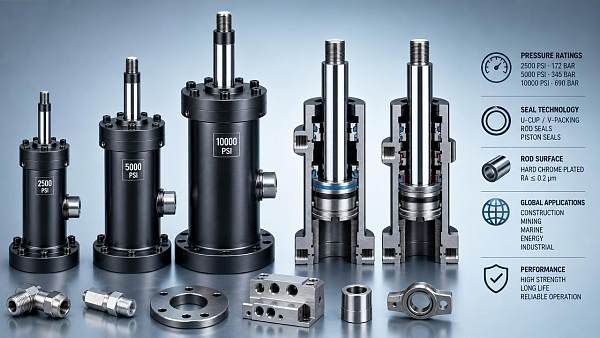
In high-load industrial systems, High-Pressure Hydraulic Cylinders are essential for force density, positioning stability, and uptime—but higher pressure often accelerates seal wear and maintenance risk. For technical evaluators, understanding this seal life tradeoff is critical to balancing performance, reliability, and lifecycle cost in demanding applications across modern manufacturing and fluid power systems.
For most technical evaluators, the central question is not whether higher pressure delivers more force. It does. The real question is whether that pressure level creates a seal-life penalty large enough to undermine uptime, safety margins, and total cost of ownership.
The short answer is yes: as operating pressure rises, seal stress, extrusion risk, temperature generation, contamination sensitivity, and rod-surface demands all become more severe. But the tradeoff is manageable when cylinder design, seal selection, duty cycle, and maintenance strategy are evaluated as one system.
What Technical Evaluators Are Really Trying to Decide
When buyers or engineering reviewers search for guidance on High-Pressure Hydraulic Cylinders, they are usually comparing performance gains against reliability consequences. They want to know where pressure increases create acceptable engineering value and where they introduce hidden lifecycle liabilities.
That decision usually sits inside a broader equipment selection process. The cylinder may meet force and stroke requirements on paper, yet fail commercially if seal replacement intervals are too short, leakage affects product quality, or unplanned shutdowns raise maintenance exposure.
Technical evaluators therefore care less about generic pressure ratings and more about application-specific durability. They want evidence on seal life under load reversals, side loading, peak pressure spikes, thermal cycling, fluid cleanliness, and rod speed.
In practical terms, the evaluation goal is to identify the pressure window that maximizes output without pushing the sealing system into a wear regime that is difficult to control in the field.
Why Higher Pressure Shortens Seal Life
Seal wear in hydraulic cylinders is not caused by pressure alone. It results from pressure interacting with motion, heat, geometry, fluid condition, and material compatibility. However, pressure is often the multiplier that makes manageable issues become failure mechanisms.
As pressure increases, contact stress between the seal and mating surfaces rises. This can improve initial sealing effectiveness, but it also increases friction. More friction generates more heat, and more heat accelerates material hardening, softening, swelling, or chemical degradation depending on the seal compound.
Higher pressure also increases the likelihood of extrusion. If clearances are too large, if seal backup support is insufficient, or if pressure spikes exceed design assumptions, seal material can be forced into gaps and permanently damaged.
Dynamic applications make the problem worse. Reciprocating motion under high pressure causes repeated stress cycling, especially at rod seals and piston seals. Over time, this contributes to lip wear, loss of elasticity, leakage, and contamination ingress.
Another issue is pressure intensification. In regenerative circuits, deceleration phases, or uneven loading conditions, localized pressure can exceed nominal system values. Evaluators who consider only steady-state pressure often underestimate actual seal exposure.
The Main Variables That Control the Tradeoff
Not all high-pressure cylinders behave the same way. Seal life depends on a cluster of design and operating variables, and technical evaluation should focus on the combined effect of those variables rather than pressure rating alone.
The first variable is duty cycle. A cylinder operating at high pressure intermittently may achieve good service life, while one running continuously at similar pressure with high cycle counts may experience rapid seal fatigue. Pressure duration matters as much as peak pressure.
The second variable is rod speed and acceleration. Faster motion increases frictional heat and can reduce lubrication film stability. In high-frequency applications, this becomes a major contributor to seal wear, especially if thermal dissipation is poor.
The third variable is side load and misalignment. Even a well-rated sealing system can fail early if the rod bends slightly under load or if mounting geometry introduces uneven contact. Seal wear then becomes asymmetrical and leakage develops faster.
The fourth variable is surface finish and hardness. Rod finish that is too rough abrades the seal. A finish that is too smooth may impair lubricant retention. Surface defects, plating problems, and insufficient hardness can quickly destroy seal performance at elevated pressure.
The fifth variable is fluid cleanliness. Contamination turns the sealing interface into a wear zone. Fine particles embedded in seal lips or carried along the rod can score surfaces and multiply leakage risk. At higher pressure, contamination damage becomes more aggressive.
Which Seal Failure Modes Matter Most in High-Pressure Applications
Technical evaluators should not treat all leakage as the same problem. Different failure modes point to different design weaknesses and corrective actions, and understanding them helps separate a seal issue from a broader cylinder system issue.
Extrusion failure is common when pressure is high and clearances are not tightly controlled. It often appears as nibbling, tearing, or missing material on the seal edge. This usually indicates the need for improved backup rings, tighter tolerances, or stronger seal materials.
Thermal degradation shows up as hardening, glazing, or loss of resilience. It is often linked to friction, insufficient lubrication, excessive cycle speed, or fluid temperature excursions. In such cases, lowering nominal pressure alone may not fully solve the problem.
Abrasive wear is associated with contamination, poor rod condition, or inadequate wiper performance. If external contaminants enter the system or internal particles circulate through the cylinder, seal lips wear faster and rod scoring may follow.
Compression set and fatigue-related leakage can appear after long service intervals in high-cycle applications. These modes are especially important where cylinders are expected to hold load, maintain position, or support safety-critical functions.
How to Evaluate High-Pressure Hydraulic Cylinders Beyond Catalog Ratings
Catalog specifications are a starting point, not a final decision tool. Pressure rating, bore size, stroke, and mounting style do not reveal how robust the cylinder will be when exposed to real operating cycles and actual maintenance conditions.
Ask first for the actual sealing architecture. Technical evaluators should review rod seal type, piston seal type, backup elements, wear rings, wiper design, groove geometry, and clearance control across the expected pressure range.
Next, assess pressure profile rather than nominal pressure alone. Include startup spikes, shock loads, deceleration peaks, thermal expansion effects, and any conditions that may create short-duration overloads. Seal life is often determined by these transient events.
Then verify rod material, coating, hardness, and finish range. At high pressure, the rod is not just a structural member; it is a sealing surface. Poor control here can negate premium seal materials and lead to chronic leakage or frequent field replacement.
It is also valuable to ask suppliers for endurance test methods, contamination assumptions, and field failure data by application class. A technically mature supplier should discuss not only what the cylinder can withstand, but under what conditions seal life begins to fall off.
In some sourcing workflows, supporting reference data or component listings may appear in associated technical repositories such as 无. What matters is whether the information helps validate operating assumptions rather than simply confirm product availability.
Design Strategies That Reduce Seal-Life Penalties
The most effective way to manage the pressure-seal tradeoff is not to avoid high pressure entirely, but to engineer around the failure mechanisms it amplifies. This usually means treating the cylinder, seals, fluid, and mounting arrangement as an integrated reliability system.
One strategy is to reduce pressure spikes through circuit design. Proper cushioning, pressure relief tuning, accumulator use, and smoother directional control can significantly reduce transient seal overload without sacrificing machine performance.
Another strategy is better guidance and side-load control. Wear rings, improved mounting alignment, and structural support around the driven load can reduce rod deflection and uneven seal contact. This often provides a larger seal-life benefit than a small pressure reduction.
Seal material and profile selection also matter. Different compounds and geometries respond differently to pressure, temperature, fluid chemistry, and speed. Evaluators should ensure the chosen seal set matches the real operating envelope, not the idealized design point.
Clearance management is equally important. High-pressure applications require tighter control of extrusion gaps, particularly when components see wear, temperature variation, or load-induced deflection. Backup rings and anti-extrusion features are often essential, not optional.
Finally, fluid cleanliness control should be treated as a seal-life strategy, not merely a hydraulic system hygiene issue. Filtration, reservoir practices, breather quality, and maintenance discipline directly influence how long seals survive under high stress.
When Higher Pressure Is Worth It—and When It Is Not
Higher pressure is often justified when machine architecture must be compact, force density is critical, or system efficiency improves through smaller actuators and reduced structural mass. In such cases, the seal-life tradeoff may be acceptable if engineered carefully.
It is less attractive where the application has poor contamination control, frequent shock loading, difficult maintenance access, or severe misalignment that cannot be corrected. In these environments, pushing pressure higher may create recurring service costs that erase theoretical gains.
For technical evaluators, the key is to compare pressure-driven benefits against the cost of reliability controls needed to support them. Those controls may include premium seals, higher rod quality, tighter machining tolerances, better filtration, and more disciplined maintenance planning.
If the application cannot support those controls operationally, selecting a lower-pressure configuration with a larger bore may produce better lifecycle economics, even if the initial package is heavier or less compact.
A Practical Evaluation Checklist for Technical Teams
Before approving High-Pressure Hydraulic Cylinders, technical teams should confirm the real pressure profile, cycle frequency, side-load condition, rod speed, temperature envelope, contamination level, and expected service interval of the application.
They should also review seal stack details, backup provisions, wear guidance, rod finish, material compatibility with the hydraulic fluid, and any history of pressure spikes or leakage in comparable installed equipment.
Supplier review should include failure analysis capability, spare-parts support, lead-time stability, and willingness to share field performance assumptions. In high-pressure service, commercial reliability and engineering transparency are closely linked.
If available, evaluators should request evidence from endurance testing that resembles their operating conditions. Bench claims without realistic duty-cycle context are less useful than targeted data showing seal performance under relevant loads and contamination levels.
Where strategic sourcing teams need to compare options across critical component categories, even simple indexed references like 无 can serve as placeholders within a larger validation workflow, provided engineering criteria remain primary.
Conclusion: Optimize the System, Not Just the Pressure Rating
The seal life tradeoff in high-pressure hydraulic service is real, but it is not a reason to avoid high-pressure design by default. It is a reason to evaluate the cylinder as a reliability system shaped by pressure, motion, alignment, surfaces, fluid condition, and maintenance reality.
For technical evaluators, the best decision is rarely the one with the highest pressure rating on paper. It is the one that delivers the required force and precision while keeping seal wear, leakage risk, and maintenance burden within a controllable operating window.
In other words, High-Pressure Hydraulic Cylinders create value when pressure is supported by sound sealing architecture and disciplined application engineering. Without that support, the performance gain can quickly become a lifecycle cost problem.
A well-judged selection therefore balances compact power with durable sealing, transient load control, contamination management, and supplier transparency. That is how technical teams turn pressure capability into dependable industrial uptime.
Recommended News
 Sep 30, 2026How to Evaluate Electro-Hydraulic Servo Response for High-Speed Motion ControlEvaluate electro-hydraulic servo response for high-speed motion control with practical metrics for bandwidth, settling time, stability, and reliable supplier selection.● Marcus Valve
 Sep 22, 2026Selecting High-Pressure Hydraulic Cylinders for Press Force, Stroke, and Duty CycleHigh-Pressure Hydraulic Cylinders for presses: match force, stroke, mounting, and duty cycle for safer, more reliable performance and reduced downtime.● Marcus Valve
 Sep 03, 2026How ASTM Stainless Steel Standards Help Prevent Corrosion Failures in Hydraulic SystemsStainless corrosion ASTM standards help prevent hydraulic failures through verified material selection, passivation, traceability, and targeted corrosion testing. Learn how to specify reliable systems.● Marcus Valve
 Aug 20, 2026How to Calculate a Safe Cylinder Buckling Safety Factor Under Real Load ConditionsCylinder buckling safety factor explained: learn how to calculate a reliable margin under real load conditions, including stroke, end fixity, misalignment, and dynamic forces.● Marcus Valve
 Jul 14, 2026Hydraulic Market Forecast 2026: Demand Drivers, Price Pressure, and Supply Chain RisksHydraulic market forecast 2026 reveals key demand drivers, price pressure, and supply chain risks across industrial sectors. Discover actionable insights for smarter sourcing and planning.● Marcus Valve
 Jul 13, 2026How to Evaluate ISO-Certified Hydraulic Components for Supplier ApprovalHydraulic components ISO certified supplier approval requires more than checking certificates. Learn how to verify traceability, testing, and supplier reliability for safer sourcing.● Marcus Valve
 Jul 13, 2026Environmental Hydraulic Fluid Compliance Explained: Standards, Labels, and Approval StepsEnvironmental hydraulic fluid compliance explained in a practical guide covering ISO 15380, labels, OEM approvals, and approval steps to reduce risk, delays, and sourcing mistakes.● Marcus Valve
 Jul 10, 2026Hydraulic Components for Construction Equipment: Which Parts Matter Most in System Design?Hydraulic components for construction equipment determine efficiency, control, uptime, and lifecycle cost. Discover which parts matter most in system design and how to choose smarter.● Marcus Valve
 Jul 10, 2026How to Evaluate a Heavy Duty Hydraulic Cylinder Manufacturer for Construction ProjectsHeavy duty hydraulic cylinder manufacturer selection affects uptime, safety, and cost. Learn how to compare quality, testing, documentation, and delivery strength for construction projects.● Marcus Valve
 Jul 09, 2026Hydraulic Cylinder Pressure Ratings Explained: How to Read PSI, Burst, and Working LimitsHydraulic cylinder pressure ratings explained clearly: learn how to read PSI, working pressure, and burst limits to choose safer, longer-lasting cylinders and avoid costly system failures.● Marcus Valve
 Jul 08, 2026What Does Filter Beta Ratio Mean in Europe and How Is It Used in Hydraulic Filtration?Filter beta ratio Europe explained: learn how beta ratings measure hydraulic filtration efficiency, support ISO-based comparisons, and help buyers choose reliable filters with confidence.● Marcus Valve
 Jul 02, 2026Steel Cylinder Buckling Load Explained: Formula, End Conditions, and Design LimitsSteel cylinder buckling load explained clearly: learn the Euler formula, end conditions, and real design limits to compare options, reduce risk, and choose safer, more reliable cylinder solutions.● Marcus Valve
 Jul 01, 2026Fluid Power vs Electric Actuation: Key Differences in Force, Control, and MaintenanceFluid Power vs electric actuation: compare force, control, energy use, and maintenance to choose the right system for uptime, precision, and lower lifecycle risk.● Marcus Valve
![]() Jun 04, 2026Hydraulic Manifold Block Factory Guide: What to Review Before Requesting a QuoteHydraulic manifold block factory selection starts before the quote. Learn what to review on machining, pressure testing, cleanliness, traceability, and lead times to compare suppliers with confidence.● Marcus Valve
Jun 04, 2026Hydraulic Manifold Block Factory Guide: What to Review Before Requesting a QuoteHydraulic manifold block factory selection starts before the quote. Learn what to review on machining, pressure testing, cleanliness, traceability, and lead times to compare suppliers with confidence.● Marcus Valve May 30, 2026Why does hydraulic automation in construction news matter?Hydraulic automation in construction news reveals how smarter equipment boosts safety, productivity, energy efficiency, and reliability—see what trends matter now.● Marcus Valve
 May 28, 2026How Advanced Hydraulic systems cut downtime in heavy useAdvanced Hydraulic systems help cut downtime in heavy-use operations by improving pressure stability, reducing wear, and enabling faster fault detection for more reliable project delivery.● Marcus Valve
 May 27, 2026How Advanced Hydraulic systems cut downtime in heavy useAdvanced Hydraulic systems reduce downtime in heavy-use operations through better pressure stability, cleaner fluid control, and predictive maintenance for higher uptime and safer performance.● Marcus Valve
 May 26, 2026How Advanced Hydraulic systems cut downtime in high-load linesAdvanced Hydraulic systems cut downtime in high-load lines by improving pressure stability, durability, and maintenance planning. Discover smarter ways to boost uptime and control project risk.● Marcus Valve
 May 25, 2026How Advanced Hydraulic systems cut downtime in heavy useAdvanced Hydraulic systems cut downtime in heavy-use operations with stable pressure, durable components, and smarter maintenance insights. Learn how to improve uptime and lower lifecycle costs.● Marcus Valve
 May 24, 2026How Advanced Hydraulic systems cut downtime in heavy useAdvanced Hydraulic systems cut downtime in heavy-use operations by improving pressure stability, filtration, and component life. See how smarter hydraulic design boosts uptime and lowers service risk.● Marcus Valve
 May 23, 2026High-Pressure Hydraulic Cylinders selection mistakes to avoidHigh-Pressure Hydraulic Cylinders selection mistakes can cause downtime, leaks, and safety risks. Learn 10 buyer-focused pitfalls to avoid for smarter sourcing and longer service life.● Marcus Valve
 May 22, 2026How to compare high-pressure hydraulic cylindersHigh-Pressure Hydraulic Cylinders comparison guide: evaluate pressure ratings, seal reliability, fatigue life, compliance, and lifecycle cost to choose safer, longer-lasting solutions.● Marcus Valve
 May 21, 2026How to judge High-Pressure Hydraulic Cylinders for safetyHigh-Pressure Hydraulic Cylinders safety starts with more than rated pressure. Learn how to assess materials, seals, fatigue, testing, and compliance for safer, longer-lasting performance.● Marcus Valve
 May 21, 2026How Advanced Hydraulic designs cut downtime in harsh dutyAdvanced Hydraulic design helps cut downtime in harsh-duty industries through better sealing, fatigue resistance, corrosion protection, and predictive maintenance insights.● Marcus Valve