Hot Articles
Popular Tags
Supply-Chain Orchestration Breaks Down Without This Data
Supply-Chain Orchestration Is Only as Strong as the Data Beneath It
Supply-Chain Orchestration fails when data is late, inconsistent, or incomplete.
In industrial environments, that failure rarely appears as a software issue first.
It appears as downtime, missed delivery windows, inflated inventory, and compliance exposure.
When critical components move across fragmented supplier networks, clean intelligence becomes operational infrastructure.
That is why Supply-Chain Orchestration now depends less on dashboards and more on trusted technical and commercial data.
Without reliable part specifications, supplier status, logistics signals, and trade updates, orchestration turns into reactive coordination.
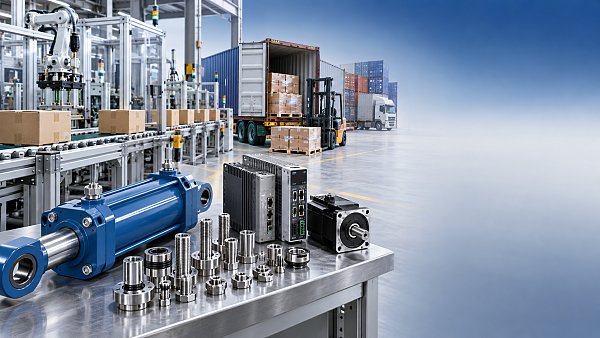
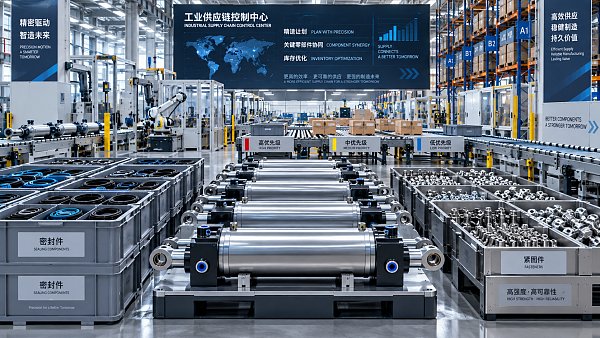
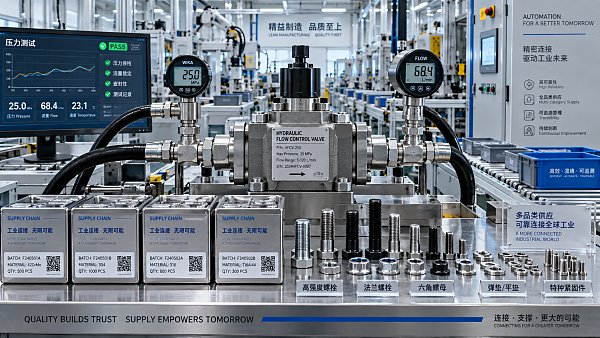
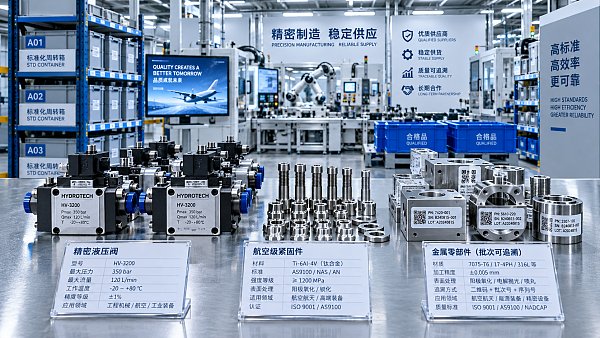
Across hydraulic systems, industrial fasteners, AMH equipment, flow control devices, and sourcing software, one pattern is clear.
The organizations that maintain continuity are the ones that govern data with the same discipline used for quality and safety.
Why the Supply-Chain Orchestration Environment Has Changed So Fast
Global supply networks are no longer shaped by price alone.
They are shaped by geopolitical shifts, material volatility, dual sourcing mandates, and higher technical traceability requirements.
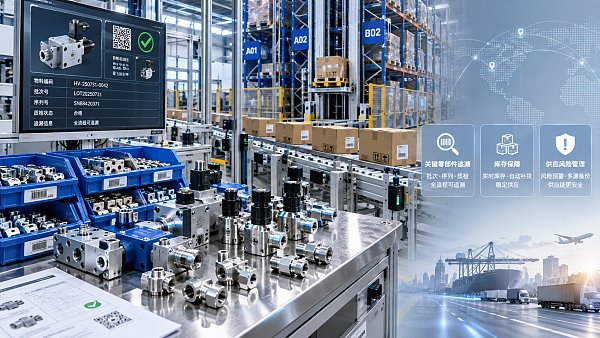
A single missing data field can now block a shipment, fail an audit, or delay a production restart.
This is especially true for parts that support uptime-critical assets.
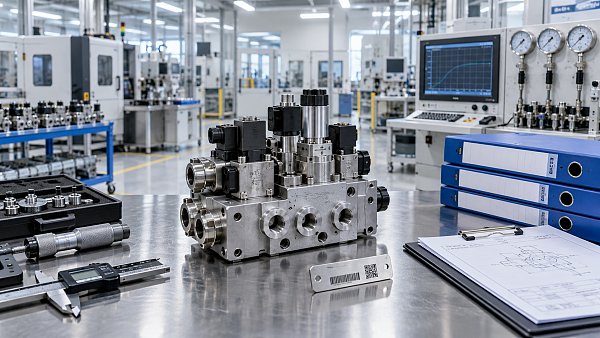
High-pressure cylinders, vibration-resistant bolts, precision valves, and metering devices all require exact identification.
If systems store conflicting dimensions, certifications, or lead times, Supply-Chain Orchestration loses decision quality immediately.
Digital tools have expanded visibility, but they have also amplified weak master data.
Bad data no longer stays local inside one plant or one procurement cycle.
It spreads across planning, sourcing, logistics, finance, and compliance layers at once.
Trend signals shaping current decisions
- Higher demand for real-time supplier risk monitoring
- More cross-border controls on industrial goods and materials
- Stricter validation of ISO, DIN, ASME, and IEEE references
- Faster engineering change cycles across component families
- Greater dependence on predictive replenishment and exception alerts
The Breakdown Starts with Four Data Gaps
Most Supply-Chain Orchestration failures can be traced to a small set of recurring information gaps.
These gaps distort planning, weaken sourcing decisions, and hide risk until disruption becomes expensive.
Each gap reduces the reliability of Supply-Chain Orchestration.
Together, they create a system that looks digital but behaves unpredictably.
What Is Driving the Need for Better Data Discipline
The push toward stronger Supply-Chain Orchestration is not theoretical.
It is being forced by structural pressures across industry.
- Critical components are more specialized and less interchangeable.
- Raw material swings change sourcing economics quickly.
- Regionalization strategies require parallel supplier qualification.
- Automation increases the cost of unplanned downtime.
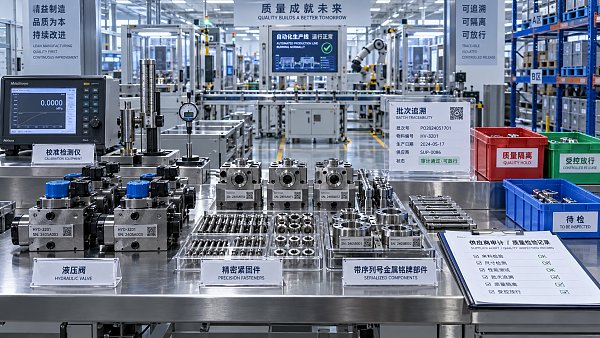
- Regulatory checks demand traceable documentation at every stage.
These forces elevate data from administrative support to strategic control.
For example, a sourcing model may appear balanced until nickel prices jump or export checks tighten.
If cost curves, supplier exposure, and component criticality are not linked, orchestration cannot adapt fast enough.
Some teams try lightweight platforms such as 无.
But tools only help when source data is normalized, governed, and continuously verified.
How Poor Data Impacts Different Business Links
Weak data quality does not damage one function alone.
It creates compounding errors across the full industrial value chain.
Engineering and specification control
Revision mismatches cause incorrect substitutions and rework.
That is dangerous when tolerances, pressure ratings, or material grades are tightly defined.
Sourcing and commercial planning
Inaccurate lead times distort reorder logic and contract timing.
Total cost analysis also fails when duties, freight, scrap risk, and quality history are disconnected.
Logistics and cross-border execution
A shipment may be physically ready but administratively blocked.
Origin data, customs codes, packing details, and certificates must match exactly.
Operations and uptime protection
Production continuity depends on the right part arriving at the right tolerance and right time.
If Supply-Chain Orchestration cannot flag risk early, maintenance windows collapse into emergency events.
The Data Priorities That Matter Most Now
Not all data deserves equal attention.
High-performing Supply-Chain Orchestration focuses first on the information that changes business outcomes fastest.
- Single-source part master with revision control
- Supplier performance data tied to quality and capacity
- Real-time lead time and shipment milestone feeds
- Material price monitoring for titanium, steel, and nickel exposure
- Trade policy alerts linked to relevant SKUs and origin routes
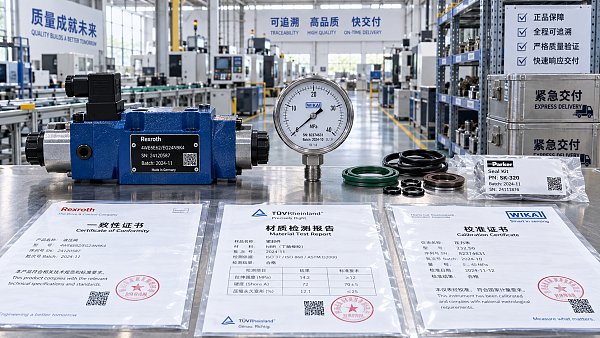
- Certification records mapped to each critical component family
This approach improves resilience without drowning teams in unused fields.
It also strengthens decision confidence during supplier shifts, engineering changes, and demand spikes.
A Practical Response Model for Stronger Supply-Chain Orchestration
The best response is not more data alone.
It is better structure, ownership, and validation.
Where suitable, an evaluation path may include 无.
Still, platform choice should follow data governance design, not replace it.
What to Watch Next as Supply-Chain Orchestration Matures
The next phase of Supply-Chain Orchestration will center on verified intelligence, not just automation.
Systems will increasingly combine technical compliance, commercial exposure, and predictive risk into one decision layer.
That matters most in environments built on critical parts and tight uptime commitments.
The strongest organizations will treat component data, supplier signals, and trade intelligence as core assets.
Those that do not will keep reacting to surprises that were visible, but not connected.
A practical next step is to audit one high-risk component category end to end.
Check part master accuracy, supplier status freshness, logistics transparency, and compliance completeness together.
That single review often reveals why Supply-Chain Orchestration breaks down and where resilience can be rebuilt fastest.
Recommended News
 Oct 16, 2026How to Use Supply Chain Risk Scores to Screen Suppliers in EuropeNeed a supply chain risk score Europe procurement teams can trust? Learn how to verify suppliers, uncover hidden risks, and build a defensible shortlist before you buy.● Lina Cloud
 Oct 15, 2026Cloud SCM Pricing: How to Compare Uptime SLAs and Downtime CostsCompare SCM cloud uptime pricing, SLA exclusions, downtime costs, and recovery options. Learn how to assess true value, reduce disruption risk, and choose the right cloud SCM plan.● Lina Cloud
 Oct 14, 2026How Do You Identify Supply Chain Risks for Critical Components?How can I identify supply chain risks for critical components? Discover how to map hidden dependencies, compare inventory with recovery time, and prioritize actions that protect uptime.● Lina Cloud
 Oct 14, 2026When Should You Approve a Second-Source Supplier?When should I approve a second source supplier? Discover key checks for quality, capacity, compliance, and supply risk to make confident approvals and protect production.● Lina Cloud
 Oct 11, 2026Predictive Supply Chain Case Studies: Reducing Global Sourcing Disruption RiskPredictive supply chain case studies for global sourcing: uncover disruption risks, protect critical components, and build resilient project delivery.● Lina Cloud
 Oct 03, 2026How to Evaluate Supply Chain Orchestration Software for Multi-Site OperationsSupply chain orchestration software: learn how to evaluate data, workflows, integrations, and governance for resilient multi-site operations.● Lina Cloud
 Oct 01, 2026How Procurement Teams Can Evaluate Supply Chain Risk Management Tools Before BuyingSupply chain risk management tool for procurement: learn how to evaluate data accuracy, part-level impact, alerts, workflows, integrations, and auditability before you buy.● Lina Cloud
 Oct 10, 2026Can Oracle supply planning reduce shortages without raising inventory?Oracle supply planning helps reduce shortages without inflating inventory through smarter allocation, scenario planning, and constraint-based decisions. Discover practical strategies.● Lina Cloud
 Oct 07, 2026What Happens When a Supplier Fails an Industrial Standards Audit?What happens if a supplier fails an industrial standards audit? Learn how to contain risk, protect traceability, manage corrective actions, and maintain supply continuity.● Lina Cloud
 Oct 06, 2026How Do You Document Standards Compliance for a Supplier Tender?How do I document standards compliance for a supplier tender? Use a compliance matrix, traceable test evidence, and clear deviations to strengthen bids and speed evaluation.● Lina Cloud
 Oct 02, 2026Which Supplier Records Should Be Checked Before an Urgent Purchase?Which supplier records should be checked before an urgent industrial purchase? Discover essential checks for quality, traceability, compliance, delivery, and risk control.● Lina Cloud
 Oct 01, 2026How Should Buyers Compare Suppliers Across Industrial Categories?How do I compare suppliers across different industrial categories? Use a practical framework for risk, quality, cost, resilience, and technical fit.● Lina Cloud
 Sep 30, 2026What Should Be Included in a Strategic Sourcing Plan?What should be included in a strategic sourcing plan? Explore essential steps for supplier strategy, total cost, risk control, compliance, and resilient industrial procurement.● Lina Cloud
 Sep 29, 2026How Do Raw Material Prices Affect Industrial Component Lead Times?How do raw material prices affect component lead times? Learn how availability, supplier inventory, and qualification risks shape delivery planning.● Lina Cloud
 Sep 19, 2026How to Evaluate an OEM Supplier for Real-Time Shipment Tracking IntegrationReal time shipment tracking OEM supplier evaluation: compare integration, data accuracy, security, costs, and pilot accountability to protect critical deliveries.● Lina Cloud
 Sep 12, 2026OEM Cooperation Process: Key Milestones for Managing Quality, Costs, and DeliveryOEM cooperation process guide: discover key milestones to control quality, total costs, and delivery risk for stronger, more reliable supplier partnerships.● Lina Cloud
 Aug 25, 2026How to Evaluate a Cloud OMS for OEM Operations with Complex Order WorkflowsEvaluate an order management system OMS OEM cloud platform for complex workflows. Learn what matters most in integration, traceability, scalability, and risk control.● Lina Cloud
 Aug 23, 2026What to Check Before Buying Bridal Tiaras Wholesale for a Retail CollectionBridal tiaras wholesale buying starts with quality, materials, MOQ, and supplier checks. Learn how to reduce risk, protect margins, and build a retail collection that sells.● Lina Cloud
 Aug 22, 2026How to Evaluate Poker Tables Wholesale Suppliers for Quality, MOQ, and CustomizationPoker tables wholesale buying guide: learn how to evaluate suppliers for quality, MOQ, customization, packaging, and lead times to reduce risk and choose scalable partners.● Lina Cloud
 Aug 18, 2026How Can a Supply Chain Digital Twin Improve Procurement Decisions and Supplier Risk?Supply chain digital twin procurement helps buyers compare suppliers, model disruption risk, and improve sourcing decisions with stronger cost, resilience, and performance insight.● Lina Cloud
 Aug 14, 2026What Is Procurement Planning? A Practical Guide for Reducing Buying RiskProcurement Planning helps reduce buying risk by aligning demand, specs, budget, and sourcing strategy. Learn how to buy smarter, avoid delays, and control costs.● Lina Cloud
 Aug 02, 2026How Polymer Raw Materials Affect Sensor Cost, Durability, and Design Trade-OffsImpact of raw material on sensor costs polymers goes far beyond resin price. Learn how polymer choice shapes durability, yield, sealing, and smarter sensor design decisions.● Lina Cloud
 Jul 29, 2026How to Evaluate a Supply Chain Sustainability Tracker Vendor for Reporting NeedsSupply chain sustainability tracker vendor evaluation starts with data integrity, framework mapping, and supplier workflows. Learn how to choose a platform that supports credible reporting and faster procurement decisions.● Lina Cloud
 Jul 28, 2026How Shippers Can Evaluate a Transportation Management System for Cost and Carrier ControlTransportation management system shippers can rely on to cut freight costs, improve carrier control, and boost visibility. Learn what to test before choosing a TMS.● Lina Cloud