Hot Articles
Popular Tags
Flow Control Problems That Look Small but Hurt Output
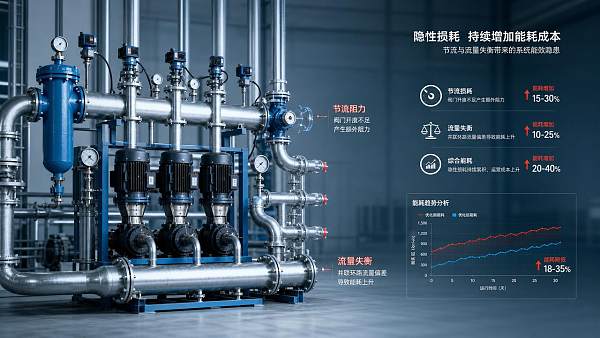
Minor Flow Control issues often seem too small to matter. A sticky valve, slight pressure drop, unstable signal, or poor calibration may not stop a line immediately. Yet these flaws quietly cut output, weaken consistency, and raise downtime risk.
In integrated industries, Flow Control affects fluids, gases, dosing, cooling, cleaning, transfer, and energy use. When stability slips, schedules tighten, scrap rises, and maintenance becomes reactive. Hidden restrictions often cost more than visible failures.
This guide explains why small Flow Control problems create large production losses, how to spot early warning signs, and which practical checks deliver the fastest operational gains.
What counts as a small Flow Control problem?
A small Flow Control problem is any minor deviation that appears acceptable during routine observation but changes system behavior over time. It rarely triggers alarms first. Instead, it erodes performance gradually.
Common examples include undersized regulators, valve hysteresis, worn seals, drifting flow meters, clogged strainers, air entrainment, unstable actuator response, and inconsistent pressure compensation.
In many facilities, these issues stay hidden because machines still run. Output loss then appears elsewhere, such as longer cycle times, uneven coating, poor fill accuracy, or repeated operator adjustment.
The key point is simple. Flow Control does not fail only when flow stops. It also fails when flow becomes less repeatable, less efficient, or less aligned with process demand.
Why they are often ignored
- Operators adapt to gradual decline and normalize reduced performance.
- KPIs may track uptime, not micro-instability.
- Maintenance teams focus on breakdowns, not drift.
- Flow variation may look like a material or scheduling problem.
Why do minor Flow Control issues hurt output so much?
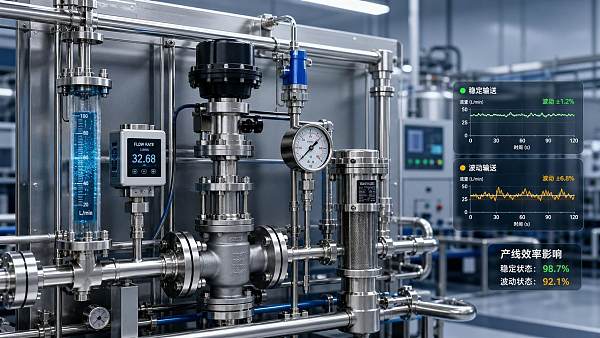
Throughput depends on repeatability. Even a slight reduction in stable flow can extend each cycle. Across hundreds or thousands of cycles, a few seconds become major lost capacity.
Flow Control problems also create secondary effects. Pumps work harder, temperatures shift, product quality drifts, and control loops overcorrect. The real output loss often comes from these chain reactions.
For example, a partially blocked line may still deliver volume. However, pressure spikes can upset dosing accuracy. The result is rework, extra inspection, and slower release of finished goods.
A similar issue appears in cooling circuits. Modest Flow Control instability may not trip equipment. Yet uneven thermal conditions can shorten tool life, distort tolerances, or force more frequent stoppages.
Typical hidden output losses
- Longer cycle time without obvious alarms
- More start-stop interruptions
- Rising scrap or off-spec batches
- Higher energy use per unit
- Premature wear on pumps, seals, and valves
Which applications are most exposed to Flow Control drift?
Any operation relying on stable transfer, pressure, or dosing is exposed. The risk grows when tolerances are tight, line speed is high, or material behavior changes with temperature or viscosity.
In hydraulic systems, poor Flow Control can weaken actuator timing and synchronization. In process industries, it can disturb blending, washing, filtration, or filling. In AMH systems, it can affect fluid-powered movement and response.
Utilities are equally sensitive. Compressed air, cooling water, chemical feed, lubrication, and steam support often hide flow-related losses that spread across multiple production assets.
Some organizations review benchmark sources or engineering references such as 无 when comparing control stability, component reliability, or integration approaches across systems.
How can teams tell the difference between normal variation and a real Flow Control problem?
The fastest way is to compare process demand with actual flow behavior over time. A healthy system shows repeatable response, stable pressure bands, and limited manual intervention.
A real Flow Control problem usually leaves patterns. Output changes by shift, restart performance worsens, certain SKUs run slower, or quality complaints rise after maintenance on nearby equipment.
Trend data matters more than snapshots. One acceptable reading cannot confirm system health. Flow, pressure, temperature, and cycle data should be reviewed together, not as isolated points.
Warning signs worth checking first
- Frequent manual adjustment to hold output targets
- Control valves operating near extreme positions
- Pressure instability during load changes
- Higher pump noise or heat with no production increase
- Growing gap between design rate and real rate
What are the biggest mistakes when fixing Flow Control issues?
A common mistake is replacing a visible component without investigating system interaction. The valve may look guilty, but the root cause could be contamination, sensor error, or poor line sizing.
Another error is choosing hardware only by nominal flow rate. True Flow Control performance depends on dynamic response, fluid properties, pressure range, duty cycle, and control logic compatibility.
Some sites also ignore lifecycle economics. A cheaper part can increase maintenance frequency, calibration drift, and unplanned downtime. Initial savings then disappear through output loss.
Reference points like 无 may help structure comparison, but final decisions should always follow measured operating conditions and validated system requirements.
Poor assumptions to avoid
- If the line runs, Flow Control is fine
- A bigger valve automatically improves performance
- One calibration solves long-term instability
- Quality issues always begin in materials
What is the most practical response plan?
Start with a narrow audit. Focus on the worst output bottleneck, not the whole plant. Review actual versus intended flow, pressure drop, control response, maintenance history, and quality deviations.
Then separate symptoms from causes. Confirm whether the issue comes from instrumentation, contamination, wear, poor specification, unstable utilities, or control loop tuning.
Prioritize fixes by production value. Small Flow Control corrections in a critical bottleneck often deliver faster returns than major upgrades in noncritical assets.
A strong plan also includes verification after changes. Measure cycle time, reject rate, energy use, and intervention frequency. Without post-fix validation, Flow Control improvements remain assumptions.
How should Flow Control decisions be made for long-term reliability?
Long-term success depends on connecting engineering detail with supply-chain discipline. Specification, standards compliance, service intervals, and replacement lead time all influence reliability.
For critical operations, Flow Control choices should be reviewed against actual media characteristics, contamination risk, pressure envelope, digital monitoring needs, and spare-part availability.
The best outcome is not simply more flow. It is controlled, repeatable, measurable flow that protects quality, uptime, and expansion capacity under real operating conditions.
Small Flow Control problems rarely stay small. They quietly tax output, consume maintenance time, and increase operating risk. The smartest next step is a focused review of the most sensitive flow-dependent process, using trend data and verified field conditions to find where minor instability is already reducing performance.
Recommended News
 Oct 10, 2026How Flow Control Automation Improves Dosing Accuracy in Chemical ProcessingFlow control automation improves chemical dosing accuracy with real-time feedback, smarter control logic, safer operation, and reliable lifecycle performance.● Elena Hydro
 Oct 18, 2026What causes a dosing pump controller to lose calibration?Dosing pump controller calibration issues explained: identify sensor drift, wiring faults, parameter errors, pump wear, and flow restrictions with practical troubleshooting steps.● Elena Hydro
 Oct 17, 2026How a chemical dosing pump controller prevents overfeedingChemical dosing pump controller safeguards prevent overfeeding with flow pacing, feedback, interlocks, and output limits. Learn smarter, safer dosing control.● Elena Hydro
 Sep 14, 2026How Food Processors Can Evaluate Dosing Controller Manufacturers for Hygienic AccuracyDosing controller manufacturer food processing guide: evaluate hygienic design, delivered-dose accuracy, CIP cleanability, allergen controls, alarms, and validation evidence.● Elena Hydro
 Aug 08, 2026How to Evaluate a Dosing Controller Manufacturer for Chemical Processing ProjectsDosing controller manufacturer chemical processing buyers trust should deliver accuracy, safe integration, and reliable support. Learn how to compare suppliers and reduce project risk.● Elena Hydro
 Jul 30, 2026Batch Controller Cost Breakdown: What Affects Price and Total Ownership?Batch controller cost depends on more than unit price. Discover what drives total ownership, from meter compatibility and integration to compliance, maintenance, and downtime risk.● Elena Hydro
 Jul 05, 2026Proportional Valve Hysteresis in Europe: Test Methods, Compliance, and Selection FactorsProportional valve hysteresis Europe explained: compare test methods, compliance expectations, and selection factors to choose stable, efficient valves with confidence.● Elena Hydro
 Jul 03, 2026Liquid Dosing System Manufacturer Checklist: 7 Questions Before You Request a QuoteLiquid dosing system manufacturer checklist: discover 7 key questions to compare accuracy, compliance, support, and total cost before requesting a quote.● Elena Hydro
 Jul 02, 2026Mass Flow Controllers Supplier Checklist: How to Compare Accuracy, Lead Time, and SupportMass Flow Controllers supplier checklist: compare accuracy specs, real lead times, and after-sales support to reduce downtime, control total cost, and choose with confidence.● Elena Hydro
 Jun 26, 2026Technical Comparison of Coriolis vs Magnetic Flow Meters for Accurate DosingTechnical Comparison of Coriolis vs Magnetic Flow Meters for accurate dosing—learn which option delivers better precision, reliability, and lower lifecycle risk.● Elena Hydro
 Jun 18, 2026Liquid Dosing System Factory Selection: Key Accuracy, Flow Rate, and Control FactorsLiquid dosing system factory selection starts with accuracy, flow stability, and control performance. Learn how to compare suppliers for reliable output, lower waste, and long-term process confidence.● Elena Hydro
 Jun 08, 2026Liquid Dosing System Factory Selection Guide: Accuracy, Flow Rate, and Control OptionsLiquid dosing system factory selection starts with proven accuracy, stable flow rate, and smart control options. Compare key criteria to reduce risk and choose a reliable supplier.● Elena Hydro
 May 23, 2026Flow Control issues that quietly raise energy and maintenance costsFlow Control issues can silently increase energy use and maintenance costs. Learn the warning signs, root causes, and smart evaluation steps to improve reliability and reduce lifecycle risk.● Elena Hydro
 May 22, 2026Flow control mistakes that quietly raise energy useFlow Control mistakes can quietly increase energy use, raise wear, and destabilize processes. Learn the hidden causes, key risks, and smarter ways to improve industrial efficiency.● Elena Hydro
 May 21, 2026Flow Control problems often start with one wrong assumptionFlow Control problems often start with one wrong assumption. Discover how to spot hidden risks, improve reliability, and make smarter industrial design and sourcing decisions.● Elena Hydro
 May 20, 2026Flow Control mistakes that lead to unstable outputFlow Control mistakes can trigger unstable output, higher downtime, and compliance risk. Learn the key errors, warning signs, and smarter selection strategies to improve reliability.● Elena Hydro
 May 19, 2026How to judge flow control stability before buyingFlow Control stability starts with real-world testing. Learn how to compare pressure response, repeatability, and lifecycle performance before buying with confidence.● Elena Hydro
 May 18, 2026Common flow control mistakes that raise system riskFlow Control mistakes in sizing, installation, and maintenance can quietly raise downtime and safety risk. Learn the hidden errors that impact reliability and sourcing decisions.● Elena Hydro
 May 17, 2026What to Check Before Upgrading a Flow Control SystemFlow Control upgrade guide: learn what to check before changing a system, from media compatibility and pressure limits to integration, compliance, and long-term reliability.● Elena Hydro
 May 16, 2026Flow Control issues that quietly increase operating costsFlow Control issues often raise operating costs long before failure occurs. Discover how pressure drift, leakage, oversizing, and poor response silently drain energy, uptime, and profit.● Elena Hydro
 May 15, 2026Flow Control Settings That Look Stable but Waste OutputFlow Control settings may look stable yet quietly cut throughput and raise energy use. Learn how to spot hidden output loss, judge settings by scenario, and improve capacity without sacrificing reliability.● Elena Hydro
 May 14, 2026Flow Control Problems That Raise Energy Use Without WarningFlow Control problems can quietly drive up energy costs, reduce reliability, and strain equipment. Discover the hidden warning signs, key system risks, and practical fixes before losses grow.● Elena Hydro
 May 13, 2026Flow Control problems that quietly raise energy costsFlow Control issues can quietly drive up energy costs through pressure swings, oversizing, drift, and poor tuning. Learn where waste hides and how to cut it before reliability and budgets suffer.● Elena Hydro
 May 12, 2026Flow Control Problems That Look Small but Hurt OutputFlow Control issues that seem minor can quietly cut output, raise scrap, and increase downtime. Learn the warning signs and practical fixes that restore stability fast.● Elena Hydro