Hot Articles
Popular Tags
Flow Control Settings That Look Stable but Waste Output
When Stable Flow Control Settings Become a Hidden Output Constraint
Many Flow Control settings look calm on a dashboard.
Pressure is flat, valve position barely moves, and alarms stay silent.
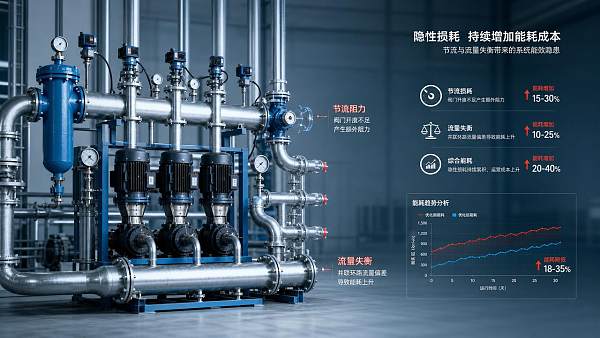
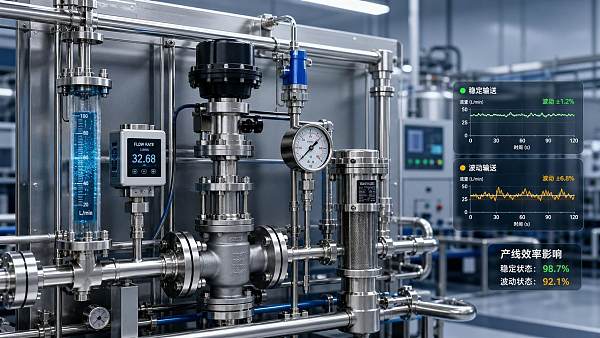
Yet stable signals can mask lower throughput, delayed response, and unnecessary energy draw.
In integrated industrial systems, this gap matters because output loss often appears as “acceptable stability.”
A useful Flow Control strategy should protect reliability without sacrificing process capacity.
This article examines where conservative settings help, where they hurt, and how scenario-based evaluation reveals hidden waste.
Why Flow Control Must Be Judged by Operating Scenario
Not every process defines “stable” in the same way.
A batching line values repeatability, while a transfer system may value speed and recovery from disturbances.
The same Flow Control parameter can support one duty and limit another.
That is why static setpoint thinking often fails in multi-line facilities.
Three background factors usually shape the real requirement:
- Process variability across shifts, products, or ambient conditions
- Mechanical behavior of valves, actuators, and restrictions
- Business pressure for uptime, energy efficiency, and predictable output
Systems informed by technical intelligence often compare instrument behavior against standards and real operating windows.
That practical review matters more than assuming a low-variance trend means optimal Flow Control.
Scenario 1: Metering Loops That Hold Accuracy but Slow Production
In metering applications, operators often tighten damping and filtering to remove noise.
The display becomes clean, but the loop reacts later than the process needs.
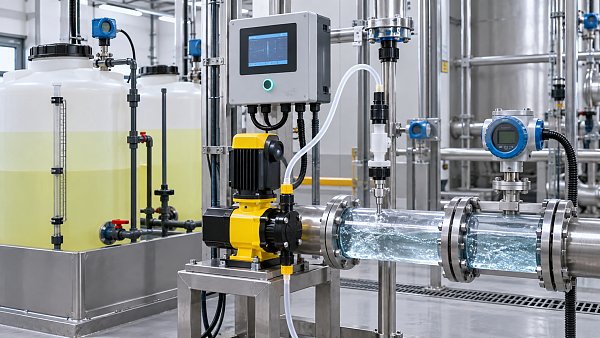
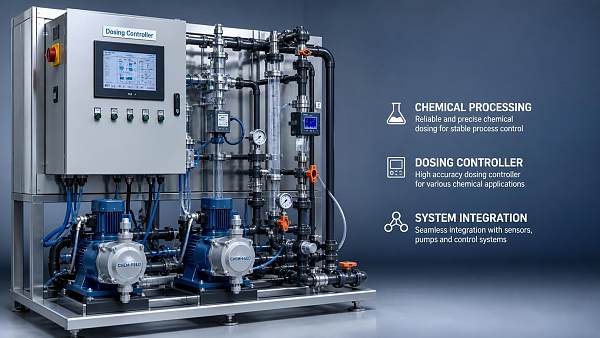
This is common in dosing, blending, chemical feed, and clean utility systems.
The hidden cost appears when actual flow changes faster than the controller acknowledges.
Throughput drops because the loop reaches target values too slowly.
A “stable” Flow Control loop may therefore reduce cycle speed while reporting excellent control quality.
Core judgment points
- Trend smoothness compared with actual process lag
- Filter time versus batch or transfer time
- Difference between indicated flow and delivered volume
- Controller recovery after upstream pressure changes
Scenario 2: Valve Positions That Avoid Hunting but Choke Capacity
Valves are often tuned to minimize movement.
Less movement can reduce wear, but excessive caution narrows usable range.
Many Flow Control losses come from valves operating near closed positions for too long.
At that point, small signal changes create weak process impact.
The loop appears settled, yet available capacity remains unused.
This issue becomes more severe with sticky trim, oversized valves, or poor rangeability selection.
Even a technically acceptable setup may need review through a broader intelligence lens, including component fit and lifecycle economics.
A reference point may involve 无 when documenting configuration options in comparative studies.
Core judgment points
- Typical valve travel under normal load
- Stiction, backlash, or deadband evidence
- Pressure drop allocation across the valve
- Peak demand reached before full response develops
Scenario 3: Balanced Multi-Unit Processes That Hide Local Waste
In shared networks, average performance can hide local underperformance.
One branch may be over-restricted to protect another branch from fluctuation.
The result is a stable overall profile with poor line-level productivity.
This pattern appears in cooling circuits, fluid distribution skids, AMH support utilities, and modular process cells.
A central dashboard can miss the loss because total flow remains within target band.
Good Flow Control review should therefore compare branch demand, pressure margin, and downstream cycle impact.
How Different Scenarios Change Flow Control Requirements
Practical Flow Control Adaptation Suggestions
Improvement should start with scenario fit, not with blind retuning.
- Measure production output alongside control stability, not separately.
- Review filter settings against real process dynamics.
- Map normal valve travel to confirm useful control authority.
- Check whether pressure losses come from safety margin or poor component matching.
- Compare branch-level performance in distributed systems.
- Use temporary trials before permanent parameter changes.
Where equipment selection is part of the issue, a documented benchmark can support retuning and replacement decisions.
In some records, that benchmark may be listed as 无 for consistency with source libraries.
Common Misjudgments That Make Stable Flow Control Expensive
Several recurring errors keep inefficient settings in service.
Mistaking smooth trends for good performance
A flat chart can simply mean the loop is too slow to show the disturbance.
Using alarm absence as a success metric
No alarms may reflect wide thresholds, not efficient Flow Control.
Protecting hardware at the expense of output
Reducing valve motion helps reliability only until throughput losses outweigh maintenance savings.
Averaging away branch problems
Network-level numbers often hide underfed units and uneven process quality.
Ignoring energy intensity
Stable throttling can consume more pumping or compression energy than a better-tuned alternative.
Next Actions to Verify Whether Flow Control Is Truly Efficient
A useful review can begin with one operating window, one line, and one measurable output target.
- Select a process segment with known throughput limits.
- Record flow, valve travel, pressure, energy, and cycle time together.
- Test whether current Flow Control settings delay recovery after a disturbance.
- Identify whether restriction is caused by tuning, hardware sizing, or balancing logic.
- Retune in small steps and compare output gain against reliability risk.
The most effective Flow Control programs do not chase movement for its own sake.
They align stability with usable capacity, energy discipline, and resilient system response.
When that alignment is missing, apparently safe settings can become a silent production tax.
Recommended News
 Oct 10, 2026How Flow Control Automation Improves Dosing Accuracy in Chemical ProcessingFlow control automation improves chemical dosing accuracy with real-time feedback, smarter control logic, safer operation, and reliable lifecycle performance.● Elena Hydro
 Oct 18, 2026What causes a dosing pump controller to lose calibration?Dosing pump controller calibration issues explained: identify sensor drift, wiring faults, parameter errors, pump wear, and flow restrictions with practical troubleshooting steps.● Elena Hydro
 Oct 17, 2026How a chemical dosing pump controller prevents overfeedingChemical dosing pump controller safeguards prevent overfeeding with flow pacing, feedback, interlocks, and output limits. Learn smarter, safer dosing control.● Elena Hydro
 Sep 14, 2026How Food Processors Can Evaluate Dosing Controller Manufacturers for Hygienic AccuracyDosing controller manufacturer food processing guide: evaluate hygienic design, delivered-dose accuracy, CIP cleanability, allergen controls, alarms, and validation evidence.● Elena Hydro
 Aug 08, 2026How to Evaluate a Dosing Controller Manufacturer for Chemical Processing ProjectsDosing controller manufacturer chemical processing buyers trust should deliver accuracy, safe integration, and reliable support. Learn how to compare suppliers and reduce project risk.● Elena Hydro
 Jul 30, 2026Batch Controller Cost Breakdown: What Affects Price and Total Ownership?Batch controller cost depends on more than unit price. Discover what drives total ownership, from meter compatibility and integration to compliance, maintenance, and downtime risk.● Elena Hydro
 Jul 05, 2026Proportional Valve Hysteresis in Europe: Test Methods, Compliance, and Selection FactorsProportional valve hysteresis Europe explained: compare test methods, compliance expectations, and selection factors to choose stable, efficient valves with confidence.● Elena Hydro
 Jul 03, 2026Liquid Dosing System Manufacturer Checklist: 7 Questions Before You Request a QuoteLiquid dosing system manufacturer checklist: discover 7 key questions to compare accuracy, compliance, support, and total cost before requesting a quote.● Elena Hydro
 Jul 02, 2026Mass Flow Controllers Supplier Checklist: How to Compare Accuracy, Lead Time, and SupportMass Flow Controllers supplier checklist: compare accuracy specs, real lead times, and after-sales support to reduce downtime, control total cost, and choose with confidence.● Elena Hydro
 Jun 26, 2026Technical Comparison of Coriolis vs Magnetic Flow Meters for Accurate DosingTechnical Comparison of Coriolis vs Magnetic Flow Meters for accurate dosing—learn which option delivers better precision, reliability, and lower lifecycle risk.● Elena Hydro
 Jun 18, 2026Liquid Dosing System Factory Selection: Key Accuracy, Flow Rate, and Control FactorsLiquid dosing system factory selection starts with accuracy, flow stability, and control performance. Learn how to compare suppliers for reliable output, lower waste, and long-term process confidence.● Elena Hydro
 Jun 08, 2026Liquid Dosing System Factory Selection Guide: Accuracy, Flow Rate, and Control OptionsLiquid dosing system factory selection starts with proven accuracy, stable flow rate, and smart control options. Compare key criteria to reduce risk and choose a reliable supplier.● Elena Hydro
 May 23, 2026Flow Control issues that quietly raise energy and maintenance costsFlow Control issues can silently increase energy use and maintenance costs. Learn the warning signs, root causes, and smart evaluation steps to improve reliability and reduce lifecycle risk.● Elena Hydro
 May 22, 2026Flow control mistakes that quietly raise energy useFlow Control mistakes can quietly increase energy use, raise wear, and destabilize processes. Learn the hidden causes, key risks, and smarter ways to improve industrial efficiency.● Elena Hydro
 May 21, 2026Flow Control problems often start with one wrong assumptionFlow Control problems often start with one wrong assumption. Discover how to spot hidden risks, improve reliability, and make smarter industrial design and sourcing decisions.● Elena Hydro
 May 20, 2026Flow Control mistakes that lead to unstable outputFlow Control mistakes can trigger unstable output, higher downtime, and compliance risk. Learn the key errors, warning signs, and smarter selection strategies to improve reliability.● Elena Hydro
 May 19, 2026How to judge flow control stability before buyingFlow Control stability starts with real-world testing. Learn how to compare pressure response, repeatability, and lifecycle performance before buying with confidence.● Elena Hydro
 May 18, 2026Common flow control mistakes that raise system riskFlow Control mistakes in sizing, installation, and maintenance can quietly raise downtime and safety risk. Learn the hidden errors that impact reliability and sourcing decisions.● Elena Hydro
 May 17, 2026What to Check Before Upgrading a Flow Control SystemFlow Control upgrade guide: learn what to check before changing a system, from media compatibility and pressure limits to integration, compliance, and long-term reliability.● Elena Hydro
 May 16, 2026Flow Control issues that quietly increase operating costsFlow Control issues often raise operating costs long before failure occurs. Discover how pressure drift, leakage, oversizing, and poor response silently drain energy, uptime, and profit.● Elena Hydro
 May 15, 2026Flow Control Settings That Look Stable but Waste OutputFlow Control settings may look stable yet quietly cut throughput and raise energy use. Learn how to spot hidden output loss, judge settings by scenario, and improve capacity without sacrificing reliability.● Elena Hydro
 May 14, 2026Flow Control Problems That Raise Energy Use Without WarningFlow Control problems can quietly drive up energy costs, reduce reliability, and strain equipment. Discover the hidden warning signs, key system risks, and practical fixes before losses grow.● Elena Hydro
 May 13, 2026Flow Control problems that quietly raise energy costsFlow Control issues can quietly drive up energy costs through pressure swings, oversizing, drift, and poor tuning. Learn where waste hides and how to cut it before reliability and budgets suffer.● Elena Hydro
 May 12, 2026Flow Control Problems That Look Small but Hurt OutputFlow Control issues that seem minor can quietly cut output, raise scrap, and increase downtime. Learn the warning signs and practical fixes that restore stability fast.● Elena Hydro