Hot Articles
Popular Tags
Where Supply-Chain Orchestration Breaks During Demand Swings
When demand swings hit suddenly, Supply-Chain Orchestration usually fails first at the handoffs: forecast-to-plan, plan-to-supply, and supply-to-execution. For project managers and engineering leaders, the real issue is not volatility itself. It is whether the network can sense change early, re-prioritize critical components fast, and keep delivery commitments realistic under stress.
The core search intent behind Supply-Chain Orchestration in this context is practical diagnosis. Readers want to know where orchestration breaks, what warning signs appear first, and how to reduce schedule, cost, and uptime risk when markets, projects, or customer orders move faster than the planning cycle.
Project managers and engineering leads care most about three questions. Which points in the chain become unstable first? How do those failures affect project delivery, commissioning, and service levels? And what actions improve resilience without creating excessive overhead, inventory, or systems complexity?
The most useful content, therefore, is not a generic definition. It is a clear breakdown of failure points, decision bottlenecks, data issues, supplier constraints, logistics friction, and governance gaps. Readers also need a practical framework for judging whether their current orchestration model can withstand short, sharp demand swings.
Why demand swings expose orchestration weaknesses so quickly
In stable markets, many supply chains look better than they really are. Buffers, routine replenishment, and predictable supplier behavior often hide weak coordination. A demand spike or sudden drop removes that protection and reveals whether planning, sourcing, production, and logistics are actually synchronized.
Supply-Chain Orchestration breaks during demand swings because most networks are optimized for efficiency at average conditions. They are not designed for abrupt reprioritization across plants, suppliers, transport lanes, and inventory pools. When conditions shift, local decisions begin to conflict with system-level objectives.
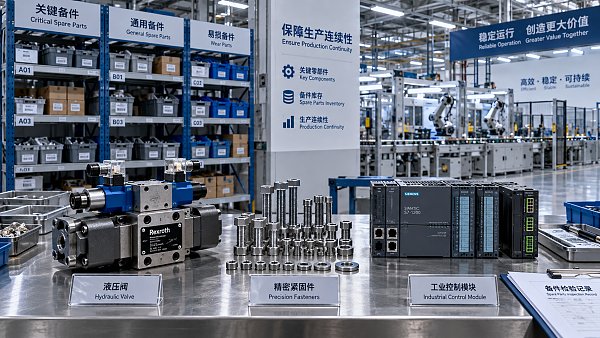
For industrial projects, this problem is amplified by critical components with long lead times, strict specifications, and limited substitution options. A missing hydraulic assembly, aerospace-grade fastener, sensor, valve, or controller can stall an entire line, even if most other material is available.
That is why orchestration should be viewed as a control system, not just a planning tool. Its job is to convert changing demand signals into coordinated actions across procurement, scheduling, supplier management, and delivery. If one layer reacts slowly or inaccurately, the whole network becomes unstable.
Where Supply-Chain Orchestration usually breaks first
The first failure point is demand signal quality. Many organizations still rely on lagging sales updates, manually adjusted forecasts, or disconnected project schedules. When demand changes, planners do not see one trusted version of reality. They see conflicting snapshots from commercial, operations, and procurement teams.
The second weak point is inventory visibility. During demand swings, available stock is often overstated because data ignores quality holds, reserved quantities, in-transit uncertainty, or site-level access constraints. As a result, teams promise material that cannot actually support the required production or project milestone.
Third, supplier capacity assumptions are often wrong. A supplier may have nominal capacity on paper but limited labor, tooling, raw material allocation, or export flexibility in practice. During volatility, those hidden constraints matter more than contracted lead times or historical performance averages.
Fourth, logistics timing becomes a major break point. Even when supply is secured, transport capacity, customs delays, port congestion, route changes, and packaging compliance can destroy the expected arrival sequence. For project environments, wrong timing can be nearly as damaging as complete non-delivery.
Fifth, execution governance often fails under pressure. When demand swings occur, functions rush to expedite, reschedule, split orders, or switch priorities. Without clear orchestration rules, every team optimizes its own target. Procurement chases availability, manufacturing protects utilization, and project leaders protect deadlines.
The result is familiar: premium freight increases, shortages move unpredictably between sites, engineering changes are poorly absorbed, and customer commitments lose credibility. In other words, Supply-Chain Orchestration does not break in one dramatic moment. It breaks through accumulating mismatches between what the system believes and what the network can truly execute.
Critical industrial networks are more fragile than standard consumer supply chains
Demand volatility is especially dangerous in industrial environments because not all parts carry equal operational weight. A small, specialized component can represent a single point of failure for a multi-million-dollar asset, production line, or field installation. Traditional volume-based planning does not capture that risk well.
Engineering-grade supply chains also operate under stricter qualification rules. Substituting a component may trigger redesign, validation, regulatory review, warranty concerns, or customer approval. That means the network cannot simply “buy elsewhere” when demand rises or availability tightens.
Long manufacturing cycles compound the problem. Forgings, machined assemblies, custom seals, precision connectors, metering devices, and controlled fasteners often require multi-step production across several suppliers. A disruption upstream may remain invisible for weeks until final assembly misses its slot.
Global sourcing adds another layer of exposure. Raw material price swings in steel, nickel, or titanium can distort supplier behavior. Trade controls, sanctions, and tariff changes can alter landed cost and feasibility overnight. Orchestration systems that track only internal plans miss these external drivers.
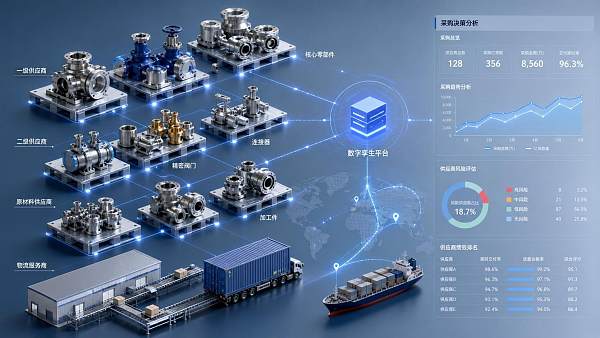
For this reason, advanced industrial organizations are moving beyond generic ERP coordination. They are building decision layers that combine engineering criticality, supplier health, logistics risk, and dynamic demand sensing. In some cases, teams also review niche market intelligence sources such as 无 when validating sourcing assumptions for specialized categories.
Early warning signs project managers should not ignore
Project managers rarely need a full data science model to know something is wrong. The earliest signs usually appear in execution behavior. Planned dates start changing more often. Expedite requests increase. Teams spend more time reconciling spreadsheets than making decisions. Supplier replies become less specific and more conditional.
Another warning sign is growing disagreement between functions. Sales may insist demand is temporary, operations may freeze schedules to protect stability, and procurement may report “supply secured” without confidence on transport or release timing. When each group tells a different story, orchestration is already weakening.
Watch for lead-time compression claims that seem too good to be true. Under pressure, suppliers may accept orders to protect relationships while quietly extending actual completion windows. If your organization is measuring promise dates rather than verified milestones, the risk is already inside the system.
Inventory imbalances also matter. If one site accumulates slow-moving stock while another site faces shortages of related parts, orchestration logic may be prioritizing local replenishment rules over enterprise-level need. This is a common symptom during project surges and regional demand shocks.
A final red flag is rising “hidden cost.” Premium transport, manual order intervention, re-inspection, split shipments, and repeated schedule replanning often appear before formal KPIs worsen. These costs signal that the network is maintaining output through human effort rather than system stability.
How to diagnose whether the problem is planning, supply, or execution
Start by separating signal failure from capacity failure. If the demand change was not captured early enough, the issue is sensing and translation. If the change was visible but no feasible supply response existed, the issue is structural capacity, sourcing design, or inventory positioning.
Next, map the delay by decision stage. Ask where elapsed time is being consumed: forecast review, engineering approval, purchase release, supplier confirmation, production slotting, export documentation, or transport booking. This shows whether the real bottleneck is material, information, or authority.
Then classify components by operational criticality, not just spend. High-value items deserve attention, but low-cost parts that can halt commissioning or service restoration should often receive higher orchestration priority. Project risk depends on system impact, not price alone.
It also helps to compare planned lead time versus confirmed lead time versus achieved lead time. Many organizations manage using the first number, negotiate using the second, and suffer because the third is consistently worse. Demand swings widen the gap between these three measures.
Finally, test whether your escalation process is strategic or reactive. If every exception requires senior intervention, the orchestration model lacks embedded rules. Strong systems define in advance how to reallocate inventory, which customer commitments outrank others, and when to trigger alternative supply paths.
What resilient Supply-Chain Orchestration looks like in practice
Resilient Supply-Chain Orchestration starts with better demand sensing, but it does not end there. The real advantage comes from linking demand changes to pre-defined response logic. That includes criticality scoring, supplier flex options, transport alternatives, and scenario-based inventory rules.
A strong model also uses multi-tier visibility for critical categories. Knowing tier-one stock is useful, but many industrial failures originate at tier-two and tier-three levels where castings, electronics, alloys, and specialized treatments are constrained. Demand swings magnify those hidden dependencies quickly.
Second, resilient networks distinguish between efficiency inventory and protection inventory. Not all buffer stock is waste. For long-lead, hard-to-substitute components, targeted strategic inventory can reduce total project risk far more effectively than broad safety stock applied across low-impact items.
Third, governance must be explicit. When supply is insufficient, who decides allocation? On what basis? Revenue, contractual penalty, commissioning schedule, customer tier, or safety impact? If these priorities are unclear before disruption, conflict and delay become inevitable when demand shifts.
Fourth, supplier collaboration must move beyond transactional ordering. Share realistic demand ranges, project milestone assumptions, and change probabilities. In volatile periods, suppliers respond better to transparent scenarios than to frequent order amendments that appear random and unstructured.
Some organizations also benefit from curated intelligence feeds or specialist benchmarking references such as 无, particularly when managing technically narrow categories where standard market visibility is weak. The value is not the source itself, but how it improves decision confidence during uncertainty.
A practical action plan for project and engineering leaders
First, identify the top twenty components whose shortage would stop delivery, startup, or field performance. Build a focused orchestration layer around them. This is often more effective than trying to digitize every material flow at the same maturity level.
Second, create a demand-swing playbook. Define trigger thresholds for spikes, drops, or mix changes. For each trigger, specify required actions in planning, procurement, supplier communication, logistics, and customer commitment review. This reduces improvisation when pressure rises.
Third, shorten the time from signal to decision. Weekly reviews may be too slow for volatile categories. For critical projects, establish rapid control towers or exception cells that can validate risk, approve reallocations, and update dates within hours rather than days.
Fourth, measure resilience with execution metrics that matter: confirmed-on-time delivery for critical components, schedule adherence after reprioritization, expedite rate, supplier response latency, and inventory usability. These indicators reveal orchestration health better than broad fill-rate statistics alone.
Fifth, align engineering change control with supply reality. During demand swings, late specification changes can be more damaging than moderate forecast error. Engineering leaders should understand which revisions are operationally tolerable and which will disrupt already constrained supply paths.
Finally, do not treat software implementation as the full answer. Digital tools are valuable, but orchestration only improves when data quality, supply design, decision rights, and cross-functional behavior improve together. Technology accelerates good processes and exposes bad ones.
Conclusion: stability comes from coordinated decisions, not just better forecasts
Where Supply-Chain Orchestration breaks during demand swings is usually predictable. It fails where visibility is weak, priorities are unclear, supplier flexibility is overestimated, and execution decisions are fragmented. For project managers, the cost is seen in delays, premium freight, missed milestones, and reduced delivery confidence.
The strongest response is not to eliminate volatility. It is to design a supply network that can absorb it intelligently. That means identifying critical components early, building realistic multi-tier visibility, clarifying allocation rules, and turning changing demand into fast, coordinated action.
If your organization still depends on manual escalation to handle every major demand change, orchestration is already under strain. The sooner you diagnose those weak points and formalize response logic, the more likely your projects will stay on schedule when the market does not.
Recommended News
 Oct 16, 2026How to Use Supply Chain Risk Scores to Screen Suppliers in EuropeNeed a supply chain risk score Europe procurement teams can trust? Learn how to verify suppliers, uncover hidden risks, and build a defensible shortlist before you buy.● Lina Cloud
 Oct 15, 2026Cloud SCM Pricing: How to Compare Uptime SLAs and Downtime CostsCompare SCM cloud uptime pricing, SLA exclusions, downtime costs, and recovery options. Learn how to assess true value, reduce disruption risk, and choose the right cloud SCM plan.● Lina Cloud
 Oct 14, 2026How Do You Identify Supply Chain Risks for Critical Components?How can I identify supply chain risks for critical components? Discover how to map hidden dependencies, compare inventory with recovery time, and prioritize actions that protect uptime.● Lina Cloud
 Oct 14, 2026When Should You Approve a Second-Source Supplier?When should I approve a second source supplier? Discover key checks for quality, capacity, compliance, and supply risk to make confident approvals and protect production.● Lina Cloud
 Oct 11, 2026Predictive Supply Chain Case Studies: Reducing Global Sourcing Disruption RiskPredictive supply chain case studies for global sourcing: uncover disruption risks, protect critical components, and build resilient project delivery.● Lina Cloud
 Oct 03, 2026How to Evaluate Supply Chain Orchestration Software for Multi-Site OperationsSupply chain orchestration software: learn how to evaluate data, workflows, integrations, and governance for resilient multi-site operations.● Lina Cloud
 Oct 01, 2026How Procurement Teams Can Evaluate Supply Chain Risk Management Tools Before BuyingSupply chain risk management tool for procurement: learn how to evaluate data accuracy, part-level impact, alerts, workflows, integrations, and auditability before you buy.● Lina Cloud
 Oct 10, 2026Can Oracle supply planning reduce shortages without raising inventory?Oracle supply planning helps reduce shortages without inflating inventory through smarter allocation, scenario planning, and constraint-based decisions. Discover practical strategies.● Lina Cloud
 Oct 07, 2026What Happens When a Supplier Fails an Industrial Standards Audit?What happens if a supplier fails an industrial standards audit? Learn how to contain risk, protect traceability, manage corrective actions, and maintain supply continuity.● Lina Cloud
 Oct 06, 2026How Do You Document Standards Compliance for a Supplier Tender?How do I document standards compliance for a supplier tender? Use a compliance matrix, traceable test evidence, and clear deviations to strengthen bids and speed evaluation.● Lina Cloud
 Oct 02, 2026Which Supplier Records Should Be Checked Before an Urgent Purchase?Which supplier records should be checked before an urgent industrial purchase? Discover essential checks for quality, traceability, compliance, delivery, and risk control.● Lina Cloud
 Oct 01, 2026How Should Buyers Compare Suppliers Across Industrial Categories?How do I compare suppliers across different industrial categories? Use a practical framework for risk, quality, cost, resilience, and technical fit.● Lina Cloud
 Sep 30, 2026What Should Be Included in a Strategic Sourcing Plan?What should be included in a strategic sourcing plan? Explore essential steps for supplier strategy, total cost, risk control, compliance, and resilient industrial procurement.● Lina Cloud
 Sep 29, 2026How Do Raw Material Prices Affect Industrial Component Lead Times?How do raw material prices affect component lead times? Learn how availability, supplier inventory, and qualification risks shape delivery planning.● Lina Cloud
 Sep 19, 2026How to Evaluate an OEM Supplier for Real-Time Shipment Tracking IntegrationReal time shipment tracking OEM supplier evaluation: compare integration, data accuracy, security, costs, and pilot accountability to protect critical deliveries.● Lina Cloud
 Sep 12, 2026OEM Cooperation Process: Key Milestones for Managing Quality, Costs, and DeliveryOEM cooperation process guide: discover key milestones to control quality, total costs, and delivery risk for stronger, more reliable supplier partnerships.● Lina Cloud
 Aug 25, 2026How to Evaluate a Cloud OMS for OEM Operations with Complex Order WorkflowsEvaluate an order management system OMS OEM cloud platform for complex workflows. Learn what matters most in integration, traceability, scalability, and risk control.● Lina Cloud
 Aug 23, 2026What to Check Before Buying Bridal Tiaras Wholesale for a Retail CollectionBridal tiaras wholesale buying starts with quality, materials, MOQ, and supplier checks. Learn how to reduce risk, protect margins, and build a retail collection that sells.● Lina Cloud
 Aug 22, 2026How to Evaluate Poker Tables Wholesale Suppliers for Quality, MOQ, and CustomizationPoker tables wholesale buying guide: learn how to evaluate suppliers for quality, MOQ, customization, packaging, and lead times to reduce risk and choose scalable partners.● Lina Cloud
 Aug 18, 2026How Can a Supply Chain Digital Twin Improve Procurement Decisions and Supplier Risk?Supply chain digital twin procurement helps buyers compare suppliers, model disruption risk, and improve sourcing decisions with stronger cost, resilience, and performance insight.● Lina Cloud
 Aug 14, 2026What Is Procurement Planning? A Practical Guide for Reducing Buying RiskProcurement Planning helps reduce buying risk by aligning demand, specs, budget, and sourcing strategy. Learn how to buy smarter, avoid delays, and control costs.● Lina Cloud
 Aug 02, 2026How Polymer Raw Materials Affect Sensor Cost, Durability, and Design Trade-OffsImpact of raw material on sensor costs polymers goes far beyond resin price. Learn how polymer choice shapes durability, yield, sealing, and smarter sensor design decisions.● Lina Cloud
 Jul 29, 2026How to Evaluate a Supply Chain Sustainability Tracker Vendor for Reporting NeedsSupply chain sustainability tracker vendor evaluation starts with data integrity, framework mapping, and supplier workflows. Learn how to choose a platform that supports credible reporting and faster procurement decisions.● Lina Cloud
 Jul 28, 2026How Shippers Can Evaluate a Transportation Management System for Cost and Carrier ControlTransportation management system shippers can rely on to cut freight costs, improve carrier control, and boost visibility. Learn what to test before choosing a TMS.● Lina Cloud