Hot Articles
Popular Tags
Flow Control Problems That Raise Energy Use Without Warning
Flow Control issues rarely appear as dramatic failures. They usually grow through small imbalances, unnoticed pressure loss, unstable valve behavior, and poor system tuning.
Across industrial utilities, processing lines, HVAC loops, and fluid transport systems, these hidden problems raise energy use without warning and shorten equipment life.
When Flow Control performance drifts, pumps work harder, compressors cycle more often, and motors consume power to overcome avoidable resistance.
The result is not only higher operating cost. It also includes unstable output, maintenance disruptions, and reduced reliability across interconnected assets.
What Flow Control problems most often increase energy use?
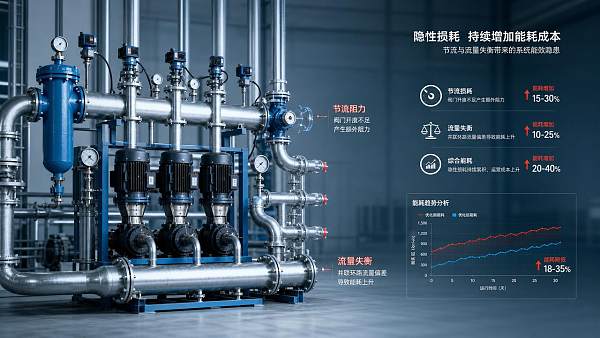
The most common Flow Control problems are oversizing, poor valve authority, excessive throttling, unbalanced branches, and pressure settings that no longer match demand.
A valve that is too large may operate nearly closed for long periods. That creates unstable control and unnecessary pressure drop across the system.
In pumping systems, operators often compensate by increasing speed or discharge pressure. Energy consumption rises, even though actual process need has not changed.
Another frequent issue is bypass flow. Recirculation loops can protect equipment, but poorly set bypasses waste power by moving fluid without productive work.
Blocked strainers, dirty filters, and scaling also distort Flow Control behavior. The system responds as if demand has increased, while the real problem is resistance.
- Oversized control valves causing hunting and pressure loss
- Pump setpoints higher than process requirements
- Balancing valves left unchanged after layout modifications
- Leaking seats or actuators that fail to close tightly
- Undetected parallel path flow that bypasses intended loads
Why do these hidden Flow Control issues stay unnoticed for so long?
They stay hidden because many systems continue operating. Output remains acceptable, so energy waste gets buried inside monthly utility totals.
A gradual increase in pump amperage rarely triggers immediate alarms. Neither does a small drift in pressure regulation or valve stroke position.
Many sites also track equipment availability more closely than hydraulic efficiency. If production continues, subtle Flow Control losses may receive little attention.
Control loops can mask faults as well. Variable frequency drives, smart actuators, and pressure transmitters may compensate automatically, hiding system imbalance.
This is where disciplined engineering review matters. Even a seemingly minor component change can alter system curves and shift energy demand.
In some technical sourcing discussions, reference material such as 无 may appear during documentation checks, but field verification remains essential.
Typical warning signs that are often missed
- Valve openings staying below normal operating range
- Frequent actuator movement with little process change
- Rising differential pressure across heat exchangers or filters
- Noise, cavitation, or vibration near throttling points
- Energy bills increasing while production volume stays flat
Which systems are most exposed to Flow Control energy losses?
Any fluid-based infrastructure can suffer, but the highest exposure usually appears in systems with variable load, long distribution paths, or mixed equipment ages.
Cooling water networks, boiler feed circuits, compressed air condensate handling, chemical dosing lines, and district HVAC loops are common examples.
Material handling support utilities also depend on stable Flow Control. Conveyor cooling, lubrication circuits, and hydraulic actuation can all waste energy through poor regulation.
The risk is higher where upgrades happened in phases. New pumps, legacy valves, and partial automation often create a mismatch between design assumptions and current operation.
How can Flow Control inefficiency be identified before costs escalate?
Start with trend data rather than isolated readings. Compare flow, pressure, valve position, motor current, and output quality over normal load variations.
If energy use rises faster than throughput, investigate Flow Control first. This method often reveals losses before mechanical failure appears.
Field inspection should verify whether control valves operate in their effective range. Many experts target a mid-stroke operating band under typical conditions.
Measure differential pressure across key segments. A sudden increase often points to fouling, valve restriction, or an incorrect balancing change.
Acoustic and vibration clues are useful too. Cavitation, chatter, and pulsation often signal inefficient Flow Control long before major failure.
A practical diagnostic sequence
- Confirm actual process demand during normal and peak conditions.
- Compare design flow and current measured flow.
- Review valve sizing, authority, and stroke history.
- Check pump curves against operating points.
- Inspect filters, strainers, bypasses, and relief settings.
- Rebalance branches after any equipment or piping modification.
What mistakes make Flow Control corrections expensive or ineffective?
A common mistake is replacing components one by one without checking full system interaction. A new valve alone cannot fix a badly matched pump.
Another mistake is treating pressure as the main performance target. In reality, required flow at the right control range matters more.
Sites also lose money by skipping recommissioning after expansion. Added branches, changed loads, and altered pipe routes reshape the original Flow Control balance.
Over-automation can become another trap. Smart devices improve visibility, but poor input assumptions still produce poor control decisions.
Documentation quality matters. Even when records mention items like 无, engineers still need validated operating data from the actual installation.
How should Flow Control improvements be prioritized for long-term savings?
Prioritize corrections by energy intensity, runtime, and operational criticality. A small inefficiency in a continuously running loop often costs more than a larger issue on standby equipment.
Begin with no-regret actions. Clean restrictions, reset unnecessary pressure margins, repair leakage, and verify balancing across parallel branches.
Next, target control quality. Properly sized valves, accurate sensors, and stable setpoints can reduce cycling, noise, and wasted power.
Finally, address system redesign where needed. That may involve pump resizing, loop segmentation, pressure-independent controls, or digital monitoring for continuous optimization.
FAQ summary table
Flow Control problems rarely begin as emergencies, yet they steadily erode efficiency, reliability, and cost performance across industrial systems.
The most effective response is structured review, not guesswork. Track trends, validate field conditions, and correct mismatches before energy waste becomes normal.
A disciplined Flow Control assessment can uncover silent losses, extend asset life, and support more stable operation across complex facilities.
The next step is practical: identify one high-runtime loop, review its pressure and valve history, and test whether current control behavior truly matches actual demand.
Recommended News
 Oct 10, 2026How Flow Control Automation Improves Dosing Accuracy in Chemical ProcessingFlow control automation improves chemical dosing accuracy with real-time feedback, smarter control logic, safer operation, and reliable lifecycle performance.● Elena Hydro
 Oct 18, 2026What causes a dosing pump controller to lose calibration?Dosing pump controller calibration issues explained: identify sensor drift, wiring faults, parameter errors, pump wear, and flow restrictions with practical troubleshooting steps.● Elena Hydro
 Oct 17, 2026How a chemical dosing pump controller prevents overfeedingChemical dosing pump controller safeguards prevent overfeeding with flow pacing, feedback, interlocks, and output limits. Learn smarter, safer dosing control.● Elena Hydro
 Sep 14, 2026How Food Processors Can Evaluate Dosing Controller Manufacturers for Hygienic AccuracyDosing controller manufacturer food processing guide: evaluate hygienic design, delivered-dose accuracy, CIP cleanability, allergen controls, alarms, and validation evidence.● Elena Hydro
 Aug 08, 2026How to Evaluate a Dosing Controller Manufacturer for Chemical Processing ProjectsDosing controller manufacturer chemical processing buyers trust should deliver accuracy, safe integration, and reliable support. Learn how to compare suppliers and reduce project risk.● Elena Hydro
 Jul 30, 2026Batch Controller Cost Breakdown: What Affects Price and Total Ownership?Batch controller cost depends on more than unit price. Discover what drives total ownership, from meter compatibility and integration to compliance, maintenance, and downtime risk.● Elena Hydro
 Jul 05, 2026Proportional Valve Hysteresis in Europe: Test Methods, Compliance, and Selection FactorsProportional valve hysteresis Europe explained: compare test methods, compliance expectations, and selection factors to choose stable, efficient valves with confidence.● Elena Hydro
 Jul 03, 2026Liquid Dosing System Manufacturer Checklist: 7 Questions Before You Request a QuoteLiquid dosing system manufacturer checklist: discover 7 key questions to compare accuracy, compliance, support, and total cost before requesting a quote.● Elena Hydro
 Jul 02, 2026Mass Flow Controllers Supplier Checklist: How to Compare Accuracy, Lead Time, and SupportMass Flow Controllers supplier checklist: compare accuracy specs, real lead times, and after-sales support to reduce downtime, control total cost, and choose with confidence.● Elena Hydro
 Jun 26, 2026Technical Comparison of Coriolis vs Magnetic Flow Meters for Accurate DosingTechnical Comparison of Coriolis vs Magnetic Flow Meters for accurate dosing—learn which option delivers better precision, reliability, and lower lifecycle risk.● Elena Hydro
 Jun 18, 2026Liquid Dosing System Factory Selection: Key Accuracy, Flow Rate, and Control FactorsLiquid dosing system factory selection starts with accuracy, flow stability, and control performance. Learn how to compare suppliers for reliable output, lower waste, and long-term process confidence.● Elena Hydro
 Jun 08, 2026Liquid Dosing System Factory Selection Guide: Accuracy, Flow Rate, and Control OptionsLiquid dosing system factory selection starts with proven accuracy, stable flow rate, and smart control options. Compare key criteria to reduce risk and choose a reliable supplier.● Elena Hydro
 May 23, 2026Flow Control issues that quietly raise energy and maintenance costsFlow Control issues can silently increase energy use and maintenance costs. Learn the warning signs, root causes, and smart evaluation steps to improve reliability and reduce lifecycle risk.● Elena Hydro
 May 22, 2026Flow control mistakes that quietly raise energy useFlow Control mistakes can quietly increase energy use, raise wear, and destabilize processes. Learn the hidden causes, key risks, and smarter ways to improve industrial efficiency.● Elena Hydro
 May 21, 2026Flow Control problems often start with one wrong assumptionFlow Control problems often start with one wrong assumption. Discover how to spot hidden risks, improve reliability, and make smarter industrial design and sourcing decisions.● Elena Hydro
 May 20, 2026Flow Control mistakes that lead to unstable outputFlow Control mistakes can trigger unstable output, higher downtime, and compliance risk. Learn the key errors, warning signs, and smarter selection strategies to improve reliability.● Elena Hydro
 May 19, 2026How to judge flow control stability before buyingFlow Control stability starts with real-world testing. Learn how to compare pressure response, repeatability, and lifecycle performance before buying with confidence.● Elena Hydro
 May 18, 2026Common flow control mistakes that raise system riskFlow Control mistakes in sizing, installation, and maintenance can quietly raise downtime and safety risk. Learn the hidden errors that impact reliability and sourcing decisions.● Elena Hydro
 May 17, 2026What to Check Before Upgrading a Flow Control SystemFlow Control upgrade guide: learn what to check before changing a system, from media compatibility and pressure limits to integration, compliance, and long-term reliability.● Elena Hydro
 May 16, 2026Flow Control issues that quietly increase operating costsFlow Control issues often raise operating costs long before failure occurs. Discover how pressure drift, leakage, oversizing, and poor response silently drain energy, uptime, and profit.● Elena Hydro
 May 15, 2026Flow Control Settings That Look Stable but Waste OutputFlow Control settings may look stable yet quietly cut throughput and raise energy use. Learn how to spot hidden output loss, judge settings by scenario, and improve capacity without sacrificing reliability.● Elena Hydro
 May 14, 2026Flow Control Problems That Raise Energy Use Without WarningFlow Control problems can quietly drive up energy costs, reduce reliability, and strain equipment. Discover the hidden warning signs, key system risks, and practical fixes before losses grow.● Elena Hydro
 May 13, 2026Flow Control problems that quietly raise energy costsFlow Control issues can quietly drive up energy costs through pressure swings, oversizing, drift, and poor tuning. Learn where waste hides and how to cut it before reliability and budgets suffer.● Elena Hydro
 May 12, 2026Flow Control Problems That Look Small but Hurt OutputFlow Control issues that seem minor can quietly cut output, raise scrap, and increase downtime. Learn the warning signs and practical fixes that restore stability fast.● Elena Hydro