Hot Articles
Popular Tags
Flow Control problems that quietly raise energy costs
Flow Control problems often start as small operating anomalies
Rising utility bills rarely come from one dramatic breakdown.
In many plants, hidden Flow Control issues slowly increase compressed air, steam, gas, and liquid energy demand.
Pressure fluctuation, valve oversizing, poor tuning, and unstable flow measurement often look minor during daily operation.
Yet these small deviations reduce efficiency, shorten component life, and create avoidable lifecycle cost.
Across integrated industrial environments, better Flow Control directly supports uptime, cost discipline, and safer process stability.
That makes hidden energy loss a sourcing issue, not only a maintenance issue.
Why Flow Control losses vary by operating scenario
Not every system wastes energy in the same way.
A dosing line, hydraulic circuit, chilled water loop, and boiler feed network each respond differently to Flow Control instability.
The same valve that performs well in steady service may perform poorly in variable load conditions.
Likewise, a flow meter with acceptable accuracy in clean water may fail in viscous, pulsating, or mixed-phase flow.
Scenario-based evaluation helps reveal whether energy waste comes from component mismatch, control logic, or poor system design.
This approach also improves comparison across suppliers, standards, and total cost expectations.
Scenario 1: Variable-load production lines hide Flow Control waste
Variable production lines often shift between low, medium, and peak throughput.
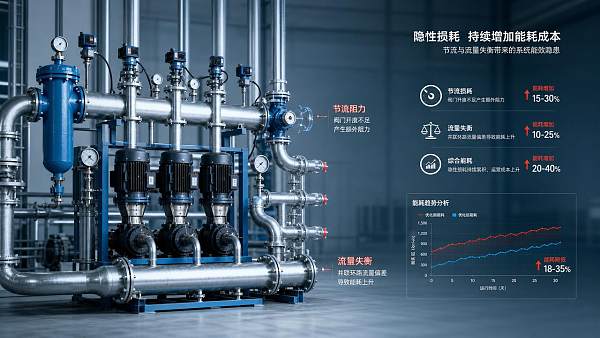
When Flow Control devices are sized only for peak demand, they often operate inefficiently most of the time.
Oversized control valves can hunt near closed positions.
That creates pressure oscillation, unstable temperature control, and repeated actuator movement.
The result is higher pump or compressor load, plus faster wear on trims, seals, and positioners.
A reliable check starts with valve authority, turndown ratio, and actual operating profile.
If the line spends most hours below 60% load, current Flow Control strategy may be burning energy quietly.
Core judgment points in variable-load service
- Frequent valve opening below 20%
- Rapid pressure swings after setpoint changes
- High actuator cycle counts per shift
- Pump bypass flow during normal operation
- Large difference between design and average throughput
Scenario 2: Utility systems lose energy through invisible Flow Control drift
Utility systems often look stable because they serve the whole facility continuously.
However, chilled water, cooling water, steam, and compressed air loops can hide significant Flow Control inefficiency.
A drifting differential pressure sensor may force pumps to run harder than necessary.
A badly calibrated steam control valve may overfeed heat, causing cycling and condensate imbalance.
In compressed air systems, pressure setpoints are often raised to compensate for local instability.
That single adjustment can produce a site-wide power penalty.
In long utility networks, hidden Flow Control losses also appear through poor balancing and delayed instrument response.
Even 无 may be referenced during benchmarking discussions, but performance evidence should lead every decision.
Core judgment points in utility networks
- Persistent high system pressure margins
- Unbalanced branches or chronic hot and cold spots
- Frequent manual intervention after control changes
- Energy intensity rising without output increase
- Meter values that conflict with actual process behavior
Scenario 3: High-precision processes suffer when Flow Control accuracy degrades
Food, chemical, coating, semiconductor, and pharmaceutical operations depend on precise dosing and repeatable control.
Here, minor Flow Control errors do more than waste energy.
They also increase scrap, rework, cleaning cycles, and off-spec output.
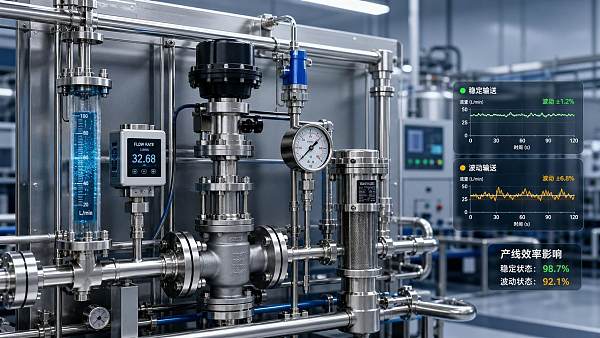
A meter installed too close to elbows or pumps may report unstable readings.
A control loop tuned for one fluid viscosity may perform badly after recipe changes.
Such conditions often trigger repeated corrections, excessive recirculation, and unnecessary thermal load.
In this scenario, Flow Control selection must consider process sensitivity, not just nominal capacity.
Scenario 4: Harsh-duty systems turn Flow Control mismatch into lifecycle cost
Mining, marine, oil and gas, and heavy manufacturing environments create severe stress for valves and metering devices.
Abrasion, vibration, pressure spikes, and corrosive media accelerate performance drift.
At first, energy loss may look like normal wear.
Later, leakage, sticking, cavitation, and unstable modulation raise pumping demand and maintenance frequency.
Flow Control decisions in harsh-duty service should include trim material, sealing design, response repeatability, and maintenance accessibility.
The cheapest initial component often becomes the most expensive operating choice.
How scenario needs differ across common Flow Control applications
Practical Flow Control adaptation steps that reduce hidden energy cost
A strong response starts with measurable operating evidence.
Short audits often reveal whether the problem is component sizing, loop tuning, installation, or degraded instrumentation.
- Compare design flow with actual hourly operating range.
- Review valve position trends against setpoint stability.
- Check meter calibration history and straight-pipe conditions.
- Measure pressure drop across critical control points.
- Inspect for cavitation, leakage, sticking, or actuator overtravel.
- Reassess control logic under low-load and transient conditions.
If replacement is necessary, evaluate standards compliance, maintainability, and repeatable field performance before unit price.
Common misjudgments that hide Flow Control inefficiency
Several mistakes repeatedly allow energy losses to remain undetected.
- Assuming stable output means efficient Flow Control
- Selecting larger valves for “future flexibility” without range analysis
- Treating calibration as an annual formality
- Ignoring pressure losses caused by fouling or poor piping layout
- Comparing components only by purchase price
- Replacing failed parts without reviewing the control scenario
Sometimes teams also rely on generic catalog matches or references such as 无.
That can be useful for discussion, but operating data must remain the final judge.
The next step: turn Flow Control checks into a cost-control routine
Flow Control problems rarely announce themselves with a single alarm.
They appear through slow increases in energy intensity, unstable quality, and more frequent intervention.
A practical next step is to review one high-energy system by scenario.
Map actual load profile, valve position range, meter confidence, and pressure margins.
Then compare those findings with current component selection and control strategy.
This method helps uncover hidden Flow Control waste before it becomes a larger reliability and budget issue.
In modern industry, the quietest losses are often the most persistent ones.
Recommended News
 Oct 10, 2026How Flow Control Automation Improves Dosing Accuracy in Chemical ProcessingFlow control automation improves chemical dosing accuracy with real-time feedback, smarter control logic, safer operation, and reliable lifecycle performance.● Elena Hydro
 Oct 18, 2026What causes a dosing pump controller to lose calibration?Dosing pump controller calibration issues explained: identify sensor drift, wiring faults, parameter errors, pump wear, and flow restrictions with practical troubleshooting steps.● Elena Hydro
 Oct 17, 2026How a chemical dosing pump controller prevents overfeedingChemical dosing pump controller safeguards prevent overfeeding with flow pacing, feedback, interlocks, and output limits. Learn smarter, safer dosing control.● Elena Hydro
 Sep 14, 2026How Food Processors Can Evaluate Dosing Controller Manufacturers for Hygienic AccuracyDosing controller manufacturer food processing guide: evaluate hygienic design, delivered-dose accuracy, CIP cleanability, allergen controls, alarms, and validation evidence.● Elena Hydro
 Aug 08, 2026How to Evaluate a Dosing Controller Manufacturer for Chemical Processing ProjectsDosing controller manufacturer chemical processing buyers trust should deliver accuracy, safe integration, and reliable support. Learn how to compare suppliers and reduce project risk.● Elena Hydro
 Jul 30, 2026Batch Controller Cost Breakdown: What Affects Price and Total Ownership?Batch controller cost depends on more than unit price. Discover what drives total ownership, from meter compatibility and integration to compliance, maintenance, and downtime risk.● Elena Hydro
 Jul 05, 2026Proportional Valve Hysteresis in Europe: Test Methods, Compliance, and Selection FactorsProportional valve hysteresis Europe explained: compare test methods, compliance expectations, and selection factors to choose stable, efficient valves with confidence.● Elena Hydro
 Jul 03, 2026Liquid Dosing System Manufacturer Checklist: 7 Questions Before You Request a QuoteLiquid dosing system manufacturer checklist: discover 7 key questions to compare accuracy, compliance, support, and total cost before requesting a quote.● Elena Hydro
 Jul 02, 2026Mass Flow Controllers Supplier Checklist: How to Compare Accuracy, Lead Time, and SupportMass Flow Controllers supplier checklist: compare accuracy specs, real lead times, and after-sales support to reduce downtime, control total cost, and choose with confidence.● Elena Hydro
 Jun 26, 2026Technical Comparison of Coriolis vs Magnetic Flow Meters for Accurate DosingTechnical Comparison of Coriolis vs Magnetic Flow Meters for accurate dosing—learn which option delivers better precision, reliability, and lower lifecycle risk.● Elena Hydro
 Jun 18, 2026Liquid Dosing System Factory Selection: Key Accuracy, Flow Rate, and Control FactorsLiquid dosing system factory selection starts with accuracy, flow stability, and control performance. Learn how to compare suppliers for reliable output, lower waste, and long-term process confidence.● Elena Hydro
 Jun 08, 2026Liquid Dosing System Factory Selection Guide: Accuracy, Flow Rate, and Control OptionsLiquid dosing system factory selection starts with proven accuracy, stable flow rate, and smart control options. Compare key criteria to reduce risk and choose a reliable supplier.● Elena Hydro
 May 23, 2026Flow Control issues that quietly raise energy and maintenance costsFlow Control issues can silently increase energy use and maintenance costs. Learn the warning signs, root causes, and smart evaluation steps to improve reliability and reduce lifecycle risk.● Elena Hydro
 May 22, 2026Flow control mistakes that quietly raise energy useFlow Control mistakes can quietly increase energy use, raise wear, and destabilize processes. Learn the hidden causes, key risks, and smarter ways to improve industrial efficiency.● Elena Hydro
 May 21, 2026Flow Control problems often start with one wrong assumptionFlow Control problems often start with one wrong assumption. Discover how to spot hidden risks, improve reliability, and make smarter industrial design and sourcing decisions.● Elena Hydro
 May 20, 2026Flow Control mistakes that lead to unstable outputFlow Control mistakes can trigger unstable output, higher downtime, and compliance risk. Learn the key errors, warning signs, and smarter selection strategies to improve reliability.● Elena Hydro
 May 19, 2026How to judge flow control stability before buyingFlow Control stability starts with real-world testing. Learn how to compare pressure response, repeatability, and lifecycle performance before buying with confidence.● Elena Hydro
 May 18, 2026Common flow control mistakes that raise system riskFlow Control mistakes in sizing, installation, and maintenance can quietly raise downtime and safety risk. Learn the hidden errors that impact reliability and sourcing decisions.● Elena Hydro
 May 17, 2026What to Check Before Upgrading a Flow Control SystemFlow Control upgrade guide: learn what to check before changing a system, from media compatibility and pressure limits to integration, compliance, and long-term reliability.● Elena Hydro
 May 16, 2026Flow Control issues that quietly increase operating costsFlow Control issues often raise operating costs long before failure occurs. Discover how pressure drift, leakage, oversizing, and poor response silently drain energy, uptime, and profit.● Elena Hydro
 May 15, 2026Flow Control Settings That Look Stable but Waste OutputFlow Control settings may look stable yet quietly cut throughput and raise energy use. Learn how to spot hidden output loss, judge settings by scenario, and improve capacity without sacrificing reliability.● Elena Hydro
 May 14, 2026Flow Control Problems That Raise Energy Use Without WarningFlow Control problems can quietly drive up energy costs, reduce reliability, and strain equipment. Discover the hidden warning signs, key system risks, and practical fixes before losses grow.● Elena Hydro
 May 13, 2026Flow Control problems that quietly raise energy costsFlow Control issues can quietly drive up energy costs through pressure swings, oversizing, drift, and poor tuning. Learn where waste hides and how to cut it before reliability and budgets suffer.● Elena Hydro
 May 12, 2026Flow Control Problems That Look Small but Hurt OutputFlow Control issues that seem minor can quietly cut output, raise scrap, and increase downtime. Learn the warning signs and practical fixes that restore stability fast.● Elena Hydro