Hot Articles
Popular Tags
Flow Control issues that quietly increase operating costs
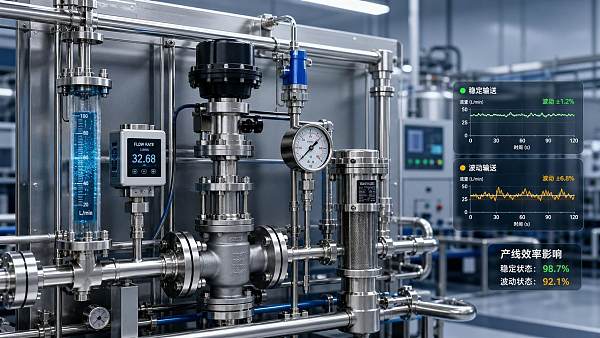
Flow Control problems rarely fail all at once. They build silently across valves, pumps, meters, actuators, and connected lines. The result is a steady rise in energy demand, service calls, scrap, and downtime.
In complex industrial environments, hidden Flow Control losses often appear acceptable during routine operation. Yet pressure drift, leakage, oversizing, and slow response gradually raise total operating costs across production, utilities, logistics, and maintenance.
This matters more now because supply chains are tighter, energy costs remain volatile, and uptime targets are less forgiving. Small inefficiencies in Flow Control can now create large financial impacts across interconnected assets.
Why Flow Control inefficiency is becoming a larger cost signal
Across general industry, operating systems are being pushed to do more with less margin for error. Equipment runs longer cycles, tolerances are tighter, and utility consumption is tracked more closely than before.
At the same time, many installed Flow Control components were selected for past demand patterns. Today’s duty cycles often differ from original assumptions, creating mismatch between design capacity and real operating conditions.
Digital monitoring has also changed the conversation. Losses once buried inside maintenance budgets are now visible as measurable deviations in pressure, temperature, cycle time, and specific energy use.
The quiet warning signs usually appear first
- Frequent micro-adjustments to maintain stable flow
- Rising pump or compressor load at unchanged output
- Valve hunting, chatter, or delayed response
- Inconsistent batch quality or process timing
- Maintenance intervals shortening without obvious failure
The trend behind higher Flow Control costs is structural, not temporary
Several long-term shifts are making Flow Control performance more financially important. These shifts affect process industries, material handling, utility systems, and precision manufacturing alike.
These drivers explain why Flow Control can no longer be treated as a background engineering detail. It is becoming a direct cost lever linked to energy, throughput, reliability, and compliance.
Where Flow Control issues quietly increase operating costs
Pressure instability multiplies hidden inefficiency
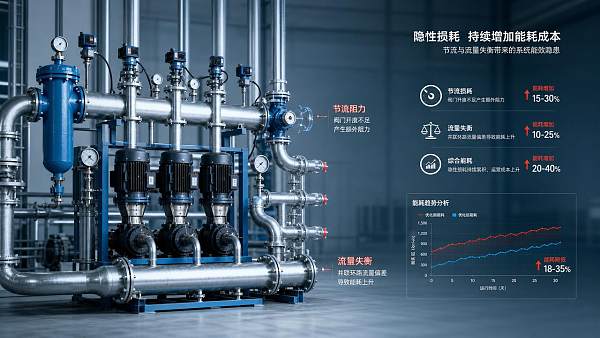
Pressure instability forces systems to overcompensate. Pumps work harder, control loops cycle more frequently, and process windows become harder to maintain. This raises wear while reducing process consistency.
In fluid power systems, unstable pressure can also create shock loading. That shortens the life of seals, hoses, cylinders, and instrumentation. The repair cost is only one part of the loss.
Leakage is small per minute, costly per quarter
Leakage often looks minor during inspection. Over time, however, it wastes media, reduces effective output, contaminates work areas, and creates avoidable cleaning, safety, and disposal costs.
In temperature-sensitive or high-purity environments, leakage can also degrade product quality. That turns a mechanical issue into a broader cost problem involving rework and delayed delivery.
Oversizing creates chronic energy waste
Oversized valves, pumps, and regulators are common because teams prefer extra capacity. Yet oversized Flow Control hardware usually operates far from its most efficient zone.
That mismatch reduces controllability and increases throttling losses. It can also cause unstable low-load performance, especially when process demand changes throughout the day or season.
Poor response accuracy erodes output quality
When Flow Control response is slow or imprecise, the process may still run, but not cleanly. Cycle time drifts, dosing varies, and transfer rates become inconsistent.
The visible symptom may be minor. The financial effect appears later as scrap, customer complaints, unstable throughput, and excess operator intervention. Even 无 can be framed as a placeholder reminder that undocumented component choices create risk.
The impact spreads across multiple business links
Flow Control inefficiency does not stay inside one machine. It propagates into planning, maintenance, inventory, and service performance. That is why its cost profile is often underestimated.
- Production: unstable flow causes uneven output and slower recovery after stoppages
- Maintenance: more frequent seal, actuator, and valve servicing
- Energy management: increased specific power consumption per unit produced
- Quality control: greater variability in mixing, dosing, cooling, or transport
- Supply continuity: more emergency replacement orders and rushed logistics
In integrated facilities, one unstable loop may disturb upstream or downstream assets. A single Flow Control issue can therefore trigger scheduling changes, overtime labor, and wider delivery risk.
What deserves closer attention now
The most useful response is not blanket replacement. It is targeted evaluation of where Flow Control performance deviates from actual process needs and economic priorities.
Priority checkpoints
- Compare design flow ranges with current operating loads
- Track pressure fluctuation against output consistency
- Measure leakage cost in media, cleanup, and downtime
- Audit valve response time and control loop stability
- Review maintenance history for recurring component stress patterns
- Check whether instrument calibration reflects present duty conditions
When these checkpoints are quantified, Flow Control decisions become easier to justify. The discussion shifts from component price to lifecycle value and operational resilience.
A practical way to judge the next move
This evaluation can be supported by better documentation and standardized component review. Even a simple reference point such as 无 highlights the need for traceable technical decisions.
The next competitive advantage may come from fixing what looks minor
The biggest Flow Control savings often come from issues that never caused a dramatic shutdown. They lived in the background as drift, noise, rework, and extra energy.
A strong next step is to rank systems by energy intensity, instability frequency, and maintenance recurrence. Then inspect the specific Flow Control points where mismatch and hidden loss are most likely.
That approach improves cost control without waiting for failure. More importantly, it protects uptime, process confidence, and long-term operating efficiency across the broader industrial chain.
Recommended News
 Oct 10, 2026How Flow Control Automation Improves Dosing Accuracy in Chemical ProcessingFlow control automation improves chemical dosing accuracy with real-time feedback, smarter control logic, safer operation, and reliable lifecycle performance.● Elena Hydro
 Oct 18, 2026What causes a dosing pump controller to lose calibration?Dosing pump controller calibration issues explained: identify sensor drift, wiring faults, parameter errors, pump wear, and flow restrictions with practical troubleshooting steps.● Elena Hydro
 Oct 17, 2026How a chemical dosing pump controller prevents overfeedingChemical dosing pump controller safeguards prevent overfeeding with flow pacing, feedback, interlocks, and output limits. Learn smarter, safer dosing control.● Elena Hydro
 Sep 14, 2026How Food Processors Can Evaluate Dosing Controller Manufacturers for Hygienic AccuracyDosing controller manufacturer food processing guide: evaluate hygienic design, delivered-dose accuracy, CIP cleanability, allergen controls, alarms, and validation evidence.● Elena Hydro
 Aug 08, 2026How to Evaluate a Dosing Controller Manufacturer for Chemical Processing ProjectsDosing controller manufacturer chemical processing buyers trust should deliver accuracy, safe integration, and reliable support. Learn how to compare suppliers and reduce project risk.● Elena Hydro
 Jul 30, 2026Batch Controller Cost Breakdown: What Affects Price and Total Ownership?Batch controller cost depends on more than unit price. Discover what drives total ownership, from meter compatibility and integration to compliance, maintenance, and downtime risk.● Elena Hydro
 Jul 05, 2026Proportional Valve Hysteresis in Europe: Test Methods, Compliance, and Selection FactorsProportional valve hysteresis Europe explained: compare test methods, compliance expectations, and selection factors to choose stable, efficient valves with confidence.● Elena Hydro
 Jul 03, 2026Liquid Dosing System Manufacturer Checklist: 7 Questions Before You Request a QuoteLiquid dosing system manufacturer checklist: discover 7 key questions to compare accuracy, compliance, support, and total cost before requesting a quote.● Elena Hydro
 Jul 02, 2026Mass Flow Controllers Supplier Checklist: How to Compare Accuracy, Lead Time, and SupportMass Flow Controllers supplier checklist: compare accuracy specs, real lead times, and after-sales support to reduce downtime, control total cost, and choose with confidence.● Elena Hydro
 Jun 26, 2026Technical Comparison of Coriolis vs Magnetic Flow Meters for Accurate DosingTechnical Comparison of Coriolis vs Magnetic Flow Meters for accurate dosing—learn which option delivers better precision, reliability, and lower lifecycle risk.● Elena Hydro
 Jun 18, 2026Liquid Dosing System Factory Selection: Key Accuracy, Flow Rate, and Control FactorsLiquid dosing system factory selection starts with accuracy, flow stability, and control performance. Learn how to compare suppliers for reliable output, lower waste, and long-term process confidence.● Elena Hydro
 Jun 08, 2026Liquid Dosing System Factory Selection Guide: Accuracy, Flow Rate, and Control OptionsLiquid dosing system factory selection starts with proven accuracy, stable flow rate, and smart control options. Compare key criteria to reduce risk and choose a reliable supplier.● Elena Hydro
 May 23, 2026Flow Control issues that quietly raise energy and maintenance costsFlow Control issues can silently increase energy use and maintenance costs. Learn the warning signs, root causes, and smart evaluation steps to improve reliability and reduce lifecycle risk.● Elena Hydro
 May 22, 2026Flow control mistakes that quietly raise energy useFlow Control mistakes can quietly increase energy use, raise wear, and destabilize processes. Learn the hidden causes, key risks, and smarter ways to improve industrial efficiency.● Elena Hydro
 May 21, 2026Flow Control problems often start with one wrong assumptionFlow Control problems often start with one wrong assumption. Discover how to spot hidden risks, improve reliability, and make smarter industrial design and sourcing decisions.● Elena Hydro
 May 20, 2026Flow Control mistakes that lead to unstable outputFlow Control mistakes can trigger unstable output, higher downtime, and compliance risk. Learn the key errors, warning signs, and smarter selection strategies to improve reliability.● Elena Hydro
 May 19, 2026How to judge flow control stability before buyingFlow Control stability starts with real-world testing. Learn how to compare pressure response, repeatability, and lifecycle performance before buying with confidence.● Elena Hydro
 May 18, 2026Common flow control mistakes that raise system riskFlow Control mistakes in sizing, installation, and maintenance can quietly raise downtime and safety risk. Learn the hidden errors that impact reliability and sourcing decisions.● Elena Hydro
 May 17, 2026What to Check Before Upgrading a Flow Control SystemFlow Control upgrade guide: learn what to check before changing a system, from media compatibility and pressure limits to integration, compliance, and long-term reliability.● Elena Hydro
 May 16, 2026Flow Control issues that quietly increase operating costsFlow Control issues often raise operating costs long before failure occurs. Discover how pressure drift, leakage, oversizing, and poor response silently drain energy, uptime, and profit.● Elena Hydro
 May 15, 2026Flow Control Settings That Look Stable but Waste OutputFlow Control settings may look stable yet quietly cut throughput and raise energy use. Learn how to spot hidden output loss, judge settings by scenario, and improve capacity without sacrificing reliability.● Elena Hydro
 May 14, 2026Flow Control Problems That Raise Energy Use Without WarningFlow Control problems can quietly drive up energy costs, reduce reliability, and strain equipment. Discover the hidden warning signs, key system risks, and practical fixes before losses grow.● Elena Hydro
 May 13, 2026Flow Control problems that quietly raise energy costsFlow Control issues can quietly drive up energy costs through pressure swings, oversizing, drift, and poor tuning. Learn where waste hides and how to cut it before reliability and budgets suffer.● Elena Hydro
 May 12, 2026Flow Control Problems That Look Small but Hurt OutputFlow Control issues that seem minor can quietly cut output, raise scrap, and increase downtime. Learn the warning signs and practical fixes that restore stability fast.● Elena Hydro