Hot Articles
Popular Tags
Flow control mistakes that quietly raise energy use
Small flow control errors rarely trigger alarms, yet they can steadily increase energy use, strain equipment, and erode process stability. For researchers evaluating industrial efficiency, understanding how Flow Control decisions affect pressure, velocity, and system balance is essential. This article outlines the overlooked mistakes that drive hidden energy losses and explains what they reveal about smarter performance management.
Why do minor Flow Control mistakes create major energy losses?
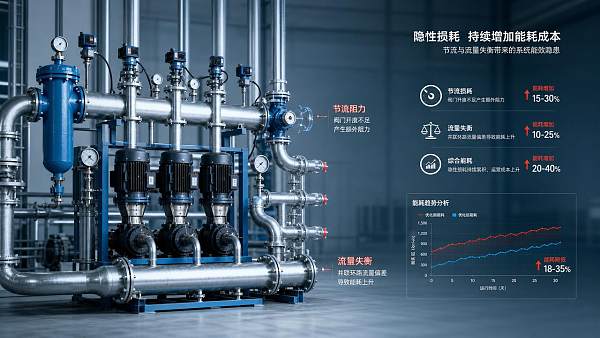
In industrial systems, energy waste often comes from mismatch rather than failure. Pumps, compressors, valves, meters, actuators, and pipe networks may all function as designed, while the overall Flow Control logic still forces the system to work harder than necessary.
That is why information researchers and sourcing teams should not focus only on component quality. They also need to examine control strategy, installation conditions, pressure drop, operating range, and how upstream and downstream devices interact under variable load.
Across process industries, material handling, hydraulic power, utilities, and automated lines, hidden energy losses often share the same pattern: a small Flow Control decision creates recurring friction, excessive throttling, unstable velocity, or unnecessary recirculation. The cost accumulates quietly over months.
What usually goes unnoticed?
- A control valve sized for peak demand but running most of the year at low opening, creating avoidable pressure loss.
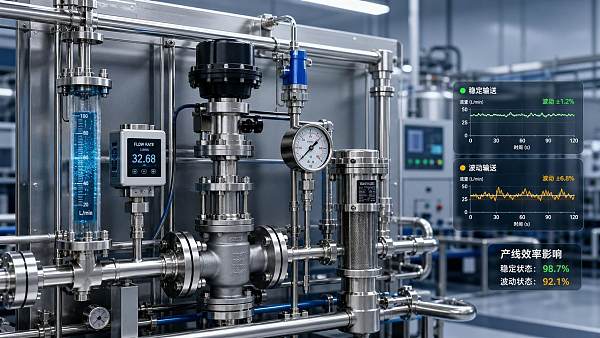
- Flow meters installed with poor straight-run conditions, resulting in unstable readings and compensation errors.
- Hydraulic circuits that regulate flow through restriction instead of matching pump output to actual demand.
- System expansions that add branches, fittings, or filters without recalculating total resistance and control response.
Which Flow Control mistakes appear most often in real industrial systems?
For cross-industry operations, the most expensive mistakes are usually not dramatic. They sit inside routine design choices, maintenance habits, or procurement shortcuts. The table below summarizes common Flow Control issues and the mechanism by which they raise energy use.
The key research insight is that Flow Control should be evaluated as a system behavior issue, not only a component issue. A premium valve or meter can still underperform when the surrounding piping, control logic, or operating envelope is poorly matched.
Why these mistakes survive audits
They seldom produce immediate downtime. Instead, they show up as gradual symptoms: elevated motor load, warmer hydraulic oil, unstable cycle times, more frequent seal wear, reduced batch consistency, or unexplained utility cost drift. Because each symptom seems manageable, the root Flow Control problem may remain unchallenged.
How pressure, velocity, and control range become hidden cost drivers
Researchers comparing suppliers or solutions should pay attention to three linked variables: pressure, velocity, and control range. These are basic technical indicators, but they are also procurement indicators because they shape long-term operating cost.
Pressure drop is not just a design number
Every unnecessary restriction raises the pressure that the energy source must overcome. In liquid systems, that often means higher pump head. In compressed systems, it can mean longer compressor duty or tighter regulation. In hydraulic power units, it increases heat generation and may demand more cooling capacity.
Velocity affects both accuracy and wear
Excessive fluid velocity can disturb sensor readings, accelerate erosion, and increase turbulence losses. Low velocity can also be problematic, especially when it encourages poor mixing, sedimentation, or sluggish actuator response. Balanced Flow Control depends on the medium, line size, and process objective.
Control range determines efficiency under variable demand
Many systems are specified for peak capacity, yet they spend most operating hours below that level. If the selected Flow Control device performs poorly at partial load, the system may cycle, overcorrect, or rely on energy-intensive bypass strategies. That is why turndown and controllable range deserve attention early in evaluation.
- Check whether stated capacity reflects continuous duty or only maximum rated flow.
- Review operating data across normal, low-load, and surge conditions rather than a single design point.
- Compare device accuracy and pressure loss under actual viscosity, temperature, and contamination levels.
What should procurement and technical teams compare before choosing a Flow Control solution?
When purchasing teams review valves, flow meters, manifolds, regulators, or integrated control skids, the lowest initial price often hides the highest operating burden. A structured comparison helps researchers translate technical details into decision-ready criteria.
For researchers, this comparison framework is especially useful when multiple vendors present similar headline specifications. The real difference often lies in part-load stability, total pressure budget, serviceability, and documentation quality.
A practical screening checklist
- Map the full flow path, including valves, meters, reducers, hoses, filters, and branch points.
- Estimate where the system spends most of its operating hours, not only the nameplate maximum.
- Request pressure drop and control performance data under realistic process conditions.
- Check compatibility with monitoring architecture, especially if predictive maintenance or digital reporting is planned.
Which application scenarios are most vulnerable to inefficient Flow Control?
The risk is not limited to one sector. In a broad industrial environment, several scenarios repeatedly show hidden losses because they combine variable demand, tight uptime expectations, and distributed equipment.
Hydraulic power and motion systems
When actuator speed is controlled mainly by restriction, the pressure surplus turns into heat. This can increase oil degradation, cooling load, and seal fatigue. Flow Control in hydraulic circuits should therefore be reviewed together with pump type, load profile, and control architecture.
Automated material handling and utility loops
AMH systems depend on consistent movement and synchronized supply conditions. If Flow Control is unstable in pneumatic auxiliaries, lubrication circuits, or thermal management loops, the impact may appear as micro-stoppages rather than obvious fluid-system alarms.
Batch processes and dosing applications
A small measurement bias or delayed valve response can cause off-spec blending, rework, or excess recirculation. In these settings, Flow Control accuracy directly affects both energy use and material efficiency.
- Processes with frequent recipe changes need wide stable control range.
- Remote or distributed systems benefit from stronger instrumentation visibility and alarm logic.
- High-value production lines should prioritize documentation and traceable performance verification.
How do standards and system data improve Flow Control decisions?
Industrial buyers rarely make sound decisions from catalog data alone. Reliable Flow Control evaluation depends on standard references, operating context, and documented constraints. Common frameworks such as ISO, DIN, ASME, and IEEE support consistent interpretation across global supply chains.
Standards help define dimensional compatibility, pressure classes, instrumentation expectations, and testing language. They do not remove engineering judgment, but they reduce ambiguity between manufacturers, integrators, and procurement teams operating across regions.
Why this matters in fragmented supply chains
When sourcing alternatives are evaluated across countries, a nominally equivalent valve, regulator, or meter may differ in internal geometry, material specification, sealing design, or communication capability. Those differences can change pressure behavior and control quality enough to alter energy consumption.
This is where a technical intelligence platform such as G-ISC adds value. By linking component-level data, standards benchmarking, and broader supply-chain signals, decision-makers can assess not just whether a part fits, but whether it supports total reliability and efficient system behavior over time.
Common misconceptions about Flow Control and energy efficiency
“If the target flow is achieved, the system is efficient.”
Not necessarily. The target may be reached through excessive throttling, bypassing, or overpressurization. A system can deliver the required output while still consuming more energy than needed.
“A larger valve or line size is safer.”
Oversizing can reduce controllability and make precise Flow Control more difficult, especially at low demand. Safety margin is important, but it should be based on realistic variability, not on unchecked overspecification.
“Measurement errors only affect reporting.”
In closed-loop systems, poor measurement quality directly affects control action. That means unstable flow, extra cycling, and recurring energy penalties. Metering quality is not just a reporting concern; it is an operating cost issue.
FAQ: what do researchers and buyers ask most about Flow Control?
How can I tell whether a Flow Control problem is worth investigating?
Look for stable but unexplained increases in utility cost, recurring pressure adjustments, frequent temperature rise in hydraulic oil, unstable batching results, or maintenance concentration around valves, seals, and filters. These symptoms often justify a structured review even when production continues normally.
What data should I collect before comparing suppliers?
Capture actual operating flow range, normal pressure conditions, fluid properties, temperature band, installation geometry, control signal type, and maintenance history. Without this data, Flow Control comparisons are likely to favor headline capacity over real-life efficiency.
Are energy-efficient Flow Control upgrades always expensive?
No. Some gains come from correcting sizing, relocating instrumentation, reducing unnecessary restrictions, or refining control logic. Others may require equipment replacement. The right decision depends on duty cycle, downtime sensitivity, and the cost of inaccurate operation.
What should be prioritized in fast-moving procurement situations?
Prioritize operating range, pressure loss, installation constraints, and documentation quality. When lead times are tight, buyers often substitute based on connection size alone. That shortcut increases the risk of hidden Flow Control inefficiency and later rework.
Why choose us for Flow Control research and sourcing support?
For organizations studying industrial efficiency, G-ISC provides more than component listings. We connect Flow Control evaluation with standards context, critical component benchmarking, supply-chain visibility, and system-level decision support across hydraulic power, intelligent metering, AMH, and industrial integration environments.
If you are comparing alternatives or validating a planned upgrade, you can consult us on parameter confirmation, product selection logic, pressure-loss review, operating range matching, delivery-cycle risk, documentation requirements, certification alignment, sample support, and quotation communication across multiple sourcing options.
This approach helps information researchers, procurement teams, and integrators move from isolated part comparison to a broader judgment: whether the selected Flow Control solution supports efficiency, reliability, and supply continuity under real operating conditions.
Recommended News
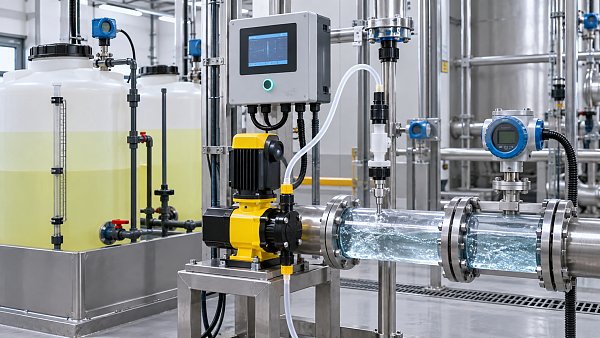
 Oct 10, 2026How Flow Control Automation Improves Dosing Accuracy in Chemical ProcessingFlow control automation improves chemical dosing accuracy with real-time feedback, smarter control logic, safer operation, and reliable lifecycle performance.● Elena Hydro
 Oct 18, 2026What causes a dosing pump controller to lose calibration?Dosing pump controller calibration issues explained: identify sensor drift, wiring faults, parameter errors, pump wear, and flow restrictions with practical troubleshooting steps.● Elena Hydro
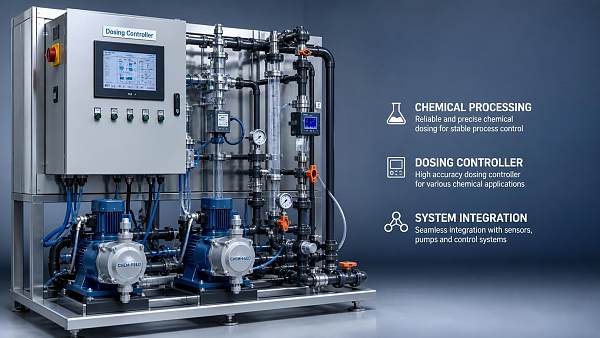
 Oct 17, 2026How a chemical dosing pump controller prevents overfeedingChemical dosing pump controller safeguards prevent overfeeding with flow pacing, feedback, interlocks, and output limits. Learn smarter, safer dosing control.● Elena Hydro
 Sep 14, 2026How Food Processors Can Evaluate Dosing Controller Manufacturers for Hygienic AccuracyDosing controller manufacturer food processing guide: evaluate hygienic design, delivered-dose accuracy, CIP cleanability, allergen controls, alarms, and validation evidence.● Elena Hydro
 Aug 08, 2026How to Evaluate a Dosing Controller Manufacturer for Chemical Processing ProjectsDosing controller manufacturer chemical processing buyers trust should deliver accuracy, safe integration, and reliable support. Learn how to compare suppliers and reduce project risk.● Elena Hydro
 Jul 30, 2026Batch Controller Cost Breakdown: What Affects Price and Total Ownership?Batch controller cost depends on more than unit price. Discover what drives total ownership, from meter compatibility and integration to compliance, maintenance, and downtime risk.● Elena Hydro
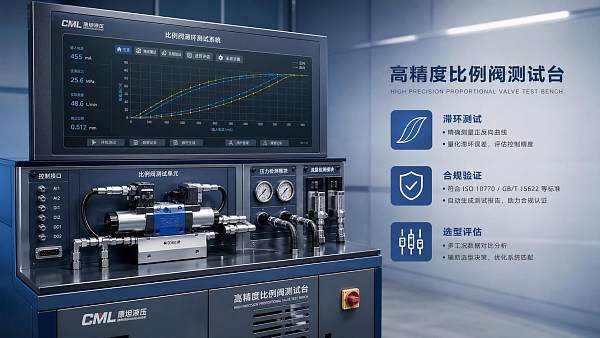
 Jul 05, 2026Proportional Valve Hysteresis in Europe: Test Methods, Compliance, and Selection FactorsProportional valve hysteresis Europe explained: compare test methods, compliance expectations, and selection factors to choose stable, efficient valves with confidence.● Elena Hydro
 Jul 03, 2026Liquid Dosing System Manufacturer Checklist: 7 Questions Before You Request a QuoteLiquid dosing system manufacturer checklist: discover 7 key questions to compare accuracy, compliance, support, and total cost before requesting a quote.● Elena Hydro
 Jul 02, 2026Mass Flow Controllers Supplier Checklist: How to Compare Accuracy, Lead Time, and SupportMass Flow Controllers supplier checklist: compare accuracy specs, real lead times, and after-sales support to reduce downtime, control total cost, and choose with confidence.● Elena Hydro
 Jun 26, 2026Technical Comparison of Coriolis vs Magnetic Flow Meters for Accurate DosingTechnical Comparison of Coriolis vs Magnetic Flow Meters for accurate dosing—learn which option delivers better precision, reliability, and lower lifecycle risk.● Elena Hydro
 Jun 18, 2026Liquid Dosing System Factory Selection: Key Accuracy, Flow Rate, and Control FactorsLiquid dosing system factory selection starts with accuracy, flow stability, and control performance. Learn how to compare suppliers for reliable output, lower waste, and long-term process confidence.● Elena Hydro
 Jun 08, 2026Liquid Dosing System Factory Selection Guide: Accuracy, Flow Rate, and Control OptionsLiquid dosing system factory selection starts with proven accuracy, stable flow rate, and smart control options. Compare key criteria to reduce risk and choose a reliable supplier.● Elena Hydro
 May 23, 2026Flow Control issues that quietly raise energy and maintenance costsFlow Control issues can silently increase energy use and maintenance costs. Learn the warning signs, root causes, and smart evaluation steps to improve reliability and reduce lifecycle risk.● Elena Hydro
 May 22, 2026Flow control mistakes that quietly raise energy useFlow Control mistakes can quietly increase energy use, raise wear, and destabilize processes. Learn the hidden causes, key risks, and smarter ways to improve industrial efficiency.● Elena Hydro
 May 21, 2026Flow Control problems often start with one wrong assumptionFlow Control problems often start with one wrong assumption. Discover how to spot hidden risks, improve reliability, and make smarter industrial design and sourcing decisions.● Elena Hydro
 May 20, 2026Flow Control mistakes that lead to unstable outputFlow Control mistakes can trigger unstable output, higher downtime, and compliance risk. Learn the key errors, warning signs, and smarter selection strategies to improve reliability.● Elena Hydro
 May 19, 2026How to judge flow control stability before buyingFlow Control stability starts with real-world testing. Learn how to compare pressure response, repeatability, and lifecycle performance before buying with confidence.● Elena Hydro
 May 18, 2026Common flow control mistakes that raise system riskFlow Control mistakes in sizing, installation, and maintenance can quietly raise downtime and safety risk. Learn the hidden errors that impact reliability and sourcing decisions.● Elena Hydro
 May 17, 2026What to Check Before Upgrading a Flow Control SystemFlow Control upgrade guide: learn what to check before changing a system, from media compatibility and pressure limits to integration, compliance, and long-term reliability.● Elena Hydro
 May 16, 2026Flow Control issues that quietly increase operating costsFlow Control issues often raise operating costs long before failure occurs. Discover how pressure drift, leakage, oversizing, and poor response silently drain energy, uptime, and profit.● Elena Hydro
 May 15, 2026Flow Control Settings That Look Stable but Waste OutputFlow Control settings may look stable yet quietly cut throughput and raise energy use. Learn how to spot hidden output loss, judge settings by scenario, and improve capacity without sacrificing reliability.● Elena Hydro
 May 14, 2026Flow Control Problems That Raise Energy Use Without WarningFlow Control problems can quietly drive up energy costs, reduce reliability, and strain equipment. Discover the hidden warning signs, key system risks, and practical fixes before losses grow.● Elena Hydro
 May 13, 2026Flow Control problems that quietly raise energy costsFlow Control issues can quietly drive up energy costs through pressure swings, oversizing, drift, and poor tuning. Learn where waste hides and how to cut it before reliability and budgets suffer.● Elena Hydro
 May 12, 2026Flow Control Problems That Look Small but Hurt OutputFlow Control issues that seem minor can quietly cut output, raise scrap, and increase downtime. Learn the warning signs and practical fixes that restore stability fast.● Elena Hydro