Hot Articles
Popular Tags
Where 5G changes real-time tracking most in logistics
The biggest changes 5G brings to real-time tracking in logistics do not happen everywhere at once. They happen in the operational points where milliseconds matter, where hundreds of moving assets compete for space, and where delayed data turns into missed shipments, excess inventory, or line stoppages. For procurement teams, business evaluators, and supply-chain researchers, the real question is not whether 5G is important, but where it materially improves visibility, control, and decision quality.
In practice, 5G has the strongest impact in high-density yards, ports, automated warehouses, cross-docking hubs, cold-chain operations, and multimodal transport environments that depend on continuous sensor data, low-latency system response, and reliable machine-to-machine communication. In lower-complexity logistics settings, the benefits may be incremental rather than transformational. Understanding that distinction is essential for buyers and analysts assessing industrial infrastructure, AMH investments, and future traceability architectures.
Where 5G changes real-time tracking most: the short answer
5G changes real-time tracking most in logistics environments with three characteristics:
- High asset density, such as ports, container yards, large fulfillment centers, and automated factories
- High operational sensitivity to latency, where delays in data transmission affect routing, exception handling, docking, picking, or equipment coordination
- High cost of uncertainty, including inventory distortion, temperature excursions, detention charges, idle labor, and production downtime
This is why 5G matters more for automated material handling, mobile robotics, connected forklifts, condition-sensitive shipments, and control tower visibility than for basic parcel tracking alone. If a logistics operation only needs periodic location updates, existing 4G, LPWAN, Wi-Fi, or barcode-based processes may still be sufficient. If it needs synchronized, real-time, machine-grade visibility across moving assets and software systems, 5G becomes much more valuable.
Why 5G matters more than previous connectivity upgrades
Earlier wireless improvements mostly made tracking faster or more convenient. 5G changes the operating model because it can support far more connected devices, lower latency, and more stable performance in crowded industrial environments. That combination affects not only visibility dashboards but also how logistics assets are orchestrated in real time.
For decision-makers, the significance of 5G lies in four practical capabilities:
- Near-real-time telemetry from vehicles, pallets, containers, robots, tools, and sensors
- Faster exception response when delays, route deviations, congestion, or environmental risks appear
- Higher synchronization quality between edge devices, warehouse systems, transport systems, and enterprise platforms
- More scalable automation in facilities where Wi-Fi congestion or inconsistent connectivity limits AMH performance
In other words, 5G is not only about seeing where something is. It is about making that location, condition, and movement data usable quickly enough to improve operational decisions.
The logistics scenarios where 5G delivers the biggest tracking advantage
1. Ports, container terminals, and large yards
These environments involve moving equipment, stacked containers, gate operations, crane coordination, and frequent asset handoffs. Tracking quality often degrades when too many devices, vehicles, and workflows overlap. 5G improves performance by supporting dense device populations and enabling faster coordination among terminal operating systems, yard trucks, sensors, and handheld devices.
Here, better real-time tracking can reduce:
- Container search time
- Yard congestion
- Gate bottlenecks
- Equipment idle time
- Misalignment between physical asset location and digital records
2. Automated warehouses and fulfillment centers
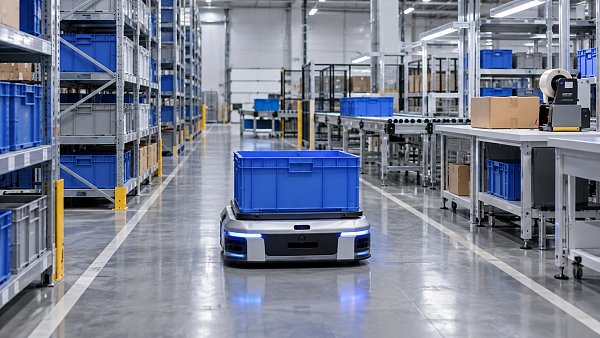
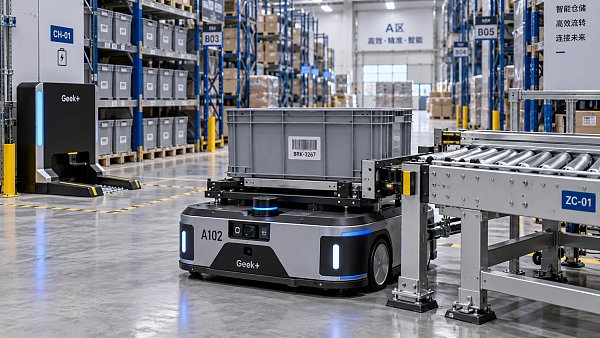
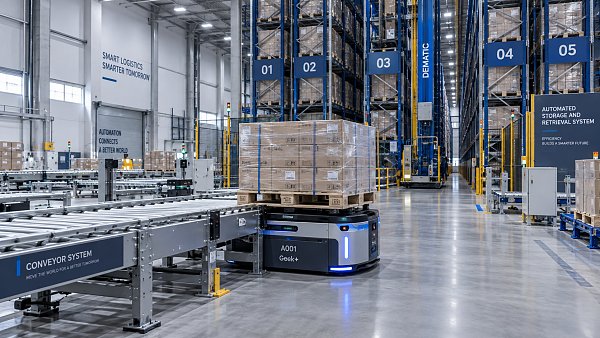
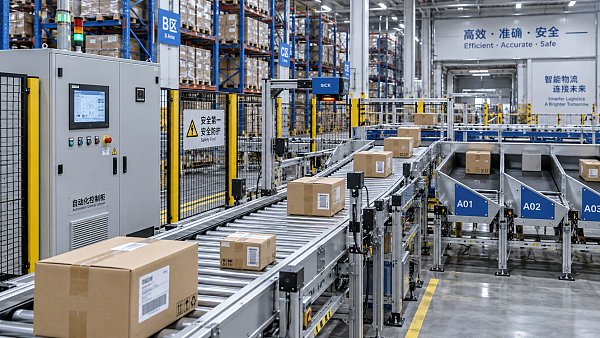
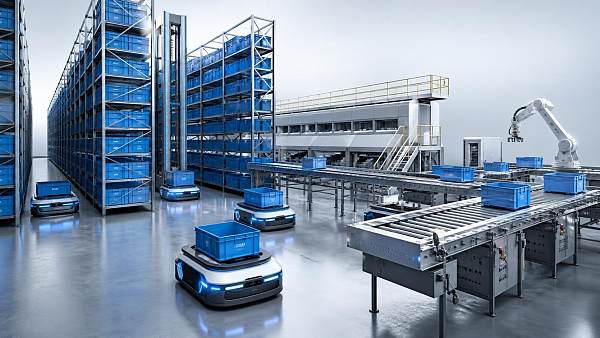
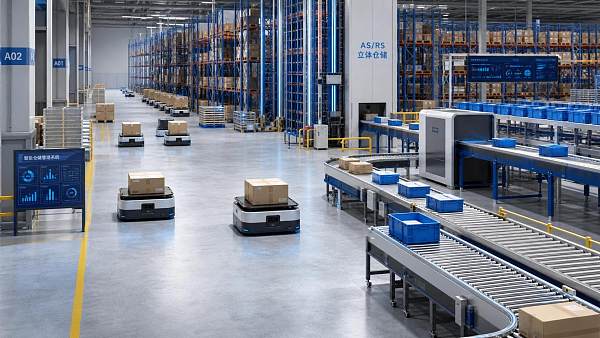
This is one of the most important use cases for procurement and operations teams. In facilities using AMRs, AGVs, automated storage and retrieval systems, smart conveyors, and connected scanning infrastructure, latency and network stability directly affect throughput. 5G can strengthen real-time tracking by allowing faster updates on asset movement, congestion zones, pick status, and equipment utilization.
For AMH-heavy operations, the value of tracking is no longer limited to inventory count accuracy. It extends to orchestration of machine movement and labor allocation. That makes 5G especially relevant where uptime and throughput are tied to system coordination.
3. Cold-chain and condition-sensitive logistics
For pharmaceuticals, specialty chemicals, food, and high-value materials, location alone is not enough. The shipment must be tracked together with temperature, humidity, shock, vibration, and dwell time. 5G enables faster and richer condition reporting, which matters when the response window is short. If a refrigeration issue appears and the system only updates after a major delay, the product may already be compromised.
4. Cross-docking and time-critical distribution
Cross-docking depends on timing precision. If inbound visibility is late or incomplete, dock scheduling, labor planning, and outbound loading all suffer. 5G supports faster status propagation across trailers, forklifts, doors, scanners, and transport management systems, improving the ability to make real-time adjustments.
5. Industrial campus logistics and factory-to-warehouse flows
Manufacturers with complex internal logistics benefit when component bins, returnable packaging, line-side inventory, forklifts, and autonomous vehicles can be tracked continuously across production and storage zones. This is particularly important where component shortages or misplaced materials can trigger expensive line interruptions.
How 5G affects inventory carrying cost and procurement decisions
For many business evaluators, the most important question is financial: does better tracking actually change cost structure? In many cases, yes—if the operation suffers from uncertainty-driven buffers.
Real-time tracking supported by 5G can influence inventory carrying cost through:
- Lower safety stock requirements because in-transit and in-yard inventory becomes more trustworthy
- Fewer urgent replenishment orders caused by inaccurate status visibility
- Reduced shrinkage and misplaced inventory through denser tracking coverage
- Less dwell time and detention exposure due to faster asset identification and dispatch
- Improved cycle-time predictability for procurement planning and supplier scheduling
However, these gains are not automatic. They depend on whether improved visibility is connected to execution logic. If an organization can see disruption earlier but has no process to reallocate stock, reprioritize transport, or trigger supplier action, the ROI will be limited.
This is also where technical intelligence matters. A 5G-enabled tracking environment should be evaluated alongside sensor quality, data integration design, exception workflows, and interoperability with ERP, WMS, TMS, and orchestration software. In some sourcing reviews, teams overemphasize network performance while underestimating integration architecture.
Why data integration API latency may matter as much as network speed
Many organizations assume 5G alone solves real-time visibility. It does not. One of the most overlooked constraints is API latency between tracking devices, middleware, visibility platforms, and enterprise systems.
If the sensor transmits instantly but the integration layer batches updates, delays event processing, or struggles with data normalization, the business still experiences lag. This is especially relevant in multi-vendor environments across logistics providers, warehouses, telematics platforms, and customs or trade-compliance systems.
For buyers and analysts, a useful evaluation framework includes these questions:
- How quickly does raw device data appear in operational applications?
- Is the platform event-driven or batch-dependent?
- Can location and condition data trigger automated workflows in real time?
- How well does the system maintain data consistency across partners?
- What happens when connectivity is interrupted and then restored?
A well-designed 5G tracking deployment is therefore a connectivity project and a systems architecture project. Without both, the visible business impact may remain modest.
What 5G changes for Automated Material Handling performance
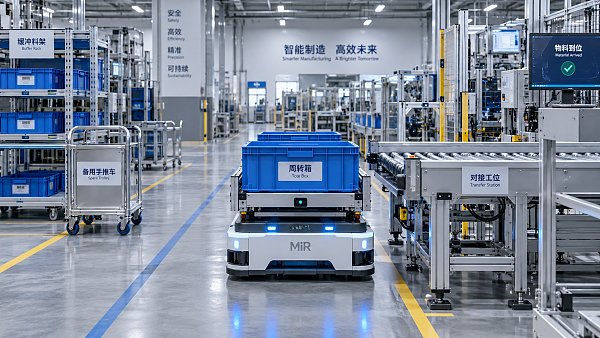
Automated Material Handling is one of the clearest areas where 5G can reshape tracking value. In AMH environments, tracking is not just a reporting function. It is part of operational control.
When autonomous mobile robots, AGVs, smart conveyors, machine vision systems, and warehouse execution software interact continuously, low-latency communication helps support:
- More precise fleet coordination
- Faster rerouting around congestion or blocked paths
- Improved handoff timing between humans and machines
- Better utilization of docks, staging lanes, and storage zones
- More reliable exception handling during peak periods
This has strategic significance for industrial procurement. If a facility is evaluating automation expansion, 5G should be assessed not as a standalone telecom upgrade but as an enabling layer for future AMH density and responsiveness. In some deployments, this is where 无 can be considered as part of a broader infrastructure review, especially when comparing long-term scalability across mixed automation environments.
How 5G supports blockchain and stronger traceability—but does not replace governance
There is strong interest in combining 5G with blockchain in logistics traceability. The logic is straightforward: 5G can improve the timeliness and granularity of tracked events, while blockchain can improve event integrity, auditability, and shared trust across parties.
This combination is especially relevant in sectors with compliance, provenance, or anti-counterfeit requirements, such as aerospace components, pharmaceuticals, food, and critical industrial parts.
But 5G does not automatically make blockchain traceability reliable. The classic problem remains: if the input data is weak, immutable storage only preserves weak data more permanently. Buyers should therefore focus on:
- Sensor credibility and calibration
- Identity management for assets and handlers
- Timestamp consistency
- Exception validation rules
- Partner participation standards
The best view is that 5G improves data capture conditions, while traceability platforms improve trust and coordination. Both are necessary in critical-component supply chains.
What procurement teams should evaluate before investing in 5G tracking
For procurement directors, sourcing specialists, distributors, and commercial evaluators, the right question is not “Should we buy 5G?” but “Where does 5G solve a costly visibility problem better than alternatives?”
Key evaluation criteria include:
- Operational density: How many moving assets, sensors, and systems compete for connectivity?
- Latency sensitivity: Does slower data materially affect service levels, uptime, or labor efficiency?
- Current pain points: Are losses driven by blind spots, stale status data, or poor exception response?
- System readiness: Can existing WMS, TMS, ERP, and control platforms ingest and act on richer data streams?
- Facility profile: Is this a fixed industrial site, a mobile fleet context, or a multi-node network?
- Alternative technologies: Would Wi-Fi 6, private LTE, LPWAN, or upgraded middleware address the same problem at lower cost?
In practical sourcing terms, 5G makes the strongest case where network reliability and responsiveness are already limiting business performance. If the bottleneck is poor master data, weak process discipline, or fragmented partner onboarding, those issues should be fixed first.
Some organizations also benefit from phased evaluation: pilot one high-impact site, measure exception-response improvement, inventory accuracy, asset utilization, and labor productivity, then scale selectively. That approach usually produces better capital discipline than network-wide deployment based on trend pressure alone. In selected assessments, stakeholders may also review 无 within the context of broader digital logistics infrastructure choices.
Where 5G is overestimated in logistics
5G is often overestimated in lower-complexity environments where tracking updates do not need to drive immediate operational action. Examples include simple point-to-point transport with limited handoffs, low-value inventory, or facilities where manual workflows dominate and update frequency is not the main issue.
In these scenarios, the business case may weaken because:
- Existing connectivity is already adequate
- Asset density is too low to justify the upgrade
- Data is not used in automated decisions
- Integration maturity is poor
- The cost of uncertainty is relatively small
This does not mean 5G has no value there. It means the strongest value appears where real-time tracking directly changes execution quality, not where it merely refreshes dashboards faster.
Bottom line: where 5G changes logistics tracking the most
5G changes real-time tracking most in logistics operations where dense asset movement, automation, and time-sensitive decisions create a high cost for delayed or incomplete data. The largest gains are typically found in ports, automated warehouses, cold-chain networks, cross-docking hubs, and industrial campus logistics tied to production continuity.
For target readers such as procurement teams, researchers, and business evaluators, the takeaway is clear: judge 5G by operational fit, not by headline speed. The real value comes when better connectivity improves AMH performance, reduces inventory uncertainty, strengthens exception handling, and feeds trusted data into enterprise and traceability systems. If those conditions exist, 5G can become a meaningful infrastructure advantage. If they do not, the investment case should be tested carefully against simpler alternatives.
Recommended News
 Oct 17, 2026Electromagnetic Flow Meters for Slurry: Choosing Abrasion-Resistant LinersElectromagnetic flow meters for slurry need durable liners. Compare polyurethane, rubber, and PTFE/PFA for abrasion, chemistry, and temperature to choose wisely and reduce downtime.● Dr. Victor Gear
 Oct 17, 2026Is an AMR System Worth the Investment for a Mid-Size Warehouse?Is an AMR system worth the investment for a mid-size warehouse? Explore labor savings, total costs, and payback scenarios to build a credible ROI case before you invest.● Dr. Victor Gear
 Oct 17, 2026How Long Does It Take to Deploy Autonomous Mobile Robots?How long does it take to deploy autonomous mobile robots? Explore pilot-to-production timelines, key delay factors, and practical ways to accelerate a safe, reliable AMR rollout.● Dr. Victor Gear
 Oct 16, 2026What Should You Compare Before Buying Material Handling Automation?What should I compare before buying automated material handling equipment? Explore throughput, integration, safety, and lifecycle costs to avoid hidden risks and invest with confidence.● Dr. Victor Gear
 Oct 16, 2026Can Material Handling Automation Cut Labor Costs Without Disruption?Can automated material handling reduce labor costs without disrupting operations? Discover how phased rollouts, reliable fallbacks, and smart system selection can cut costs and protect throughput.● Dr. Victor Gear
 Oct 15, 2026How Do You Qualify a Material Handling Integrator Before Awarding Work?How do I qualify a system integrator before awarding a project? Learn how to verify experience, assess controls expertise, and set acceptance criteria to reduce material handling project risks.● Dr. Victor Gear
 Oct 15, 2026What Are the Risks of Switching Automation Integrators Mid-Project?What are the risks of changing system integrators mid-project? Explore delays, rework, software rights, and safety gaps—and learn how to protect your project with a controlled takeover.● Dr. Victor Gear
 Sep 01, 2026Fluid Power Aluminum Body Selection: Pressure, Corrosion, and Weight CriteriaFluid Power aluminum body selection made clear: compare pressure duty, corrosion protection, fatigue risk, sealing, and assembly weight for reliable performance.● Dr. Victor Gear
 Aug 11, 2026European Flow Control Standards: What Engineers Must Check for ComplianceFlow control standards Europe: learn the key compliance checks engineers must verify, from PED and CE marking to pressure ratings, traceability, and documentation.● Dr. Victor Gear
 Aug 10, 2026Flow Control in North America: What Buyers Should Evaluate in SuppliersFlow Control North America: Learn what buyers should evaluate in suppliers, from engineering quality and compliance to delivery reliability and technical support.● Dr. Victor Gear
 Aug 06, 2026Warehouse Automation Investment in 2026: How to Evaluate ROI, Labor Savings, and ScaleWarehouse automation investment 2026 explained: learn how to assess ROI, labor savings, integration risk, and scalable growth before committing capital.● Dr. Victor Gear
 Aug 04, 2026How to Evaluate a Turbine Flow Meters Manufacturer for Accuracy-Critical ApplicationsTurbine flow meters manufacturer selection starts with calibration, traceability, and mechanical quality. Learn how to compare suppliers for accuracy-critical applications.● Dr. Victor Gear
 Jul 31, 2026How to Choose Directional Control Valves for Industrial Machinery ApplicationsDirectional Control Valves for industrial machinery: learn how to match motion, pressure, flow, actuation, and reliability needs to choose the right valve with confidence.● Dr. Victor Gear
 Jul 17, 2026How to Choose an ATEX Intelligent Flow Metering System for Hazardous AreasIntelligent Flow Metering ATEX selection starts with safety, process fit, and compliance. Learn how to choose a reliable system for hazardous areas with confidence.● Dr. Victor Gear
 Jul 15, 2026How to Select Flanged Electromagnetic Flow Meters for Water and Chemical LinesFlanged electromagnetic flow meters for water and chemical lines: learn how to match conductivity, materials, pressure, and installation for accurate, reliable, low-maintenance performance.● Dr. Victor Gear
 Jul 11, 2026Order Management Systems for Ecommerce: Key Features, Integrations, and Selection CriteriaOrder management systems ecommerce teams rely on can improve inventory accuracy, fulfillment speed, and integrations. Explore key features and smart selection criteria.● Dr. Victor Gear
 Jul 09, 2026ASRS Systems Mini Load: When It Fits Small Parts Storage and What to Check FirstASRS Systems mini load explained: learn when it truly fits small parts storage, what to check first, and how to avoid costly mistakes before comparing vendors.● Dr. Victor Gear
 Jul 06, 2026How to Choose Smart Warehouse Integrators for Multi-Site Automation ProjectsSmart warehouse integrators can make or break multi-site automation. Learn how to compare design, software, rollout, and support capabilities to choose a scalable partner.● Dr. Victor Gear
 Jul 04, 2026Digital Insertion Flow Meter Selection Guide: Pipe Size, Accuracy, and Installation LimitsDigital insertion flow meter selection made practical: learn how pipe size, accuracy, flow profile, and installation limits affect performance, cost, and reliable industrial operation.● Dr. Victor Gear
 Jul 03, 2026How to Choose CE Solenoid Valves: Voltage, Media Compatibility, and IP RatingCE Solenoid Valves selection starts with the right voltage, media compatibility, and IP rating. Learn how to avoid failure, reduce downtime, and choose valves that truly fit your application.● Dr. Victor Gear
 Jul 01, 2026How to Evaluate a Flow Control Valve Manufacturer for Pressure Stability and Lead TimeFlow Control valve manufacturer selection starts with pressure stability and proven lead time. Learn how to compare suppliers, reduce downtime risk, and improve long-term sourcing confidence.● Dr. Victor Gear
 Jun 30, 2026How to Evaluate a Fluid Power Exporter for Lead Time, Certifications, and After-Sales SupportFluid Power exporter evaluation made practical: learn how to verify lead times, certifications, and after-sales support to reduce sourcing risk, avoid downtime, and choose a reliable partner.● Dr. Victor Gear
 Jun 29, 2026Where LoRaWAN Flow Sensors Fit Best: Remote Tank Monitoring, Water Networks, and Utility SitesLoRaWAN flow sensors fit best in remote tank monitoring, water networks, and utility sites. Learn where they add the most value, improve visibility, and support smarter maintenance decisions.● Dr. Victor Gear
 Jun 28, 2026Fluid Power Steel Manifold Selection Guide: Ports, Pressure Ratings, and Layout BasicsFluid Power steel manifold selection made simple: compare port types, pressure ratings, and layout basics to reduce leaks, improve uptime, and choose the right solution with confidence.● Dr. Victor Gear