Hot Articles
Popular Tags
When Automated Material Handling improves warehouse flow
When Automated Material Handling is aligned with warehouse design, data visibility, and execution priorities, warehouse flow becomes faster, safer, and more predictable.
The strongest results do not come from equipment alone. They come from system coordination across storage, transport, software, labor planning, and maintenance strategy.
In modern industrial operations, Automated Material Handling supports continuity, throughput, and accuracy while reducing avoidable delays, touches, and congestion across inbound, storage, picking, packing, and outbound stages.
As demand volatility, compliance pressure, and uptime expectations rise, Automated Material Handling is increasingly treated as a core operational infrastructure decision rather than a standalone warehouse upgrade.
Automated Material Handling in warehouse operations
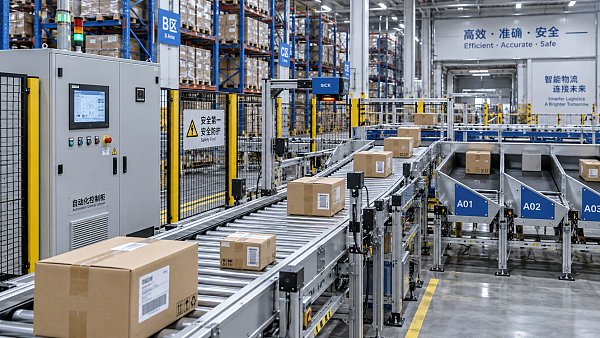
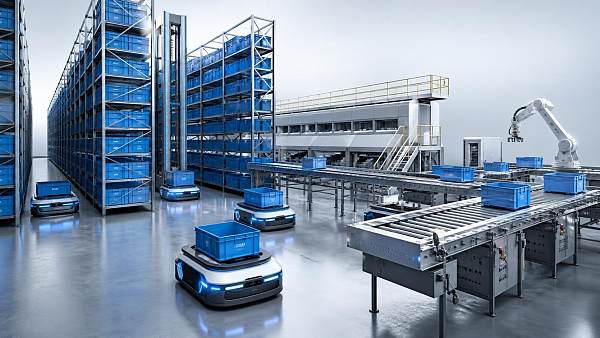
Automated Material Handling refers to the controlled movement, storage, buffering, sorting, and retrieval of goods through integrated mechanical and digital systems.
It often includes conveyors, AS/RS, AMRs, pallet shuttles, sorters, lifts, sensors, barcode systems, and warehouse software.
The goal is not automation for its own sake. The goal is stable material flow with fewer interruptions, less manual dependency, and better use of warehouse space.
In a broad industrial context, Automated Material Handling connects physical execution with digital control. That connection improves traceability and supports more disciplined operational planning.
Core functional elements
- Transport: conveyor lines, AMRs, AGVs, lifts, and transfer cars.
- Storage: high-density racking, shuttles, carousels, and automated retrieval systems.
- Control: WMS, WCS, PLC architecture, and real-time traffic logic.
- Identification: barcode, RFID, machine vision, and load verification.
- Safety: guarding, emergency stops, zone controls, and monitored access.
Why warehouse flow is under pressure
Warehouse flow breaks down when inventory velocity rises faster than layout, control logic, or labor coordination can adapt.
Many facilities still rely on fragmented movement paths, disconnected data sources, and manual exception handling. That creates delays that compound across shifts.
Automated Material Handling addresses these issues by reducing uncontrolled movement and standardizing task execution under measurable rules.
How Automated Material Handling improves warehouse flow
Warehouse flow improves when movement becomes synchronized rather than reactive. Automated Material Handling supports that shift through predictable handoffs and real-time visibility.
Instead of moving every load directly to its next step by manual judgment, systems can allocate routes, queue priorities, and storage positions using live operational conditions.
Main performance gains
- Shorter travel distance for goods and operators.
- Reduced waiting time between process zones.
- Higher picking and replenishment accuracy.
- Lower product handling damage risk.
- More stable throughput during peak cycles.
- Better slotting discipline and inventory control.
These gains matter because flow losses rarely remain isolated. A delay at receiving can disrupt putaway, picking, packing, and dispatch in the same operating window.
Automated Material Handling reduces these chain reactions by creating controlled pathways for volume, exceptions, and replenishment signals.
Flow improvement mechanisms
- Continuous transport replaces stop-start manual transfer.
- Automated buffering absorbs short-term process imbalance.
- System rules prioritize urgent or constrained orders.
- Integrated data improves exception detection speed.
- Space utilization improves through denser storage logic.
Business value beyond movement speed
The value of Automated Material Handling is broader than speed. It changes cost structure, reliability, service consistency, and long-term scalability.
In complex supply environments, resilience depends on more than inventory availability. It depends on whether the facility can process that inventory without internal friction.
Typical Automated Material Handling scenarios
Automated Material Handling does not follow one fixed design path. The right architecture depends on product profile, order pattern, space limits, and service requirements.
Representative warehouse scenarios
- High-throughput distribution centers using conveyor sorting and dynamic dispatch lanes.
- Mixed-SKU storage operations using AMRs for flexible picking support.
- Pallet-intensive facilities using shuttles and automated deep-lane storage.
- Temperature-controlled sites using low-touch movement for compliance stability.
- Component warehouses using precise retrieval systems for part traceability.
- Cross-docking hubs using synchronized transfer and short dwell-time control.
In each case, Automated Material Handling should fit the dominant flow challenge. Flexibility matters in volatile order environments. Density matters where land or building expansion is limited.
Implementation priorities and risk controls
Successful Automated Material Handling projects begin with process mapping, not equipment catalogs. A system must solve the real flow constraint, not just modernize appearances.
It is essential to define baseline metrics before design selection. Without that baseline, post-implementation value becomes difficult to verify.
Practical planning checklist
- Measure current throughput, cycle time, error rate, and congestion zones.
- Segment SKUs by velocity, size, handling need, and compliance rules.
- Confirm software integration needs across WMS, ERP, and control layers.
- Validate maintenance access, spare parts strategy, and recovery procedures.
- Review safety zoning, traffic separation, and emergency logic.
- Phase deployment to reduce operational disruption during cutover.
Risk often appears at interfaces. Conveyor reliability may be high, but poor label quality or weak master data can still damage overall flow.
That is why Automated Material Handling should be treated as an integrated operational program involving mechanics, controls, data quality, training, and governance.
What to evaluate before the next warehouse upgrade
Before expanding equipment scope, review whether the facility needs speed, density, flexibility, traceability, or a balanced mix of all five.
The most effective Automated Material Handling strategy is usually modular. It should improve current performance while leaving room for future integration and scaling.
A disciplined next step is to audit flow losses by zone, quantify delay causes, and compare those findings against realistic automation pathways.
When Automated Material Handling is aligned with warehouse objectives, it improves flow in ways that are measurable, durable, and operationally defensible.
Recommended News
 Oct 17, 2026Electromagnetic Flow Meters for Slurry: Choosing Abrasion-Resistant LinersElectromagnetic flow meters for slurry need durable liners. Compare polyurethane, rubber, and PTFE/PFA for abrasion, chemistry, and temperature to choose wisely and reduce downtime.● Dr. Victor Gear
 Oct 17, 2026Is an AMR System Worth the Investment for a Mid-Size Warehouse?Is an AMR system worth the investment for a mid-size warehouse? Explore labor savings, total costs, and payback scenarios to build a credible ROI case before you invest.● Dr. Victor Gear
 Oct 17, 2026How Long Does It Take to Deploy Autonomous Mobile Robots?How long does it take to deploy autonomous mobile robots? Explore pilot-to-production timelines, key delay factors, and practical ways to accelerate a safe, reliable AMR rollout.● Dr. Victor Gear
 Oct 16, 2026What Should You Compare Before Buying Material Handling Automation?What should I compare before buying automated material handling equipment? Explore throughput, integration, safety, and lifecycle costs to avoid hidden risks and invest with confidence.● Dr. Victor Gear
 Oct 16, 2026Can Material Handling Automation Cut Labor Costs Without Disruption?Can automated material handling reduce labor costs without disrupting operations? Discover how phased rollouts, reliable fallbacks, and smart system selection can cut costs and protect throughput.● Dr. Victor Gear
 Oct 15, 2026How Do You Qualify a Material Handling Integrator Before Awarding Work?How do I qualify a system integrator before awarding a project? Learn how to verify experience, assess controls expertise, and set acceptance criteria to reduce material handling project risks.● Dr. Victor Gear
 Oct 15, 2026What Are the Risks of Switching Automation Integrators Mid-Project?What are the risks of changing system integrators mid-project? Explore delays, rework, software rights, and safety gaps—and learn how to protect your project with a controlled takeover.● Dr. Victor Gear
 Sep 01, 2026Fluid Power Aluminum Body Selection: Pressure, Corrosion, and Weight CriteriaFluid Power aluminum body selection made clear: compare pressure duty, corrosion protection, fatigue risk, sealing, and assembly weight for reliable performance.● Dr. Victor Gear
 Aug 11, 2026European Flow Control Standards: What Engineers Must Check for ComplianceFlow control standards Europe: learn the key compliance checks engineers must verify, from PED and CE marking to pressure ratings, traceability, and documentation.● Dr. Victor Gear
 Aug 10, 2026Flow Control in North America: What Buyers Should Evaluate in SuppliersFlow Control North America: Learn what buyers should evaluate in suppliers, from engineering quality and compliance to delivery reliability and technical support.● Dr. Victor Gear
 Aug 06, 2026Warehouse Automation Investment in 2026: How to Evaluate ROI, Labor Savings, and ScaleWarehouse automation investment 2026 explained: learn how to assess ROI, labor savings, integration risk, and scalable growth before committing capital.● Dr. Victor Gear
 Aug 04, 2026How to Evaluate a Turbine Flow Meters Manufacturer for Accuracy-Critical ApplicationsTurbine flow meters manufacturer selection starts with calibration, traceability, and mechanical quality. Learn how to compare suppliers for accuracy-critical applications.● Dr. Victor Gear
 Jul 31, 2026How to Choose Directional Control Valves for Industrial Machinery ApplicationsDirectional Control Valves for industrial machinery: learn how to match motion, pressure, flow, actuation, and reliability needs to choose the right valve with confidence.● Dr. Victor Gear
 Jul 17, 2026How to Choose an ATEX Intelligent Flow Metering System for Hazardous AreasIntelligent Flow Metering ATEX selection starts with safety, process fit, and compliance. Learn how to choose a reliable system for hazardous areas with confidence.● Dr. Victor Gear
 Jul 15, 2026How to Select Flanged Electromagnetic Flow Meters for Water and Chemical LinesFlanged electromagnetic flow meters for water and chemical lines: learn how to match conductivity, materials, pressure, and installation for accurate, reliable, low-maintenance performance.● Dr. Victor Gear
 Jul 11, 2026Order Management Systems for Ecommerce: Key Features, Integrations, and Selection CriteriaOrder management systems ecommerce teams rely on can improve inventory accuracy, fulfillment speed, and integrations. Explore key features and smart selection criteria.● Dr. Victor Gear
 Jul 09, 2026ASRS Systems Mini Load: When It Fits Small Parts Storage and What to Check FirstASRS Systems mini load explained: learn when it truly fits small parts storage, what to check first, and how to avoid costly mistakes before comparing vendors.● Dr. Victor Gear
 Jul 06, 2026How to Choose Smart Warehouse Integrators for Multi-Site Automation ProjectsSmart warehouse integrators can make or break multi-site automation. Learn how to compare design, software, rollout, and support capabilities to choose a scalable partner.● Dr. Victor Gear
 Jul 04, 2026Digital Insertion Flow Meter Selection Guide: Pipe Size, Accuracy, and Installation LimitsDigital insertion flow meter selection made practical: learn how pipe size, accuracy, flow profile, and installation limits affect performance, cost, and reliable industrial operation.● Dr. Victor Gear
 Jul 03, 2026How to Choose CE Solenoid Valves: Voltage, Media Compatibility, and IP RatingCE Solenoid Valves selection starts with the right voltage, media compatibility, and IP rating. Learn how to avoid failure, reduce downtime, and choose valves that truly fit your application.● Dr. Victor Gear
 Jul 01, 2026How to Evaluate a Flow Control Valve Manufacturer for Pressure Stability and Lead TimeFlow Control valve manufacturer selection starts with pressure stability and proven lead time. Learn how to compare suppliers, reduce downtime risk, and improve long-term sourcing confidence.● Dr. Victor Gear
 Jun 30, 2026How to Evaluate a Fluid Power Exporter for Lead Time, Certifications, and After-Sales SupportFluid Power exporter evaluation made practical: learn how to verify lead times, certifications, and after-sales support to reduce sourcing risk, avoid downtime, and choose a reliable partner.● Dr. Victor Gear
 Jun 29, 2026Where LoRaWAN Flow Sensors Fit Best: Remote Tank Monitoring, Water Networks, and Utility SitesLoRaWAN flow sensors fit best in remote tank monitoring, water networks, and utility sites. Learn where they add the most value, improve visibility, and support smarter maintenance decisions.● Dr. Victor Gear
 Jun 28, 2026Fluid Power Steel Manifold Selection Guide: Ports, Pressure Ratings, and Layout BasicsFluid Power steel manifold selection made simple: compare port types, pressure ratings, and layout basics to reduce leaks, improve uptime, and choose the right solution with confidence.● Dr. Victor Gear