Hot Articles
Popular Tags
Is Automated Material Handling worth the upgrade now
For project managers and engineering leads, the question is no longer whether Automated Material Handling matters, but whether delaying the upgrade is costing uptime, labor efficiency, and supply-chain resilience. As production demands grow more complex, the right AMH strategy can reduce bottlenecks, improve safety, and support scalable operations. This article examines whether upgrading now delivers measurable operational and financial value.
Why is Automated Material Handling becoming a time-sensitive decision?
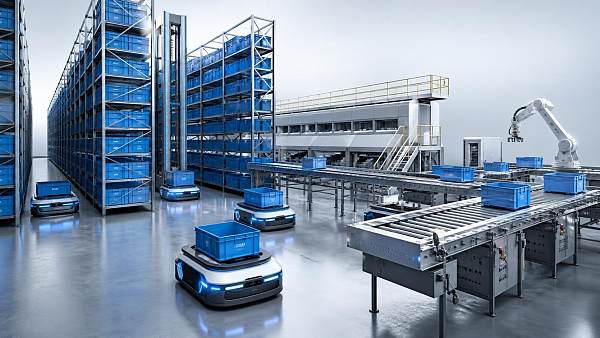
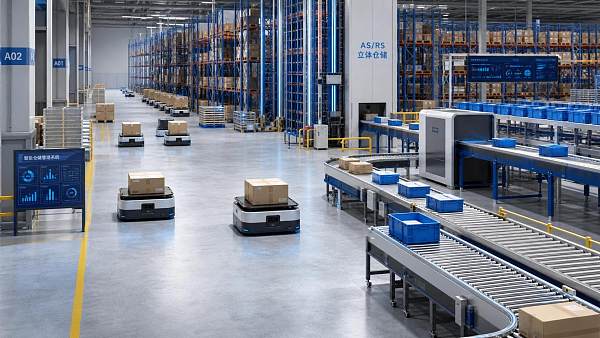
Automated Material Handling is no longer limited to large greenfield factories. It now plays a practical role in mixed manufacturing, distribution hubs, spare-parts logistics, and high-compliance industrial environments where throughput, traceability, and labor predictability directly affect project outcomes.
For project leaders, the urgency comes from three converging pressures: rising labor costs, tighter delivery commitments, and more fragile global supply chains. When inbound materials, work-in-progress, and finished goods move through disconnected manual steps, small delays quickly become line stoppages, quality escapes, or missed shipment windows.
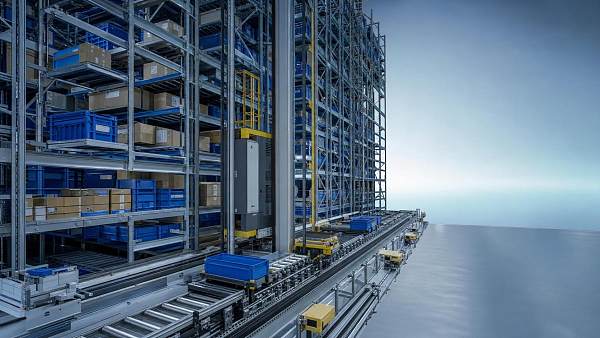
That is why many teams are reassessing conveyors, AS/RS, AMR fleets, pallet shuttles, sortation, and warehouse execution software as one integrated upgrade rather than isolated equipment purchases. The decision is no longer just about automation. It is about operational resilience.
- Manual transport often hides waste in waiting time, forklift congestion, and inconsistent replenishment to critical production cells.
- Capacity expansion without AMH frequently increases headcount faster than output, which weakens margin control.
- Cross-site standardization becomes difficult when each facility uses different handling logic, safety practices, and data capture methods.
What has changed in the project environment?
Industrial programs now face shorter launch windows and more volatile demand patterns. A system designed only for average daily volume may fail under seasonal peaks, SKU growth, or component shortages. Automated Material Handling helps absorb that volatility by improving routing logic, storage density, and system visibility.
This is where G-ISC brings value. By combining technical benchmarking, standards-based evaluation, and live supply-chain intelligence across hardware and software categories, G-ISC helps decision-makers compare AMH options with a broader view of lifecycle risk, not just purchase price.
When is an AMH upgrade worth it now rather than later?
The strongest case for upgrading now appears when operational losses are already measurable. Project managers should not wait for a full capacity crisis if current handling methods are creating recurring delays, safety concerns, or excessive dependency on scarce labor.
The table below helps translate common shop-floor symptoms into upgrade triggers for Automated Material Handling.
A delayed decision may look conservative on paper, but it can lock the project into hidden costs: lost throughput, safety exposure, rework, and delayed launches. If at least two of the above signals are persistent, the financial argument for Automated Material Handling often becomes stronger than the argument for postponement.
Situations where waiting may still make sense
- The facility layout is about to be redesigned, and current paths would force costly rework within 12 months.
- SKU profiles, load dimensions, or throughput assumptions are still unstable and cannot support a credible specification.
- Digital prerequisites such as WMS, MES, or reliable master data are not mature enough to support automation logic.
Which Automated Material Handling options fit different industrial scenarios?
Not every site needs the same AMH architecture. The right choice depends on load type, route repeatability, storage constraints, safety objectives, and integration depth. For project managers, a scenario-based comparison is more useful than chasing the most advanced technology.
The following table compares common Automated Material Handling approaches across practical industrial use cases.
For many brownfield projects, hybrid design is the most practical answer. A site may use conveyors for stable trunk routes, AMRs for flexible replenishment, and compact automated storage for high-value or fast-moving inventory. That combination often delivers faster payback than replacing the entire handling environment at once.
How to narrow the shortlist
- Map current flows by load unit, distance, frequency, and required response time.
- Separate stable demand from volatile demand so flexible and fixed automation are not confused.
- Check interface readiness with WMS, ERP, PLC, MES, and safety systems before final equipment selection.
- Model peak conditions, not just average daily throughput, because congestion appears during exceptions.
What should project managers evaluate before approving the upgrade?
A successful Automated Material Handling project is rarely won by hardware alone. The strongest business cases combine mechanical design, software integration, safety engineering, maintainability, and supply continuity for critical components. Procurement teams should therefore assess system fit at both operational and commercial levels.
Core evaluation criteria
- Throughput requirement: Define pallets per hour, totes per hour, picks per hour, and allowable queue time under normal and peak conditions.
- Load characteristics: Weight, dimensions, center of gravity, stackability, fragility, and packaging variance shape the equipment choice.
- System availability: Review expected uptime targets, maintenance intervals, spare-parts strategy, and failure recovery procedures.
- Safety and compliance: Confirm machine safety concepts, traffic separation, guarding, emergency stop logic, and applicable standards alignment.
- Integration burden: Evaluate API capability, control architecture, data capture points, and reporting visibility for operations teams.
- Scalability: Check whether the solution can absorb future SKU growth, layout expansion, or additional shifts without major redesign.
Why G-ISC is useful during this stage
Because G-ISC covers AMH alongside fluid power, industrial fasteners, flow control, and supply-chain software, it can evaluate the upgrade as a system of interdependent components rather than a single machine purchase. This matters in real projects, where uptime can be compromised by a sensor lead time, a fastening specification mismatch, or an overlooked controls interface.
For engineering leads, that cross-disciplinary view reduces specification gaps. For sourcing managers, it improves negotiation discipline by connecting technical selection with supplier risk, standards alignment, and delivery exposure.
How do cost, payback, and alternatives compare?
The investment question around Automated Material Handling should be framed in total operational impact, not only capital expenditure. A lower-cost manual setup may appear attractive until hidden costs are added: overtime, damage, picking errors, forklift maintenance, safety incidents, and productivity loss during labor shortages.
The table below summarizes cost logic that project teams can use during early screening.
In practice, many organizations benefit from a phased path. They start with one high-friction process such as pallet transfer, line feeding, or buffer storage. Once data confirms labor savings and service-level gains, they extend Automated Material Handling into adjacent zones. This reduces project risk while preserving a long-term architecture.
Cost elements teams often underestimate
- Software integration, simulation, and commissioning effort across existing control layers.
- Spare-parts provisioning for motors, drives, rollers, sensors, batteries, and safety components.
- Civil adjustments, floor flatness correction, guarding, charging zones, and utility routing.
- Training requirements for operators, maintenance technicians, and supervisors.
What standards, risk controls, and implementation steps matter most?
Automated Material Handling projects succeed when engineering, safety, and handover are planned together. While exact compliance needs vary by region and application, project teams should align with recognized machine safety principles, electrical standards, risk assessment methods, and traceability requirements relevant to the site.
Implementation checklist for project managers
- Define use cases clearly: receiving, storage, line feeding, kitting, finished goods, or outbound sortation.
- Validate data inputs: SKU master data, packaging rules, order profiles, and actual hourly movement patterns.
- Run a risk review covering traffic interaction, failure modes, manual override, and emergency recovery.
- Set acceptance criteria: throughput, accuracy, uptime, fault response time, and operator training completion.
- Prepare lifecycle support: spare parts, preventive maintenance plan, firmware policy, and escalation contacts.
Common mistakes that slow return on investment
One common mistake is treating Automated Material Handling as an isolated automation package instead of linking it to inventory policy, planning logic, and labor design. Another is specifying peak mechanical speed without checking how upstream scanning, packaging quality, or dispatch sequencing will constrain the real system.
A third mistake is underestimating component supply risk. G-ISC’s market monitoring capability is especially relevant here. Raw material volatility, cross-border policy changes, and critical-component lead times can shift project economics or startup schedules. Early visibility helps teams plan alternates before procurement becomes urgent.
FAQ: what do project managers ask before investing in Automated Material Handling?
How do we know if Automated Material Handling is suitable for a retrofit site?
Start with route stability, floor condition, ceiling constraints, traffic density, and software readiness. Retrofit sites often benefit from AMRs and modular conveyor sections because they reduce structural disruption. The key is confirming whether the existing process is stable enough to automate without locking in today’s inefficiencies.
What metrics should we use to justify the upgrade?
Use a balanced set of metrics: labor hours per moved unit, line stoppage frequency, order accuracy, travel distance, forklift incidents, storage density, and throughput during peak hours. A solid business case also includes softer but real factors such as launch reliability, customer service resilience, and easier multi-site standardization.
How long does an Automated Material Handling project usually take?
Timing depends on scope. A targeted retrofit may move from concept to go-live in a few months, while an integrated storage and transport system can require a much longer engineering, integration, and commissioning cycle. The real driver is not just equipment fabrication. It is design maturity, interface complexity, and site readiness.
Is it better to automate one bottleneck first or launch a full network upgrade?
If the site has one dominant pain point, a phased upgrade is usually safer. It generates operational data, builds internal confidence, and limits change-management pressure. A full upgrade makes more sense when several connected bottlenecks share the same root cause and piecemeal fixes would simply move congestion downstream.
Why choose us when evaluating Automated Material Handling now?
G-ISC supports project managers and engineering leads with a deeper decision framework than a standard product catalog. We connect Automated Material Handling evaluation with critical-component reliability, global sourcing exposure, standards benchmarking, and commercial intelligence across the industrial supply chain.
That means you can consult us not only about AMH architecture, but also about component compatibility, specification checkpoints, delivery-risk monitoring, and implementation sequencing. Our perspective is designed for complex industrial operations where hardware, software, and procurement timing must work together.
- Request parameter confirmation for load type, throughput targets, storage density, route design, and integration requirements.
- Discuss product and solution selection for conveyors, AMR workflows, automated storage, and supporting control layers.
- Review delivery timelines, critical-component availability, and cross-border sourcing risks before final approval.
- Explore customized upgrade paths, sample support where applicable, compliance expectations, and quotation planning.
If your team is deciding whether Automated Material Handling is worth the upgrade now, the most practical next step is a structured evaluation based on your real flow data, layout constraints, and project milestones. Contact us to compare options, validate assumptions, and build a solution path that fits both operational goals and procurement reality.
Recommended News
 Oct 17, 2026Electromagnetic Flow Meters for Slurry: Choosing Abrasion-Resistant LinersElectromagnetic flow meters for slurry need durable liners. Compare polyurethane, rubber, and PTFE/PFA for abrasion, chemistry, and temperature to choose wisely and reduce downtime.● Dr. Victor Gear
 Oct 17, 2026Is an AMR System Worth the Investment for a Mid-Size Warehouse?Is an AMR system worth the investment for a mid-size warehouse? Explore labor savings, total costs, and payback scenarios to build a credible ROI case before you invest.● Dr. Victor Gear
 Oct 17, 2026How Long Does It Take to Deploy Autonomous Mobile Robots?How long does it take to deploy autonomous mobile robots? Explore pilot-to-production timelines, key delay factors, and practical ways to accelerate a safe, reliable AMR rollout.● Dr. Victor Gear
 Oct 16, 2026What Should You Compare Before Buying Material Handling Automation?What should I compare before buying automated material handling equipment? Explore throughput, integration, safety, and lifecycle costs to avoid hidden risks and invest with confidence.● Dr. Victor Gear
 Oct 16, 2026Can Material Handling Automation Cut Labor Costs Without Disruption?Can automated material handling reduce labor costs without disrupting operations? Discover how phased rollouts, reliable fallbacks, and smart system selection can cut costs and protect throughput.● Dr. Victor Gear
 Oct 15, 2026How Do You Qualify a Material Handling Integrator Before Awarding Work?How do I qualify a system integrator before awarding a project? Learn how to verify experience, assess controls expertise, and set acceptance criteria to reduce material handling project risks.● Dr. Victor Gear
 Oct 15, 2026What Are the Risks of Switching Automation Integrators Mid-Project?What are the risks of changing system integrators mid-project? Explore delays, rework, software rights, and safety gaps—and learn how to protect your project with a controlled takeover.● Dr. Victor Gear
 Sep 01, 2026Fluid Power Aluminum Body Selection: Pressure, Corrosion, and Weight CriteriaFluid Power aluminum body selection made clear: compare pressure duty, corrosion protection, fatigue risk, sealing, and assembly weight for reliable performance.● Dr. Victor Gear
 Aug 11, 2026European Flow Control Standards: What Engineers Must Check for ComplianceFlow control standards Europe: learn the key compliance checks engineers must verify, from PED and CE marking to pressure ratings, traceability, and documentation.● Dr. Victor Gear
 Aug 10, 2026Flow Control in North America: What Buyers Should Evaluate in SuppliersFlow Control North America: Learn what buyers should evaluate in suppliers, from engineering quality and compliance to delivery reliability and technical support.● Dr. Victor Gear
 Aug 06, 2026Warehouse Automation Investment in 2026: How to Evaluate ROI, Labor Savings, and ScaleWarehouse automation investment 2026 explained: learn how to assess ROI, labor savings, integration risk, and scalable growth before committing capital.● Dr. Victor Gear
 Aug 04, 2026How to Evaluate a Turbine Flow Meters Manufacturer for Accuracy-Critical ApplicationsTurbine flow meters manufacturer selection starts with calibration, traceability, and mechanical quality. Learn how to compare suppliers for accuracy-critical applications.● Dr. Victor Gear
 Jul 31, 2026How to Choose Directional Control Valves for Industrial Machinery ApplicationsDirectional Control Valves for industrial machinery: learn how to match motion, pressure, flow, actuation, and reliability needs to choose the right valve with confidence.● Dr. Victor Gear
 Jul 17, 2026How to Choose an ATEX Intelligent Flow Metering System for Hazardous AreasIntelligent Flow Metering ATEX selection starts with safety, process fit, and compliance. Learn how to choose a reliable system for hazardous areas with confidence.● Dr. Victor Gear
 Jul 15, 2026How to Select Flanged Electromagnetic Flow Meters for Water and Chemical LinesFlanged electromagnetic flow meters for water and chemical lines: learn how to match conductivity, materials, pressure, and installation for accurate, reliable, low-maintenance performance.● Dr. Victor Gear
 Jul 11, 2026Order Management Systems for Ecommerce: Key Features, Integrations, and Selection CriteriaOrder management systems ecommerce teams rely on can improve inventory accuracy, fulfillment speed, and integrations. Explore key features and smart selection criteria.● Dr. Victor Gear
 Jul 09, 2026ASRS Systems Mini Load: When It Fits Small Parts Storage and What to Check FirstASRS Systems mini load explained: learn when it truly fits small parts storage, what to check first, and how to avoid costly mistakes before comparing vendors.● Dr. Victor Gear
 Jul 06, 2026How to Choose Smart Warehouse Integrators for Multi-Site Automation ProjectsSmart warehouse integrators can make or break multi-site automation. Learn how to compare design, software, rollout, and support capabilities to choose a scalable partner.● Dr. Victor Gear
 Jul 04, 2026Digital Insertion Flow Meter Selection Guide: Pipe Size, Accuracy, and Installation LimitsDigital insertion flow meter selection made practical: learn how pipe size, accuracy, flow profile, and installation limits affect performance, cost, and reliable industrial operation.● Dr. Victor Gear
 Jul 03, 2026How to Choose CE Solenoid Valves: Voltage, Media Compatibility, and IP RatingCE Solenoid Valves selection starts with the right voltage, media compatibility, and IP rating. Learn how to avoid failure, reduce downtime, and choose valves that truly fit your application.● Dr. Victor Gear
 Jul 01, 2026How to Evaluate a Flow Control Valve Manufacturer for Pressure Stability and Lead TimeFlow Control valve manufacturer selection starts with pressure stability and proven lead time. Learn how to compare suppliers, reduce downtime risk, and improve long-term sourcing confidence.● Dr. Victor Gear
 Jun 30, 2026How to Evaluate a Fluid Power Exporter for Lead Time, Certifications, and After-Sales SupportFluid Power exporter evaluation made practical: learn how to verify lead times, certifications, and after-sales support to reduce sourcing risk, avoid downtime, and choose a reliable partner.● Dr. Victor Gear
 Jun 29, 2026Where LoRaWAN Flow Sensors Fit Best: Remote Tank Monitoring, Water Networks, and Utility SitesLoRaWAN flow sensors fit best in remote tank monitoring, water networks, and utility sites. Learn where they add the most value, improve visibility, and support smarter maintenance decisions.● Dr. Victor Gear
 Jun 28, 2026Fluid Power Steel Manifold Selection Guide: Ports, Pressure Ratings, and Layout BasicsFluid Power steel manifold selection made simple: compare port types, pressure ratings, and layout basics to reduce leaks, improve uptime, and choose the right solution with confidence.● Dr. Victor Gear