Hot Articles
Popular Tags
When Automated Material Handling starts saving labor costs
For operations under pressure to raise throughput without adding labor, the timing of savings matters more than the promise of automation itself.
Automated Material Handling begins cutting labor costs when repetitive movement, waiting time, and avoidable touchpoints become large enough to outweigh system ownership costs.
That threshold is not fixed.
It depends on labor rates, shift structure, travel distance, order variability, uptime requirements, and how well automation fits existing material flow.
In today’s cross-industry environment, Automated Material Handling is moving from an optional upgrade to a measurable cost-control strategy.
The cost-saving conversation around Automated Material Handling has changed
A few years ago, many facilities viewed Automated Material Handling as a capacity tool first and a labor tool second.
That order has reversed in many sectors.
Wage inflation, labor shortages, and stricter service expectations have made manual transport more expensive and less predictable.
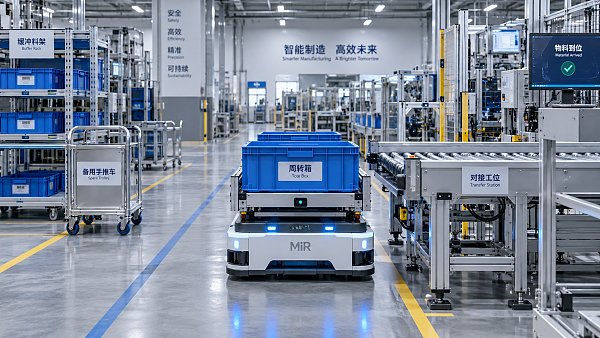
At the same time, AMRs, conveyors, AS/RS, sortation systems, and software controls have become easier to scale in phases.
This shift matters because labor cost is rarely just hourly pay.
It also includes overtime, training, turnover, travel time, mispicks, rework, congestion, and the hidden cost of inconsistent flow.
When these losses accumulate, Automated Material Handling starts saving labor costs earlier than many initial business cases assume.
The strongest trend signals appear where movement is frequent, predictable, and labor-heavy
The clearest savings patterns usually emerge in internal transport tasks rather than highly complex manual assembly work.
Facilities often discover that labor is consumed by motion, not value creation.
Common examples include pallet transfers, line-side replenishment, put-away, order staging, and repetitive warehouse travel.
In these cases, Automated Material Handling reduces dependency on direct walking and driving labor.
It also smooths workload swings between shifts.
Another signal is throughput pressure without available floor labor.
When volume rises but staffing cannot, automation stops being a future project and becomes a margin protection measure.
What pushes Automated Material Handling past the savings threshold
The labor-saving point is usually created by several conditions working together, not one factor alone.
Automated Material Handling starts saving labor costs fastest when routes are stable, tasks are repeated, and labor utilization is currently low.
The practical break-even point is operational, not theoretical
Many teams estimate payback using only headcount reduction.
That approach often understates the real impact.
In practice, Automated Material Handling may save labor costs before positions disappear from the organizational chart.
Savings can come from fewer temporary workers, lower overtime, less supervision of routine transport, and the reassignment of labor to bottleneck tasks.
The result is labor productivity improvement first, direct labor reduction second.
Where Automated Material Handling creates the earliest labor gains across industries
Across mixed industrial settings, the earliest wins tend to appear in a limited number of use cases.
- Dock-to-storage pallet movement with repeatable routes
- Line-side replenishment in assembly and packaging areas
- Work-in-process transfer between machining, testing, and packing
- E-commerce and spare-parts picking support
- Buffering and sequencing for variable production schedules
These applications share one feature.
They consume labor continuously but do not always require human judgment at every movement step.
That is where Automated Material Handling performs best.
The impact reaches beyond payroll and changes several business functions
Once Automated Material Handling is introduced, labor economics improve in more than one area.
Material flow becomes more visible, scheduling becomes more reliable, and exception management becomes easier to measure.
This creates secondary savings that strengthen the labor case.
For example, fewer rush moves reduce planner interventions.
Better replenishment timing reduces operator waiting.
More consistent transport reduces idle machine time and manual escalation effort.
In regulated or quality-sensitive environments, fewer manual touches can also support traceability and process discipline.
Different workflow stages feel the change differently
What deserves close attention before claiming labor savings
Not every installation delivers immediate labor reduction.
Automated Material Handling creates the best results when several basics are checked early.
- Map current travel paths, touches, delays, and exceptions with real data
- Separate productive labor from transport and waiting labor
- Measure utilization by shift, not by daily averages alone
- Include maintenance, software, training, and integration in total cost
- Test whether process variation will overwhelm the selected system
- Define labor savings as avoided hiring, overtime reduction, or redeployment
These checks prevent overestimating payback and help match Automated Material Handling to the right level of operational complexity.
A better decision model starts with phased judgment, not oversized ambition
The best response is usually a phased rollout.
Start where labor is heavily consumed by repeated movement and where performance can be tracked quickly.
Then expand only after cycle time, uptime, and labor indicators confirm the result.
This approach reduces risk while showing exactly when Automated Material Handling starts saving labor costs in real operations.
The next move is to quantify the true cost of manual movement
The most useful next step is not buying equipment.
It is building a clean baseline.
Track labor hours spent on transport, waiting, replenishment delays, overtime, and error recovery for one representative period.
Then compare that baseline with one focused Automated Material Handling use case.
If repetitive movement dominates labor consumption, the savings window may already be open.
In many facilities, Automated Material Handling begins paying back not when automation looks impressive, but when manual flow has quietly become the most expensive part of the process.
Recommended News
 Oct 17, 2026Electromagnetic Flow Meters for Slurry: Choosing Abrasion-Resistant LinersElectromagnetic flow meters for slurry need durable liners. Compare polyurethane, rubber, and PTFE/PFA for abrasion, chemistry, and temperature to choose wisely and reduce downtime.● Dr. Victor Gear
 Oct 17, 2026Is an AMR System Worth the Investment for a Mid-Size Warehouse?Is an AMR system worth the investment for a mid-size warehouse? Explore labor savings, total costs, and payback scenarios to build a credible ROI case before you invest.● Dr. Victor Gear
 Oct 17, 2026How Long Does It Take to Deploy Autonomous Mobile Robots?How long does it take to deploy autonomous mobile robots? Explore pilot-to-production timelines, key delay factors, and practical ways to accelerate a safe, reliable AMR rollout.● Dr. Victor Gear
 Oct 16, 2026What Should You Compare Before Buying Material Handling Automation?What should I compare before buying automated material handling equipment? Explore throughput, integration, safety, and lifecycle costs to avoid hidden risks and invest with confidence.● Dr. Victor Gear
 Oct 16, 2026Can Material Handling Automation Cut Labor Costs Without Disruption?Can automated material handling reduce labor costs without disrupting operations? Discover how phased rollouts, reliable fallbacks, and smart system selection can cut costs and protect throughput.● Dr. Victor Gear
 Oct 15, 2026How Do You Qualify a Material Handling Integrator Before Awarding Work?How do I qualify a system integrator before awarding a project? Learn how to verify experience, assess controls expertise, and set acceptance criteria to reduce material handling project risks.● Dr. Victor Gear
 Oct 15, 2026What Are the Risks of Switching Automation Integrators Mid-Project?What are the risks of changing system integrators mid-project? Explore delays, rework, software rights, and safety gaps—and learn how to protect your project with a controlled takeover.● Dr. Victor Gear
 Sep 01, 2026Fluid Power Aluminum Body Selection: Pressure, Corrosion, and Weight CriteriaFluid Power aluminum body selection made clear: compare pressure duty, corrosion protection, fatigue risk, sealing, and assembly weight for reliable performance.● Dr. Victor Gear
 Aug 11, 2026European Flow Control Standards: What Engineers Must Check for ComplianceFlow control standards Europe: learn the key compliance checks engineers must verify, from PED and CE marking to pressure ratings, traceability, and documentation.● Dr. Victor Gear
 Aug 10, 2026Flow Control in North America: What Buyers Should Evaluate in SuppliersFlow Control North America: Learn what buyers should evaluate in suppliers, from engineering quality and compliance to delivery reliability and technical support.● Dr. Victor Gear
 Aug 06, 2026Warehouse Automation Investment in 2026: How to Evaluate ROI, Labor Savings, and ScaleWarehouse automation investment 2026 explained: learn how to assess ROI, labor savings, integration risk, and scalable growth before committing capital.● Dr. Victor Gear
 Aug 04, 2026How to Evaluate a Turbine Flow Meters Manufacturer for Accuracy-Critical ApplicationsTurbine flow meters manufacturer selection starts with calibration, traceability, and mechanical quality. Learn how to compare suppliers for accuracy-critical applications.● Dr. Victor Gear
 Jul 31, 2026How to Choose Directional Control Valves for Industrial Machinery ApplicationsDirectional Control Valves for industrial machinery: learn how to match motion, pressure, flow, actuation, and reliability needs to choose the right valve with confidence.● Dr. Victor Gear
 Jul 17, 2026How to Choose an ATEX Intelligent Flow Metering System for Hazardous AreasIntelligent Flow Metering ATEX selection starts with safety, process fit, and compliance. Learn how to choose a reliable system for hazardous areas with confidence.● Dr. Victor Gear
 Jul 15, 2026How to Select Flanged Electromagnetic Flow Meters for Water and Chemical LinesFlanged electromagnetic flow meters for water and chemical lines: learn how to match conductivity, materials, pressure, and installation for accurate, reliable, low-maintenance performance.● Dr. Victor Gear
 Jul 11, 2026Order Management Systems for Ecommerce: Key Features, Integrations, and Selection CriteriaOrder management systems ecommerce teams rely on can improve inventory accuracy, fulfillment speed, and integrations. Explore key features and smart selection criteria.● Dr. Victor Gear
 Jul 09, 2026ASRS Systems Mini Load: When It Fits Small Parts Storage and What to Check FirstASRS Systems mini load explained: learn when it truly fits small parts storage, what to check first, and how to avoid costly mistakes before comparing vendors.● Dr. Victor Gear
 Jul 06, 2026How to Choose Smart Warehouse Integrators for Multi-Site Automation ProjectsSmart warehouse integrators can make or break multi-site automation. Learn how to compare design, software, rollout, and support capabilities to choose a scalable partner.● Dr. Victor Gear
 Jul 04, 2026Digital Insertion Flow Meter Selection Guide: Pipe Size, Accuracy, and Installation LimitsDigital insertion flow meter selection made practical: learn how pipe size, accuracy, flow profile, and installation limits affect performance, cost, and reliable industrial operation.● Dr. Victor Gear
 Jul 03, 2026How to Choose CE Solenoid Valves: Voltage, Media Compatibility, and IP RatingCE Solenoid Valves selection starts with the right voltage, media compatibility, and IP rating. Learn how to avoid failure, reduce downtime, and choose valves that truly fit your application.● Dr. Victor Gear
 Jul 01, 2026How to Evaluate a Flow Control Valve Manufacturer for Pressure Stability and Lead TimeFlow Control valve manufacturer selection starts with pressure stability and proven lead time. Learn how to compare suppliers, reduce downtime risk, and improve long-term sourcing confidence.● Dr. Victor Gear
 Jun 30, 2026How to Evaluate a Fluid Power Exporter for Lead Time, Certifications, and After-Sales SupportFluid Power exporter evaluation made practical: learn how to verify lead times, certifications, and after-sales support to reduce sourcing risk, avoid downtime, and choose a reliable partner.● Dr. Victor Gear
 Jun 29, 2026Where LoRaWAN Flow Sensors Fit Best: Remote Tank Monitoring, Water Networks, and Utility SitesLoRaWAN flow sensors fit best in remote tank monitoring, water networks, and utility sites. Learn where they add the most value, improve visibility, and support smarter maintenance decisions.● Dr. Victor Gear
 Jun 28, 2026Fluid Power Steel Manifold Selection Guide: Ports, Pressure Ratings, and Layout BasicsFluid Power steel manifold selection made simple: compare port types, pressure ratings, and layout basics to reduce leaks, improve uptime, and choose the right solution with confidence.● Dr. Victor Gear