Hot Articles
Popular Tags
Automated Material Handling Bottlenecks That Slow Throughput
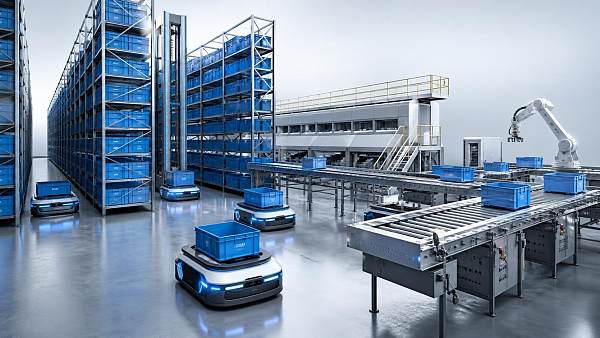
Automated Material Handling bottlenecks can quietly erode throughput, inflate labor costs, and disrupt project timelines long before they appear in KPI reports. In complex industrial environments, slowdowns rarely come from a single machine. They emerge from the interaction between conveyors, AS/RS, AMRs, palletizing cells, buffer zones, software logic, and upstream or downstream processes that were never fully balanced. When Automated Material Handling systems are expected to support higher SKU variety, shorter delivery windows, and stricter uptime targets, even a minor mismatch in speed, storage logic, or data quality can cascade into measurable losses. Understanding where these constraints form—and how to diagnose them with engineering discipline—is essential for restoring flow, protecting asset utilization, and improving scalable performance.
What are Automated Material Handling bottlenecks, and why do they often stay hidden?
A bottleneck in Automated Material Handling is any point in the flow where capacity is lower than the demand placed on it. This may be a physical asset, such as a conveyor merge, lift, shuttle aisle, robotic pick station, or charging area for AMRs. It can also be a digital limitation, including poor routing rules, delayed WMS-WCS communication, barcode read failures, or conservative safety logic that forces unnecessary stops.
These bottlenecks often remain hidden because average throughput can look acceptable over a full shift while short-interval congestion is severe. A system may appear to meet daily volume targets, yet still create recurring queues, starved workstations, emergency labor interventions, and uneven cycle times. In many facilities, the true issue is not total installed capacity but the inability to sustain flow during peaks, changeovers, or order-mix volatility.
Another reason they stay undetected is fragmented accountability. Mechanical teams focus on uptime, software teams track exceptions, and operations teams respond to output shortfalls. Without a unified view of flow, latent Automated Material Handling constraints are treated as isolated events rather than symptoms of a system-level imbalance.
Where do throughput slowdowns usually form in an Automated Material Handling system?
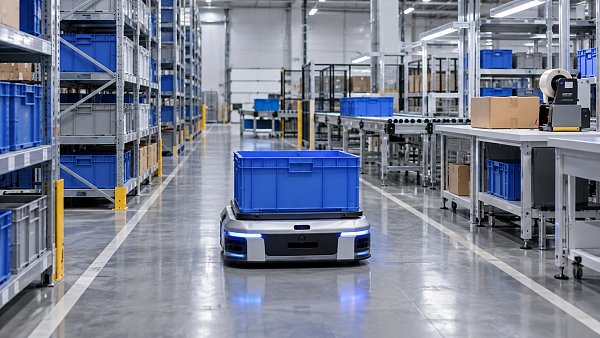
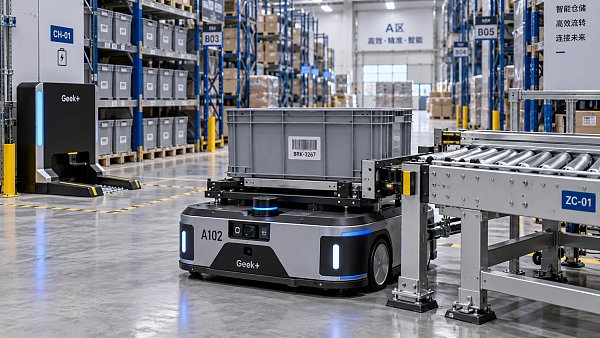
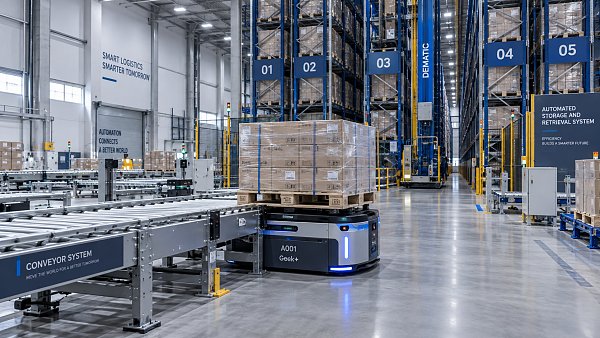
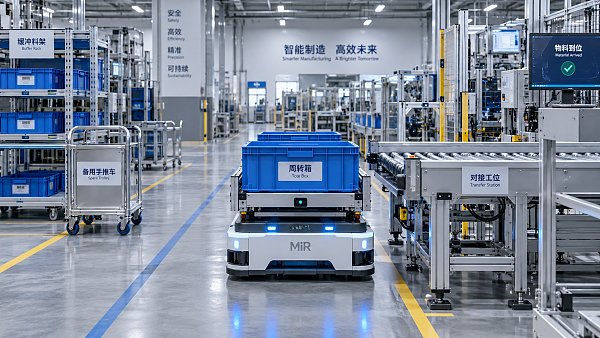
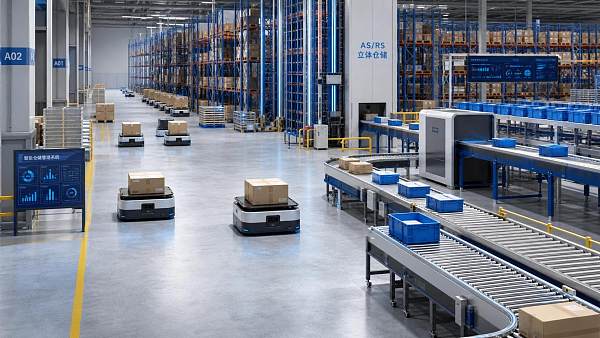
Most throughput losses appear at transition points rather than at obvious high-speed equipment. Interfaces between subsystems are especially vulnerable. For example, an AS/RS may retrieve pallets quickly, but if the outbound conveyor cannot absorb bursts, the storage machine spends time waiting. Similarly, AMRs may navigate efficiently until they encounter shared intersections, doorways, staging constraints, or inconsistent task dispatching.
Common high-risk locations include:
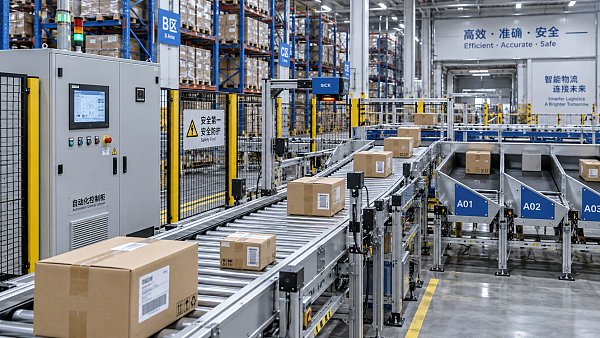
- Infeed and discharge merges where multiple lines compete for a single path
- Accumulation zones with poor release sequencing
- Pick modules affected by SKU slotting errors and replenishment delays
- AS/RS aisles with unbalanced storage assignment or dual-command inefficiencies
- AMR fleets operating with traffic conflicts, battery downtime, or weak map design
- Vision, scanning, and weighing checkpoints that trigger repeated exception handling
- Manual intervention nodes inserted into otherwise automated flow
In broader industrial settings, bottlenecks also arise when Automated Material Handling is deployed without matching changes to packaging standards, pallet quality, labeling discipline, or production schedule stability. A technically advanced line can underperform if incoming unit loads vary in dimensions, weight distribution, or scan readability.
How can you tell whether the root cause is equipment, controls, or process design?
The most effective diagnosis starts with time-based evidence rather than assumptions. Throughput loss should be broken into micro-events: blocked time, starved time, fault time, reset time, travel time, dwell time, and idle time under available demand. This reveals whether the issue is mechanical underperformance, logic-driven hesitation, or poor flow orchestration.
A practical way to separate causes is to ask three questions. First, does the asset achieve its rated speed when isolated? If yes, mechanical capacity may not be the limiting factor. Second, does performance degrade only during traffic peaks, SKU changes, or shift transitions? If so, controls or process logic may be constraining flow. Third, are operators repeatedly bypassing automated rules to keep output moving? That often points to layout, slotting, or task-allocation design flaws rather than hardware weakness.
Useful diagnostic signals include queue length distribution, recirculation frequency, order aging, AMR wait-at-node time, AS/RS double-handling, scan exception rates, and buffer occupancy patterns. Digital twins and event logs can accelerate analysis, but even simple timestamp mapping across process handoff points often reveals the hidden constraint.
In some projects, external benchmarking data or technical intelligence repositories help frame what “normal” should look like. Reference material such as 无 may be used during early review stages to compare flow assumptions, although final decisions still depend on site-specific operating conditions.
What mistakes make Automated Material Handling bottlenecks worse over time?
One frequent mistake is optimizing individual assets instead of the end-to-end system. Increasing conveyor speed, adding more AMRs, or tightening robot cycle times can actually amplify congestion if release logic, buffer sizing, and downstream absorption are unchanged. Local efficiency gains do not always translate into better throughput.
Another error is designing around average demand. Automated Material Handling systems experience stress during peaks, not averages. If simulation models ignore promotional surges, shift overlap, replenishment conflicts, or mixed-case complexity, the installed system may technically pass acceptance testing while failing in live operation.
A third mistake is underestimating data governance. Slotting rules, master data integrity, carton dimensions, SKU velocity classification, and route priorities all shape system performance. Poor data quality can make an advanced WCS behave unpredictably, creating false congestion and unbalanced task queues.
There is also a maintenance-related trap. Teams often focus on breakdowns, but throughput is frequently degraded by “soft failures” such as sensor contamination, drifting alignment, degraded rollers, battery health decline, or delayed firmware updates. These issues do not stop the line outright; they slowly reduce the stable operating envelope of Automated Material Handling assets.
How should bottlenecks be prioritized and corrected without disrupting operations?
Prioritization should be based on constraint impact, recurrence, and recoverability. The best first target is not always the largest delay in raw minutes, but the point where small improvements unlock sustained flow across multiple downstream activities. In Automated Material Handling, a short but repeated merge conflict may be more damaging than an occasional longer stoppage at a less critical station.
A staged correction plan usually works better than broad redesign. Start with software and operational changes that have low physical disruption: release sequencing, task-priority logic, traffic zoning, slotting updates, dynamic buffering rules, and maintenance threshold adjustments. Then move to medium-effort interventions such as sensor relocation, conveyor controls tuning, charger redistribution, or revised workstation ergonomics. Capital-intensive changes—additional lanes, extra shuttles, parallel lifts, or layout modifications—should come only after the system’s logic has been stabilized.
Short pilot windows are valuable. Test one routing rule, one replenishment policy, or one traffic map change against defined metrics such as orders per hour, blocked time, and exception count. This reduces risk and creates a factual basis for wider rollout. Where available, materials like 无 can support technical comparison, but implementation success still depends on measured validation inside the live process.
What metrics and review methods prevent Automated Material Handling bottlenecks from returning?
Preventing recurrence requires a shift from static KPI review to flow-oriented monitoring. Instead of relying only on daily output, track interval-based indicators that expose instability early. Automated Material Handling performance is far easier to protect when variability is detected before it becomes visible in labor overtime or missed shipments.
A strong review rhythm includes weekly exception analysis, monthly flow rebalancing checks, and quarterly stress tests against future volume assumptions. This is especially important in integrated industrial networks where production, warehousing, spare parts, and outbound fulfillment share the same Automated Material Handling backbone.
Automated Material Handling bottlenecks are rarely solved by speed alone. They are solved by aligning equipment capability, controls logic, data accuracy, maintenance discipline, and operational design around the real constraint. The fastest path forward is to map delays at handoff points, measure peak-condition performance, and correct the smallest instability that causes the largest downstream disruption. With that approach, throughput improves not as a one-time gain, but as a repeatable operating condition that supports growth, uptime, and more reliable industrial execution.
Recommended News
 Oct 17, 2026Electromagnetic Flow Meters for Slurry: Choosing Abrasion-Resistant LinersElectromagnetic flow meters for slurry need durable liners. Compare polyurethane, rubber, and PTFE/PFA for abrasion, chemistry, and temperature to choose wisely and reduce downtime.● Dr. Victor Gear
 Oct 17, 2026Is an AMR System Worth the Investment for a Mid-Size Warehouse?Is an AMR system worth the investment for a mid-size warehouse? Explore labor savings, total costs, and payback scenarios to build a credible ROI case before you invest.● Dr. Victor Gear
 Oct 17, 2026How Long Does It Take to Deploy Autonomous Mobile Robots?How long does it take to deploy autonomous mobile robots? Explore pilot-to-production timelines, key delay factors, and practical ways to accelerate a safe, reliable AMR rollout.● Dr. Victor Gear
 Oct 16, 2026What Should You Compare Before Buying Material Handling Automation?What should I compare before buying automated material handling equipment? Explore throughput, integration, safety, and lifecycle costs to avoid hidden risks and invest with confidence.● Dr. Victor Gear
 Oct 16, 2026Can Material Handling Automation Cut Labor Costs Without Disruption?Can automated material handling reduce labor costs without disrupting operations? Discover how phased rollouts, reliable fallbacks, and smart system selection can cut costs and protect throughput.● Dr. Victor Gear
 Oct 15, 2026How Do You Qualify a Material Handling Integrator Before Awarding Work?How do I qualify a system integrator before awarding a project? Learn how to verify experience, assess controls expertise, and set acceptance criteria to reduce material handling project risks.● Dr. Victor Gear
 Oct 15, 2026What Are the Risks of Switching Automation Integrators Mid-Project?What are the risks of changing system integrators mid-project? Explore delays, rework, software rights, and safety gaps—and learn how to protect your project with a controlled takeover.● Dr. Victor Gear
 Sep 01, 2026Fluid Power Aluminum Body Selection: Pressure, Corrosion, and Weight CriteriaFluid Power aluminum body selection made clear: compare pressure duty, corrosion protection, fatigue risk, sealing, and assembly weight for reliable performance.● Dr. Victor Gear
 Aug 11, 2026European Flow Control Standards: What Engineers Must Check for ComplianceFlow control standards Europe: learn the key compliance checks engineers must verify, from PED and CE marking to pressure ratings, traceability, and documentation.● Dr. Victor Gear
 Aug 10, 2026Flow Control in North America: What Buyers Should Evaluate in SuppliersFlow Control North America: Learn what buyers should evaluate in suppliers, from engineering quality and compliance to delivery reliability and technical support.● Dr. Victor Gear
 Aug 06, 2026Warehouse Automation Investment in 2026: How to Evaluate ROI, Labor Savings, and ScaleWarehouse automation investment 2026 explained: learn how to assess ROI, labor savings, integration risk, and scalable growth before committing capital.● Dr. Victor Gear
 Aug 04, 2026How to Evaluate a Turbine Flow Meters Manufacturer for Accuracy-Critical ApplicationsTurbine flow meters manufacturer selection starts with calibration, traceability, and mechanical quality. Learn how to compare suppliers for accuracy-critical applications.● Dr. Victor Gear
 Jul 31, 2026How to Choose Directional Control Valves for Industrial Machinery ApplicationsDirectional Control Valves for industrial machinery: learn how to match motion, pressure, flow, actuation, and reliability needs to choose the right valve with confidence.● Dr. Victor Gear
 Jul 17, 2026How to Choose an ATEX Intelligent Flow Metering System for Hazardous AreasIntelligent Flow Metering ATEX selection starts with safety, process fit, and compliance. Learn how to choose a reliable system for hazardous areas with confidence.● Dr. Victor Gear
 Jul 15, 2026How to Select Flanged Electromagnetic Flow Meters for Water and Chemical LinesFlanged electromagnetic flow meters for water and chemical lines: learn how to match conductivity, materials, pressure, and installation for accurate, reliable, low-maintenance performance.● Dr. Victor Gear
 Jul 11, 2026Order Management Systems for Ecommerce: Key Features, Integrations, and Selection CriteriaOrder management systems ecommerce teams rely on can improve inventory accuracy, fulfillment speed, and integrations. Explore key features and smart selection criteria.● Dr. Victor Gear
 Jul 09, 2026ASRS Systems Mini Load: When It Fits Small Parts Storage and What to Check FirstASRS Systems mini load explained: learn when it truly fits small parts storage, what to check first, and how to avoid costly mistakes before comparing vendors.● Dr. Victor Gear
 Jul 06, 2026How to Choose Smart Warehouse Integrators for Multi-Site Automation ProjectsSmart warehouse integrators can make or break multi-site automation. Learn how to compare design, software, rollout, and support capabilities to choose a scalable partner.● Dr. Victor Gear
 Jul 04, 2026Digital Insertion Flow Meter Selection Guide: Pipe Size, Accuracy, and Installation LimitsDigital insertion flow meter selection made practical: learn how pipe size, accuracy, flow profile, and installation limits affect performance, cost, and reliable industrial operation.● Dr. Victor Gear
 Jul 03, 2026How to Choose CE Solenoid Valves: Voltage, Media Compatibility, and IP RatingCE Solenoid Valves selection starts with the right voltage, media compatibility, and IP rating. Learn how to avoid failure, reduce downtime, and choose valves that truly fit your application.● Dr. Victor Gear
 Jul 01, 2026How to Evaluate a Flow Control Valve Manufacturer for Pressure Stability and Lead TimeFlow Control valve manufacturer selection starts with pressure stability and proven lead time. Learn how to compare suppliers, reduce downtime risk, and improve long-term sourcing confidence.● Dr. Victor Gear
 Jun 30, 2026How to Evaluate a Fluid Power Exporter for Lead Time, Certifications, and After-Sales SupportFluid Power exporter evaluation made practical: learn how to verify lead times, certifications, and after-sales support to reduce sourcing risk, avoid downtime, and choose a reliable partner.● Dr. Victor Gear
 Jun 29, 2026Where LoRaWAN Flow Sensors Fit Best: Remote Tank Monitoring, Water Networks, and Utility SitesLoRaWAN flow sensors fit best in remote tank monitoring, water networks, and utility sites. Learn where they add the most value, improve visibility, and support smarter maintenance decisions.● Dr. Victor Gear
 Jun 28, 2026Fluid Power Steel Manifold Selection Guide: Ports, Pressure Ratings, and Layout BasicsFluid Power steel manifold selection made simple: compare port types, pressure ratings, and layout basics to reduce leaks, improve uptime, and choose the right solution with confidence.● Dr. Victor Gear