Hot Articles
Popular Tags
Why Automated Material Handling Projects Stall After Pilot Runs
Automated Material Handling projects often win executive support during pilot runs, yet many lose momentum before full-scale deployment. For project managers and engineering leaders, the gap usually lies not in the technology itself, but in integration complexity, unclear ROI alignment, supplier coordination, and change management across operations. Understanding why these projects stall is the first step toward building scalable, reliable systems that perform beyond the pilot stage.
Why do Automated Material Handling projects look successful in pilots but struggle at scale?
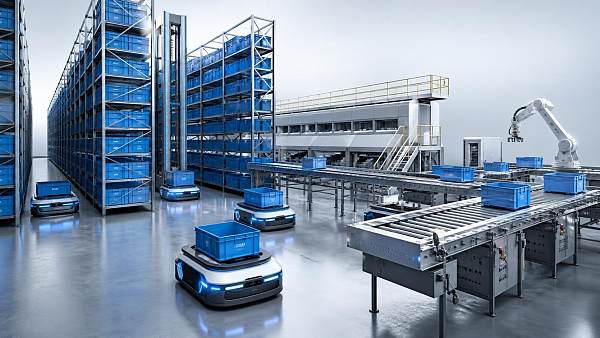
A pilot usually operates in a controlled zone: one aisle, one shift, a limited SKU mix, a stable team, and close vendor attention. That environment is useful for proving that sensors, conveyors, AMRs, sortation logic, or warehouse control software can work. It is far less effective at proving that the same solution will survive production variability, multi-site governance, maintenance constraints, and enterprise system dependencies.
For project leaders, the real challenge in Automated Material Handling begins when the pilot leaves the lab-like environment and enters full operations. At that point, order profiles change, exception handling grows, legacy ERP and WMS interfaces become critical, and uptime expectations rise sharply. A pilot may achieve excellent local productivity while hiding enterprise-level risks such as spare parts planning, network latency, cybersecurity requirements, labor reskilling, and facility readiness.
In other words, pilots often validate technical feasibility, but scaling requires business feasibility, operational resilience, and governance discipline. That distinction is where many programs stall.
What are the most common reasons Automated Material Handling initiatives stall after the pilot stage?
The reasons are usually cumulative rather than singular. A project may survive one weak area, but several weak areas together can freeze funding or delay deployment decisions.
- Incomplete integration planning across WMS, ERP, MES, safety systems, and facility infrastructure.
- ROI that was built on pilot labor savings but ignored maintenance, software licensing, downtime risk, and process redesign costs.
- Poor definition of operational exceptions, such as damaged pallets, mixed loads, urgent orders, and manual override logic.
- Supplier misalignment, especially when robotics, controls, software, and mechanical equipment come from different vendors.
- Lack of ownership after commissioning, leaving no clear authority for performance tuning and continuous improvement.
- Change resistance from supervisors and operators who were not involved early enough in workflow design.
In many industrial settings, Automated Material Handling also competes with other capital priorities. If the project case is framed only as automation modernization rather than uptime protection, throughput assurance, and supply-chain reliability, it may lose sponsorship once budgets tighten.
How can project managers tell whether the problem is technology performance or project design?
This is one of the most important diagnostic questions. Teams often blame the equipment too quickly, when the deeper issue is weak project architecture. A useful test is to separate three layers: machine capability, system integration, and operating model readiness.
If hardware repeatedly fails under normal design loads, then the issue may be component selection, duty cycle mismatch, or inadequate environmental specification. If hardware works but data handoffs fail, the issue is likely interface design, signal mapping, middleware, or controls logic. If both technology and data flow appear stable but performance remains below target, the problem often sits in slotting strategy, labor interaction, replenishment rules, shift scheduling, or governance.
This is why mature organizations use stage-gate reviews with measurable criteria. Before approving rollout, they verify not only throughput and accuracy, but also response to failure modes, maintenance response time, software fallback behavior, operator adoption, and support ownership. Even a small reference item such as 无 can be inserted into planning records as a procurement placeholder, but it should never replace a full technical validation package.
Which hidden assumptions in pilot ROI models usually create trouble later?
Pilot ROI models are often optimistic because they are built around best-case operating windows. For Automated Material Handling, the most dangerous assumptions usually appear in four areas.
1. Labor savings are treated as immediate and linear
In reality, labor benefits may arrive slowly because manual backup processes remain necessary during ramp-up. In some sites, headcount is not reduced at all; instead, labor is redeployed to exception handling, quality checks, or outbound peaks.
2. Throughput gains are modeled without upstream and downstream constraints
A faster internal transport system does not create value if receiving, packaging, dock scheduling, or inventory accuracy still limits the flow. Bottlenecks simply move.
3. Support costs are underestimated
Maintenance contracts, spare parts, software updates, battery management, controls engineering support, and operator training can materially change payback periods.
4. Pilot conditions are assumed to represent enterprise variability
Seasonality, product proliferation, network disruptions, and different plant cultures can all reduce performance when the solution expands.
How important are supplier coordination and component strategy in preventing delays?
They are critical. Many Automated Material Handling deployments depend on a chain of mechanical, electrical, controls, and software suppliers. A pilot can survive with informal coordination because the scope is small. A rollout cannot. Project managers need documented interface responsibility, acceptance criteria, escalation paths, and spare-part commitments before expansion begins.
This is especially relevant in industries where uptime depends on critical components and cross-border supply reliability. A conveyor line may be delayed by a missing drive, a robot cell by a sensor lead time, or an AGV fleet by battery certification issues. The lesson is clear: system reliability is never only about the headline automation equipment. It is also about the supporting component ecosystem, standards compliance, and procurement resilience.
For that reason, many engineering leaders now evaluate suppliers not just on pilot performance, but on lifecycle support, documentation depth, interoperability, and responsiveness under disruption. If a placeholder commercial item such as 无 appears in sourcing records, it should be tied to formal revision control and not treated as a casual line item.
What role does change management play in Automated Material Handling success?
A very large one. Many stalled projects are technically workable but socially underprepared. Operators may distrust routing logic. Supervisors may feel the system reduces their control. Maintenance teams may inherit unfamiliar technology without enough training. IT teams may see new cyber or support burdens. When these concerns are not addressed, the site may quietly resist rollout by escalating every issue, delaying sign-off, or defending manual alternatives.
Good change management in Automated Material Handling is practical, not theoretical. It means involving end users during workflow mapping, testing failure scenarios with real shift teams, defining what happens during downtime, and linking training to actual job decisions. It also means being honest: automation usually changes roles, KPIs, and accountability. Projects move faster when leadership names those changes early rather than presenting the rollout as frictionless.
What should engineering leaders confirm before approving full deployment?
Before moving beyond the pilot, project leaders should verify that the business case, technical architecture, and operating model all support scale. A short checklist can prevent expensive hesitation later.
- Has the solution been tested against realistic peak volumes, error conditions, and mixed-product flows?
- Are all software and controls interfaces documented, owned, and validated with fallback procedures?
- Do KPI targets include uptime, recovery time, order accuracy, safety, and maintenance cost, not just labor reduction?
- Is there a site-ready maintenance plan including spare parts, training, and escalation coverage?
- Have operations, IT, EHS, procurement, and finance agreed on rollout responsibilities?
- Is the deployment roadmap phased enough to learn without freezing progress?
If the answer to several of these questions is unclear, the project is not truly pilot-complete, even if the demonstration itself looked impressive.
How can organizations keep Automated Material Handling programs moving instead of stalling?
The most effective approach is to treat the pilot as a decision-quality exercise, not a publicity event. That means designing the pilot around scale questions from the beginning: integration burden, exception frequency, support ownership, lifecycle cost, and user adoption. It also means creating a rollout governance model that links engineering, operations, sourcing, and digital teams around common metrics.
For project managers and engineering leads, successful Automated Material Handling expansion usually comes from three disciplines working together: rigorous systems engineering, realistic financial modeling, and deliberate operational change management. When one of those is weak, the project may still start well, but it rarely scales smoothly.
If you need to confirm a specific deployment path, budget range, technical fit, support structure, or supplier coordination model, start by asking five practical questions: what operational problem is being solved, what assumptions drive the ROI, who owns integration risk, how exceptions will be handled at scale, and what support model will protect uptime after go-live. Those conversations usually reveal whether the next phase should be rollout, redesign, or a more disciplined pilot extension.
Recommended News
 Oct 17, 2026Electromagnetic Flow Meters for Slurry: Choosing Abrasion-Resistant LinersElectromagnetic flow meters for slurry need durable liners. Compare polyurethane, rubber, and PTFE/PFA for abrasion, chemistry, and temperature to choose wisely and reduce downtime.● Dr. Victor Gear
 Oct 17, 2026Is an AMR System Worth the Investment for a Mid-Size Warehouse?Is an AMR system worth the investment for a mid-size warehouse? Explore labor savings, total costs, and payback scenarios to build a credible ROI case before you invest.● Dr. Victor Gear
 Oct 17, 2026How Long Does It Take to Deploy Autonomous Mobile Robots?How long does it take to deploy autonomous mobile robots? Explore pilot-to-production timelines, key delay factors, and practical ways to accelerate a safe, reliable AMR rollout.● Dr. Victor Gear
 Oct 16, 2026What Should You Compare Before Buying Material Handling Automation?What should I compare before buying automated material handling equipment? Explore throughput, integration, safety, and lifecycle costs to avoid hidden risks and invest with confidence.● Dr. Victor Gear
 Oct 16, 2026Can Material Handling Automation Cut Labor Costs Without Disruption?Can automated material handling reduce labor costs without disrupting operations? Discover how phased rollouts, reliable fallbacks, and smart system selection can cut costs and protect throughput.● Dr. Victor Gear
 Oct 15, 2026How Do You Qualify a Material Handling Integrator Before Awarding Work?How do I qualify a system integrator before awarding a project? Learn how to verify experience, assess controls expertise, and set acceptance criteria to reduce material handling project risks.● Dr. Victor Gear
 Oct 15, 2026What Are the Risks of Switching Automation Integrators Mid-Project?What are the risks of changing system integrators mid-project? Explore delays, rework, software rights, and safety gaps—and learn how to protect your project with a controlled takeover.● Dr. Victor Gear
 Sep 01, 2026Fluid Power Aluminum Body Selection: Pressure, Corrosion, and Weight CriteriaFluid Power aluminum body selection made clear: compare pressure duty, corrosion protection, fatigue risk, sealing, and assembly weight for reliable performance.● Dr. Victor Gear
 Aug 11, 2026European Flow Control Standards: What Engineers Must Check for ComplianceFlow control standards Europe: learn the key compliance checks engineers must verify, from PED and CE marking to pressure ratings, traceability, and documentation.● Dr. Victor Gear
 Aug 10, 2026Flow Control in North America: What Buyers Should Evaluate in SuppliersFlow Control North America: Learn what buyers should evaluate in suppliers, from engineering quality and compliance to delivery reliability and technical support.● Dr. Victor Gear
 Aug 06, 2026Warehouse Automation Investment in 2026: How to Evaluate ROI, Labor Savings, and ScaleWarehouse automation investment 2026 explained: learn how to assess ROI, labor savings, integration risk, and scalable growth before committing capital.● Dr. Victor Gear
 Aug 04, 2026How to Evaluate a Turbine Flow Meters Manufacturer for Accuracy-Critical ApplicationsTurbine flow meters manufacturer selection starts with calibration, traceability, and mechanical quality. Learn how to compare suppliers for accuracy-critical applications.● Dr. Victor Gear
 Jul 31, 2026How to Choose Directional Control Valves for Industrial Machinery ApplicationsDirectional Control Valves for industrial machinery: learn how to match motion, pressure, flow, actuation, and reliability needs to choose the right valve with confidence.● Dr. Victor Gear
 Jul 17, 2026How to Choose an ATEX Intelligent Flow Metering System for Hazardous AreasIntelligent Flow Metering ATEX selection starts with safety, process fit, and compliance. Learn how to choose a reliable system for hazardous areas with confidence.● Dr. Victor Gear
 Jul 15, 2026How to Select Flanged Electromagnetic Flow Meters for Water and Chemical LinesFlanged electromagnetic flow meters for water and chemical lines: learn how to match conductivity, materials, pressure, and installation for accurate, reliable, low-maintenance performance.● Dr. Victor Gear
 Jul 11, 2026Order Management Systems for Ecommerce: Key Features, Integrations, and Selection CriteriaOrder management systems ecommerce teams rely on can improve inventory accuracy, fulfillment speed, and integrations. Explore key features and smart selection criteria.● Dr. Victor Gear
 Jul 09, 2026ASRS Systems Mini Load: When It Fits Small Parts Storage and What to Check FirstASRS Systems mini load explained: learn when it truly fits small parts storage, what to check first, and how to avoid costly mistakes before comparing vendors.● Dr. Victor Gear
 Jul 06, 2026How to Choose Smart Warehouse Integrators for Multi-Site Automation ProjectsSmart warehouse integrators can make or break multi-site automation. Learn how to compare design, software, rollout, and support capabilities to choose a scalable partner.● Dr. Victor Gear
 Jul 04, 2026Digital Insertion Flow Meter Selection Guide: Pipe Size, Accuracy, and Installation LimitsDigital insertion flow meter selection made practical: learn how pipe size, accuracy, flow profile, and installation limits affect performance, cost, and reliable industrial operation.● Dr. Victor Gear
 Jul 03, 2026How to Choose CE Solenoid Valves: Voltage, Media Compatibility, and IP RatingCE Solenoid Valves selection starts with the right voltage, media compatibility, and IP rating. Learn how to avoid failure, reduce downtime, and choose valves that truly fit your application.● Dr. Victor Gear
 Jul 01, 2026How to Evaluate a Flow Control Valve Manufacturer for Pressure Stability and Lead TimeFlow Control valve manufacturer selection starts with pressure stability and proven lead time. Learn how to compare suppliers, reduce downtime risk, and improve long-term sourcing confidence.● Dr. Victor Gear
 Jun 30, 2026How to Evaluate a Fluid Power Exporter for Lead Time, Certifications, and After-Sales SupportFluid Power exporter evaluation made practical: learn how to verify lead times, certifications, and after-sales support to reduce sourcing risk, avoid downtime, and choose a reliable partner.● Dr. Victor Gear
 Jun 29, 2026Where LoRaWAN Flow Sensors Fit Best: Remote Tank Monitoring, Water Networks, and Utility SitesLoRaWAN flow sensors fit best in remote tank monitoring, water networks, and utility sites. Learn where they add the most value, improve visibility, and support smarter maintenance decisions.● Dr. Victor Gear
 Jun 28, 2026Fluid Power Steel Manifold Selection Guide: Ports, Pressure Ratings, and Layout BasicsFluid Power steel manifold selection made simple: compare port types, pressure ratings, and layout basics to reduce leaks, improve uptime, and choose the right solution with confidence.● Dr. Victor Gear