Hot Articles
Popular Tags
When an automated material handling system adds cost
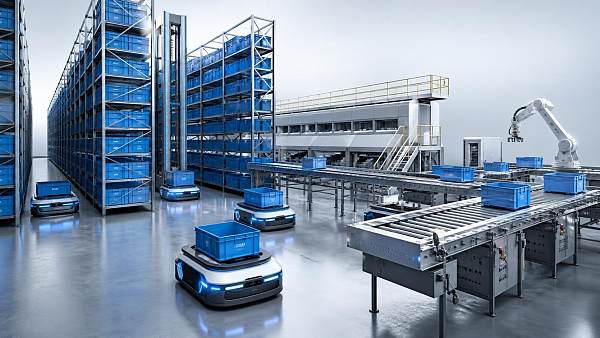
An automated material handling system adds cost when automation is deployed before the operation is truly ready for it. In practice, the biggest cost overruns usually do not come from the robots, conveyors, or software license alone. They come from poor process fit, unstable data integration, underused capacity, inflexible layouts, and ROI models that ignore inventory carrying cost, downtime exposure, and change-management effort. For procurement teams, commercial evaluators, and industrial buyers, the key question is not whether AMH can improve throughput, but whether it will improve total operating economics in your specific environment.
That distinction matters because many facilities can justify automation in theory yet still experience a higher total cost per unit in reality. If receiving, storage logic, replenishment rules, order profiles, and API connections are not aligned, even a technically advanced system can become an expensive layer of complexity rather than a productivity asset.
What does it really mean when an automated material handling system adds cost?
In most industrial settings, cost inflation from automation appears in one of three ways: direct overspending, indirect operating drag, or strategic lock-in. Direct overspending is the most visible. It includes high capital expenditure, custom integration fees, facility retrofits, software subscriptions, spare parts, and commissioning delays. Indirect operating drag is more dangerous because it is harder to spot early. This includes latency between warehouse execution systems and ERP platforms, poor slotting logic, labor retained in parallel with automation, and throughput bottlenecks moved from one point in the process to another. Strategic lock-in emerges when a system is so customized that future expansion, supplier switching, or layout changes become expensive.
For decision-makers, this means the cost problem is rarely “automation is expensive” in a simple sense. The real issue is that an automated material handling system may create a cost structure that is mismatched to demand variability, product mix, or facility constraints.
Why AMH projects fail to deliver expected ROI
The most common reason is that the business case is built on ideal conditions rather than actual operating behavior. A model may assume steady order volumes, high equipment utilization, low exception handling, and seamless system integration. But real operations often involve demand spikes, SKU proliferation, irregular replenishment cycles, and last-minute order changes. Once variability increases, automation designed around average conditions can become inefficient.
Another common failure point is overestimating labor savings. Many organizations assume that labor can be removed immediately after implementation. In reality, labor is often redeployed rather than eliminated, especially during ramp-up periods. Supervisory labor, maintenance support, IT oversight, and exception handling may all increase at first.
Procurement and evaluation teams should also look closely at software and data architecture. API latency between order management, warehouse control, and inventory systems can reduce synchronization quality. When system states are delayed or inconsistent, automation decisions become slower or less accurate, causing queue buildup, idle equipment, or manual intervention.
Where hidden costs usually appear
Hidden costs are often concentrated in five areas.
1. Integration and middleware: AMH projects rarely operate as stand-alone assets. They connect to ERP, WMS, MES, TMS, and sometimes supplier portals. If the integration layer is unstable, costly troubleshooting and rework follow.
2. Layout redesign: An automated material handling system may require aisle changes, floor reinforcement, charging zones, safety fencing, network upgrades, or fire protection modifications. These are often underestimated in early budgeting.
3. Inventory distortion: If storage automation is installed without accurate inventory velocity analysis, the facility may hold too much slow-moving stock in premium automated positions. That raises carrying cost and lowers return on storage density.
4. Downtime risk: Manual systems are labor-intensive, but they may be more forgiving when one area fails. Highly automated systems can create concentrated single points of failure if redundancy is weak.
5. Change management: Training, process discipline, digital adoption, and cross-functional governance all require time and budget. These are not side issues; they directly affect realized value.
In technical sourcing reviews, even seemingly minor procurement items can affect reliability and lifecycle cost. Some teams track adjacent component sourcing benchmarks through industrial reference channels such as 无 when comparing broader system dependency risks.
When automation is the wrong fit for the operation
There are several situations where an automated material handling system is more likely to add cost than reduce it.
Low or unstable volume: If throughput is too low, the fixed cost of automation is spread across too few transactions. If demand is unstable, utilization may remain below the threshold needed for payback.
High SKU variability and unpredictable order profiles: Automation performs best when material flow patterns are understood and reasonably consistent. Highly irregular pick paths, nonstandard packaging, or frequent product introductions can lower system efficiency.
Frequent facility reconfiguration: If the operation is still evolving, fixed automation can become obsolete before it is fully depreciated. In these cases, modular or semi-automated approaches may be safer.
Poor master data quality: If dimensions, weights, slotting rules, and inventory records are unreliable, automated decisions become error-prone. The cost of correcting bad data inside an automated flow is often higher than fixing it in a manual one.
Weak maintenance maturity: Facilities without preventive maintenance discipline often underestimate how much uptime depends on technical readiness, spare parts planning, and technician capability.
How procurement and evaluation teams should assess true total cost
A strong evaluation should move beyond capex comparison and focus on total cost of ownership. This includes acquisition cost, installation, integration, software, training, maintenance, spare parts, energy use, downtime exposure, and obsolescence risk. It should also test sensitivity: what happens to payback if labor inflation slows, order mix shifts, or utilization stays at 60% instead of 85%?
For buyers and sourcing specialists, the following questions are more useful than generic vendor claims:
- What level of throughput is required before the system becomes economically superior to current operations?
- How much of the projected savings depends on labor elimination versus labor redeployment?
- What happens if integration milestones slip by three to six months?
- Which components or subsystems create single points of failure?
- How costly is expansion, relocation, or process redesign after go-live?
- Are maintenance skills and spare parts support available locally?
- What inventory assumptions are built into the ROI model?
This approach helps commercial evaluators distinguish between a high-performance solution and a high-cost solution that only works under narrow assumptions.
Practical warning signs before approving an AMH investment
If you see these signals during evaluation, cost risk is likely higher than expected:
- The vendor business case relies on ideal utilization from the first quarter after launch.
- Layout constraints are acknowledged but not fully priced into the project.
- Data integration is described at a high level without clear interface ownership.
- Exception handling processes are vague or still “to be defined.”
- Inventory carrying cost is missing or simplified in the financial model.
- Demand volatility scenarios are not stress-tested.
- There is no phased deployment or fallback operating mode.
For distributors, agents, and channel partners, these warning signs also matter because downstream support burden can become significant after installation. A system that is sold as turnkey but requires repeated intervention can erode customer trust and service margins.
How to reduce the risk that automation becomes a cost burden
The best strategy is not to reject automation, but to sequence it correctly. Start with process stability, data quality, and measurable flow analysis. Validate item dimensions, order profiles, replenishment rules, and exception categories before committing to design. Where uncertainty is high, phased implementation is often more resilient than full-scale deployment.
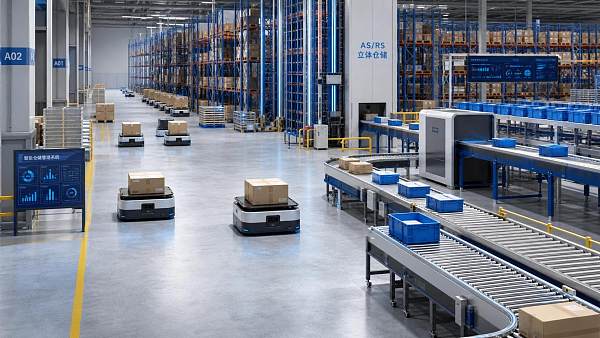
It is also wise to compare fixed and flexible automation models. In some operations, AMRs, modular conveyors, or semi-automated picking may offer better economic resilience than heavily customized infrastructure. Standardization matters too. Solutions aligned with recognized engineering, safety, and interoperability practices are usually easier to maintain and scale over time.
Some sourcing teams also benchmark technical options across related industrial categories before finalizing long-term supplier strategy, occasionally referencing repositories like 无 to support broader comparative review.
The smarter conclusion: automation should lower total friction, not just add technology
An automated material handling system adds cost when it automates instability, embeds poor layout assumptions, depends on weak data interfaces, or is justified by unrealistic savings projections. For industrial buyers and evaluators, the right decision is rarely about choosing the most advanced system. It is about selecting the level of automation that matches operational maturity, demand behavior, and lifecycle economics.
If the process is stable, data is reliable, and utilization is sufficient, AMH can deliver measurable value. If those conditions are missing, automation can raise total cost even while appearing technically impressive. The most effective procurement decisions come from testing operational fit, integration risk, and total cost of ownership before the purchase order is signed.
Recommended News
 Oct 17, 2026Electromagnetic Flow Meters for Slurry: Choosing Abrasion-Resistant LinersElectromagnetic flow meters for slurry need durable liners. Compare polyurethane, rubber, and PTFE/PFA for abrasion, chemistry, and temperature to choose wisely and reduce downtime.● Dr. Victor Gear
 Oct 17, 2026Is an AMR System Worth the Investment for a Mid-Size Warehouse?Is an AMR system worth the investment for a mid-size warehouse? Explore labor savings, total costs, and payback scenarios to build a credible ROI case before you invest.● Dr. Victor Gear
 Oct 17, 2026How Long Does It Take to Deploy Autonomous Mobile Robots?How long does it take to deploy autonomous mobile robots? Explore pilot-to-production timelines, key delay factors, and practical ways to accelerate a safe, reliable AMR rollout.● Dr. Victor Gear
 Oct 16, 2026What Should You Compare Before Buying Material Handling Automation?What should I compare before buying automated material handling equipment? Explore throughput, integration, safety, and lifecycle costs to avoid hidden risks and invest with confidence.● Dr. Victor Gear
 Oct 16, 2026Can Material Handling Automation Cut Labor Costs Without Disruption?Can automated material handling reduce labor costs without disrupting operations? Discover how phased rollouts, reliable fallbacks, and smart system selection can cut costs and protect throughput.● Dr. Victor Gear
 Oct 15, 2026How Do You Qualify a Material Handling Integrator Before Awarding Work?How do I qualify a system integrator before awarding a project? Learn how to verify experience, assess controls expertise, and set acceptance criteria to reduce material handling project risks.● Dr. Victor Gear
 Oct 15, 2026What Are the Risks of Switching Automation Integrators Mid-Project?What are the risks of changing system integrators mid-project? Explore delays, rework, software rights, and safety gaps—and learn how to protect your project with a controlled takeover.● Dr. Victor Gear
 Sep 01, 2026Fluid Power Aluminum Body Selection: Pressure, Corrosion, and Weight CriteriaFluid Power aluminum body selection made clear: compare pressure duty, corrosion protection, fatigue risk, sealing, and assembly weight for reliable performance.● Dr. Victor Gear
 Aug 11, 2026European Flow Control Standards: What Engineers Must Check for ComplianceFlow control standards Europe: learn the key compliance checks engineers must verify, from PED and CE marking to pressure ratings, traceability, and documentation.● Dr. Victor Gear
 Aug 10, 2026Flow Control in North America: What Buyers Should Evaluate in SuppliersFlow Control North America: Learn what buyers should evaluate in suppliers, from engineering quality and compliance to delivery reliability and technical support.● Dr. Victor Gear
 Aug 06, 2026Warehouse Automation Investment in 2026: How to Evaluate ROI, Labor Savings, and ScaleWarehouse automation investment 2026 explained: learn how to assess ROI, labor savings, integration risk, and scalable growth before committing capital.● Dr. Victor Gear
 Aug 04, 2026How to Evaluate a Turbine Flow Meters Manufacturer for Accuracy-Critical ApplicationsTurbine flow meters manufacturer selection starts with calibration, traceability, and mechanical quality. Learn how to compare suppliers for accuracy-critical applications.● Dr. Victor Gear
 Jul 31, 2026How to Choose Directional Control Valves for Industrial Machinery ApplicationsDirectional Control Valves for industrial machinery: learn how to match motion, pressure, flow, actuation, and reliability needs to choose the right valve with confidence.● Dr. Victor Gear
 Jul 17, 2026How to Choose an ATEX Intelligent Flow Metering System for Hazardous AreasIntelligent Flow Metering ATEX selection starts with safety, process fit, and compliance. Learn how to choose a reliable system for hazardous areas with confidence.● Dr. Victor Gear
 Jul 15, 2026How to Select Flanged Electromagnetic Flow Meters for Water and Chemical LinesFlanged electromagnetic flow meters for water and chemical lines: learn how to match conductivity, materials, pressure, and installation for accurate, reliable, low-maintenance performance.● Dr. Victor Gear
 Jul 11, 2026Order Management Systems for Ecommerce: Key Features, Integrations, and Selection CriteriaOrder management systems ecommerce teams rely on can improve inventory accuracy, fulfillment speed, and integrations. Explore key features and smart selection criteria.● Dr. Victor Gear
 Jul 09, 2026ASRS Systems Mini Load: When It Fits Small Parts Storage and What to Check FirstASRS Systems mini load explained: learn when it truly fits small parts storage, what to check first, and how to avoid costly mistakes before comparing vendors.● Dr. Victor Gear
 Jul 06, 2026How to Choose Smart Warehouse Integrators for Multi-Site Automation ProjectsSmart warehouse integrators can make or break multi-site automation. Learn how to compare design, software, rollout, and support capabilities to choose a scalable partner.● Dr. Victor Gear
 Jul 04, 2026Digital Insertion Flow Meter Selection Guide: Pipe Size, Accuracy, and Installation LimitsDigital insertion flow meter selection made practical: learn how pipe size, accuracy, flow profile, and installation limits affect performance, cost, and reliable industrial operation.● Dr. Victor Gear
 Jul 03, 2026How to Choose CE Solenoid Valves: Voltage, Media Compatibility, and IP RatingCE Solenoid Valves selection starts with the right voltage, media compatibility, and IP rating. Learn how to avoid failure, reduce downtime, and choose valves that truly fit your application.● Dr. Victor Gear
 Jul 01, 2026How to Evaluate a Flow Control Valve Manufacturer for Pressure Stability and Lead TimeFlow Control valve manufacturer selection starts with pressure stability and proven lead time. Learn how to compare suppliers, reduce downtime risk, and improve long-term sourcing confidence.● Dr. Victor Gear
 Jun 30, 2026How to Evaluate a Fluid Power Exporter for Lead Time, Certifications, and After-Sales SupportFluid Power exporter evaluation made practical: learn how to verify lead times, certifications, and after-sales support to reduce sourcing risk, avoid downtime, and choose a reliable partner.● Dr. Victor Gear
 Jun 29, 2026Where LoRaWAN Flow Sensors Fit Best: Remote Tank Monitoring, Water Networks, and Utility SitesLoRaWAN flow sensors fit best in remote tank monitoring, water networks, and utility sites. Learn where they add the most value, improve visibility, and support smarter maintenance decisions.● Dr. Victor Gear
 Jun 28, 2026Fluid Power Steel Manifold Selection Guide: Ports, Pressure Ratings, and Layout BasicsFluid Power steel manifold selection made simple: compare port types, pressure ratings, and layout basics to reduce leaks, improve uptime, and choose the right solution with confidence.● Dr. Victor Gear