Hot Articles
Popular Tags
When Advanced Hydraulic Systems Fail Under Peak Loads
When Advanced Hydraulic systems fail under peak loads, the consequences extend far beyond downtime—they expose hidden design margins, sourcing risks, and maintenance gaps that technical evaluators cannot ignore. This article examines why high-pressure components break down under extreme demand, how to identify early failure indicators, and what engineering, compliance, and supply-chain strategies can improve reliability in critical industrial operations.
Why Peak-Load Failure Must Be Judged by Application Scenario
For technical evaluators, the biggest mistake is treating all Advanced Hydraulic failures as generic pressure events. In reality, peak-load breakdowns vary sharply by operating scenario. A forging press that sees short, violent pressure spikes faces different risks than a mining excavator climbing a loaded grade, or a marine winch working in corrosive, cyclic conditions. The same rated cylinder, valve block, seal package, or hose assembly may perform acceptably in one environment and fail prematurely in another.
This is why scenario-based evaluation matters. Peak loads are not just about maximum bar or psi. They involve duty cycle, transient shock, contamination exposure, thermal drift, control responsiveness, operator behavior, and supplier consistency. In complex industrial procurement, reliability is built not only through design calculations, but through matching the hydraulic architecture to actual use conditions, maintenance capability, and compliance expectations.
For organizations managing critical assets, Advanced Hydraulic assessment should therefore begin with one question: under which exact operating moments does the system experience its true stress edge, and what component chain is most vulnerable at that moment?
Typical Scenarios Where Advanced Hydraulic Systems Fail Under Peak Loads
Technical failures under peak demand usually appear in a limited set of industrial scenarios. Understanding these scenarios helps evaluators prioritize the right inspection points, supplier questions, and testing methods.
1. High-force forming and pressing lines
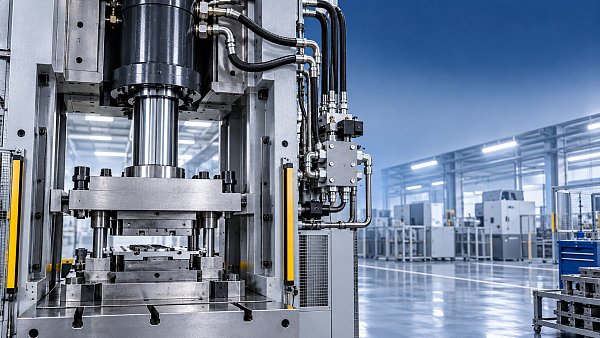
Metal forming, die stamping, and composite pressing often generate sudden pressure intensification near end-of-stroke. Failures here commonly involve seal extrusion, rod scoring, valve sticking, and manifold cracking. Evaluators should focus on pressure shock management, cushion design, response speed of proportional valves, and whether the cylinder tube and rod are sized for real transient loads rather than nominal production loads.
2. Mobile heavy equipment in construction and mining
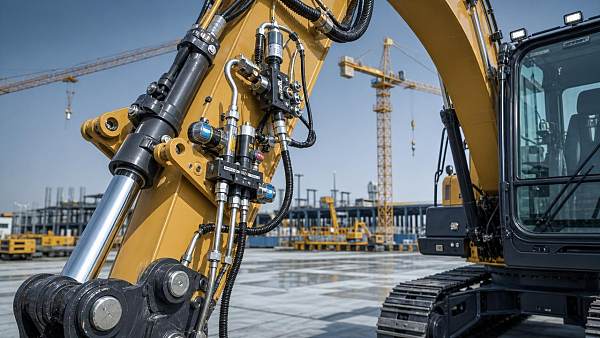
Excavators, loaders, drills, and haul-support equipment experience load reversals, vibration, side loading, and contamination simultaneously. Under peak loads, hose bursts, fitting loosening, pump cavitation, and boom cylinder seal failures are frequent. In this scenario, Advanced Hydraulic reliability depends heavily on cleanliness control, mechanical alignment, hose routing, and fatigue resistance of connectors exposed to constant shock.
3. Automated material handling and lifting systems
In AMH platforms, dock lifts, scissor tables, and stacker interfaces, the risk profile is less about extreme force alone and more about repeatability and safety at load peaks. Small leakage, response lag, or thermal viscosity changes can degrade synchronization and create dangerous motion behavior. Evaluators should review holding-valve integrity, load-lock capability, and control-loop stability under maximum payload and frequent cycles.
4. Marine, offshore, and corrosive process environments
In offshore lifting, hatch actuation, and process isolation systems, peak load events combine with salt exposure, moisture ingress, and irregular maintenance windows. Here, the root cause may not be underdesign, but material degradation that reduces safe load margin over time. Stainless choices, surface treatment, seal compatibility, and enclosure protection become decisive evaluation points.
Scenario Comparison: What Changes from One Application to Another
The table below helps technical evaluators compare how failure patterns and decision priorities shift across common use cases.
How Technical Evaluators Should Read Early Failure Indicators
In Advanced Hydraulic systems, catastrophic failure rarely arrives without warning. The challenge is that warning signs are often misread as isolated maintenance issues instead of structural reliability signals. A small rise in oil temperature under identical loads may indicate internal leakage or pump inefficiency. More frequent hose replacements may point to pulsation problems, not poor consumable quality. Slower actuator movement at peak force can reveal valve restriction, air entrainment, or fluid viscosity drift.
Evaluators should treat the following as serious early indicators in peak-load scenarios:
- Pressure overshoot above modeled values during transient events
- Unexplained heat generation near valves, pumps, or return circuits
- Frequent seal replacement concentrated in one actuator family
- Metal particles or varnish formation in fluid analysis
- Load-holding drift during dwell or pause conditions
- Audible cavitation, chatter, or impact noise near peak demand
These signs become especially important in applications where a single failure can shut down a production cell, create safety exposure, or damage upstream and downstream equipment.
Different Scenarios Require Different Evaluation Criteria
A recurring procurement error is using the same vendor scorecard for every hydraulic application. Technical evaluators should adjust criteria according to business impact and operating context.
For continuous production lines
Focus on repeatability, mean time between failures, spare part interchangeability, and validated cycle endurance. Here, the true cost of Advanced Hydraulic failure is lost throughput and unstable quality. Component traceability and documented performance under sustained duty matter more than low initial purchase price.
For remote or difficult-to-service assets
Mining, offshore, and infrastructure assets require strong attention to field maintainability, corrosion resistance, and logistics resilience. Ask whether replacement seals, rods, valve kits, and hoses can be sourced quickly across regions. In some sourcing situations, even a technically compliant part becomes operationally risky if lead times are volatile.
For safety-critical handling and lifting
The key issue is fail-safe behavior under maximum payload. Evaluators should check counterbalance valves, lock valves, burst protection logic, emergency lowering methods, and compliance with relevant lifting or machinery safety standards. Here, pressure capacity alone is not enough; controlled failure mode matters just as much.
Where Design, Sourcing, and Maintenance Often Disconnect
Peak-load failures often emerge from the space between disciplines rather than from one dramatic design flaw. Engineering may specify adequate pressure ratings, but procurement substitutes seals without equivalent temperature capability. Maintenance may replace hoses to the same length and fitting pattern, while ignoring bend radius violations caused by machine modifications. Operations may push cycle rates beyond the thermal assumptions built into the original system.
This is why technical evaluation should include a component-chain review: pump, fluid, filtration, valve block, cylinder, seals, connectors, controls, and mounting structure. One weak point can invalidate the theoretical margin of the entire Advanced Hydraulic package. In highly integrated sourcing environments, even documentation quality—material certificates, test records, lot traceability, and standards alignment—can separate a robust system from one that only appears compliant on paper.
In some procurement workflows, evaluators may encounter placeholder product records such as 无. Even when documentation is incomplete or temporary, the review process should still demand pressure-cycle evidence, dimensional consistency, seal chemistry data, and origin transparency before approval.
Common Misjudgments in Advanced Hydraulic Peak-Load Assessment
Several errors repeatedly distort technical decisions across industries:
- Confusing rated pressure with real operating stress: transient spikes and shock loads may exceed nominal values by a large margin.
- Underestimating contamination: many peak-load failures begin as wear acceleration caused by poor fluid cleanliness.
- Ignoring mechanical side load: cylinders often fail because alignment and mounting conditions differ from design assumptions.
- Assuming equivalent replacement parts are truly equivalent: minor differences in seal hardness, surface finish, or connector metallurgy can sharply reduce service life.
- Reviewing components separately: a strong pump does not compensate for poor valve dynamics or weak hose assemblies.
Scenario-Based Recommendations for Stronger Reliability
To improve peak-load performance, technical evaluators should align recommendations with the application reality rather than rely on generic best practices.
- For high-shock machinery, require transient pressure recording and fatigue validation, not only static pressure certificates.
- For harsh outdoor or mining equipment, prioritize hose routing audits, connector locking integrity, and contamination-monitoring plans.
- For AMH and lifting systems, verify fail-safe valve behavior and motion stability under maximum payload across repeated cycles.
- For marine or corrosive installations, evaluate coatings, rod materials, and seal resistance over expected maintenance intervals.
- For global sourcing projects, integrate supplier quality, traceability, and lead-time resilience into the technical approval model.
Final Decision Framework for Technical Evaluators
The most reliable way to assess Advanced Hydraulic systems under peak loads is to judge them by scenario, not by catalog promise. Ask where the true load spike occurs, what environmental conditions amplify risk, which component sees the narrowest safety margin, and whether maintenance and sourcing practices can preserve the designed performance over time. A system that looks strong in specification sheets may still be vulnerable in the field if thermal, contamination, alignment, or logistics realities were overlooked.
For technical evaluators, the next step is practical: map your highest-risk operating scenarios, compare them against actual component performance evidence, and close the gaps between design intent, supplier capability, and service execution. That scenario-based approach is what turns hydraulic reliability from a reactive repair issue into a strategic operational advantage.
Recommended News
 Sep 30, 2026How to Evaluate Electro-Hydraulic Servo Response for High-Speed Motion ControlEvaluate electro-hydraulic servo response for high-speed motion control with practical metrics for bandwidth, settling time, stability, and reliable supplier selection.● Marcus Valve
 Sep 22, 2026Selecting High-Pressure Hydraulic Cylinders for Press Force, Stroke, and Duty CycleHigh-Pressure Hydraulic Cylinders for presses: match force, stroke, mounting, and duty cycle for safer, more reliable performance and reduced downtime.● Marcus Valve
 Sep 03, 2026How ASTM Stainless Steel Standards Help Prevent Corrosion Failures in Hydraulic SystemsStainless corrosion ASTM standards help prevent hydraulic failures through verified material selection, passivation, traceability, and targeted corrosion testing. Learn how to specify reliable systems.● Marcus Valve
 Aug 20, 2026How to Calculate a Safe Cylinder Buckling Safety Factor Under Real Load ConditionsCylinder buckling safety factor explained: learn how to calculate a reliable margin under real load conditions, including stroke, end fixity, misalignment, and dynamic forces.● Marcus Valve
 Jul 14, 2026Hydraulic Market Forecast 2026: Demand Drivers, Price Pressure, and Supply Chain RisksHydraulic market forecast 2026 reveals key demand drivers, price pressure, and supply chain risks across industrial sectors. Discover actionable insights for smarter sourcing and planning.● Marcus Valve
 Jul 13, 2026How to Evaluate ISO-Certified Hydraulic Components for Supplier ApprovalHydraulic components ISO certified supplier approval requires more than checking certificates. Learn how to verify traceability, testing, and supplier reliability for safer sourcing.● Marcus Valve
 Jul 13, 2026Environmental Hydraulic Fluid Compliance Explained: Standards, Labels, and Approval StepsEnvironmental hydraulic fluid compliance explained in a practical guide covering ISO 15380, labels, OEM approvals, and approval steps to reduce risk, delays, and sourcing mistakes.● Marcus Valve
 Jul 10, 2026Hydraulic Components for Construction Equipment: Which Parts Matter Most in System Design?Hydraulic components for construction equipment determine efficiency, control, uptime, and lifecycle cost. Discover which parts matter most in system design and how to choose smarter.● Marcus Valve
 Jul 10, 2026How to Evaluate a Heavy Duty Hydraulic Cylinder Manufacturer for Construction ProjectsHeavy duty hydraulic cylinder manufacturer selection affects uptime, safety, and cost. Learn how to compare quality, testing, documentation, and delivery strength for construction projects.● Marcus Valve
 Jul 09, 2026Hydraulic Cylinder Pressure Ratings Explained: How to Read PSI, Burst, and Working LimitsHydraulic cylinder pressure ratings explained clearly: learn how to read PSI, working pressure, and burst limits to choose safer, longer-lasting cylinders and avoid costly system failures.● Marcus Valve
 Jul 08, 2026What Does Filter Beta Ratio Mean in Europe and How Is It Used in Hydraulic Filtration?Filter beta ratio Europe explained: learn how beta ratings measure hydraulic filtration efficiency, support ISO-based comparisons, and help buyers choose reliable filters with confidence.● Marcus Valve
 Jul 02, 2026Steel Cylinder Buckling Load Explained: Formula, End Conditions, and Design LimitsSteel cylinder buckling load explained clearly: learn the Euler formula, end conditions, and real design limits to compare options, reduce risk, and choose safer, more reliable cylinder solutions.● Marcus Valve
 Jul 01, 2026Fluid Power vs Electric Actuation: Key Differences in Force, Control, and MaintenanceFluid Power vs electric actuation: compare force, control, energy use, and maintenance to choose the right system for uptime, precision, and lower lifecycle risk.● Marcus Valve
![]() Jun 04, 2026Hydraulic Manifold Block Factory Guide: What to Review Before Requesting a QuoteHydraulic manifold block factory selection starts before the quote. Learn what to review on machining, pressure testing, cleanliness, traceability, and lead times to compare suppliers with confidence.● Marcus Valve
Jun 04, 2026Hydraulic Manifold Block Factory Guide: What to Review Before Requesting a QuoteHydraulic manifold block factory selection starts before the quote. Learn what to review on machining, pressure testing, cleanliness, traceability, and lead times to compare suppliers with confidence.● Marcus Valve May 30, 2026Why does hydraulic automation in construction news matter?Hydraulic automation in construction news reveals how smarter equipment boosts safety, productivity, energy efficiency, and reliability—see what trends matter now.● Marcus Valve
 May 28, 2026How Advanced Hydraulic systems cut downtime in heavy useAdvanced Hydraulic systems help cut downtime in heavy-use operations by improving pressure stability, reducing wear, and enabling faster fault detection for more reliable project delivery.● Marcus Valve
 May 27, 2026How Advanced Hydraulic systems cut downtime in heavy useAdvanced Hydraulic systems reduce downtime in heavy-use operations through better pressure stability, cleaner fluid control, and predictive maintenance for higher uptime and safer performance.● Marcus Valve
 May 26, 2026How Advanced Hydraulic systems cut downtime in high-load linesAdvanced Hydraulic systems cut downtime in high-load lines by improving pressure stability, durability, and maintenance planning. Discover smarter ways to boost uptime and control project risk.● Marcus Valve
 May 25, 2026How Advanced Hydraulic systems cut downtime in heavy useAdvanced Hydraulic systems cut downtime in heavy-use operations with stable pressure, durable components, and smarter maintenance insights. Learn how to improve uptime and lower lifecycle costs.● Marcus Valve
 May 24, 2026How Advanced Hydraulic systems cut downtime in heavy useAdvanced Hydraulic systems cut downtime in heavy-use operations by improving pressure stability, filtration, and component life. See how smarter hydraulic design boosts uptime and lowers service risk.● Marcus Valve
 May 23, 2026High-Pressure Hydraulic Cylinders selection mistakes to avoidHigh-Pressure Hydraulic Cylinders selection mistakes can cause downtime, leaks, and safety risks. Learn 10 buyer-focused pitfalls to avoid for smarter sourcing and longer service life.● Marcus Valve
 May 22, 2026How to compare high-pressure hydraulic cylindersHigh-Pressure Hydraulic Cylinders comparison guide: evaluate pressure ratings, seal reliability, fatigue life, compliance, and lifecycle cost to choose safer, longer-lasting solutions.● Marcus Valve
 May 21, 2026How to judge High-Pressure Hydraulic Cylinders for safetyHigh-Pressure Hydraulic Cylinders safety starts with more than rated pressure. Learn how to assess materials, seals, fatigue, testing, and compliance for safer, longer-lasting performance.● Marcus Valve
 May 21, 2026How Advanced Hydraulic designs cut downtime in harsh dutyAdvanced Hydraulic design helps cut downtime in harsh-duty industries through better sealing, fatigue resistance, corrosion protection, and predictive maintenance insights.● Marcus Valve