Hot Articles
Popular Tags
Aerospace Fasteners: Why Material Choice Changes Total Cost
For procurement teams, Aerospace Fasteners are not just line items—they are cost drivers that affect certification, maintenance cycles, corrosion resistance, and long-term supply risk. Choosing between titanium, stainless steel, alloy steel, or specialty materials can significantly change total ownership cost across aerospace programs. This article explains why material selection matters beyond unit price and how smarter sourcing decisions improve reliability, compliance, and lifecycle value.
Why material choice in Aerospace Fasteners changes procurement outcomes
In aerospace sourcing, the cheapest fastener rarely delivers the lowest program cost. Material selection affects weight, fatigue resistance, galvanic compatibility, environmental durability, machining complexity, and inspection requirements. For procurement professionals managing strict delivery windows and regulated documentation, those variables directly influence approval time, supplier flexibility, and future maintenance burden.
Aerospace Fasteners operate in structures where vibration, thermal cycling, pressurization, humidity, de-icing chemicals, and dissimilar metal contact can accelerate failure. A material that performs well in general industrial service may become expensive in aerospace because it increases replacement frequency, requires extra coatings, or introduces certification complications. Total cost therefore extends far beyond piece price.
- Higher acquisition cost may reduce airframe weight, fuel burn, and downstream maintenance.
- Lower-cost material may need protective finishes, tighter storage control, or shorter service intervals.
- A material change can trigger requalification effort, drawing updates, and supplier audits.
- Commodity exposure to titanium, nickel, and steel markets can materially change budget predictability.
This is where a technical intelligence partner such as G-ISC becomes valuable. By connecting material benchmarks, standards alignment, trade policy changes, and raw material movements, procurement leaders gain a broader view of risk instead of comparing quotations in isolation.
What procurement teams often underestimate
Many buyers focus on tensile strength and unit cost first. Those are important, but they do not capture hidden drivers such as lot traceability, shelf-life of coated parts, non-destructive testing expectations, lead-time volatility, or compatibility with adjacent materials like aluminum alloys and composites. In aerospace, a poor match can turn a low-price bid into a high-cost corrective action.
How common materials compare in real aerospace sourcing decisions
The table below compares common material families used in Aerospace Fasteners from a procurement perspective. It is not a design approval substitute, but it helps sourcing teams frame supplier discussions around cost, performance, and lifecycle implications rather than price alone.
The comparison shows why material choice should be linked to mission profile. Titanium may look expensive at order entry, yet a lighter aircraft structure can justify it over a long service life. Alloy steel may be economically attractive, but if corrosion management or coating control becomes intensive, lifecycle cost can climb quickly.
Why “same drawing, different material” is never a simple substitution
Changing the material of Aerospace Fasteners can alter torque behavior, clamp load stability, surface treatment needs, and even the inspection plan. Procurement teams should not approve substitutions based only on dimensional equivalence. Every alternative should be evaluated with engineering, quality, and compliance stakeholders before commitment.
Where total cost actually comes from
Procurement leaders are often asked to reduce purchase price without increasing operational risk. The most effective way to do that is to map total cost components. For Aerospace Fasteners, hidden cost is usually distributed across several stages of the program rather than concentrated in the invoice.
The table below breaks cost into practical sourcing categories that can be discussed with suppliers, maintenance planners, and internal quality teams.
When these categories are quantified, a more expensive fastener can become the lower-cost choice over time. This is especially true in fleets where maintenance access is difficult, downtime is expensive, or strict reliability metrics are contractually enforced.
The link between raw material volatility and sourcing strategy
Titanium, nickel, and specialty steel prices do not move at the same pace. Procurement teams that track only quote validity may miss larger structural risk. G-ISC helps buyers connect component sourcing to upstream material fluctuations, project tenders, and trade policy developments, making it easier to lock in inventory positions or qualify alternate supply routes before shortages become urgent.
How to select Aerospace Fasteners by application, not by habit
One of the most common mistakes in aerospace sourcing is using historical material preference as the default rule. Good procurement practice begins with the application environment. The right material for a cabin installation may be wrong for a wing, landing system support structure, or engine-adjacent assembly.
A practical evaluation checklist
- Define the load profile: static load, cyclic fatigue, vibration exposure, and preload sensitivity.
- Review the environment: moisture, salt exposure, heat, hydraulic fluid contact, and cleaning chemicals.
- Check adjacent materials: aluminum, composites, stainless structures, and galvanic corrosion potential.
- Confirm compliance needs: drawing requirements, material callouts, process approvals, and traceability expectations.
- Assess supply continuity: approved source count, lead time stability, and stock buffer strategy.
- Estimate lifecycle cost: replacement rate, inspection burden, and service labor impact.
If a sourcing program includes adjacent critical components beyond fasteners, buyers often benefit from a broader systems view. In some industrial procurement workflows, reference materials or linked component reviews are embedded alongside part assessment, such as 无, to support centralized documentation and cross-category comparison.
When stainless steel is enough—and when it is not
Stainless steel can be a smart value choice for many non-extreme conditions, especially when buyers need broad availability and manageable lead times. But if weight reduction is strategically important, or if the assembly faces aggressive corrosion and fatigue conditions, titanium or a specialty alloy may deliver better lifecycle economics despite the higher initial spend.
What standards and compliance checks procurement should verify
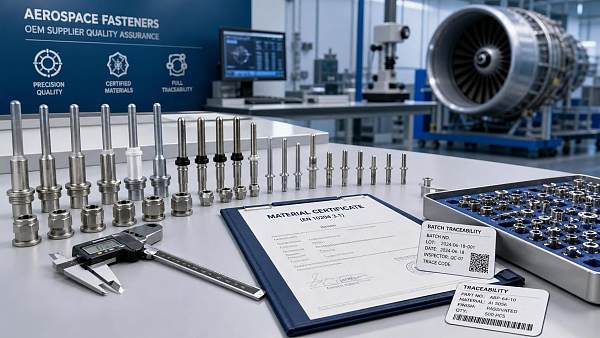
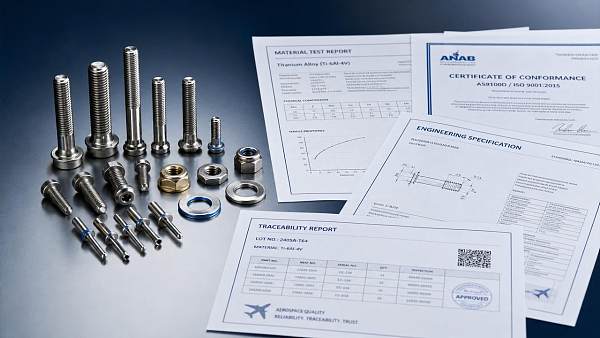
For Aerospace Fasteners, compliance does not stop at material chemistry. Procurement must verify that the delivered part aligns with the specified standards, process controls, and documentation package required by the program. Depending on the application, that may involve ISO, DIN, ASME, or aerospace-specific customer requirements, along with material certificates and process records.
- Material traceability by heat, lot, or batch should be reviewable and retained according to program needs.
- Special processes such as coating, passivation, heat treatment, or lubrication should be documented and controlled.
- Dimensional, mechanical, and surface integrity checks should match drawing and inspection requirements.
- Change control is essential; suppliers should not alter source material or process routes without formal notification where applicable.
For buyers working across global sites, consistency matters as much as compliance. G-ISC supports this by benchmarking hardware and sourcing decisions against recognized industrial standards and by integrating technical review with supply-chain intelligence, which is particularly useful when multiple plants or contractors rely on the same approved part family.
Common procurement mistakes that increase lifecycle cost
Most avoidable cost inflation in Aerospace Fasteners comes from decisions made early, often under schedule pressure. Procurement teams can reduce risk by recognizing patterns that look efficient at order placement but create friction later.
Frequent mistakes
- Approving a material substitute before engineering confirms torque, corrosion, and compatibility effects.
- Comparing supplier prices without separating metal cost, process cost, and certification cost.
- Ignoring single-source exposure for specialty alloys until replenishment lead times extend.
- Treating all stainless or alloy steels as equivalent despite major grade and finish differences.
- Failing to align spare parts strategy with maintenance interval data and fleet utilization patterns.
A disciplined sourcing review can prevent these issues. Instead of choosing only by price rank, buyers should score each option across technical suitability, compliance burden, lead time stability, and service-life expectations. That method creates a defendable procurement decision when programs face audits, warranty discussions, or redesign pressure.
FAQ: what buyers ask before placing Aerospace Fasteners orders
How should procurement compare titanium and stainless steel fasteners?
Start with application priorities. If weight, corrosion resistance, and long-term structural efficiency matter most, titanium often justifies its premium. If the assembly is less weight-sensitive and supply flexibility is critical, stainless steel may offer better commercial practicality. The key is to include assembly behavior, documentation burden, and replacement frequency in the comparison.
Are Aerospace Fasteners always worth buying at the highest specification available?
No. Over-specifying material can increase cost, extend lead times, narrow the supplier pool, and complicate quality control without proportional benefit. The right specification is the one that satisfies the operating environment, compliance requirement, and service-life target with controlled risk.
What should buyers ask suppliers about certification?
Ask for material traceability details, process records, inspection scope, shelf-life or storage conditions if relevant, and notification procedures for source or process changes. Also confirm whether the supplier can provide consistent documentation across repeat lots and across global delivery destinations.
How can buyers reduce supply risk for specialty material fasteners?
Use dual-source planning where technically feasible, monitor upstream raw material trends, define reorder points earlier, and evaluate whether alternate approved materials exist for less critical locations. Market intelligence is important here; a small signal in titanium or nickel availability can become a large delivery problem months later.
Why informed sourcing matters more in a fragmented global supply chain
Supply fragmentation has changed the way Aerospace Fasteners should be bought. Procurement teams now manage not only quality and cost, but also geopolitical exposure, regional processing constraints, logistics variability, and data consistency across suppliers. Material choice sits at the center of all of these issues because it determines which mills, processes, standards, and inventories are even available to the program.
G-ISC supports procurement decision-makers with a combination of engineering context and commercial intelligence. That means buyers can review more than a datasheet: they can assess standards alignment, cross-border trade developments, raw material price changes, and sourcing alternatives in one decision framework. In critical components, that integrated view often makes the difference between a stable supply plan and a reactive one.
Why choose us for Aerospace Fasteners sourcing decisions
If you are evaluating Aerospace Fasteners for a new program, a replacement cycle, or a cost-down initiative, we can help you move beyond quote comparison. G-ISC supports procurement teams with structured analysis across material selection, lifecycle cost, compliance checks, and supply continuity planning.
- Parameter confirmation: review operating environment, load profile, corrosion exposure, and adjacent material compatibility.
- Material selection support: compare titanium, stainless steel, alloy steel, and specialty options for cost and risk.
- Delivery planning: discuss lead times, approved source options, buffer strategies, and regional supply constraints.
- Certification review: clarify documentation expectations, traceability needs, and process control checkpoints.
- Quotation communication: align pricing with raw material exposure, lot size, and total ownership impact rather than unit price alone.
Contact us to discuss your application, target cost, required standards, sample support needs, and delivery schedule. A focused review at the sourcing stage can help prevent unnecessary qualification delays, maintenance cost escalation, and future supply disruption.
Recommended News
 Oct 12, 2026How to Specify Low-VOC Fastener Coatings for Corrosion Protection and ComplianceLow VOC fastener coating specification guide: balance corrosion resistance, torque control, VOC compliance, and supplier validation for reliable assemblies.● Dr. Aris Alloy
 Oct 08, 2026Selecting Precision Fasteners for Semiconductor Equipment Vacuum and Cleanroom ServicePrecision Fasteners for semiconductor equipment: learn how to select vacuum- and cleanroom-ready hardware for reliable preload, low contamination, and long-term serviceability.● Dr. Aris Alloy
 Oct 04, 2026Selecting Stainless Micro Screws for Corrosion Resistance and Precision AssemblyStainless micro screws guide: choose corrosion-resistant alloys, precision threads, and reliable drive designs for demanding assemblies. Explore key selection tips.● Dr. Aris Alloy
 Oct 04, 2026How Do You Verify Precision Fastener Tolerances From a Datasheet?How do I verify precision fastener tolerances from a datasheet? Learn the key checks for thread class, dimensions, coatings, materials, and inspection methods.● Dr. Aris Alloy
 Sep 15, 2026Selecting Threaded Rods for Construction: Load, Corrosion, and Code RequirementsThreaded rods for construction: learn how to match load paths, corrosion protection, installation details, and code requirements for safer, compliant connections.● Dr. Aris Alloy
 Aug 16, 2026What Makes a High Strength Alloy Suitable for Aerospace Parts?High strength alloy for aerospace selection depends on more than tensile strength. Learn how fatigue, corrosion, heat, and manufacturability determine safer, lighter parts.● Dr. Aris Alloy
 Jul 26, 2026How Strong Are 3D Printed Fasteners in Load-Bearing Assemblies?3d printed fastener strength explained for load-bearing assemblies: learn where printed bolts work, where they fail, and how to choose safer, smarter fastening options.● Dr. Aris Alloy
 Jul 22, 2026How to Evaluate a Blind Bolt Custom OEM Partner for Aerospace Fastener ProjectsBlind bolt custom OEM sourcing for aerospace demands more than price. Learn how to assess quality systems, material traceability, engineering support, and supply stability before choosing a partner.● Dr. Aris Alloy
 Jul 18, 2026Salt Spray Hours for Fasteners: How to Compare Coatings and Corrosion ResistanceSalt spray hours fasteners explained: compare coatings, test limits, and real corrosion resistance to choose the right finish for longer service life and smarter sourcing.● Dr. Aris Alloy
 Jul 15, 2026Precision Fasteners Cost Factors: Materials, Tolerances, Finishes, and Order VolumePrecision Fasteners cost factors explained: compare materials, tolerances, finishes, and order volume to reduce sourcing risk, control total cost, and make smarter buying decisions.● Dr. Aris Alloy
 Jul 14, 2026How to Read a Titanium Alloy Weight Chart for Fastener and Aerospace Part SelectionTitanium alloy weight chart guide for fastener and aerospace part selection. Learn how to compare grade, density, dimensions, and standards to reduce sourcing risk.● Dr. Aris Alloy
 Jul 12, 2026How to Read Fastener Vibration Test Data for Joint Reliability DecisionsFastener vibration test data explained for smarter joint reliability decisions. Learn how to assess preload loss, residual clamp load, and test validity before sourcing or design approval.● Dr. Aris Alloy
 Jul 09, 2026Fastener Coating Cost Breakdown: What Changes Price by Material, Finish, and VolumeFastener coating cost explained: see how material, finish, volume, geometry, and compliance affect pricing, and learn how to compare quotes smarter while controlling total sourcing cost.● Dr. Aris Alloy
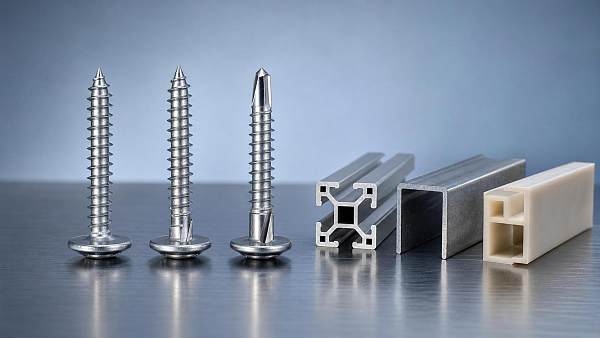
 Jul 06, 2026Self Tapping Industrial Screws: Types, Materials, and When to Use EachSelf tapping Industrial Screws guide: compare thread-forming, thread-cutting, and self-drilling types, materials, and best-use scenarios to choose faster, stronger, more reliable assemblies.● Dr. Aris Alloy
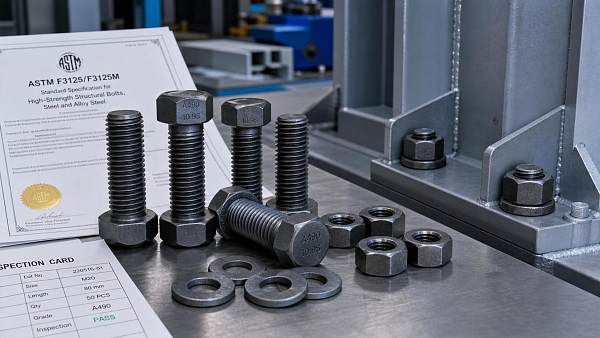
 Jul 05, 2026High-Tensile Bolts ASTM: How to Read Grades, Strength Classes, and Spec RequirementsHigh-Tensile Bolts ASTM guide: learn how to read grades, strength classes, specs, markings, and certificates to avoid sourcing mistakes and choose compliant bolts with confidence.● Dr. Aris Alloy
 Jul 04, 2026Stainless Automotive Fasteners Manufacturer: What Certifications and Materials Matter Most?Stainless automotive fasteners manufacturer selection starts with certifications, traceability, and the right alloys. Learn what matters most for reliable, compliant sourcing.● Dr. Aris Alloy
 Jul 03, 2026Fastener Price Trend 2026: What Steel Costs, Freight, and Demand Mean for BuyersFastener price trend 2026 explained: see how steel costs, freight volatility, and uneven demand may affect budgets, lead times, and sourcing decisions—so buyers can plan smarter.● Dr. Aris Alloy
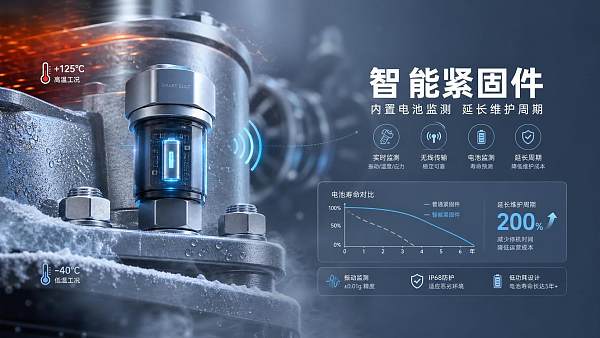
 Jul 02, 2026Why Smart Fastener Battery Life Drops Early and How to Extend Service IntervalsSmart fastener battery life dropping too soon? Learn the real causes behind early drain and discover practical ways to extend service intervals without sacrificing monitoring accuracy.● Dr. Aris Alloy
 Jun 28, 2026Marine Grade Stainless Corrosion: What Causes It and How to Prevent Tea StainingMarine grade stainless corrosion often starts with tea staining. Learn the real causes, high-risk environments, and practical prevention steps to protect performance and cut lifecycle costs.● Dr. Aris Alloy
 Jun 26, 2026How to Choose Vibration-Resistant Fasteners for Aerospace AssembliesVibration-Resistant Fasteners for aerospace help protect critical assemblies from loosening, corrosion, and fatigue. Learn how to choose the right solution for safer, longer-lasting performance.● Dr. Aris Alloy
 Jun 23, 2026Fastener Hardness Explained: When to Use Rockwell vs Vickers TestingFastener hardness (Rockwell/Vickers) explained: learn when to use Rockwell for fast production checks and Vickers for precise surface analysis to improve quality, compliance, and reliability.● Dr. Aris Alloy
 Jun 15, 2026Wholesale Aerospace Fasteners: Specs, Materials, and Certifications Buyers Should CheckWholesale aerospace fasteners buyers should verify specs, material traceability, and certifications before ordering. Learn the key checks to reduce risk and source with confidence.● Dr. Aris Alloy
 Jun 07, 2026Instrument Cases Buying Guide: Hard vs Soft Cases, Protection Ratings, and FitInstrument cases buying guide: compare hard vs soft cases, understand IP protection ratings, and choose the right fit to protect sensitive equipment, reduce downtime, and buy with confidence.● Dr. Aris Alloy
 Jun 06, 2026How Global Construction Fastener Tenders Work: Bid Requirements, Specs, and Common RisksGlobal construction fastener tenders explained: learn bid requirements, key specs, compliance checks, and common risks to improve tender decisions and avoid costly project delays.● Dr. Aris Alloy