Hot Articles
Popular Tags
Fluid Power vs Electric Actuation in Heavy Equipment
In heavy equipment, the choice between Fluid Power and electric actuation shapes uptime, force density, maintenance strategy, and total lifecycle cost. For procurement teams and technical researchers, understanding where hydraulic systems outperform electric solutions—and where electrification delivers measurable gains—is essential for smarter specification and sourcing. This article compares both actuation methods through an engineering, reliability, and supply-chain lens.
What does Fluid Power mean in heavy equipment, and why is it still widely used?
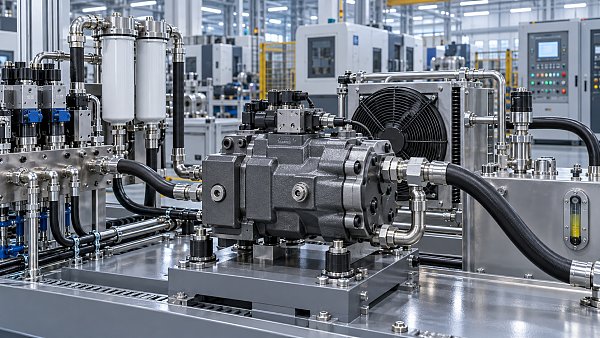
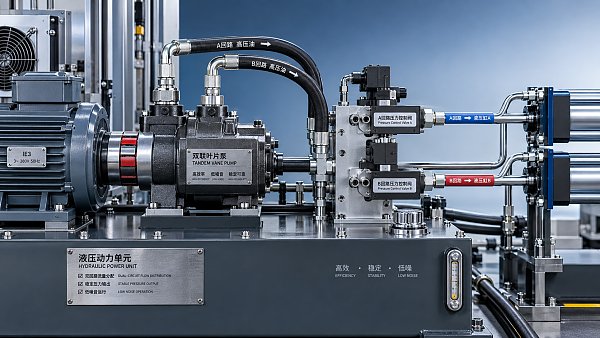
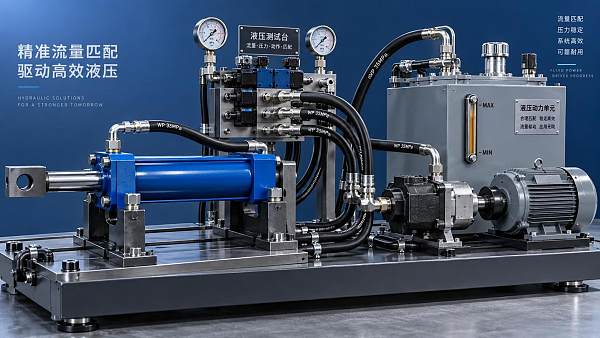
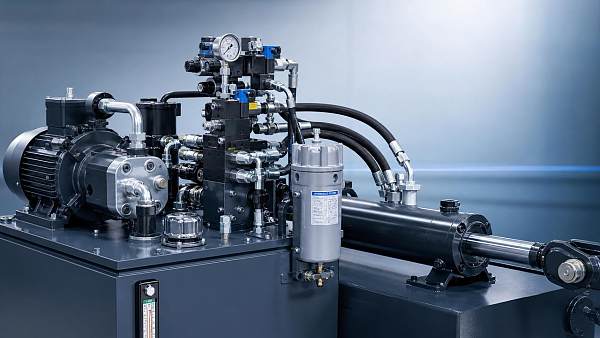
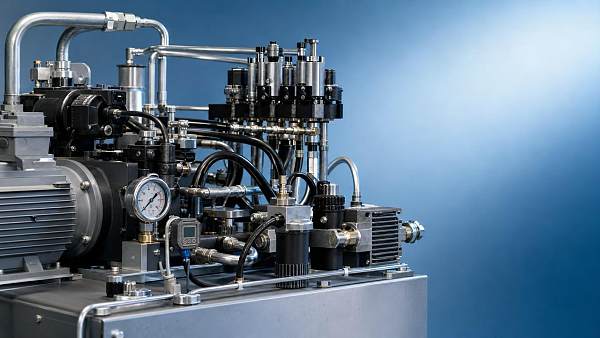
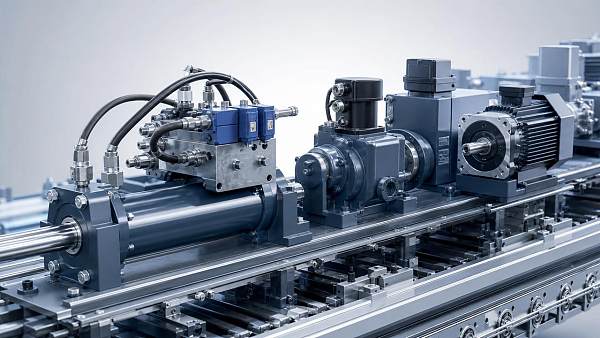
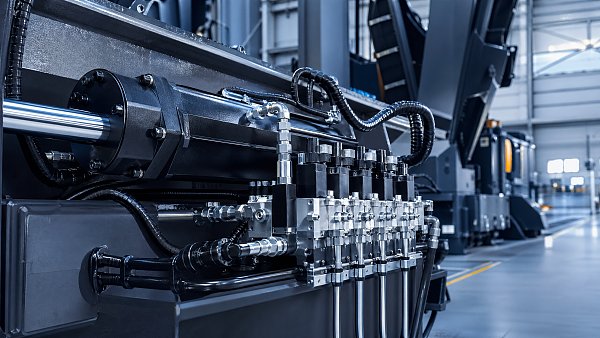
Fluid Power refers to the transmission and control of energy through pressurized liquids or gases, although in heavy equipment the discussion usually centers on hydraulic systems. Excavators, loaders, mining shovels, mobile cranes, press machines, and forestry equipment continue to rely on hydraulics because Fluid Power delivers very high force in compact packages. That combination of force density and rugged controllability is difficult to replicate with purely electric linear actuation at the same scale.
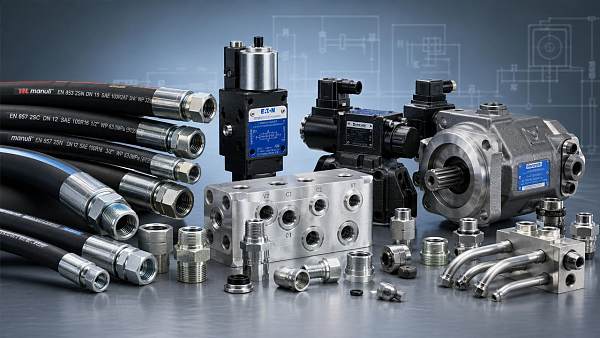
The reason this topic remains important is simple: heavy-duty applications rarely operate under ideal laboratory conditions. They face shock loads, contamination, vibration, weather swings, and long duty cycles. In such environments, hydraulic cylinders, pumps, manifolds, hoses, and valves often provide a proven path to dependable motion. For decision-makers, Fluid Power is not just a legacy technology; it is a practical engineering answer to real-world mechanical demands.
That said, the market is changing. Electrification, tighter energy rules, and digital diagnostics are pushing engineers to revisit old assumptions. In many cases, the right answer is no longer “all hydraulic” or “all electric,” but a specification based on load profile, control precision, serviceability, and infrastructure constraints.
How does Fluid Power compare with electric actuation in force, precision, and duty cycle?
This is often the first question procurement researchers ask, because performance differences drive every downstream decision. In broad terms, Fluid Power excels in high-force, high-shock, and continuous-duty tasks. Electric actuation often performs best where positioning precision, cleaner operation, lower noise, and easier system integration matter more than raw force.
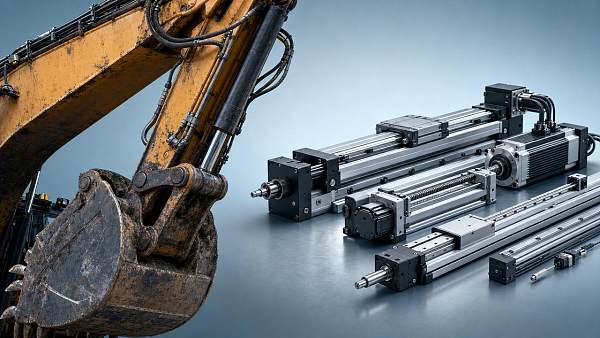
Hydraulics generate large linear forces without oversized actuators. For lifting, pressing, digging, clamping, and steering under variable loads, that matters. Pressure can be multiplied efficiently, and overload management is often more forgiving. Electric systems, by contrast, depend on motors, gears, screws, or roller mechanisms, and these components may become large, thermally constrained, or mechanically stressed when very high loads are involved.
However, electric actuation has a clear advantage in repeatable positioning and digital control simplicity. Servo motors and integrated drives can offer excellent motion profiling, closed-loop synchronization, and clean data visibility. While modern electro-hydraulic systems also deliver impressive precision, achieving that level of control may require higher system complexity and tuning expertise.
Which applications favor Fluid Power, and where does electric actuation make more sense?
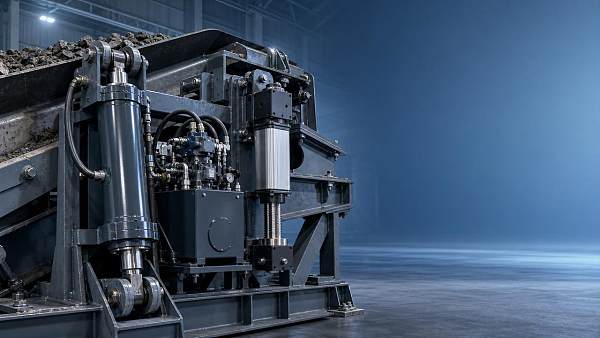
If the application involves digging, lifting, tilting, pressing, or load-holding under harsh conditions, Fluid Power usually remains the front-runner. Construction and mining machines are classic examples because they demand compact power delivery, reliable stall behavior, and tolerance for impact and contamination. Mobile and off-highway platforms also benefit from hydraulic architectures that are already deeply standardized across fleets and service networks.
Electric actuation is often better suited to enclosed industrial environments where motion is more repetitive, cleanliness is critical, and the force requirement is moderate relative to the required precision. Automated tooling, packaging subassemblies, robotic transfer systems, and some material handling functions fit this pattern well. In these settings, an electric solution may reduce leakage risk, simplify energy management during idle time, and improve control responsiveness.
Hybridization is becoming increasingly relevant. For instance, a machine may retain Fluid Power for boom lift or bucket force while converting auxiliary motions to electric drives. This selective approach can reduce energy waste without sacrificing heavy-duty performance. For technical sourcing teams, that means the comparison is not always binary. The better question is often: which motion axis should remain hydraulic, and which can be electrified without creating new operational risks?
What should buyers compare beyond purchase price?
A common mistake is comparing only actuator cost. In heavy equipment, total cost of ownership includes power unit design, controls, sensors, thermal management, maintenance labor, seal replacement, spare parts availability, downtime exposure, and operator familiarity. Fluid Power may appear more complex due to hoses, reservoirs, and valves, yet the installed base and field service maturity can offset those concerns. Electric systems may reduce some maintenance categories, but replacement cost for motors, gearboxes, and high-load screw mechanisms can be substantial.
Energy efficiency should also be evaluated carefully. Electric actuation is frequently presented as automatically more efficient, but that is only true in the right duty cycle. If the application requires intermittent motion with long idle periods, electric systems can be highly efficient because they consume little energy when stopped. If the application demands sustained high force, repeated shock handling, or simultaneous multi-axis work, a well-designed hydraulic system may still offer competitive overall productivity relative to its installed cost.
Supply-chain resilience matters as much as performance. Heavy equipment programs depend on predictable access to pumps, cylinders, servo motors, inverters, seals, bearings, valves, and electronic controls. Lead-time volatility in one critical component can delay production or service support. In strategic sourcing research, it can be useful to benchmark component families, approved standards, and regional service capabilities—even when evaluating a placeholder offer such as 无—because the long-term support model often outweighs the initial quotation.
Are maintenance and reliability really better with electric systems?
Not always. Electric actuation is often perceived as lower maintenance because it avoids hydraulic fluid handling and leak management. In clean factory settings, that perception may be justified. But heavy equipment introduces dust, moisture, thermal cycling, shock, and variable loads that can accelerate wear in electromechanical transmissions. A ball screw or gearbox operating near its mechanical limits may require disciplined monitoring, alignment control, and replacement planning.
Fluid Power, on the other hand, requires attention to fluid cleanliness, seals, filtration, hose condition, and pressure integrity. Those are real maintenance burdens, but they are well understood by most heavy-equipment service organizations. Many field technicians are more prepared to diagnose a leaking cylinder or contaminated valve than an intermittent drive fault or encoder-related positioning issue in a remote environment.
Reliability therefore depends less on technology labels and more on fit-for-duty engineering. A hydraulic system designed with correct filtration, seal material selection, and pressure margins can deliver long service life. An electric actuator sized conservatively, sealed properly, and protected from overload can do the same. Buyers should ask not “Which technology is maintenance-free?” but “Which architecture is easier for our operating environment and maintenance culture to support?”
What are the most common mistakes when comparing Fluid Power and electric actuation?
The first mistake is evaluating peak force without studying the full duty cycle. Some electric solutions can achieve high peak numbers briefly, but repeated loading, stall conditions, or thermal buildup may change the real capability. The second mistake is ignoring load-holding behavior. Hydraulics often handle suspended or resisting loads naturally with the right valve design, while electric systems may require brakes, redundant controls, or power-loss safeguards.
Another frequent error is underestimating environmental exposure. A machine deployed in mining, port operations, or outdoor civil works may face conditions very different from a controlled industrial line. In such cases, Fluid Power can remain the safer choice not because it is newer or older, but because it is more tolerant of contamination and abuse at the system level.
A fourth mistake is treating digitalization as exclusive to electric systems. Modern Fluid Power platforms can integrate sensors, pressure feedback, predictive maintenance logic, and networked control architectures. Electro-hydraulic intelligence is expanding quickly, and buyers who assume hydraulics cannot support Industry 4.0 goals may miss highly effective solutions.
How can procurement and research teams make a sound decision?
A practical decision process starts with five screening questions. What is the real load profile, including peak, continuous, and shock conditions? How critical is precision versus brute force? What environmental risks will the actuator face? What maintenance capabilities exist in the target region? And how stable is the supply chain for the required components over the asset life?
From there, teams should compare both architectures using the same decision framework rather than vendor marketing language. That means reviewing energy use by duty cycle, expected wear points, control requirements, failure modes, service intervals, spare-part commonality, and compliance with applicable standards such as ISO, DIN, ASME, or relevant electrical protection requirements. If available, field data from similar equipment classes is more valuable than generic brochure claims.
It is also wise to validate how each option affects the wider machine ecosystem. A change from Fluid Power to electric actuation may alter battery size, wiring architecture, software complexity, thermal design, or emergency stop strategy. Conversely, staying hydraulic may preserve interchangeability and technician familiarity while limiting some efficiency gains. Even when reviewing a broad market reference like 无, the key is to assess system consequences, not isolated part specifications.
Quick FAQ summary for researchers
What is the clearest takeaway for heavy-equipment specification?
The most useful conclusion is that Fluid Power and electric actuation solve different problems well. Fluid Power remains the benchmark for compact high-force output, shock tolerance, and proven field durability in demanding heavy-equipment roles. Electric actuation brings strong advantages in precision, controllability, cleanliness, and certain energy-use profiles. Neither technology is universally superior; the winning choice depends on load case, environment, service model, and lifecycle economics.
For information researchers, the best next step is to organize internal discussions around application-specific questions: actual force requirements, motion frequency, exposure conditions, acceptable downtime, digital control needs, and global component availability. If further confirmation is needed on exact configuration, parameters, project timeline, budget range, or sourcing approach, those are the first issues to clarify before moving into supplier comparison or technical approval.
Recommended News
 Oct 14, 2026What is driving replacement demand in the piston pumps market?Piston pumps market replacement demand is rising as aging hydraulic systems face efficiency losses, automation needs, contamination risks, and costly downtime. Explore key drivers.● Marcus Valve
 Sep 24, 2026How to Read an NPSH Chart to Prevent Pump Cavitation in Process SystemsPump cavitation NPSH chart guide: learn to compare NPSHa and NPSHr across real operating conditions, prevent costly cavitation, and select safer process pump solutions.● Marcus Valve
 Sep 23, 2026Double Vane Pump Selection: Flow, Pressure, and Noise Factors for Hydraulic SystemsDouble vane pump selection made simple: compare flow, pressure, noise, inlet conditions, and duty cycles to improve hydraulic reliability and performance.● Marcus Valve
 Sep 10, 2026How to Calculate Hydraulic System Flow Rate for Cylinder Speed and Pump SizingHydraulic system flow rate calculation made practical: size pumps from cylinder speed, bore and rod area, efficiency, pressure, and real-world duty-cycle demands.● Marcus Valve
 Sep 07, 2026How to Evaluate Quiet Hydraulic Pump Suppliers for Low-Noise Industrial SystemsQuiet hydraulic pump suppliers: learn how to compare acoustic test data, pressure stability, production quality, and lifecycle support for reliable low-noise industrial systems.● Marcus Valve
 Aug 30, 2026Hydraulic Contamination Monitoring: Which Sensors Detect Wear Before Failure?Hydraulic contamination monitoring: discover which particle, ferrous debris, moisture, dielectric, and filter sensors detect wear early to prevent costly hydraulic failures.● Marcus Valve
 Jul 04, 2026Piston Pump Cavitation NPSH Explained: How to Diagnose Noise, Damage, and Flow LossPiston pump cavitation NPSH explained clearly: learn how to spot noise, pitting, and flow loss early, diagnose root causes fast, and prevent costly hydraulic downtime.● Marcus Valve
 Jun 29, 2026Hydraulic Pump Noise Standards Explained: Test Methods, dB Limits, and Compliance BasicsHydraulic pump noise standards explained in clear terms—learn test methods, dB limits, and compliance basics to compare pumps accurately, reduce risk, and make smarter sourcing decisions.● Marcus Valve
 Jun 21, 2026How to Evaluate a Piston Pump Manufacturer for Pressure Rating, Materials, and Lead TimePiston pump manufacturer selection starts with proven pressure ratings, material compatibility, and reliable lead times. Learn how to compare suppliers with less risk and better long-term value.● Marcus Valve
 Jun 18, 2026Gear Pump Wholesale Pricing Explained: What Affects MOQ, Materials, and Lead Time?Gear pump wholesale pricing explained: learn how MOQ, materials, machining precision, testing, and lead time affect total cost, supplier risk, and smarter sourcing decisions.● Marcus Valve
 May 28, 2026What Fluid Power data matters most when comparing pumps?Fluid Power pump comparison goes beyond pressure and flow. Learn which data truly matters—efficiency, contamination tolerance, heat, noise, and reliability—to cut downtime and lifecycle cost.● Marcus Valve
 May 23, 2026What should you verify before choosing a Fluid Power system?Fluid Power system selection starts with verification. Learn what to check for load, pressure, fluid compatibility, temperature, and support to avoid downtime and choose with confidence.● Marcus Valve
 May 22, 2026What fluid power issues cause the most downtime?Fluid Power downtime often starts with contamination, pressure loss, overheating, and seal failure. Learn the top causes, compare risks, and improve system reliability faster.● Marcus Valve
 May 21, 2026What makes Fluid Power a better fit than electric drive?Fluid Power often outperforms electric drive in high-force, shock-heavy, and safety-critical applications. Discover why it delivers better uptime, durability, and load control.● Marcus Valve
 May 20, 2026How Fluid Power compares with electric drive on costFluid Power cost vs electric drive: compare upfront investment, energy use, maintenance, and TCO to choose the most cost-effective motion solution for your operation.● Marcus Valve
 May 19, 2026What fluid power mistakes drive up downtime most?Fluid Power downtime often starts with small mistakes. Learn how contamination, pressure settings, component selection, and maintenance planning drive costly stops—and how to prevent them.● Marcus Valve
 May 18, 2026How fluid power choices affect uptime and repair costsFluid Power choices directly impact uptime and repair costs. Discover a practical checklist to reduce failures, improve reliability, and lower lifecycle maintenance expenses.● Marcus Valve
 May 17, 2026What Fluid Power Mistakes Still Drive Up Energy Use?Fluid Power mistakes still inflate energy use through oversizing, throttling, leakage, and poor maintenance. Discover practical fixes to cut costs, boost reliability, and improve hydraulic efficiency.● Marcus Valve
 May 16, 2026What Fluid Power buyers should compare before quotingFluid Power buyers should compare pressure ratings, seal compatibility, material traceability, lead times, and supplier support before quoting to reduce risk, control lifecycle cost, and improve uptime.● Marcus Valve
 May 14, 2026Fluid Power vs Electric Actuation in Harsh Duty CyclesFluid Power vs electric actuation in harsh duty cycles: compare shock resistance, force density, contamination tolerance, and lifecycle cost to choose the most reliable solution.● Marcus Valve
 May 13, 2026Fluid Power vs electric actuators in heavy-duty linesFluid Power vs electric actuators: discover which solution delivers better force, uptime, precision, and lifecycle value in heavy-duty lines before you decide.● Marcus Valve
 May 07, 2026Fluid Power vs Electric Actuation in Heavy EquipmentFluid Power vs electric actuation in heavy equipment: compare force density, precision, maintenance, and lifecycle cost to choose the smartest, most reliable solution.● Marcus Valve
 May 03, 2026What makes advanced hydraulic technology pay off faster?Advanced Hydraulic technology drives faster Operational Uptime improvement through Total Reliability standards, smarter sourcing, and predictive supply chain case studies in manufacturing.● Marcus Valve
![]() May 01, 2026Critical Components That Quietly Raise Downtime RiskCritical Components for industrial applications drive hidden downtime risk. Learn how Total Reliability certification and Supply-Chain Orchestration for manufacturing improve uptime.● Marcus Valve
May 01, 2026Critical Components That Quietly Raise Downtime RiskCritical Components for industrial applications drive hidden downtime risk. Learn how Total Reliability certification and Supply-Chain Orchestration for manufacturing improve uptime.● Marcus Valve