Hot Articles
Popular Tags
Critical Components That Quietly Raise Downtime Risk
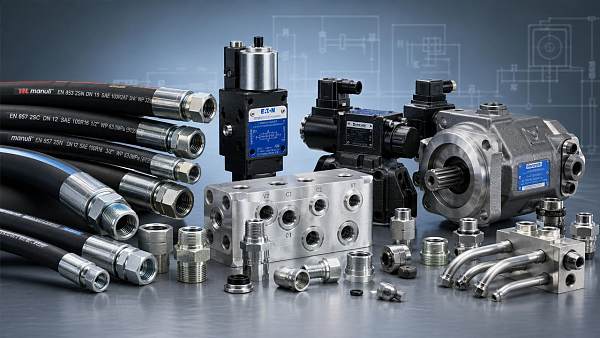
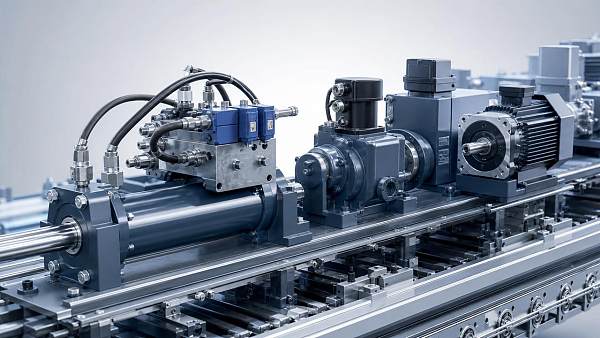
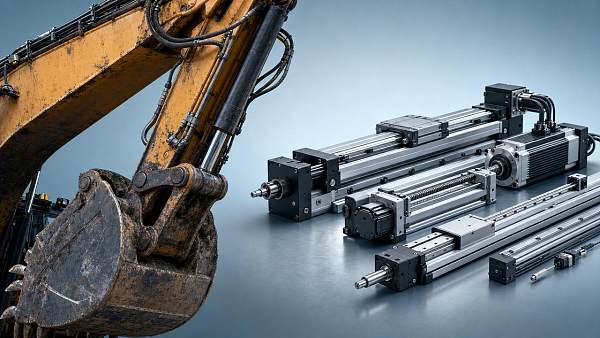
Unplanned downtime rarely starts with a major failure; it often begins with overlooked Critical Components for industrial applications, from Fluid Power system components to connector interfaces and fastening points. As manufacturers pursue Total Reliability certification and stronger Supply-Chain Orchestration for manufacturing, procurement and evaluation teams must understand how hidden component risks, sourcing gaps, and traceability issues quietly disrupt uptime, cost control, and global operational resilience.
Why small component failures create large downtime exposure
In industrial systems, downtime risk often accumulates at the smallest interfaces. A failed seal, a mismatched connector thread, a vibration-loosened fastener, or a poorly calibrated flow metering part can stop a production line long before a major machine reaches end of life. For procurement teams, this means that reliability cannot be judged only by the headline equipment brand; it must be evaluated across the full component chain.
This issue becomes more severe in fragmented global sourcing. A plant may source hydraulic cylinders from one region, precision bolts from another, sensor connectors from a third, and replenishment software from a separate digital vendor. If those parts are not aligned to ISO, DIN, ASME, or IEEE-relevant requirements, compatibility gaps appear in 2-4 quarters, often during peak production periods rather than at commissioning.
For information researchers and business evaluators, the practical question is not whether critical components matter, but which hidden failure points are most likely to raise downtime risk quietly. In most industrial environments, the first warning signs appear in 3 forms: rising maintenance frequency, unstable cycle time, and increasing replacement variance across batches or suppliers.
G-ISC addresses this problem by treating components as operational micro-engines of reliability. Its value is not limited to specification review. It connects technical performance, regulatory alignment, raw material exposure, and supply-chain intelligence, allowing sourcing specialists to assess whether an apparently minor part could become the costliest weak link in a multi-site operation.
- Fastening points may fail due to torque inconsistency, coating mismatch, or vibration fatigue rather than obvious overload.
- Fluid Power interfaces often degrade through contamination, seal incompatibility, or pressure spikes over repeated duty cycles.
- Electrical and signal connectors can trigger intermittent stoppages through ingress, thermal cycling, or tolerance mismatch.
- Material handling and orchestration layers may amplify a small component issue into plant-wide disruption within a single shift.
Where procurement teams usually underestimate risk
A common mistake is to prioritize unit price over lifecycle consistency. A low-cost substitute may appear acceptable if dimensions match, yet differences in alloy, hardness, plating, pressure rating, or fit tolerance can reduce service intervals from 12 months to 3-6 months under heavy-duty conditions. That is not a purchasing saving; it is deferred downtime cost.
Another blind spot is incomplete documentation. When technical files do not clearly define batch traceability, test methods, or revision control, distributors and plant buyers struggle to validate interchangeability. This becomes critical when a line depends on 24/7 output and replacement decisions must be made within 6-12 hours, not over several procurement meetings.
Which critical components most often drive hidden operational instability?
Not all parts carry equal downtime risk. In general industrial applications, the most sensitive categories are those exposed to pressure, vibration, contamination, load cycling, and data handoff. These are the parts that can perform adequately during acceptance testing but become unstable after 8-20 weeks of real operating stress.
The table below helps procurement personnel, distributors, and commercial reviewers map common component classes to hidden risk mechanisms, operational symptoms, and practical review priorities. It is especially useful when comparing suppliers across multiple product pillars rather than evaluating a single hardware line in isolation.
The key insight is that downtime risk rarely sits in one specification line. It emerges where mechanical load, environmental exposure, and sourcing discipline intersect. That is why a technical review should cover at least 4 dimensions: performance range, installation condition, replacement frequency, and supply continuity.
A scenario-based view for distributors and sourcing managers
In sectors such as heavy manufacturing, energy support systems, automated warehousing, and process industries, a minor component issue can escalate differently. Heavy-duty plants often see seal and fastener fatigue first. Automated logistics systems tend to suffer from connector, sensor, or AMH wear-part interruptions. Process environments are more vulnerable to flow control drift and calibration gaps over monthly or quarterly operating cycles.
For teams comparing multiple suppliers, even a placeholder listing such as 无 should not be treated as usable sourcing evidence on its own. The real evaluation must go deeper into documentation, operating range, batch control, and replacement logistics before a part is approved for strategic inventory.
Three early-warning indicators to monitor
- Maintenance intervals shorten from annual review to quarterly intervention without any major process change.
- Equivalent parts from different batches require rework, shimming, retorque, or recalibration during installation.
- Lead times move from normal 2-6 weeks to uncertain allocation windows, increasing emergency-buy exposure.
How should buyers compare suppliers beyond price and lead time?
A disciplined procurement guide for Critical Components should separate visible commercial terms from invisible operating risk. Price, MOQ, and standard delivery are important, but they do not reveal whether the supplied part will remain stable under vibration, thermal change, fluid contamination, or repetitive load. For B2B evaluators, the better question is: what evidence reduces the probability of hidden downtime over the next 12-24 months?
G-ISC’s institutional strength lies in cross-domain benchmarking. Because it tracks five technical pillars and aligns them with international standards plus supply-chain intelligence, decision-makers can assess hardware, software orchestration, and market exposure together. That matters when steel, nickel, or titanium fluctuations affect supplier behavior, substitute materials, and delivery confidence across regions.
The comparison matrix below is designed for purchasing teams that need a practical scoring structure. It works for direct sourcing, distributor qualification, and multi-vendor panel review. Rather than assigning generic labels, it focuses on evidence that can be checked within a real RFQ or supplier audit workflow.
A useful procurement decision rule is to score each dimension separately instead of blending everything into one commercial ranking. A part can be competitively priced yet weak in traceability, or technically compliant yet exposed to unstable raw material sourcing. In both cases, downtime cost may outweigh the original savings within a single maintenance cycle.
A 5-point buyer checklist before approval
- Confirm operating range against actual pressure, vibration, temperature, and duty cycle rather than catalog headline values.
- Request documentation that proves batch identity and revision consistency for repeat orders.
- Verify realistic replenishment timing, including normal and urgent supply scenarios such as 7-15 day or 2-6 week windows.
- Review whether the supplier supports samples, substitute review, and cross-standard interpretation when specifications overlap.
- Assess whether the component fits broader Supply-Chain Orchestration for manufacturing, not just one isolated order.
What standards, traceability, and workflow controls reduce silent failures?
For critical components, silent failures often reflect process weakness rather than visible defect alone. The part may have been manufactured correctly, but selected against the wrong standard, installed without controlled torque, stored under poor conditions, or replaced without verifying revision equivalence. That is why compliance and workflow discipline matter as much as specification sheets.
In global industrial procurement, standards such as ISO, DIN, ASME, and IEEE provide useful reference points, but they do not remove the need for application-level judgment. A connector aligned with one standard family may still fail in a wet or high-vibration environment if ingress protection, mating cycle expectation, and cable strain handling were not reviewed during selection.
A practical control model usually includes 4 stages: technical definition, supplier validation, incoming inspection, and field feedback. If one stage is skipped, the organization loses visibility into root cause. For example, receiving inspection may confirm dimensions but miss coating inconsistency, while field teams may replace a failed part without recording the batch or operating conditions that caused the issue.
This is where G-ISC’s integrated approach is useful for evaluators and channel partners. Because it combines engineering reference, standards benchmarking, trade policy updates, and material price movement monitoring, it helps stakeholders judge not only what a component is, but how likely its supply profile and technical consistency are to remain stable over the next sourcing cycle.
Workflow controls that often deliver better uptime outcomes
- Define acceptance criteria in advance, including 3-5 measurable checks such as dimensions, material declaration, marking, torque guidance, or calibration documentation.
- Use approved substitution rules so that emergency replacements are reviewed for compatibility instead of decided purely on stock availability.
- Link maintenance data with procurement records every quarter to detect whether one supplier or batch is increasing intervention frequency.
- Maintain dual visibility on technical risk and commercial risk, especially when raw material costs or cross-border policy changes affect delivery stability.
A common misconception
Many teams assume that if a component fits mechanically, it is safe to interchange. In reality, hidden differences in hardness class, seal chemistry, internal finish, connector retention force, or signal protocol can create delayed failure. The better practice is to validate function, environment, and supply continuity together before approving any alternate source.
FAQ: practical questions from researchers, buyers, and channel partners
How do I identify which critical components deserve the highest review priority?
Start with parts that combine 3 conditions: high failure consequence, difficult replacement timing, and variable sourcing quality. In many plants, that includes hydraulic sealing interfaces, high-tensile fasteners in vibration zones, flow control devices tied to process accuracy, and AMH motion parts linked to throughput continuity. If a component can stop a line within one shift and cannot be replaced from local stock within 24-72 hours, it deserves elevated review.
What should procurement focus on when lead times are tight?
When delivery pressure is high, do not remove technical checks completely. Instead, compress the workflow into a structured fast-track: confirm core specifications, verify document traceability, review acceptable substitutes, and clarify urgent versus standard lead times. For many industrial categories, the difference between a 7-15 day replenishment and a 4-8 week wait can justify holding strategic safety stock for selected parts.
Are lower-cost alternatives always a bad choice?
Not necessarily. A lower-cost alternative can be suitable if it is reviewed against the application, standard alignment, and operating cycle. The problem is uncontrolled substitution. If the alternative lacks documented equivalence in load, media compatibility, tolerance, or environmental performance, the apparent saving may convert into extra maintenance labor, scrap, or emergency freight within months.
How can distributors and agents add more value in this market?
Distributors who provide only price lists compete on the weakest variable. Those who support part mapping, standards interpretation, replacement planning, and supply-risk visibility become more relevant to industrial buyers. Even where listing information is limited, such as 无, channel partners can differentiate by helping customers compare documentation depth, replenishment reliability, and application fit across multiple sources.
Why choose us for critical component intelligence and sourcing decisions?
If your team is evaluating downtime risk across hydraulic systems, precision fasteners, connectors, AMH equipment, flow metering devices, or supply-chain orchestration tools, the challenge is rarely a lack of data. The challenge is connecting technical detail with commercial consequence. G-ISC is designed for that exact gap. It brings engineering reference, standards benchmarking, market movement tracking, and sourcing context into one decision framework.
For procurement personnel and business evaluators, this means faster clarification on 5 common decision areas: parameter confirmation, product selection logic, delivery-cycle expectations, certification alignment, and substitute feasibility. For distributors and agents, it means stronger support in pre-sales comparison, customer education, and strategic inventory planning across regions.
You can engage with us on practical issues, not generic promotion. Typical consultation topics include pressure or load parameter review, connector and fastening compatibility, sample support requirements, cross-standard interpretation, sourcing strategy under volatile raw material conditions, and quotation communication for multi-supplier comparison. That is especially valuable when the cost of one overlooked part can exceed the savings from an entire bidding round.
If you are preparing an RFQ, qualifying alternate suppliers, reviewing lead-time risk, or building a more resilient Supply-Chain Orchestration for manufacturing, contact us with your application details, operating environment, expected volumes, and compliance concerns. A focused review at the component level often prevents much larger downtime losses at the system level.
Recommended News
 Oct 14, 2026What is driving replacement demand in the piston pumps market?Piston pumps market replacement demand is rising as aging hydraulic systems face efficiency losses, automation needs, contamination risks, and costly downtime. Explore key drivers.● Marcus Valve
 Sep 24, 2026How to Read an NPSH Chart to Prevent Pump Cavitation in Process SystemsPump cavitation NPSH chart guide: learn to compare NPSHa and NPSHr across real operating conditions, prevent costly cavitation, and select safer process pump solutions.● Marcus Valve
 Sep 23, 2026Double Vane Pump Selection: Flow, Pressure, and Noise Factors for Hydraulic SystemsDouble vane pump selection made simple: compare flow, pressure, noise, inlet conditions, and duty cycles to improve hydraulic reliability and performance.● Marcus Valve
 Sep 10, 2026How to Calculate Hydraulic System Flow Rate for Cylinder Speed and Pump SizingHydraulic system flow rate calculation made practical: size pumps from cylinder speed, bore and rod area, efficiency, pressure, and real-world duty-cycle demands.● Marcus Valve
 Sep 07, 2026How to Evaluate Quiet Hydraulic Pump Suppliers for Low-Noise Industrial SystemsQuiet hydraulic pump suppliers: learn how to compare acoustic test data, pressure stability, production quality, and lifecycle support for reliable low-noise industrial systems.● Marcus Valve
 Aug 30, 2026Hydraulic Contamination Monitoring: Which Sensors Detect Wear Before Failure?Hydraulic contamination monitoring: discover which particle, ferrous debris, moisture, dielectric, and filter sensors detect wear early to prevent costly hydraulic failures.● Marcus Valve
 Jul 04, 2026Piston Pump Cavitation NPSH Explained: How to Diagnose Noise, Damage, and Flow LossPiston pump cavitation NPSH explained clearly: learn how to spot noise, pitting, and flow loss early, diagnose root causes fast, and prevent costly hydraulic downtime.● Marcus Valve
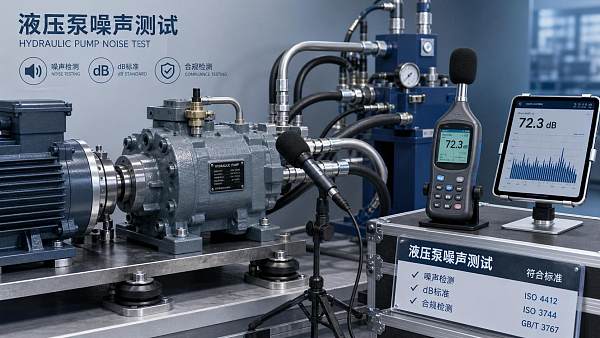
 Jun 29, 2026Hydraulic Pump Noise Standards Explained: Test Methods, dB Limits, and Compliance BasicsHydraulic pump noise standards explained in clear terms—learn test methods, dB limits, and compliance basics to compare pumps accurately, reduce risk, and make smarter sourcing decisions.● Marcus Valve
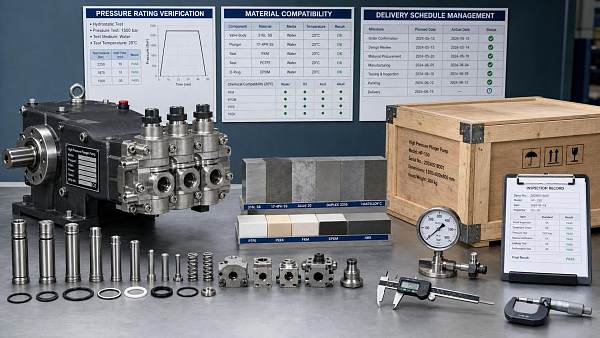
 Jun 21, 2026How to Evaluate a Piston Pump Manufacturer for Pressure Rating, Materials, and Lead TimePiston pump manufacturer selection starts with proven pressure ratings, material compatibility, and reliable lead times. Learn how to compare suppliers with less risk and better long-term value.● Marcus Valve
 Jun 18, 2026Gear Pump Wholesale Pricing Explained: What Affects MOQ, Materials, and Lead Time?Gear pump wholesale pricing explained: learn how MOQ, materials, machining precision, testing, and lead time affect total cost, supplier risk, and smarter sourcing decisions.● Marcus Valve
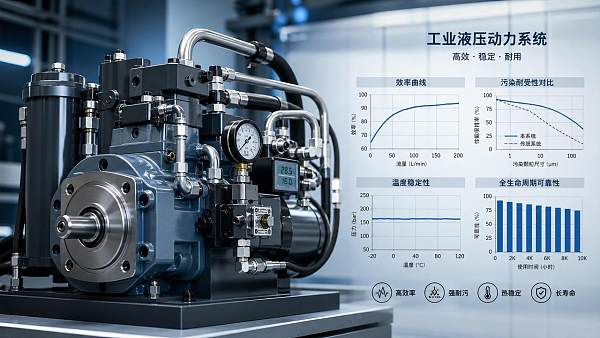
 May 28, 2026What Fluid Power data matters most when comparing pumps?Fluid Power pump comparison goes beyond pressure and flow. Learn which data truly matters—efficiency, contamination tolerance, heat, noise, and reliability—to cut downtime and lifecycle cost.● Marcus Valve
 May 23, 2026What should you verify before choosing a Fluid Power system?Fluid Power system selection starts with verification. Learn what to check for load, pressure, fluid compatibility, temperature, and support to avoid downtime and choose with confidence.● Marcus Valve
 May 22, 2026What fluid power issues cause the most downtime?Fluid Power downtime often starts with contamination, pressure loss, overheating, and seal failure. Learn the top causes, compare risks, and improve system reliability faster.● Marcus Valve
 May 21, 2026What makes Fluid Power a better fit than electric drive?Fluid Power often outperforms electric drive in high-force, shock-heavy, and safety-critical applications. Discover why it delivers better uptime, durability, and load control.● Marcus Valve
 May 20, 2026How Fluid Power compares with electric drive on costFluid Power cost vs electric drive: compare upfront investment, energy use, maintenance, and TCO to choose the most cost-effective motion solution for your operation.● Marcus Valve
 May 19, 2026What fluid power mistakes drive up downtime most?Fluid Power downtime often starts with small mistakes. Learn how contamination, pressure settings, component selection, and maintenance planning drive costly stops—and how to prevent them.● Marcus Valve
 May 18, 2026How fluid power choices affect uptime and repair costsFluid Power choices directly impact uptime and repair costs. Discover a practical checklist to reduce failures, improve reliability, and lower lifecycle maintenance expenses.● Marcus Valve
 May 17, 2026What Fluid Power Mistakes Still Drive Up Energy Use?Fluid Power mistakes still inflate energy use through oversizing, throttling, leakage, and poor maintenance. Discover practical fixes to cut costs, boost reliability, and improve hydraulic efficiency.● Marcus Valve
 May 16, 2026What Fluid Power buyers should compare before quotingFluid Power buyers should compare pressure ratings, seal compatibility, material traceability, lead times, and supplier support before quoting to reduce risk, control lifecycle cost, and improve uptime.● Marcus Valve
 May 14, 2026Fluid Power vs Electric Actuation in Harsh Duty CyclesFluid Power vs electric actuation in harsh duty cycles: compare shock resistance, force density, contamination tolerance, and lifecycle cost to choose the most reliable solution.● Marcus Valve
 May 13, 2026Fluid Power vs electric actuators in heavy-duty linesFluid Power vs electric actuators: discover which solution delivers better force, uptime, precision, and lifecycle value in heavy-duty lines before you decide.● Marcus Valve
 May 07, 2026Fluid Power vs Electric Actuation in Heavy EquipmentFluid Power vs electric actuation in heavy equipment: compare force density, precision, maintenance, and lifecycle cost to choose the smartest, most reliable solution.● Marcus Valve
 May 03, 2026What makes advanced hydraulic technology pay off faster?Advanced Hydraulic technology drives faster Operational Uptime improvement through Total Reliability standards, smarter sourcing, and predictive supply chain case studies in manufacturing.● Marcus Valve
![]() May 01, 2026Critical Components That Quietly Raise Downtime RiskCritical Components for industrial applications drive hidden downtime risk. Learn how Total Reliability certification and Supply-Chain Orchestration for manufacturing improve uptime.● Marcus Valve
May 01, 2026Critical Components That Quietly Raise Downtime RiskCritical Components for industrial applications drive hidden downtime risk. Learn how Total Reliability certification and Supply-Chain Orchestration for manufacturing improve uptime.● Marcus Valve