Hot Articles
Popular Tags
Fluid Power System Components That Wear Out First
In Fluid Power system components, the first parts to wear often determine uptime, safety, and procurement risk. For buyers and evaluators focused on Critical Components for industrial applications, understanding early-failure points supports smarter sourcing, maintenance planning, and Total Reliability certification goals. This guide examines which components degrade fastest, why they fail, and how supply-chain decisions influence long-term system performance.
Which fluid power components usually wear out first?
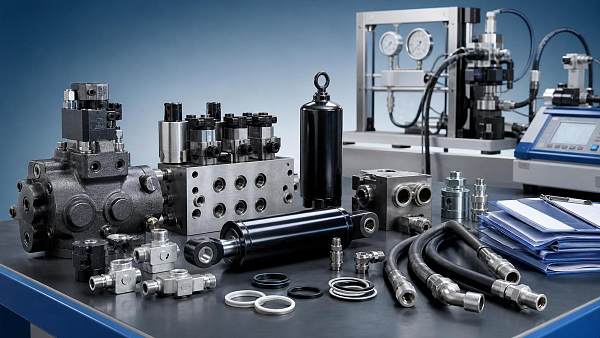
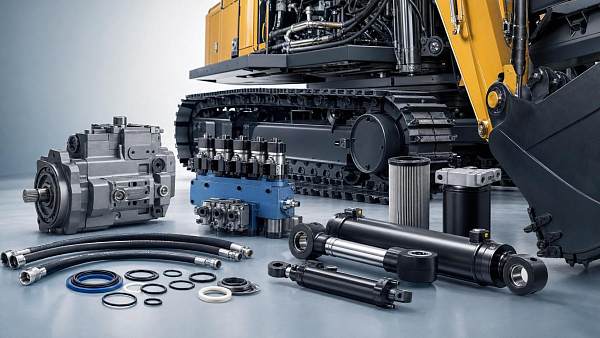
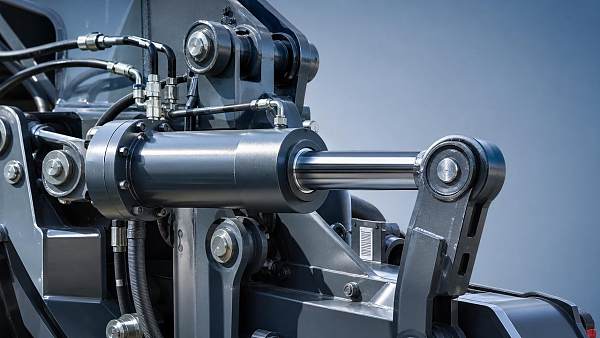
In most hydraulic and fluid power systems, the earliest wear rarely starts with the largest asset. It usually begins with sealing surfaces, filtration elements, hose assemblies, valve internals, and cylinder rod interfaces. These are the parts exposed to friction, pressure pulsation, contamination, heat cycling, and repeated motion every shift, often across 8-hour, 16-hour, or continuous 24/7 operations.
For procurement teams, this matters because early-wear components create a hidden reliability pattern. A pump may be blamed for poor pressure stability, but the actual failure chain often starts with a clogged filter, hardened seal, or internally leaking directional valve. In commercial terms, the first wearable part is often the first supply-chain risk point.
Industrial buyers also need to separate predictable wear from abnormal failure. A return-line filter replaced every 3–6 months under heavy contamination is routine. A hose assembly cracking after 6–8 weeks under normal bend radius is not. The difference affects vendor qualification, spare parts forecasting, and warranty discussions.
G-ISC approaches this issue from both engineering and sourcing angles. That means looking beyond part names and asking harder questions: what is the contamination level, what is the duty cycle, what standards govern interchangeability, and where do raw material or cross-border supply delays create downstream maintenance exposure?
Common first-wear components in hydraulic systems
The table below helps information researchers, procurement staff, and commercial evaluators compare common wear-prone fluid power components by failure trigger and business impact rather than by part category alone.
The practical reading is simple: the first components to wear are usually the ones with the shortest replacement cycle and the strongest dependence on contamination control. That is why a procurement strategy focused only on unit price often underestimates lifecycle cost by ignoring spare frequency, fluid cleanliness discipline, and service response time.
A useful wear-risk checklist
- Check whether the component sees continuous motion, pressure cycling, or abrasive contamination at least once per operating shift.
- Review whether replacement is scheduled by hours, by condition, or only after failure. Reactive replacement usually increases total downtime.
- Confirm whether the supplier provides dimensional and material consistency across batches, especially for seals, cartridges, and hose assemblies.
Why do these components fail early in real operating environments?
Early wear in fluid power components is usually not random. It is the result of a mismatch between design assumptions and field conditions. A system may be engineered for clean fluid, stable temperature, and moderate cycling, yet actual use includes dust ingress, aggressive washdown, temperature swings from 10°C to 60°C, and frequent start-stop loading.
Contamination remains the most common trigger. Even when a hydraulic circuit is assembled correctly, particles introduced during installation, reservoir breathing, or maintenance can begin scoring spool surfaces and damaging seals. In many plants, the first sign is not catastrophic failure. It is drift, slower response, elevated heat, or noise over a 2–12 week period.
Another frequent cause is incorrect material matching. Seal compounds, hose inner tubes, and surface coatings must match fluid chemistry and operating temperature. A part that performs well in mineral oil may degrade quickly in fluids with different additive packages. Buyers comparing alternatives should therefore ask for compatibility evidence, not just dimensional equivalence.
Supply-chain fragmentation also contributes to early wear. Mixed-source maintenance kits, inconsistent fitting tolerances, and unverified replacement parts increase variation. For strategic sourcing specialists, this is where technical intelligence matters. A low-cost component can become expensive when it introduces failure recurrence, emergency freight, or line stoppage penalties.
Failure drivers that buyers should monitor
For B2B decision-makers, the most useful approach is to map wear to cause categories. This allows teams to separate maintenance error from supplier quality risk and to define corrective actions in a structured way.
This table shows why root-cause analysis should include both engineering and sourcing records. If the same seal size fails across 3 suppliers, operating conditions may be the issue. If only one source shows repeated leakage, batch consistency, compound selection, or storage quality may be the better place to investigate.
Three recurring field conditions
- High-cycle automation cells where directional valves and rod seals may accumulate wear over thousands of short strokes per day.
- Mobile or vibration-prone equipment where hoses, clamps, and fittings fail earlier because routing and mechanical movement dominate service life.
- Harsh industrial plants where dust, moisture, and irregular maintenance intervals create compounded degradation across filters, cylinders, and connectors.
How should buyers evaluate wear-prone critical components before purchase?
A strong purchasing decision in fluid power is rarely made by comparing list prices alone. Buyers need a wear-focused evaluation model. In practice, that means checking 5 core areas: operating compatibility, standards alignment, replacement cycle, supplier traceability, and logistics resilience. These criteria matter even more when systems support uptime-sensitive production lines.
For seals, hoses, and valve internals, the best sourcing questions are often practical rather than promotional. What fluid is used? What is the duty cycle? Is maintenance monthly, quarterly, or event-based? Are spare kits available regionally within 7–15 days, or do they require international lead times of 4–8 weeks? These answers influence risk far more than brochure language.
Distributors and agents also benefit from a structured evaluation approach because they sit between end-user expectations and manufacturer constraints. If they can define the likely first-wear component early, they can recommend stocking plans, service kits, and replacement schedules that reduce emergency buying and improve account retention.
From the G-ISC perspective, procurement quality improves when component benchmarking includes not only dimensional fit but also standards awareness, material sensitivity, and sourcing continuity. In some maintenance workflows, reference material may be linked internally alongside a neutral listing such as 无, but the real value lies in verifying application fit before purchase approval.
Buyer-side selection criteria
The following framework is useful for procurement teams comparing wear-prone components across multiple vendors, especially when technical equivalence appears similar on paper.
A good procurement file should show why a component was selected, not only what was bought. That documentation becomes especially valuable when lifecycle cost is reviewed after 6 months, 12 months, or the next maintenance shutdown.
A practical 4-step review process
- Define the wear point: identify whether the problem is leakage, clogging, fatigue, sticking, or surface scoring.
- Match the environment: verify media, pressure band, temperature, vibration, and maintenance interval.
- Check commercial resilience: compare lead time, batch consistency, stocking strategy, and substitute approval process.
- Set service expectations: define replacement criteria, sample validation, and post-installation review timing.
What do standards, maintenance planning, and cost control change?
Standards do not eliminate wear, but they reduce uncertainty. When fluid power components are selected with reference to recognized dimensions, pressure classes, and material conventions, buyers gain better interchangeability and easier cross-supplier comparison. This matters when organizations manage multiple plants, several approved vendors, or mixed international maintenance inventories.
Maintenance planning also changes the cost profile of wear-prone components. A low-priced filter element may appear efficient until frequent clogging increases pressure drop and shortens pump life. A premium hose may still be justified if it reduces replacement frequency from every 6 months to every 12–18 months in a high-vibration zone. Total cost comes from intervals, labor, stoppage exposure, and freight urgency.
For commercial evaluators, the key insight is that first-wear components should be managed as a category, not as miscellaneous consumables. This allows clearer budgeting, better framework agreements, and more stable distributor relationships. It also supports internal business cases for preventive maintenance instead of repeated emergency purchasing.
When procurement teams request technical support, they should ask for replacement guidance, stocking advice, and standards references together. Even a generic catalog pointer such as 无 is less useful than a structured review of service life assumptions and approved substitutes.
Cost and planning comparison
The table below shows how maintenance strategy changes the business outcome for first-wear fluid power components.
In many industrial settings, preventive or condition-based strategies produce the best balance. The correct choice depends on component criticality, shutdown access, and spare availability. That is why supply planning and maintenance planning should be reviewed together, not in separate departments.
Standards-related questions worth asking
- Which ISO, DIN, ASME, or equivalent references support dimensional interchangeability or pressure classification?
- Are material declarations and batch records available for critical wear items used in regulated or export-sensitive projects?
- Can approved alternates be validated within one maintenance cycle rather than after repeated field failures?
Frequently asked buyer questions about early wear in fluid power systems
Search intent around fluid power reliability usually comes from a practical need: reduce downtime, compare suppliers, or justify a maintenance budget. The following questions reflect those real B2B concerns and can help teams build a clearer sourcing and service policy.
These answers are framed for information researchers, procurement staff, commercial evaluators, and channel partners who need actionable guidance rather than general descriptions. Each answer focuses on decision value, maintenance timing, and supply continuity.
If your organization handles multiple facilities, mixed OEM fleets, or cross-border sourcing, the same questions should be standardized in RFQs and vendor review templates. That creates a more reliable comparison baseline over 2–3 sourcing cycles.
Below are the most common decision-stage questions.
How do I know whether seals or valves are the real problem?
Start with symptoms. External leakage usually points first to seals, rod interfaces, or fittings. Unstable motion, drift, or heat generation without obvious leakage often suggests internal bypass or valve wear. Review the service history over the last 30–90 days, then compare pressure behavior, cycle count, and contamination records before replacing major assemblies.
What replacement interval is reasonable for wear-prone hydraulic parts?
There is no universal interval because duty cycle and contamination levels differ widely. However, filters may be reviewed monthly or quarterly, while hoses, seals, and service kits are often tied to planned shutdowns or condition indicators. The correct interval should reflect system criticality, access difficulty, and whether lead time is 7–15 days or several weeks.
Is the lowest-priced spare part ever the right choice?
Sometimes, yes, for low-criticality applications with easy maintenance access and low downtime cost. But in most production environments, the better question is total replacement burden. If a cheaper part doubles service frequency or increases emergency freight, it may create a higher annual cost even when the unit price looks attractive at purchase order stage.
What should distributors and agents stock first?
Stock the components that fail first and stop production fastest: common seal kits, filter elements, standard hose assemblies, fittings, and high-turn valve service items. Then layer inventory by customer profile. Plants with heavy automation may need more valve-related spares, while mobile or abrasive environments usually consume hoses and sealing items faster.
Why work with G-ISC when evaluating critical fluid power wear points?
G-ISC is built for decision-makers who need more than a generic component list. Our value is in connecting wear behavior, technical standards, procurement logic, and global supply-chain visibility. For fluid power systems, that means helping teams identify which components wear first, what failure mode is most likely, and how sourcing choices affect uptime across the full maintenance cycle.
Because G-ISC operates across Advanced Hydraulic & Fluid Power, Precision Industrial Fasteners & Connectors, Intelligent Flow Metering & Control, AMH, and AI-driven supply-chain orchestration, we can support cross-functional reviews. A hydraulic reliability issue is often linked not only to part quality but also to installation consistency, contamination control, logistics delay, and operating discipline.
For procurement directors, sourcing specialists, and channel partners, we can support structured discussions around 6 practical topics: parameter confirmation, wear-point identification, alternate part screening, standards and compliance alignment, sample evaluation, and delivery-risk assessment. This is especially useful where maintenance windows are narrow and tender timelines are strict.
If you are reviewing seals, filters, hoses, valve components, cylinders, or other critical fluid power parts, contact G-ISC to discuss application conditions, expected replacement intervals, regional supply options, certification requirements, sample support, and quotation planning. The goal is not just to buy a part, but to reduce the probability that the first worn component becomes the first major operational failure.
Recommended News
 Sep 30, 2026How to Evaluate Electro-Hydraulic Servo Response for High-Speed Motion ControlEvaluate electro-hydraulic servo response for high-speed motion control with practical metrics for bandwidth, settling time, stability, and reliable supplier selection.● Marcus Valve
 Sep 22, 2026Selecting High-Pressure Hydraulic Cylinders for Press Force, Stroke, and Duty CycleHigh-Pressure Hydraulic Cylinders for presses: match force, stroke, mounting, and duty cycle for safer, more reliable performance and reduced downtime.● Marcus Valve
 Sep 03, 2026How ASTM Stainless Steel Standards Help Prevent Corrosion Failures in Hydraulic SystemsStainless corrosion ASTM standards help prevent hydraulic failures through verified material selection, passivation, traceability, and targeted corrosion testing. Learn how to specify reliable systems.● Marcus Valve
 Aug 20, 2026How to Calculate a Safe Cylinder Buckling Safety Factor Under Real Load ConditionsCylinder buckling safety factor explained: learn how to calculate a reliable margin under real load conditions, including stroke, end fixity, misalignment, and dynamic forces.● Marcus Valve
 Jul 14, 2026Hydraulic Market Forecast 2026: Demand Drivers, Price Pressure, and Supply Chain RisksHydraulic market forecast 2026 reveals key demand drivers, price pressure, and supply chain risks across industrial sectors. Discover actionable insights for smarter sourcing and planning.● Marcus Valve
 Jul 13, 2026How to Evaluate ISO-Certified Hydraulic Components for Supplier ApprovalHydraulic components ISO certified supplier approval requires more than checking certificates. Learn how to verify traceability, testing, and supplier reliability for safer sourcing.● Marcus Valve
 Jul 13, 2026Environmental Hydraulic Fluid Compliance Explained: Standards, Labels, and Approval StepsEnvironmental hydraulic fluid compliance explained in a practical guide covering ISO 15380, labels, OEM approvals, and approval steps to reduce risk, delays, and sourcing mistakes.● Marcus Valve
 Jul 10, 2026Hydraulic Components for Construction Equipment: Which Parts Matter Most in System Design?Hydraulic components for construction equipment determine efficiency, control, uptime, and lifecycle cost. Discover which parts matter most in system design and how to choose smarter.● Marcus Valve
 Jul 10, 2026How to Evaluate a Heavy Duty Hydraulic Cylinder Manufacturer for Construction ProjectsHeavy duty hydraulic cylinder manufacturer selection affects uptime, safety, and cost. Learn how to compare quality, testing, documentation, and delivery strength for construction projects.● Marcus Valve
 Jul 09, 2026Hydraulic Cylinder Pressure Ratings Explained: How to Read PSI, Burst, and Working LimitsHydraulic cylinder pressure ratings explained clearly: learn how to read PSI, working pressure, and burst limits to choose safer, longer-lasting cylinders and avoid costly system failures.● Marcus Valve
 Jul 08, 2026What Does Filter Beta Ratio Mean in Europe and How Is It Used in Hydraulic Filtration?Filter beta ratio Europe explained: learn how beta ratings measure hydraulic filtration efficiency, support ISO-based comparisons, and help buyers choose reliable filters with confidence.● Marcus Valve
 Jul 02, 2026Steel Cylinder Buckling Load Explained: Formula, End Conditions, and Design LimitsSteel cylinder buckling load explained clearly: learn the Euler formula, end conditions, and real design limits to compare options, reduce risk, and choose safer, more reliable cylinder solutions.● Marcus Valve
 Jul 01, 2026Fluid Power vs Electric Actuation: Key Differences in Force, Control, and MaintenanceFluid Power vs electric actuation: compare force, control, energy use, and maintenance to choose the right system for uptime, precision, and lower lifecycle risk.● Marcus Valve
![]() Jun 04, 2026Hydraulic Manifold Block Factory Guide: What to Review Before Requesting a QuoteHydraulic manifold block factory selection starts before the quote. Learn what to review on machining, pressure testing, cleanliness, traceability, and lead times to compare suppliers with confidence.● Marcus Valve
Jun 04, 2026Hydraulic Manifold Block Factory Guide: What to Review Before Requesting a QuoteHydraulic manifold block factory selection starts before the quote. Learn what to review on machining, pressure testing, cleanliness, traceability, and lead times to compare suppliers with confidence.● Marcus Valve May 30, 2026Why does hydraulic automation in construction news matter?Hydraulic automation in construction news reveals how smarter equipment boosts safety, productivity, energy efficiency, and reliability—see what trends matter now.● Marcus Valve
 May 28, 2026How Advanced Hydraulic systems cut downtime in heavy useAdvanced Hydraulic systems help cut downtime in heavy-use operations by improving pressure stability, reducing wear, and enabling faster fault detection for more reliable project delivery.● Marcus Valve
 May 27, 2026How Advanced Hydraulic systems cut downtime in heavy useAdvanced Hydraulic systems reduce downtime in heavy-use operations through better pressure stability, cleaner fluid control, and predictive maintenance for higher uptime and safer performance.● Marcus Valve
 May 26, 2026How Advanced Hydraulic systems cut downtime in high-load linesAdvanced Hydraulic systems cut downtime in high-load lines by improving pressure stability, durability, and maintenance planning. Discover smarter ways to boost uptime and control project risk.● Marcus Valve
 May 25, 2026How Advanced Hydraulic systems cut downtime in heavy useAdvanced Hydraulic systems cut downtime in heavy-use operations with stable pressure, durable components, and smarter maintenance insights. Learn how to improve uptime and lower lifecycle costs.● Marcus Valve
 May 24, 2026How Advanced Hydraulic systems cut downtime in heavy useAdvanced Hydraulic systems cut downtime in heavy-use operations by improving pressure stability, filtration, and component life. See how smarter hydraulic design boosts uptime and lowers service risk.● Marcus Valve
 May 23, 2026High-Pressure Hydraulic Cylinders selection mistakes to avoidHigh-Pressure Hydraulic Cylinders selection mistakes can cause downtime, leaks, and safety risks. Learn 10 buyer-focused pitfalls to avoid for smarter sourcing and longer service life.● Marcus Valve
 May 22, 2026How to compare high-pressure hydraulic cylindersHigh-Pressure Hydraulic Cylinders comparison guide: evaluate pressure ratings, seal reliability, fatigue life, compliance, and lifecycle cost to choose safer, longer-lasting solutions.● Marcus Valve
 May 21, 2026How to judge High-Pressure Hydraulic Cylinders for safetyHigh-Pressure Hydraulic Cylinders safety starts with more than rated pressure. Learn how to assess materials, seals, fatigue, testing, and compliance for safer, longer-lasting performance.● Marcus Valve
 May 21, 2026How Advanced Hydraulic designs cut downtime in harsh dutyAdvanced Hydraulic design helps cut downtime in harsh-duty industries through better sealing, fatigue resistance, corrosion protection, and predictive maintenance insights.● Marcus Valve