Hot Articles
Popular Tags
What fluid power mistakes drive up downtime most?
Fluid Power downtime rarely begins with one dramatic breakdown. In most industrial environments, losses build from small, repeated mistakes that weaken reliability over time.
Wrong component sizing, poor contamination control, unstable pressure settings, and delayed maintenance often create the highest downtime costs. These issues affect output, safety, energy use, and replacement cycles.
In complex supply chains, Fluid Power decisions also influence sourcing risk, spare-parts planning, and standard compliance. Knowing which mistakes matter most helps reduce unplanned stops and improve lifecycle value.
Why Fluid Power downtime looks different across operating scenarios
Not every hydraulic system fails for the same reason. A mobile machine, a high-speed production line, and a heavy-duty press each stress Fluid Power components differently.
This matters because the biggest downtime mistake in one setting may be secondary in another. The correct judgment depends on duty cycle, contamination exposure, pressure spikes, and maintenance access.
A structured, scenario-based review prevents overgeneralized decisions. It also helps align Fluid Power selection with uptime targets, environmental conditions, and service logistics.
Scenario 1: Continuous production lines where contamination quietly drives Fluid Power downtime
In automated lines, contamination is often the most expensive hidden error. Particles, water ingress, and degraded oil slowly damage pumps, valves, seals, and servo components.
Many systems appear stable until response quality drops. Then sticking valves, noisy pumps, heat rise, and erratic actuator motion begin to interrupt production.
Core judgment points
- Filter ratings do not match valve tolerances.
- Reservoir breathers allow moisture and dust ingress.
- Fluid sampling intervals are too long.
- Oil changes happen without root-cause correction.
This Fluid Power mistake drives up downtime because contamination damage is cumulative. By the time alarms appear, component wear is already advanced and failure propagation has begun.
Scenario 2: Heavy-load equipment where pressure misjudgment creates severe Fluid Power failures
Presses, lifting systems, and steel-processing equipment often suffer from poor pressure management. Excessive relief settings and unmanaged spikes shorten the life of hoses, cylinders, and pumps.
Teams sometimes raise pressure to solve force shortfalls. That shortcut can mask design mismatch, internal leakage, or undersized actuators instead of solving the real problem.
Core judgment points
- Relief valves are set near maximum operating demand.
- Pressure transients are not measured during full-load cycles.
- Cylinder buckling and side-load risks are overlooked.
- Hose burst margins do not reflect shock loading.
Among all Fluid Power mistakes, pressure abuse often creates the fastest route to catastrophic downtime. It can also increase safety risk and force large-scope system shutdowns.
Scenario 3: Mobile and outdoor systems where wrong component selection causes recurring Fluid Power stoppages
Construction, agricultural, and utility equipment operate under vibration, weather exposure, variable loads, and frequent starts. In these settings, incorrect component selection is a major downtime driver.
The common mistake is choosing Fluid Power parts only by nominal specification. Real-world conditions such as temperature swings, seal compatibility, and hose routing receive less attention.
Core judgment points
- Seal materials are unsuitable for cold starts or heat cycles.
- Connectors lack vibration resistance.
- Pump selection ignores intermittent shock loads.
- Ingress protection around sensors and controls is inadequate.
This Fluid Power problem increases repeat failures. The result is not always one major breakdown, but frequent service calls, fluid leaks, and unstable machine availability.
Scenario 4: Precision systems where maintenance planning mistakes create hidden Fluid Power losses
Packaging, robotics support units, and metering applications rely on repeatable motion. In these systems, poor maintenance planning can be more damaging than visible hardware defects.
A reactive approach delays intervention until speed, position, or cycle consistency drifts beyond tolerance. By then, Fluid Power wear has already reduced process quality.
Core judgment points
- Maintenance intervals are calendar-based, not condition-based.
- Technicians replace failed parts without checking upstream contamination.
- Heat trends and pressure drift are not recorded.
- Critical spares are missing or technically mismatched.
For precision Fluid Power systems, small deviations become quality losses first and downtime second. That sequence makes the mistake harder to detect early.
How Fluid Power downtime priorities differ by scenario
Practical Fluid Power recommendations for better scenario fit
Reducing downtime requires targeted action, not generic maintenance advice. The best improvements come from linking Fluid Power controls to actual operating exposure.
- Validate component sizing against peak load, shock load, and full temperature range.
- Set contamination targets by component sensitivity, not by broad plant averages.
- Measure dynamic pressure events during real cycles, not only static test conditions.
- Use seal, hose, and connector specifications matched to vibration and media compatibility.
- Adopt oil analysis, heat trending, and pressure drift monitoring for condition-based maintenance.
- Standardize critical spares to recognized ISO, DIN, ASME, or equivalent requirements.
These steps strengthen Fluid Power reliability while also improving sourcing visibility. Better standardization reduces emergency substitution and lowers the risk of non-equivalent replacement parts.
Common Fluid Power misjudgments that keep downtime high
Several repeated assumptions cause preventable losses across industries. They look minor at first, but they often sit behind the highest total downtime cost.
- Assuming higher pressure always improves performance.
- Treating fluid cleanliness as a maintenance issue only, not a design issue.
- Selecting Fluid Power parts from catalog ratings without duty-cycle verification.
- Replacing failed parts without tracing root causes upstream.
- Ignoring heat as an early sign of restriction, leakage, or inefficiency.
- Keeping spare inventory broad but technically inconsistent.
When these errors combine, Fluid Power downtime rises sharply. A contaminated system with wrong pressure settings and poor spare matching can fail repeatedly even after repairs.
Next-step actions to reduce Fluid Power downtime with better decisions
Start with a failure map covering contamination, pressure behavior, component fit, and maintenance response time. Rank each issue by stoppage frequency, repair scope, and production impact.
Then compare installed Fluid Power components against actual duty conditions and recognized standards. Review whether fluid, seals, connectors, cylinders, and valves remain aligned with present workloads.
Finally, build a sourcing and maintenance plan around verifiable data. That approach improves uptime, supports reliability targets, and turns Fluid Power from a recurring risk into a controlled asset base.
Recommended News
 Oct 14, 2026What is driving replacement demand in the piston pumps market?Piston pumps market replacement demand is rising as aging hydraulic systems face efficiency losses, automation needs, contamination risks, and costly downtime. Explore key drivers.● Marcus Valve
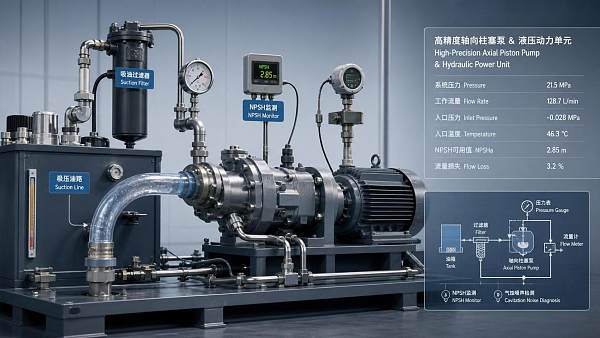
 Sep 24, 2026How to Read an NPSH Chart to Prevent Pump Cavitation in Process SystemsPump cavitation NPSH chart guide: learn to compare NPSHa and NPSHr across real operating conditions, prevent costly cavitation, and select safer process pump solutions.● Marcus Valve
 Sep 23, 2026Double Vane Pump Selection: Flow, Pressure, and Noise Factors for Hydraulic SystemsDouble vane pump selection made simple: compare flow, pressure, noise, inlet conditions, and duty cycles to improve hydraulic reliability and performance.● Marcus Valve
 Sep 10, 2026How to Calculate Hydraulic System Flow Rate for Cylinder Speed and Pump SizingHydraulic system flow rate calculation made practical: size pumps from cylinder speed, bore and rod area, efficiency, pressure, and real-world duty-cycle demands.● Marcus Valve
 Sep 07, 2026How to Evaluate Quiet Hydraulic Pump Suppliers for Low-Noise Industrial SystemsQuiet hydraulic pump suppliers: learn how to compare acoustic test data, pressure stability, production quality, and lifecycle support for reliable low-noise industrial systems.● Marcus Valve
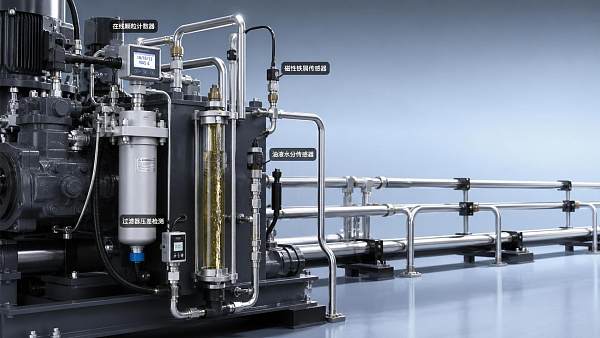
 Aug 30, 2026Hydraulic Contamination Monitoring: Which Sensors Detect Wear Before Failure?Hydraulic contamination monitoring: discover which particle, ferrous debris, moisture, dielectric, and filter sensors detect wear early to prevent costly hydraulic failures.● Marcus Valve
 Jul 04, 2026Piston Pump Cavitation NPSH Explained: How to Diagnose Noise, Damage, and Flow LossPiston pump cavitation NPSH explained clearly: learn how to spot noise, pitting, and flow loss early, diagnose root causes fast, and prevent costly hydraulic downtime.● Marcus Valve
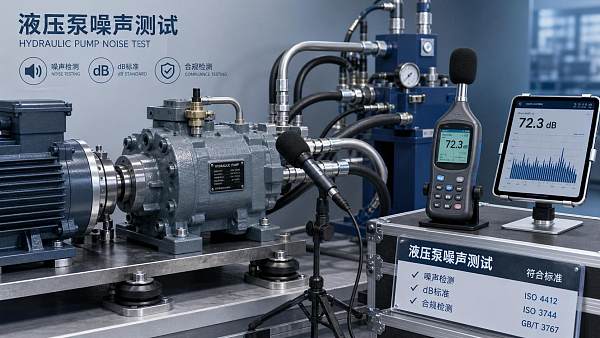
 Jun 29, 2026Hydraulic Pump Noise Standards Explained: Test Methods, dB Limits, and Compliance BasicsHydraulic pump noise standards explained in clear terms—learn test methods, dB limits, and compliance basics to compare pumps accurately, reduce risk, and make smarter sourcing decisions.● Marcus Valve
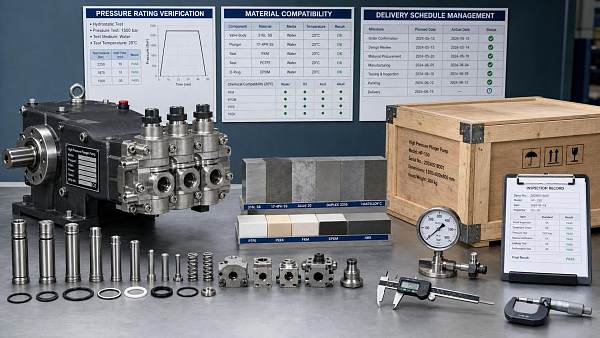
 Jun 21, 2026How to Evaluate a Piston Pump Manufacturer for Pressure Rating, Materials, and Lead TimePiston pump manufacturer selection starts with proven pressure ratings, material compatibility, and reliable lead times. Learn how to compare suppliers with less risk and better long-term value.● Marcus Valve
 Jun 18, 2026Gear Pump Wholesale Pricing Explained: What Affects MOQ, Materials, and Lead Time?Gear pump wholesale pricing explained: learn how MOQ, materials, machining precision, testing, and lead time affect total cost, supplier risk, and smarter sourcing decisions.● Marcus Valve
 May 28, 2026What Fluid Power data matters most when comparing pumps?Fluid Power pump comparison goes beyond pressure and flow. Learn which data truly matters—efficiency, contamination tolerance, heat, noise, and reliability—to cut downtime and lifecycle cost.● Marcus Valve
 May 23, 2026What should you verify before choosing a Fluid Power system?Fluid Power system selection starts with verification. Learn what to check for load, pressure, fluid compatibility, temperature, and support to avoid downtime and choose with confidence.● Marcus Valve
 May 22, 2026What fluid power issues cause the most downtime?Fluid Power downtime often starts with contamination, pressure loss, overheating, and seal failure. Learn the top causes, compare risks, and improve system reliability faster.● Marcus Valve
 May 21, 2026What makes Fluid Power a better fit than electric drive?Fluid Power often outperforms electric drive in high-force, shock-heavy, and safety-critical applications. Discover why it delivers better uptime, durability, and load control.● Marcus Valve
 May 20, 2026How Fluid Power compares with electric drive on costFluid Power cost vs electric drive: compare upfront investment, energy use, maintenance, and TCO to choose the most cost-effective motion solution for your operation.● Marcus Valve
 May 19, 2026What fluid power mistakes drive up downtime most?Fluid Power downtime often starts with small mistakes. Learn how contamination, pressure settings, component selection, and maintenance planning drive costly stops—and how to prevent them.● Marcus Valve
 May 18, 2026How fluid power choices affect uptime and repair costsFluid Power choices directly impact uptime and repair costs. Discover a practical checklist to reduce failures, improve reliability, and lower lifecycle maintenance expenses.● Marcus Valve
 May 17, 2026What Fluid Power Mistakes Still Drive Up Energy Use?Fluid Power mistakes still inflate energy use through oversizing, throttling, leakage, and poor maintenance. Discover practical fixes to cut costs, boost reliability, and improve hydraulic efficiency.● Marcus Valve
 May 16, 2026What Fluid Power buyers should compare before quotingFluid Power buyers should compare pressure ratings, seal compatibility, material traceability, lead times, and supplier support before quoting to reduce risk, control lifecycle cost, and improve uptime.● Marcus Valve
 May 14, 2026Fluid Power vs Electric Actuation in Harsh Duty CyclesFluid Power vs electric actuation in harsh duty cycles: compare shock resistance, force density, contamination tolerance, and lifecycle cost to choose the most reliable solution.● Marcus Valve
 May 13, 2026Fluid Power vs electric actuators in heavy-duty linesFluid Power vs electric actuators: discover which solution delivers better force, uptime, precision, and lifecycle value in heavy-duty lines before you decide.● Marcus Valve
 May 07, 2026Fluid Power vs Electric Actuation in Heavy EquipmentFluid Power vs electric actuation in heavy equipment: compare force density, precision, maintenance, and lifecycle cost to choose the smartest, most reliable solution.● Marcus Valve
 May 03, 2026What makes advanced hydraulic technology pay off faster?Advanced Hydraulic technology drives faster Operational Uptime improvement through Total Reliability standards, smarter sourcing, and predictive supply chain case studies in manufacturing.● Marcus Valve
![]() May 01, 2026Critical Components That Quietly Raise Downtime RiskCritical Components for industrial applications drive hidden downtime risk. Learn how Total Reliability certification and Supply-Chain Orchestration for manufacturing improve uptime.● Marcus Valve
May 01, 2026Critical Components That Quietly Raise Downtime RiskCritical Components for industrial applications drive hidden downtime risk. Learn how Total Reliability certification and Supply-Chain Orchestration for manufacturing improve uptime.● Marcus Valve