Hot Articles
Popular Tags
What Makes a Precision Fasteners Supplier Reliable?
Choosing a reliable precision fasteners supplier is not just a sourcing decision—it is a risk-control decision. For procurement teams, distributors, and commercial evaluators, reliability means consistent part quality, traceable materials, on-time delivery, standards compliance, and the ability to support production even when markets become volatile. In practical terms, a trustworthy supplier helps reduce line stoppages, warranty exposure, audit failures, and total procurement cost over time.
When buyers search for what makes a precision fasteners supplier reliable, they are usually not looking for a generic definition. They want a clear way to assess suppliers, compare options, and avoid costly mistakes. The most dependable partners typically combine proven manufacturing controls, transparent documentation, stable supply-chain capabilities, and responsive technical support. Price matters, but for critical components, reliability matters more.
Why reliability matters more than unit price
Precision fasteners are small components, but they can carry major operational consequences. In automotive assemblies, industrial machinery, energy systems, aerospace subassemblies, and electronics enclosures, one inconsistent bolt, screw, stud, or nut can lead to vibration failure, loosening, corrosion issues, dimensional misfit, or safety risk.
That is why experienced buyers evaluate suppliers beyond quoted cost. A low price can quickly become expensive if it leads to rejected batches, delayed deliveries, rework, maintenance events, or field failure. A reliable precision fasteners supplier protects uptime, product integrity, and compliance performance. For organizations focused on Total Reliability, supplier selection should be tied directly to lifecycle risk, not just purchase price.
What procurement teams should check first
If you need a fast initial screening method, start with five questions:
- Can the supplier provide consistent dimensional accuracy and mechanical performance?
- Are materials, finishes, and heat treatment fully traceable?
- Do they operate under recognized quality systems such as ISO-based controls?
- Can they deliver reliably across regions and demand fluctuations?
- Will they respond quickly when quality issues or engineering changes occur?
If the answer to any of these is unclear, the supplier may still be workable for non-critical orders, but they are not yet proven for high-dependability applications.
Quality systems are the foundation of supplier reliability
A reliable precision fasteners supplier should have more than a sales promise. They need a working quality system that governs inspection, calibration, process control, nonconformance handling, and corrective action. Buyers should look for documented procedures and objective evidence, not just certificates displayed on a website.
Important quality indicators include:
- Incoming raw material verification
- In-process dimensional inspection
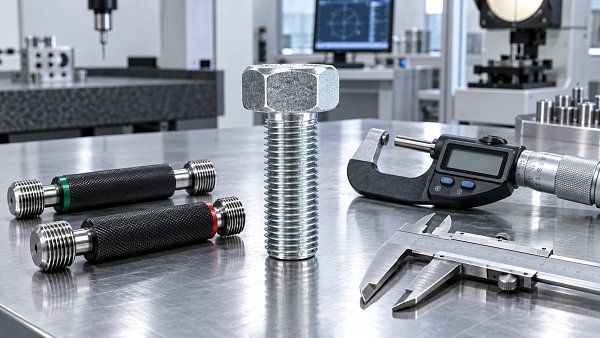
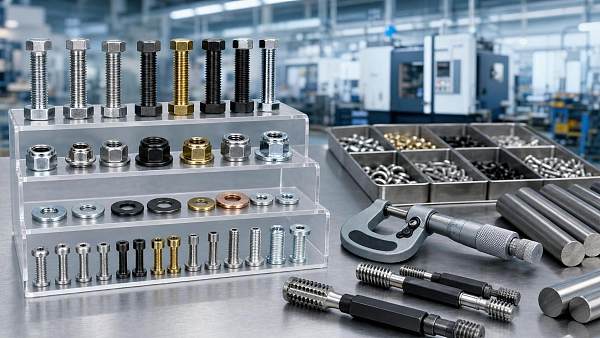
- Thread gauge control and calibration records
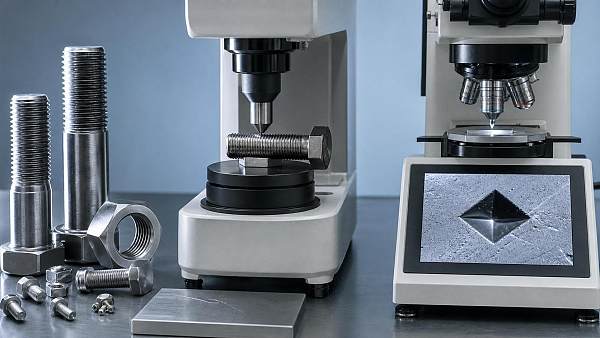
- Mechanical testing for tensile strength, hardness, torque, or proof load where applicable
- Surface treatment and plating validation
- Lot traceability and retention records
- CAPA processes for root cause analysis and corrective action
For buyers in regulated or high-performance sectors, the supplier should also be able to align with customer-specific PPAP, FAI, IMDS, RoHS, REACH, or other documentation requirements where relevant. Reliability becomes measurable when quality control is repeatable and auditable.
Material traceability and standards compliance are non-negotiable
One of the clearest signs of a dependable supplier is the ability to prove what was made, from what material, to which standard, and under what process conditions. Precision fasteners often need to meet exact DIN, ISO, ASME, ASTM, or customer-drawn specifications. If documentation is weak, risk rises immediately.
Procurement and technical review teams should ask for:
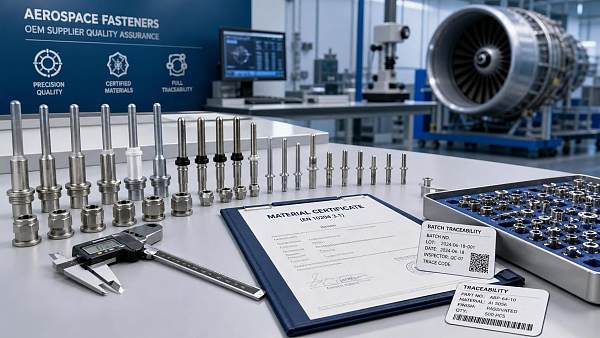
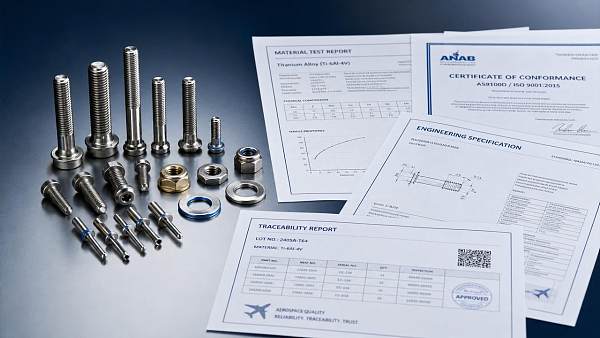
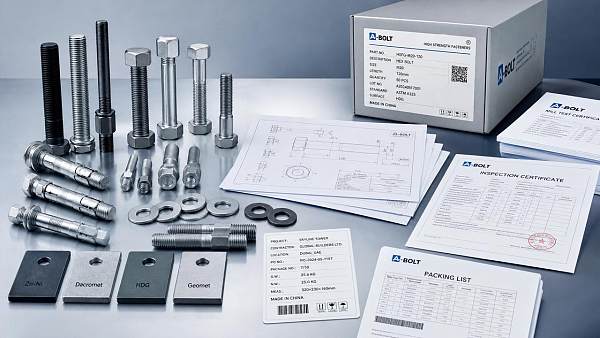
- Mill test certificates or material certificates
- Batch or heat number traceability
- Plating or coating certifications
- Inspection reports tied to specific lots
- Conformance declarations against requested standards
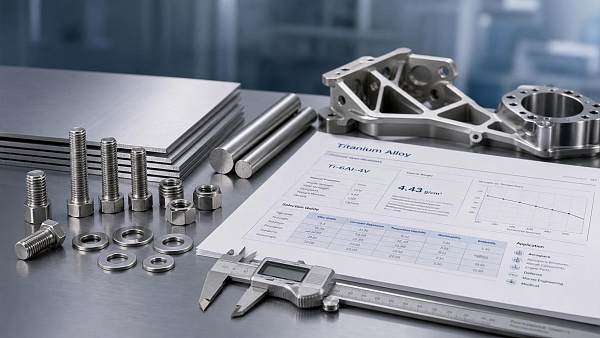
This becomes even more important when sourcing stainless steel, alloy steel, titanium, or specialty corrosion-resistant fasteners, where material substitution can create major reliability problems. In market conditions affected by raw material volatility, true traceability is a key defense against hidden quality compromise.
Manufacturing capability matters as much as documentation
Certificates alone do not make a supplier reliable. You also need confidence in their production capability. That includes machinery, tooling control, process stability, technical staff, and the ability to hold tolerance across repeat orders.
Useful evaluation points include:
- Experience with tight-tolerance or custom fastener production
- Cold heading, machining, thread rolling, heat treatment, and finishing capability
- Ability to manufacture both standard and engineered parts
- Capacity planning for recurring orders and urgent demand
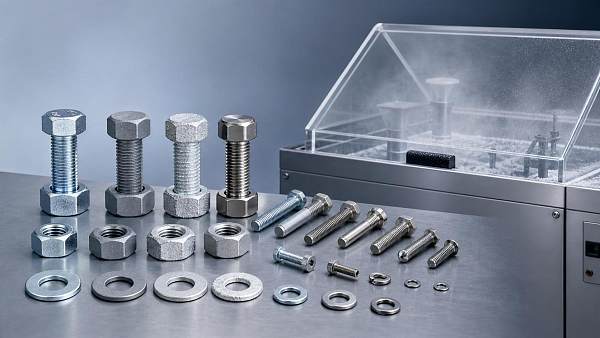
- Inspection technology such as optical sorting, hardness testing, salt spray testing, or CMM support where needed
A supplier that can only meet specification under ideal conditions is not fully reliable. The stronger partner is the one that can maintain consistency across scale, timeline pressure, and specification complexity.
Supply-chain resilience is now part of supplier reliability
In the past, buyers often judged fastener suppliers mainly by quality and price. Today, supply-chain resilience is equally important. A supplier may produce excellent parts, but if they cannot secure raw materials, manage cross-border shipping, or recover from disruption, they are still a weak link.
Reliable suppliers typically show strength in:
- Multi-source raw material access
- Inventory planning for critical SKUs
- Stable logistics coordination
- Regional warehousing or fulfillment support
- Lead-time transparency
- Clear communication during delays or shortages
This is especially relevant for global sourcing teams managing complex production lines. A reliable precision fasteners supplier should support continuity planning, not simply react after disruption occurs. In some cases, suppliers also provide digital visibility tools or planning data that improve forecasting and replenishment decisions.
How responsive technical support reveals the real supplier quality
Many suppliers appear capable during quotation, but their true reliability becomes visible when something changes. A drawing revision, urgent shipment request, coating issue, failed inspection result, or customer complaint will test whether the supplier is organized and accountable.
Strong suppliers usually respond with:
- Fast engineering clarification
- Accurate feasibility feedback before production
- Structured 8D or root cause reports when issues occur
- Transparent replacement or containment actions
- Realistic lead-time updates instead of vague assurances
For distributors, agents, and sourcing evaluators, this responsiveness is commercially important. It affects client trust, return rates, and the ability to retain accounts. A reliable supplier acts like an operational partner, not just a shipment source.
Red flags that suggest a supplier may not be dependable
Buyers can save significant time by recognizing warning signs early. Common red flags include inconsistent quotations, missing inspection records, reluctance to share certifications, unclear origin of materials, unstable lead times, and poor response to technical questions.
Other concerns include:
- Frequent changes in quoted material or finish without explanation
- Unusually low pricing on critical-specification parts
- No clear lot identification on packaging
- Weak packaging that risks thread or coating damage
- No formal complaint handling process
- Overpromising on capability without sample validation
If a supplier cannot support even a basic vendor assessment, they are unlikely to support a serious long-term reliability program.
How to evaluate a precision fasteners supplier before committing
For practical decision-making, procurement teams should use a structured review process rather than relying on brochure claims. A strong pre-qualification approach may include:
- Review certifications, quality manuals, and technical scope
- Verify material and process traceability documents
- Assess manufacturing capability for your required tolerances and volumes
- Request samples or pilot batches for dimensional and functional validation
- Evaluate delivery performance history and supply continuity plans
- Audit communication quality during RFQ and technical review stages
- Score total value, not just unit price
Some buyers also maintain a benchmark file across approved vendors to compare defect rates, OTIF performance, response speed, and claim closure quality. This creates a more objective supplier reliability model over time.
In broader industrial intelligence workflows, decision-makers may also compare supply and specification reference points through structured sourcing portals and technical repositories, including entries such as 无, when mapping available vendor information against internal approval criteria.
What reliable suppliers deliver to distributors and commercial evaluators
For distributors, agents, and business evaluators, a reliable supplier creates advantages beyond product compliance. It improves quotation confidence, reduces after-sales friction, supports repeat business, and strengthens market reputation. When supply is stable and documentation is complete, channel partners can respond faster to customer demand and pursue higher-value accounts.
This reliability also helps with commercial forecasting. Buyers are better able to plan stock, manage service commitments, and reduce emergency procurement costs. In sectors where downtime is expensive, that confidence becomes a real competitive advantage.
Final answer: reliability is proven through consistency, transparency, and resilience
What makes a precision fasteners supplier reliable? In simple terms, it is the ability to deliver the right fasteners, to the right specification, with verified quality, dependable lead times, and full documentation—consistently over time. The best suppliers combine manufacturing discipline, standards compliance, traceable materials, technical responsiveness, and supply-chain resilience.
For procurement professionals and market evaluators, the smartest approach is to judge suppliers by evidence, not claims. A reliable partner should help lower operational risk, support compliance, and protect production continuity. In critical components sourcing, that is the standard that truly matters.
Recommended News
 Oct 12, 2026How to Specify Low-VOC Fastener Coatings for Corrosion Protection and ComplianceLow VOC fastener coating specification guide: balance corrosion resistance, torque control, VOC compliance, and supplier validation for reliable assemblies.● Dr. Aris Alloy
 Oct 08, 2026Selecting Precision Fasteners for Semiconductor Equipment Vacuum and Cleanroom ServicePrecision Fasteners for semiconductor equipment: learn how to select vacuum- and cleanroom-ready hardware for reliable preload, low contamination, and long-term serviceability.● Dr. Aris Alloy
 Oct 04, 2026Selecting Stainless Micro Screws for Corrosion Resistance and Precision AssemblyStainless micro screws guide: choose corrosion-resistant alloys, precision threads, and reliable drive designs for demanding assemblies. Explore key selection tips.● Dr. Aris Alloy
 Oct 04, 2026How Do You Verify Precision Fastener Tolerances From a Datasheet?How do I verify precision fastener tolerances from a datasheet? Learn the key checks for thread class, dimensions, coatings, materials, and inspection methods.● Dr. Aris Alloy
 Sep 15, 2026Selecting Threaded Rods for Construction: Load, Corrosion, and Code RequirementsThreaded rods for construction: learn how to match load paths, corrosion protection, installation details, and code requirements for safer, compliant connections.● Dr. Aris Alloy
 Aug 16, 2026What Makes a High Strength Alloy Suitable for Aerospace Parts?High strength alloy for aerospace selection depends on more than tensile strength. Learn how fatigue, corrosion, heat, and manufacturability determine safer, lighter parts.● Dr. Aris Alloy
 Jul 26, 2026How Strong Are 3D Printed Fasteners in Load-Bearing Assemblies?3d printed fastener strength explained for load-bearing assemblies: learn where printed bolts work, where they fail, and how to choose safer, smarter fastening options.● Dr. Aris Alloy
 Jul 22, 2026How to Evaluate a Blind Bolt Custom OEM Partner for Aerospace Fastener ProjectsBlind bolt custom OEM sourcing for aerospace demands more than price. Learn how to assess quality systems, material traceability, engineering support, and supply stability before choosing a partner.● Dr. Aris Alloy
 Jul 18, 2026Salt Spray Hours for Fasteners: How to Compare Coatings and Corrosion ResistanceSalt spray hours fasteners explained: compare coatings, test limits, and real corrosion resistance to choose the right finish for longer service life and smarter sourcing.● Dr. Aris Alloy
 Jul 15, 2026Precision Fasteners Cost Factors: Materials, Tolerances, Finishes, and Order VolumePrecision Fasteners cost factors explained: compare materials, tolerances, finishes, and order volume to reduce sourcing risk, control total cost, and make smarter buying decisions.● Dr. Aris Alloy
 Jul 14, 2026How to Read a Titanium Alloy Weight Chart for Fastener and Aerospace Part SelectionTitanium alloy weight chart guide for fastener and aerospace part selection. Learn how to compare grade, density, dimensions, and standards to reduce sourcing risk.● Dr. Aris Alloy
 Jul 12, 2026How to Read Fastener Vibration Test Data for Joint Reliability DecisionsFastener vibration test data explained for smarter joint reliability decisions. Learn how to assess preload loss, residual clamp load, and test validity before sourcing or design approval.● Dr. Aris Alloy
 Jul 09, 2026Fastener Coating Cost Breakdown: What Changes Price by Material, Finish, and VolumeFastener coating cost explained: see how material, finish, volume, geometry, and compliance affect pricing, and learn how to compare quotes smarter while controlling total sourcing cost.● Dr. Aris Alloy
 Jul 06, 2026Self Tapping Industrial Screws: Types, Materials, and When to Use EachSelf tapping Industrial Screws guide: compare thread-forming, thread-cutting, and self-drilling types, materials, and best-use scenarios to choose faster, stronger, more reliable assemblies.● Dr. Aris Alloy
 Jul 05, 2026High-Tensile Bolts ASTM: How to Read Grades, Strength Classes, and Spec RequirementsHigh-Tensile Bolts ASTM guide: learn how to read grades, strength classes, specs, markings, and certificates to avoid sourcing mistakes and choose compliant bolts with confidence.● Dr. Aris Alloy
 Jul 04, 2026Stainless Automotive Fasteners Manufacturer: What Certifications and Materials Matter Most?Stainless automotive fasteners manufacturer selection starts with certifications, traceability, and the right alloys. Learn what matters most for reliable, compliant sourcing.● Dr. Aris Alloy
 Jul 03, 2026Fastener Price Trend 2026: What Steel Costs, Freight, and Demand Mean for BuyersFastener price trend 2026 explained: see how steel costs, freight volatility, and uneven demand may affect budgets, lead times, and sourcing decisions—so buyers can plan smarter.● Dr. Aris Alloy
 Jul 02, 2026Why Smart Fastener Battery Life Drops Early and How to Extend Service IntervalsSmart fastener battery life dropping too soon? Learn the real causes behind early drain and discover practical ways to extend service intervals without sacrificing monitoring accuracy.● Dr. Aris Alloy
 Jun 28, 2026Marine Grade Stainless Corrosion: What Causes It and How to Prevent Tea StainingMarine grade stainless corrosion often starts with tea staining. Learn the real causes, high-risk environments, and practical prevention steps to protect performance and cut lifecycle costs.● Dr. Aris Alloy
 Jun 26, 2026How to Choose Vibration-Resistant Fasteners for Aerospace AssembliesVibration-Resistant Fasteners for aerospace help protect critical assemblies from loosening, corrosion, and fatigue. Learn how to choose the right solution for safer, longer-lasting performance.● Dr. Aris Alloy
 Jun 23, 2026Fastener Hardness Explained: When to Use Rockwell vs Vickers TestingFastener hardness (Rockwell/Vickers) explained: learn when to use Rockwell for fast production checks and Vickers for precise surface analysis to improve quality, compliance, and reliability.● Dr. Aris Alloy
 Jun 15, 2026Wholesale Aerospace Fasteners: Specs, Materials, and Certifications Buyers Should CheckWholesale aerospace fasteners buyers should verify specs, material traceability, and certifications before ordering. Learn the key checks to reduce risk and source with confidence.● Dr. Aris Alloy
 Jun 07, 2026Instrument Cases Buying Guide: Hard vs Soft Cases, Protection Ratings, and FitInstrument cases buying guide: compare hard vs soft cases, understand IP protection ratings, and choose the right fit to protect sensitive equipment, reduce downtime, and buy with confidence.● Dr. Aris Alloy
 Jun 06, 2026How Global Construction Fastener Tenders Work: Bid Requirements, Specs, and Common RisksGlobal construction fastener tenders explained: learn bid requirements, key specs, compliance checks, and common risks to improve tender decisions and avoid costly project delays.● Dr. Aris Alloy