Hot Articles
Popular Tags
High-Pressure Hydraulic Cylinders: Repair or Replace?
When High-Pressure Hydraulic Cylinders begin to fail, procurement teams face a critical decision: repair for short-term savings or replace for long-term reliability. For buyers managing uptime, safety, and total cost of ownership, the right choice depends on failure mode, service life, compliance demands, and supply-chain risk. This guide helps procurement professionals evaluate both options with greater technical and commercial confidence.
Why the repair-versus-replace decision is changing
The decision framework around High-Pressure Hydraulic Cylinders is no longer as simple as comparing one repair quote with the price of a new unit. Across heavy industry, mining, marine, material handling, energy, and automated manufacturing, buyers are facing a more complex operating environment. Downtime is more expensive, compliance scrutiny is tighter, and supply-chain volatility still affects lead times for seals, rods, tubes, forgings, and machining capacity.
At the same time, asset owners are under pressure to improve reliability rather than merely restore function. This shift matters because a repaired cylinder that returns to service quickly but fails again during a critical production window may cost far more than a planned replacement. Procurement teams are therefore moving from a price-only mindset to a risk-adjusted sourcing model that weighs service life, warranty, traceability, and the operational consequences of repeat failure.
Another notable change is the growing convergence between engineering and procurement. Buyers are expected to understand not only commercial terms, but also surface damage limits, rod straightness, barrel scoring, seal compatibility, pressure cycle history, and whether the cylinder can still meet required performance after refurbishment. In many organizations, this means the repair-or-replace decision has become a cross-functional reliability judgment rather than a maintenance shortcut.
Key market signals procurement teams should not ignore
Several signals explain why High-Pressure Hydraulic Cylinders are being evaluated differently today. First, end users are extending maintenance analytics deeper into critical components. Failures that were once treated as isolated wear events are now tracked as recurring patterns tied to contamination, overload, poor rod protection, misalignment, or underspecified designs.
Second, the rise of harsher duty cycles is reshaping replacement economics. More equipment now operates under higher pressure, faster cycle rates, more demanding ambient conditions, and stricter uptime targets. In such environments, a marginal repair may offer less value than a new cylinder designed with upgraded materials, coatings, or sealing systems.
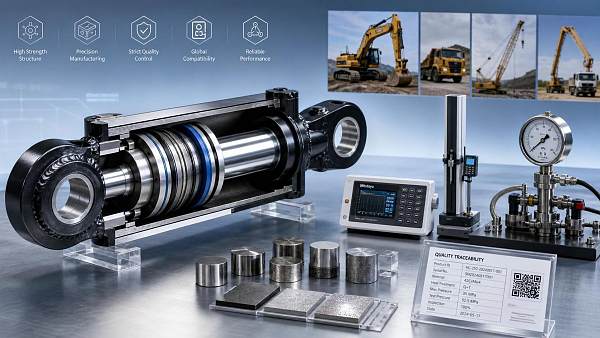
Third, compliance and documentation requirements are growing. Buyers in regulated sectors increasingly need material certificates, dimensional verification, testing records, and clear service documentation. If a repaired unit cannot deliver acceptable traceability or confidence in safe reuse, replacement becomes easier to justify.
What is driving the shift in decision criteria
The biggest driver is total cost of ownership. For procurement professionals, the true cost of a hydraulic cylinder includes inspection, removal, freight, teardown, machining, seals, chrome repair, pressure testing, reinstallation, and the cost of operational interruption. If repair resolves only the visible symptom while hidden fatigue, corrosion, or dimensional wear remain, the apparent savings disappear quickly.
A second driver is the maturity of replacement options. Buyers can now source application-specific cylinders with better coatings, improved rod materials, upgraded sealing packages, and refined design tolerances. In many cases, replacing older units with modernized equivalents reduces leak rates and extends service intervals.
A third driver is risk transfer. Vendors that provide stronger warranties, inspection reports, pressure test data, and clearer performance commitments allow procurement to defend decisions more confidently. This is especially important where safety, environmental release, or mission-critical equipment are involved. Even a well-priced repair may be commercially weak if liability remains unclear.
In selected sourcing reviews, teams may also encounter general catalog references such as 无. Even when such product information is limited, buyers should avoid relying on generic descriptions alone and instead insist on application-specific technical validation.
When repair remains the smarter option
Despite the shift toward reliability-led procurement, repair still makes strong sense in many scenarios. If the failure is isolated, clearly diagnosed, and limited to seals, minor rod polish damage, or non-structural wear, refurbishment may restore the cylinder efficiently. This is especially true when the original cylinder body, rod, ports, mounting geometry, and pressure envelope remain within specification.
Repair is also attractive when replacement lead times threaten production continuity. In sectors where custom dimensions or special mountings are common, a fast repair from a qualified service partner may preserve uptime while a spare or future replacement is planned more strategically.
However, procurement should only support repair when four conditions are present: the root cause is known, the repair scope is measurable, post-repair testing is available, and expected remaining life is commercially acceptable. Without these conditions, repair may simply postpone a larger failure event.
When replacement is becoming the preferred procurement choice
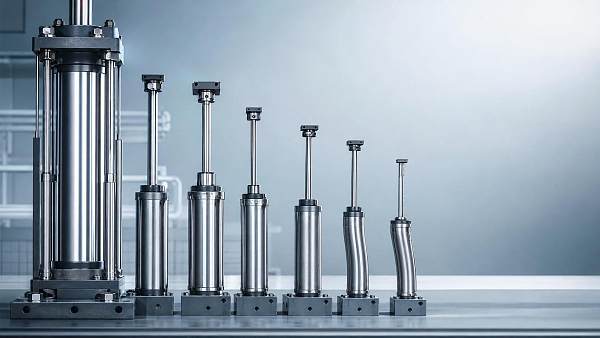
Replacement is increasingly favored where High-Pressure Hydraulic Cylinders show structural damage, severe scoring, rod bending, deep corrosion, repeated seal failure from worn surfaces, or evidence of pressure-cycle fatigue. In these cases, refurbishing may restore appearance but not dependable performance.
The case for replacement becomes even stronger when the cylinder is nearing the end of its design life, the operating environment has intensified, or the equipment now carries stricter safety and compliance expectations than when the original unit was installed. A new cylinder can also create a technical reset point, allowing procurement and engineering to standardize specifications, improve interchangeability, and reduce future service complexity.
For multinational buyers, replacement may also simplify vendor governance. Standardized new-build sourcing often delivers clearer quality agreements, agreed lead times, and better multi-site compatibility than ad hoc local repairs of inconsistent quality.
A practical decision matrix for procurement and maintenance
The most effective decisions combine technical evidence with commercial judgment. Rather than asking whether repair is cheaper today, buyers should ask which option produces the lower operational risk over the next service interval.
Who is most affected by this trend
The move toward more disciplined decisions on High-Pressure Hydraulic Cylinders affects several roles differently. Procurement managers face stronger pressure to justify value over time, not just secure a low initial price. Maintenance leaders need better failure diagnostics and service records. Operations teams want fewer interruptions. Quality and compliance teams increasingly expect test evidence and material traceability. Suppliers, meanwhile, are being pushed to provide more than parts; they must offer inspection depth, lifecycle support, and reliable delivery performance.
This is why supplier selection is becoming more strategic. A vendor that can inspect, recommend, document, and support both repair and replacement options gives buyers more flexibility. In some procurement workflows, even a sparse listing such as 无 may enter the sourcing conversation, but responsible teams should still require a full technical-commercial comparison before award.
What buyers should evaluate now
In the current market, procurement teams should strengthen five review points. First, confirm failure mode with evidence, not assumption. Second, compare repair and replacement using downtime-adjusted total cost, not only workshop price. Third, assess whether the existing cylinder design still matches present operating conditions. Fourth, verify testing, warranty, and traceability expectations before approving either path. Fifth, review spare strategy, because a planned replacement program often costs less than emergency sourcing.
It is also wise to classify cylinders by criticality. Not every unit requires the same response. Low-criticality assets may justify repair-first strategies, while high-criticality cylinders in continuous production, offshore, safety-sensitive, or remote operations often justify replacement thresholds much earlier.
Outlook: from reactive maintenance to reliability-led sourcing
The broader direction is clear: decisions around High-Pressure Hydraulic Cylinders are moving away from reactive maintenance habits and toward reliability-led sourcing. This does not mean replacement will always win. It means that repair must now prove its value through documented condition, predictable remaining life, and acceptable risk. Where it cannot, replacement becomes the more defensible business choice.
For procurement professionals, the real opportunity is to build a repeatable decision model with engineering, maintenance, and suppliers. If organizations want to judge how this trend affects their own operations, they should confirm a few questions now: Which cylinders are truly production-critical? Where are repeat failures occurring? How reliable are current repair vendors? What documentation is required for audits and safety? And at what cost point does replacement deliver better lifecycle value than another repair cycle?
Teams that answer those questions early will make better sourcing decisions, reduce avoidable downtime, and manage High-Pressure Hydraulic Cylinders with greater technical confidence and commercial control.
Recommended News
 Sep 30, 2026How to Evaluate Electro-Hydraulic Servo Response for High-Speed Motion ControlEvaluate electro-hydraulic servo response for high-speed motion control with practical metrics for bandwidth, settling time, stability, and reliable supplier selection.● Marcus Valve
 Sep 22, 2026Selecting High-Pressure Hydraulic Cylinders for Press Force, Stroke, and Duty CycleHigh-Pressure Hydraulic Cylinders for presses: match force, stroke, mounting, and duty cycle for safer, more reliable performance and reduced downtime.● Marcus Valve
 Sep 03, 2026How ASTM Stainless Steel Standards Help Prevent Corrosion Failures in Hydraulic SystemsStainless corrosion ASTM standards help prevent hydraulic failures through verified material selection, passivation, traceability, and targeted corrosion testing. Learn how to specify reliable systems.● Marcus Valve
 Aug 20, 2026How to Calculate a Safe Cylinder Buckling Safety Factor Under Real Load ConditionsCylinder buckling safety factor explained: learn how to calculate a reliable margin under real load conditions, including stroke, end fixity, misalignment, and dynamic forces.● Marcus Valve
 Jul 14, 2026Hydraulic Market Forecast 2026: Demand Drivers, Price Pressure, and Supply Chain RisksHydraulic market forecast 2026 reveals key demand drivers, price pressure, and supply chain risks across industrial sectors. Discover actionable insights for smarter sourcing and planning.● Marcus Valve
 Jul 13, 2026How to Evaluate ISO-Certified Hydraulic Components for Supplier ApprovalHydraulic components ISO certified supplier approval requires more than checking certificates. Learn how to verify traceability, testing, and supplier reliability for safer sourcing.● Marcus Valve
 Jul 13, 2026Environmental Hydraulic Fluid Compliance Explained: Standards, Labels, and Approval StepsEnvironmental hydraulic fluid compliance explained in a practical guide covering ISO 15380, labels, OEM approvals, and approval steps to reduce risk, delays, and sourcing mistakes.● Marcus Valve
 Jul 10, 2026Hydraulic Components for Construction Equipment: Which Parts Matter Most in System Design?Hydraulic components for construction equipment determine efficiency, control, uptime, and lifecycle cost. Discover which parts matter most in system design and how to choose smarter.● Marcus Valve
 Jul 10, 2026How to Evaluate a Heavy Duty Hydraulic Cylinder Manufacturer for Construction ProjectsHeavy duty hydraulic cylinder manufacturer selection affects uptime, safety, and cost. Learn how to compare quality, testing, documentation, and delivery strength for construction projects.● Marcus Valve
 Jul 09, 2026Hydraulic Cylinder Pressure Ratings Explained: How to Read PSI, Burst, and Working LimitsHydraulic cylinder pressure ratings explained clearly: learn how to read PSI, working pressure, and burst limits to choose safer, longer-lasting cylinders and avoid costly system failures.● Marcus Valve
 Jul 08, 2026What Does Filter Beta Ratio Mean in Europe and How Is It Used in Hydraulic Filtration?Filter beta ratio Europe explained: learn how beta ratings measure hydraulic filtration efficiency, support ISO-based comparisons, and help buyers choose reliable filters with confidence.● Marcus Valve
 Jul 02, 2026Steel Cylinder Buckling Load Explained: Formula, End Conditions, and Design LimitsSteel cylinder buckling load explained clearly: learn the Euler formula, end conditions, and real design limits to compare options, reduce risk, and choose safer, more reliable cylinder solutions.● Marcus Valve
 Jul 01, 2026Fluid Power vs Electric Actuation: Key Differences in Force, Control, and MaintenanceFluid Power vs electric actuation: compare force, control, energy use, and maintenance to choose the right system for uptime, precision, and lower lifecycle risk.● Marcus Valve
![]() Jun 04, 2026Hydraulic Manifold Block Factory Guide: What to Review Before Requesting a QuoteHydraulic manifold block factory selection starts before the quote. Learn what to review on machining, pressure testing, cleanliness, traceability, and lead times to compare suppliers with confidence.● Marcus Valve
Jun 04, 2026Hydraulic Manifold Block Factory Guide: What to Review Before Requesting a QuoteHydraulic manifold block factory selection starts before the quote. Learn what to review on machining, pressure testing, cleanliness, traceability, and lead times to compare suppliers with confidence.● Marcus Valve May 30, 2026Why does hydraulic automation in construction news matter?Hydraulic automation in construction news reveals how smarter equipment boosts safety, productivity, energy efficiency, and reliability—see what trends matter now.● Marcus Valve
 May 28, 2026How Advanced Hydraulic systems cut downtime in heavy useAdvanced Hydraulic systems help cut downtime in heavy-use operations by improving pressure stability, reducing wear, and enabling faster fault detection for more reliable project delivery.● Marcus Valve
 May 27, 2026How Advanced Hydraulic systems cut downtime in heavy useAdvanced Hydraulic systems reduce downtime in heavy-use operations through better pressure stability, cleaner fluid control, and predictive maintenance for higher uptime and safer performance.● Marcus Valve
 May 26, 2026How Advanced Hydraulic systems cut downtime in high-load linesAdvanced Hydraulic systems cut downtime in high-load lines by improving pressure stability, durability, and maintenance planning. Discover smarter ways to boost uptime and control project risk.● Marcus Valve
 May 25, 2026How Advanced Hydraulic systems cut downtime in heavy useAdvanced Hydraulic systems cut downtime in heavy-use operations with stable pressure, durable components, and smarter maintenance insights. Learn how to improve uptime and lower lifecycle costs.● Marcus Valve
 May 24, 2026How Advanced Hydraulic systems cut downtime in heavy useAdvanced Hydraulic systems cut downtime in heavy-use operations by improving pressure stability, filtration, and component life. See how smarter hydraulic design boosts uptime and lowers service risk.● Marcus Valve
 May 23, 2026High-Pressure Hydraulic Cylinders selection mistakes to avoidHigh-Pressure Hydraulic Cylinders selection mistakes can cause downtime, leaks, and safety risks. Learn 10 buyer-focused pitfalls to avoid for smarter sourcing and longer service life.● Marcus Valve
 May 22, 2026How to compare high-pressure hydraulic cylindersHigh-Pressure Hydraulic Cylinders comparison guide: evaluate pressure ratings, seal reliability, fatigue life, compliance, and lifecycle cost to choose safer, longer-lasting solutions.● Marcus Valve
 May 21, 2026How to judge High-Pressure Hydraulic Cylinders for safetyHigh-Pressure Hydraulic Cylinders safety starts with more than rated pressure. Learn how to assess materials, seals, fatigue, testing, and compliance for safer, longer-lasting performance.● Marcus Valve
 May 21, 2026How Advanced Hydraulic designs cut downtime in harsh dutyAdvanced Hydraulic design helps cut downtime in harsh-duty industries through better sealing, fatigue resistance, corrosion protection, and predictive maintenance insights.● Marcus Valve