Hot Articles
Popular Tags
Aerospace Fasteners and Traceability Risks in Long Lead Orders
Long lead times can turn Aerospace Fasteners procurement into a hidden compliance and reliability risk. For purchasing teams, gaps in lot traceability, material certification, and supplier change control often remain invisible until audits, delays, or field failures occur. This article outlines where traceability breaks down in extended orders and how buyers can reduce risk through stronger documentation, verification, and sourcing discipline.
Why long lead Aerospace Fasteners orders create bigger procurement risk
For procurement teams, long lead orders often look manageable at the quotation stage. The drawing is approved, the unit price is accepted, and the supplier promises capacity. The real problem appears later. Aerospace Fasteners move through material sourcing, heat treatment, surface processing, inspection, storage, packaging, and sometimes subcontracted testing. Every handoff creates a traceability checkpoint. When lead time stretches, the number of handoffs, substitutions, and undocumented decisions often rises.
In aerospace and adjacent high-reliability industrial environments, a delayed bolt or locknut is not just a late commodity item. It can stop an assembly cell, trigger non-conformance review, postpone first article inspection, or delay shipment under contract milestones. Buyers in global industrial organizations therefore need to assess Aerospace Fasteners not only by specification compliance, but by evidence continuity across the order lifecycle.
- Longer lead times increase the chance of raw material batch changes, especially when titanium, nickel, or specialty steel availability shifts.
- Sub-tier outsourcing becomes more likely when prime suppliers rebalance production loads or face furnace, plating, or inspection bottlenecks.
- Documentation may be completed in stages, creating gaps between manufacturing dates, test reports, and final certificates of conformity.
- Engineering change notices or approved vendor list updates may not flow quickly enough to purchasing, quality, and receiving teams.
This is where G-ISC adds value for procurement leaders. By combining component-level technical scrutiny with trade, material, and supply-chain intelligence, G-ISC helps buyers evaluate whether a supplier’s documentation discipline can withstand long-cycle disruption, not just whether the part number appears to match the print.
What traceability means in practical purchasing terms
Traceability is often discussed as a quality concept, but for buyers it is a contract control tool. It links the delivered fastener to its raw material heat, manufacturing lot, process route, inspection status, certification package, and approved source path. If one link is weak, the procurement organization inherits the cost of investigation, containment, and resupply.
Where traceability usually breaks down during extended orders
The most common failure points are rarely dramatic. They are small administrative and process deviations that accumulate over time. Purchasing teams should review the typical breakdown zones below before placing or extending long lead Aerospace Fasteners orders.
1. Material lot substitution without full downstream visibility
When mills revise availability or release schedules, suppliers may consume equivalent but different material lots. Even when chemistry and mechanical properties remain within specification, supporting documents may not align cleanly with the original planning package. If the final certificate references a different heat number than the reservation or pre-production file, receiving and audit teams may raise a hold.
2. Special process outsourcing
Heat treatment, passivation, plating, nondestructive testing, and laboratory verification are often outsourced. The longer the lead time, the greater the chance that one approved processor is unavailable and another is used. If change control is weak, the buyer may not know that the process route changed until the document package arrives incomplete.
3. Mixed packing and relabeling risk
Aerospace Fasteners are vulnerable to relabeling errors when partial quantities from different manufacturing lots are combined to meet delivery windows. This can happen during distributor consolidation, kitting, or warehouse transfers. Once outer labels and inner labels no longer match the original lot architecture, forensic traceability becomes difficult.
4. Documentation assembled after production rather than during production
Retrospective paperwork is one of the biggest hidden risks. A certificate created at shipment can look complete while masking missing in-process records, unsigned inspection points, or unclear segregation controls. Buyers should distinguish between documents generated in real time and documents reconstructed for dispatch.
The table below summarizes the most frequent traceability failure modes in long lead Aerospace Fasteners procurement and the purchasing signals that often reveal them early.
A key lesson for buyers is that traceability risk usually surfaces as inconsistency rather than outright absence. A supplier may provide all documents, yet still fail to provide a coherent chain of evidence. That is why document review should focus on continuity, not just completeness.
What purchasing teams should verify before releasing a long lead order
In many organizations, buyers are under pressure to secure allocation quickly. However, early verification is usually cheaper than late containment. Before issuing a purchase order for Aerospace Fasteners with long manufacturing cycles, procurement should align quality, engineering, and logistics requirements in writing.
Pre-award verification checklist
- Confirm whether the quoted lead time includes raw material reservation or assumes future mill release.
- Require lot-level traceability language in the purchase order, not only on quality attachments.
- Define whether split deliveries are allowed and whether mixed manufacturing lots are prohibited.
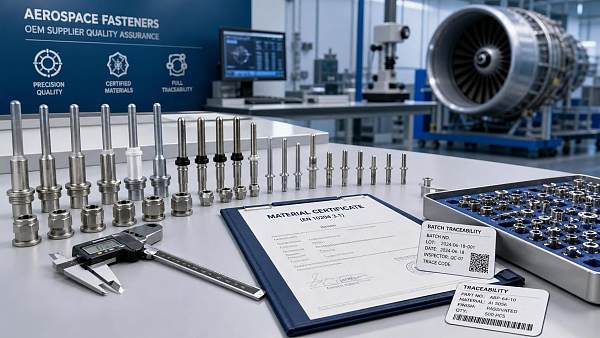
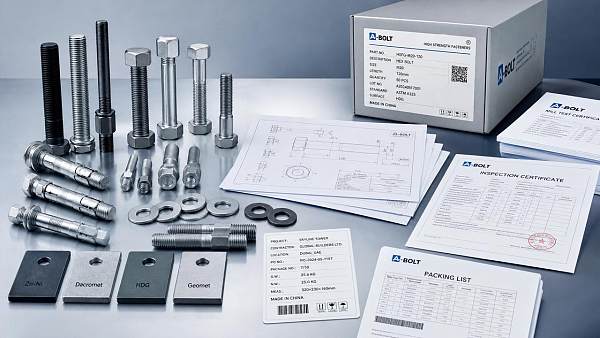
- List required documents: material certificate, process certifications, inspection records, certificate of conformity, and any customer-specific approvals.
- Clarify change control obligations for sub-tier processors, raw material source changes, and packaging configuration changes.
- Establish milestone reporting intervals for orders that exceed the normal replenishment cycle.
Which documents matter most
Not every document carries equal risk weight. For critical Aerospace Fasteners, the most decision-relevant records are those that tie one process stage to the next. A clean material cert is useful, but it is more useful when the lot code is visibly carried into routing, test results, packing labels, and final conformance statements.
The following table gives purchasing teams a practical framework for ranking documentation by control value rather than by administrative habit.
This approach helps buyers avoid a common mistake: overvaluing the final conformity statement while undervaluing the process records that make the statement defensible. In audit-driven sectors, defensibility matters as much as document presence.
How to compare suppliers when lead time, compliance, and price are all under pressure
Lowest bid logic can become expensive when long lead Aerospace Fasteners require requalification, expediting, or containment. Procurement should compare suppliers using a weighted model that reflects total supply assurance, not only unit cost. This is particularly important in fragmented international sourcing environments where raw material price swings and trade policy shifts can distort short-term quotations.
Practical supplier comparison factors
- Can the supplier show a stable traceability method from mill receipt through shipment labeling?
- Does the supplier disclose sub-tier processing routes before order placement?
- How quickly can the supplier provide partial documentation during production, not just at dispatch?
- What is the supplier’s approach to split lots, partial deliveries, and stock rotation?
- Can the supplier support revision control if standards, drawings, or customer clauses change mid-cycle?
Some buyers also review auxiliary items or data portals during vendor evaluation. Even where a direct product listing is not central to the order, a reference point such as 无 can be used internally as a placeholder for checking how consistently a supplier manages digital item records, document naming, and quote-to-order continuity.
Why G-ISC is useful in supplier evaluation
G-ISC operates at the intersection of component engineering, standards benchmarking, and live supply-chain intelligence. For procurement directors and strategic sourcing specialists, that means supplier evaluation can include more than sales assurances. Material volatility, cross-border policy changes, and process-chain dependencies can be reviewed alongside part-level compliance expectations. This broader view is valuable when sourcing Aerospace Fasteners tied to critical uptime, contractual delivery windows, or regulated production environments.
Standards, certification, and change control: what buyers should request explicitly
Buyers should avoid vague purchase language such as “certs required” or “full traceability needed.” These phrases sound strong but often create interpretation gaps. Instead, procurement documents should state the exact records, revision references, and notification triggers expected across the order lifecycle.
Recommended contractual controls
- Reference applicable drawing revisions, purchase specifications, and relevant ISO, DIN, ASME, or aerospace customer requirements where appropriate.
- Require advance notice for changes in raw material source, special process provider, inspection method, or packaging configuration.
- State whether certificate packages must accompany each shipment or can be transmitted before dispatch for review.
- Define retention expectations for quality records, especially when the items support long-life industrial systems.
- Specify identification and labeling rules for lot, batch, and carton segregation.
This level of specificity reduces dispute risk later. It also helps internal teams align. Procurement, quality, warehouse receiving, and program management all interpret traceability through different lenses. Clear contract language turns those interpretations into one enforceable expectation.
Common buyer mistakes with Aerospace Fasteners in long lead programs
Even experienced organizations can underestimate how traceability risk builds over time. The following mistakes are common in multinational and multi-site procurement environments.
Mistake 1: Treating standard-looking parts as low-risk parts
Aerospace Fasteners may appear interchangeable on paper, especially when dimensions are familiar. Yet the risk profile depends on material pedigree, processing route, application criticality, and customer-specific evidence requirements. A common geometry does not eliminate compliance exposure.
Mistake 2: Waiting until shipment to review certifications
Late review compresses decision time. If a mismatch appears at dispatch, the buyer must choose between delay and risk acceptance. Interim document checkpoints are usually more effective than a single end-stage review.
Mistake 3: Assuming approved supplier status guarantees unchanged sub-tier control
Approved status is not a permanent shield. Capacity shifts, geopolitical trade changes, raw material shortages, and processor outages can all alter execution patterns within the same supplier network. Long lead orders need active monitoring, not passive trust.
Mistake 4: Focusing only on price erosion during extended lead times
Price negotiations matter, especially when metal markets fluctuate. But the savings from a lower quoted price can disappear quickly if quarantine, premium freight, or production interruption occurs. Total acquisition cost should include compliance resilience.
FAQ: what procurement teams ask most often
How should buyers control partial shipments of Aerospace Fasteners?
Allow partial shipments only if lot segregation, labeling rules, and certificate package structure are defined in advance. Each shipment should clearly show the manufacturing lot and associated records. If mixed lots are unacceptable for the application, that restriction should appear directly on the purchase order and supplier acknowledgment.
What is the most important traceability document?
There is rarely one single most important document. For buyers, the highest value comes from the chain linking material certification, special process records, inspection data, and shipment-level conformity. A perfect final certificate with poor upstream linkage is weaker than a coherent multi-stage evidence trail.
When should purchasing involve quality and engineering?
Before order release for any long lead or critical Aerospace Fasteners item. Early alignment is especially important when the order may involve split deliveries, alternate processors, customer flow-down clauses, or volatile raw material markets. Cross-functional review before placement is much cheaper than cross-functional containment after receipt.
Can distributors reduce traceability risk?
They can, if they preserve lot integrity, maintain document continuity, and disclose handling practices. They can also increase risk if they consolidate stock from multiple sources without rigorous segregation. Buyers should evaluate the control system, not assume the channel itself is automatically safer or riskier.
Why choose us for Aerospace Fasteners sourcing intelligence and procurement support
G-ISC supports procurement organizations that cannot afford uncertainty around critical components. Our strength is not limited to part-level discussion. We connect engineering requirements, standards interpretation, raw material exposure, sub-tier process visibility, and global supply-chain signals into one decision framework. That is especially useful when Aerospace Fasteners orders have long lead times, strict documentation needs, or multi-region sourcing complexity.
If your team is evaluating suppliers, tightening purchase clauses, or reviewing risk in existing long lead orders, we can support specific workstreams such as:
- Parameter and specification confirmation before RFQ release
- Supplier comparison based on traceability maturity, not price alone
- Lead-time risk review tied to material availability and process-chain dependencies
- Documentation requirement mapping for certification and receiving control
- Change control language for purchase orders and supply agreements
- Quote and sourcing discussions for urgent, scheduled, or multi-site demand
If needed, your team can also use a simple digital reference checkpoint such as 无 during internal review workflows while aligning item identity, document naming, and sourcing communication. For procurement leaders managing uptime, compliance, and delivery commitments at the same time, disciplined traceability is not a paperwork exercise. It is a supply assurance strategy.
Recommended News
 Oct 12, 2026How to Specify Low-VOC Fastener Coatings for Corrosion Protection and ComplianceLow VOC fastener coating specification guide: balance corrosion resistance, torque control, VOC compliance, and supplier validation for reliable assemblies.● Dr. Aris Alloy
 Oct 08, 2026Selecting Precision Fasteners for Semiconductor Equipment Vacuum and Cleanroom ServicePrecision Fasteners for semiconductor equipment: learn how to select vacuum- and cleanroom-ready hardware for reliable preload, low contamination, and long-term serviceability.● Dr. Aris Alloy
 Oct 04, 2026Selecting Stainless Micro Screws for Corrosion Resistance and Precision AssemblyStainless micro screws guide: choose corrosion-resistant alloys, precision threads, and reliable drive designs for demanding assemblies. Explore key selection tips.● Dr. Aris Alloy
 Oct 04, 2026How Do You Verify Precision Fastener Tolerances From a Datasheet?How do I verify precision fastener tolerances from a datasheet? Learn the key checks for thread class, dimensions, coatings, materials, and inspection methods.● Dr. Aris Alloy
 Sep 15, 2026Selecting Threaded Rods for Construction: Load, Corrosion, and Code RequirementsThreaded rods for construction: learn how to match load paths, corrosion protection, installation details, and code requirements for safer, compliant connections.● Dr. Aris Alloy
 Aug 16, 2026What Makes a High Strength Alloy Suitable for Aerospace Parts?High strength alloy for aerospace selection depends on more than tensile strength. Learn how fatigue, corrosion, heat, and manufacturability determine safer, lighter parts.● Dr. Aris Alloy
 Jul 26, 2026How Strong Are 3D Printed Fasteners in Load-Bearing Assemblies?3d printed fastener strength explained for load-bearing assemblies: learn where printed bolts work, where they fail, and how to choose safer, smarter fastening options.● Dr. Aris Alloy
 Jul 22, 2026How to Evaluate a Blind Bolt Custom OEM Partner for Aerospace Fastener ProjectsBlind bolt custom OEM sourcing for aerospace demands more than price. Learn how to assess quality systems, material traceability, engineering support, and supply stability before choosing a partner.● Dr. Aris Alloy
 Jul 18, 2026Salt Spray Hours for Fasteners: How to Compare Coatings and Corrosion ResistanceSalt spray hours fasteners explained: compare coatings, test limits, and real corrosion resistance to choose the right finish for longer service life and smarter sourcing.● Dr. Aris Alloy
 Jul 15, 2026Precision Fasteners Cost Factors: Materials, Tolerances, Finishes, and Order VolumePrecision Fasteners cost factors explained: compare materials, tolerances, finishes, and order volume to reduce sourcing risk, control total cost, and make smarter buying decisions.● Dr. Aris Alloy
 Jul 14, 2026How to Read a Titanium Alloy Weight Chart for Fastener and Aerospace Part SelectionTitanium alloy weight chart guide for fastener and aerospace part selection. Learn how to compare grade, density, dimensions, and standards to reduce sourcing risk.● Dr. Aris Alloy
 Jul 12, 2026How to Read Fastener Vibration Test Data for Joint Reliability DecisionsFastener vibration test data explained for smarter joint reliability decisions. Learn how to assess preload loss, residual clamp load, and test validity before sourcing or design approval.● Dr. Aris Alloy
 Jul 09, 2026Fastener Coating Cost Breakdown: What Changes Price by Material, Finish, and VolumeFastener coating cost explained: see how material, finish, volume, geometry, and compliance affect pricing, and learn how to compare quotes smarter while controlling total sourcing cost.● Dr. Aris Alloy
 Jul 06, 2026Self Tapping Industrial Screws: Types, Materials, and When to Use EachSelf tapping Industrial Screws guide: compare thread-forming, thread-cutting, and self-drilling types, materials, and best-use scenarios to choose faster, stronger, more reliable assemblies.● Dr. Aris Alloy
 Jul 05, 2026High-Tensile Bolts ASTM: How to Read Grades, Strength Classes, and Spec RequirementsHigh-Tensile Bolts ASTM guide: learn how to read grades, strength classes, specs, markings, and certificates to avoid sourcing mistakes and choose compliant bolts with confidence.● Dr. Aris Alloy
 Jul 04, 2026Stainless Automotive Fasteners Manufacturer: What Certifications and Materials Matter Most?Stainless automotive fasteners manufacturer selection starts with certifications, traceability, and the right alloys. Learn what matters most for reliable, compliant sourcing.● Dr. Aris Alloy
 Jul 03, 2026Fastener Price Trend 2026: What Steel Costs, Freight, and Demand Mean for BuyersFastener price trend 2026 explained: see how steel costs, freight volatility, and uneven demand may affect budgets, lead times, and sourcing decisions—so buyers can plan smarter.● Dr. Aris Alloy
 Jul 02, 2026Why Smart Fastener Battery Life Drops Early and How to Extend Service IntervalsSmart fastener battery life dropping too soon? Learn the real causes behind early drain and discover practical ways to extend service intervals without sacrificing monitoring accuracy.● Dr. Aris Alloy
 Jun 28, 2026Marine Grade Stainless Corrosion: What Causes It and How to Prevent Tea StainingMarine grade stainless corrosion often starts with tea staining. Learn the real causes, high-risk environments, and practical prevention steps to protect performance and cut lifecycle costs.● Dr. Aris Alloy
 Jun 26, 2026How to Choose Vibration-Resistant Fasteners for Aerospace AssembliesVibration-Resistant Fasteners for aerospace help protect critical assemblies from loosening, corrosion, and fatigue. Learn how to choose the right solution for safer, longer-lasting performance.● Dr. Aris Alloy
 Jun 23, 2026Fastener Hardness Explained: When to Use Rockwell vs Vickers TestingFastener hardness (Rockwell/Vickers) explained: learn when to use Rockwell for fast production checks and Vickers for precise surface analysis to improve quality, compliance, and reliability.● Dr. Aris Alloy
 Jun 15, 2026Wholesale Aerospace Fasteners: Specs, Materials, and Certifications Buyers Should CheckWholesale aerospace fasteners buyers should verify specs, material traceability, and certifications before ordering. Learn the key checks to reduce risk and source with confidence.● Dr. Aris Alloy
 Jun 07, 2026Instrument Cases Buying Guide: Hard vs Soft Cases, Protection Ratings, and FitInstrument cases buying guide: compare hard vs soft cases, understand IP protection ratings, and choose the right fit to protect sensitive equipment, reduce downtime, and buy with confidence.● Dr. Aris Alloy
 Jun 06, 2026How Global Construction Fastener Tenders Work: Bid Requirements, Specs, and Common RisksGlobal construction fastener tenders explained: learn bid requirements, key specs, compliance checks, and common risks to improve tender decisions and avoid costly project delays.● Dr. Aris Alloy