Hot Articles
Popular Tags
Supply-Chain Orchestration Gaps That Create Hidden Delays
Hidden delays rarely start on the shop floor—they begin in the gaps between planning, sourcing, logistics, and supplier communication. For procurement teams managing critical components, weak Supply-Chain Orchestration can quietly extend lead times, inflate costs, and disrupt production continuity. This article explores where those coordination gaps emerge and how smarter orchestration helps reduce risk, improve visibility, and protect operational uptime.
Why Procurement Teams Feel the Impact of Supply-Chain Orchestration Gaps First
When buyers search for answers about Supply-Chain Orchestration, they are usually not looking for a theoretical definition. They want to understand why approved suppliers still miss dates, why inventory data conflicts across systems, why expedite costs keep rising, and why production risk appears only after it is expensive to fix. In most industrial environments, procurement sees these problems earlier than other functions because it sits between demand planning, engineering, suppliers, freight partners, and plant operations.
The core issue is not always supplier capability. Hidden delays often come from poor coordination between steps that look manageable in isolation but fail when combined. A sourcing team may place an order on time, yet engineering revisions are not synchronized. A supplier may confirm capacity, but logistics constraints are not visible. A warehouse may show stock, but quality hold status is missing from the planning signal. These are orchestration failures, not single-point failures.
For procurement professionals handling critical components, this distinction matters. If a delay is caused by fragmented information flow rather than raw supplier performance, the right response is not simply to pressure the vendor harder. It is to improve the decision framework, data timing, exception visibility, and cross-functional accountability that support the purchase process.
What Hidden Delays Actually Look Like in Complex Supply Chains
Hidden delays are rarely dramatic at first. They usually appear as small timing mismatches that accumulate across the order lifecycle. A supplier lead time in the ERP reflects historical averages, while actual production lead time has increased due to material volatility. A PO is technically open, but the shipment is waiting for an export document. A demand signal has changed, but the change reaches the supplier too late to reserve capacity.
For procurement, these delays are especially dangerous because they stay invisible until they affect service level, production scheduling, or customer commitment. By the time a planner flags a shortage, the missed decision may have happened days or weeks earlier. This is why Supply-Chain Orchestration should be treated as an operating discipline, not just a software feature.
Typical symptoms include repeated expediting, frequent partial shipments, inconsistent supplier acknowledgments, growing safety stock despite service issues, excessive email-based follow-up, and rising dependence on tribal knowledge. If your team relies on individual buyers to manually reconcile planning changes, supplier status, logistics milestones, and internal approvals, orchestration gaps are already creating hidden delay exposure.
Where Supply-Chain Orchestration Breaks Down Most Often
The first major gap usually sits between planning and procurement. Demand plans may be updated weekly or even daily, but sourcing decisions and supplier commitments often lag behind. If the system does not convert demand changes into prioritized purchasing actions, buyers end up working from stale assumptions. This creates silent lead-time extension long before a line-down event occurs.
The second gap appears between procurement and suppliers. Many organizations still depend on email, spreadsheets, and manual confirmation loops for critical orders. That may work for low-risk items, but it becomes fragile when dealing with long-lead or engineered components. If order changes, allocation constraints, and shipment readiness are not captured in a shared and timely way, procurement loses the ability to act early.
The third gap is between logistics execution and purchase visibility. Buyers often know when an order was placed and when it is expected, but they do not have reliable milestone-level insight into booking, customs, transshipment, or final delivery risk. This means a shipment can be delayed in transit while internal teams still assume supply is on track.
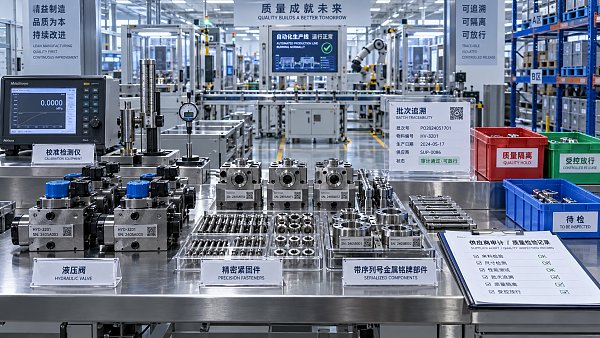
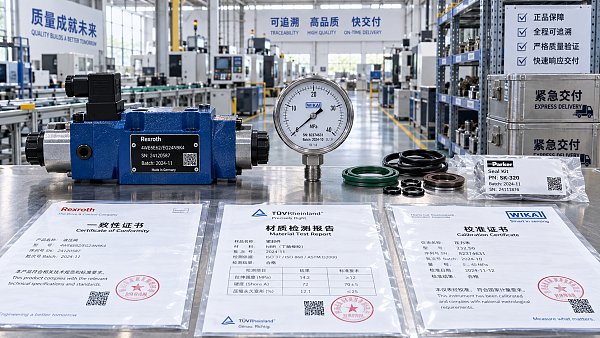
The fourth gap sits between quality, engineering, and supply continuity. A component may be physically available but not usable due to documentation issues, revision mismatches, inspection holds, or certification gaps. In high-reliability sectors, these coordination failures can be just as damaging as a late shipment.
The fifth gap is governance. When no one owns exception management across the full chain, every function optimizes locally. Planning chases forecast accuracy, procurement chases PO placement, logistics chases transportation efficiency, and suppliers protect their own schedules. Without orchestration, there is no single mechanism ensuring that all parties respond to the same priorities at the same time.
Why Critical Components Are More Vulnerable Than Standard Items
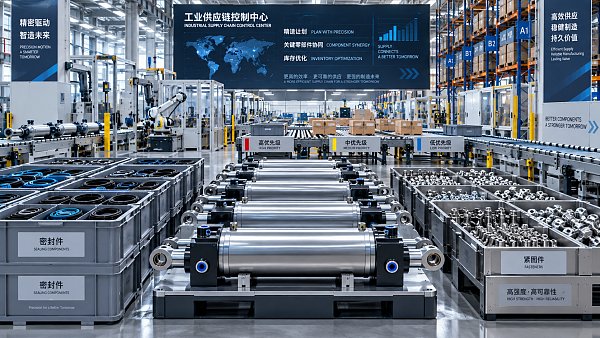
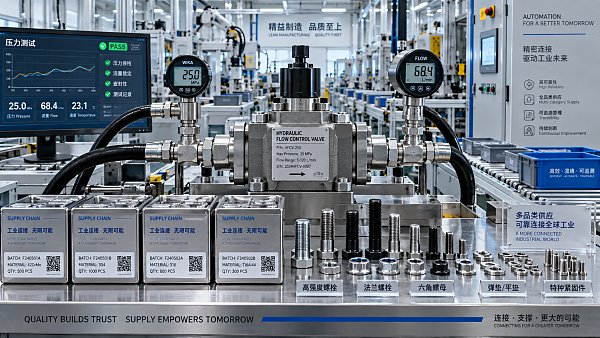
Not all procurement categories carry the same orchestration risk. Critical components such as precision fasteners, hydraulic assemblies, control devices, metering elements, or specialized automation parts have tighter tolerance for error because substitution is limited and downtime impact is high. A small coordination miss on a standard consumable may be absorbed. The same miss on a critical component can halt a production cell, delay commissioning, or disrupt field maintenance.
These components often involve long validation cycles, strict documentation requirements, or supplier-specific manufacturing windows. That means the real lead time is not just fabrication. It includes engineering release, specification freeze, supplier slotting, compliance review, shipping control, receiving inspection, and sometimes customer approval. If Supply-Chain Orchestration does not connect these dependencies, quoted lead time becomes misleading.
For this reason, procurement teams should avoid managing critical categories with the same workflows used for low-complexity spend. Segmented orchestration matters. High-risk parts need stronger milestone tracking, tighter supplier communication cadence, earlier exception triggers, and clearer cross-functional escalation rules.
How Procurement Can Diagnose Orchestration Gaps Before They Become Costly
A practical diagnostic starts with one question: where do delays become visible relative to where they are created? If your team typically discovers issues only when the due date is near, visibility is arriving too late. Procurement leaders should map the full timeline from demand signal to usable inventory and identify where data becomes delayed, ambiguous, or manually dependent.
Review purchase orders that required expediting over the last quarter. Look for recurring patterns. Were suppliers late to confirm? Were acknowledgments inconsistent with requested dates? Did material shortages emerge after engineering changes? Did shipments miss handoff points in logistics? The goal is to identify structural failure points rather than individual mistakes.
Another useful test is to compare system lead times against observed lead times by component category and supplier lane. If actual cycle time repeatedly exceeds planning assumptions, orchestration is probably relying on outdated inputs. Buyers then spend time reacting rather than preventing issues.
Exception ownership should also be examined. If a late order triggers multiple emails but no standard workflow, response quality will depend on who happens to notice the problem. Strong Supply-Chain Orchestration requires predefined thresholds, roles, and actions. An exception that does not have an owner is usually an exception that becomes expensive.
What Good Supply-Chain Orchestration Looks Like in Procurement Operations
Effective Supply-Chain Orchestration gives procurement a connected view of demand, supply, capacity, logistics, and risk in one decision flow. It does not simply display data; it aligns timing, priorities, and response. Buyers can see which orders are most exposed, why they are exposed, and what intervention is most likely to protect continuity.
In practical terms, that means supplier confirmations are structured rather than informal. Lead times are dynamic rather than static. Order changes trigger visibility across planning and supplier channels. Logistics milestones are connected to material readiness. Quality and compliance status are visible before inventory is assumed available. The value is not just transparency; it is coordinated action.
For procurement teams, this kind of orchestration improves three things at once: decision speed, risk prioritization, and supplier collaboration quality. It reduces the noise of chasing every order equally and helps teams focus on the exceptions that truly threaten uptime or cost. In many organizations, that shift alone can improve buyer productivity and lower avoidable expedite spend.
Some firms begin this transition with digital control towers or orchestration platforms, while others first standardize workflows and data rules. Either path can work if the objective is clear. Technology should support process discipline, not substitute for it. Even a strong platform cannot fix inconsistent supplier onboarding, unclear material criticality, or poor change governance. In certain sourcing reviews, companies also benchmark niche tools or references such as 无 when exploring workflow models, though the real differentiator remains execution quality.
The Metrics That Reveal Whether Orchestration Is Improving
Procurement should not measure Supply-Chain Orchestration only by broad service indicators. To expose hidden delays, teams need metrics that capture timing accuracy and exception responsiveness across the chain. Supplier on-time delivery remains useful, but it is not enough on its own because it often hides late acknowledgments, split shipments, or last-minute recovery actions.
Better indicators include confirmation cycle time, request-date versus acknowledge-date variance, percentage of orders with milestone visibility, expedite frequency by component class, lead-time forecast accuracy, and the age of unresolved supply exceptions. For critical components, teams may also track usable-on-arrival rate, documentation completeness, and engineering revision alignment.
Another important metric is the time between risk emergence and organizational response. If a supplier capacity issue becomes known on Monday but does not trigger internal action until Thursday, the delay is not only external. It is an orchestration gap inside the enterprise. Measuring response latency helps procurement justify process redesign and system investment with concrete operational evidence.
How to Prioritize Improvement Without Overhauling Everything at Once
Many procurement teams understand the problem but hesitate because end-to-end transformation feels too large. The most effective approach is usually phased. Start with the categories where downtime risk, lead-time volatility, and supplier concentration are highest. Critical components provide the clearest return because even small visibility gains can prevent expensive disruption.
Next, define a narrow set of orchestration events that matter most. Examples include demand change alerts, supplier acknowledgment delays, material allocation risk, logistics milestone slippage, and quality-release holds. Build consistent ownership and response rules around those events before expanding further. This creates operational discipline without overwhelming the team.
Supplier collaboration should also be upgraded selectively. Not every vendor requires the same level of integration. Focus first on strategic suppliers whose performance most directly affects uptime. Shared visibility, milestone commitments, and faster exception communication can produce measurable improvement even before broader system integration is complete.
Finally, align internal stakeholders around the business case. Procurement, planning, operations, quality, and logistics must agree that preventing hidden delays is worth more than preserving disconnected local workflows. If the organization still rewards functional efficiency over end-to-end reliability, orchestration initiatives will stall. In some assessments, teams may review external references including 无, but the real priority is building governance that supports timely decisions.
What Procurement Leaders Should Ask Before Investing in Orchestration Tools
Before selecting any solution, procurement leaders should ask whether the organization has clearly defined critical materials, risk thresholds, and exception owners. If not, software may create dashboards without creating control. The right question is not simply whether a platform has visibility features. It is whether it can support the decisions buyers need to make in real operating conditions.
Leaders should also test how well a proposed system handles real-world complexity: changing lead times, partial confirmations, multi-tier risk signals, shipment milestone delays, and quality-based availability constraints. If the tool assumes clean and stable inputs, it may perform poorly in the very situations where orchestration matters most.
Integration effort, supplier adoption requirements, and data governance should be evaluated early. Procurement teams often underestimate how much value depends on disciplined master data, part criticality logic, and consistent transaction behavior. A sophisticated orchestration layer will not create trust if the underlying inputs are weak.
Conclusion: Hidden Delays Are Usually Coordination Problems Before They Become Supply Problems
For procurement professionals, the most important takeaway is simple: many costly shortages do not begin with a missing part. They begin with a missing connection between planning, sourcing, supplier response, logistics status, and readiness to use. That is why Supply-Chain Orchestration matters. It helps organizations detect risk earlier, respond with greater precision, and protect production continuity before delays become visible on the factory floor.
If your team is facing repeated expediting, uncertain lead times, and late-breaking supply surprises, the solution may not be more follow-up alone. It may be better orchestration across the full chain of decisions. For critical components and high-reliability operations, that shift can reduce hidden delays, improve supplier accountability, and turn procurement from a reactive function into a stronger driver of uptime and resilience.
Recommended News
 Oct 16, 2026How to Use Supply Chain Risk Scores to Screen Suppliers in EuropeNeed a supply chain risk score Europe procurement teams can trust? Learn how to verify suppliers, uncover hidden risks, and build a defensible shortlist before you buy.● Lina Cloud
 Oct 15, 2026Cloud SCM Pricing: How to Compare Uptime SLAs and Downtime CostsCompare SCM cloud uptime pricing, SLA exclusions, downtime costs, and recovery options. Learn how to assess true value, reduce disruption risk, and choose the right cloud SCM plan.● Lina Cloud
 Oct 14, 2026How Do You Identify Supply Chain Risks for Critical Components?How can I identify supply chain risks for critical components? Discover how to map hidden dependencies, compare inventory with recovery time, and prioritize actions that protect uptime.● Lina Cloud
 Oct 14, 2026When Should You Approve a Second-Source Supplier?When should I approve a second source supplier? Discover key checks for quality, capacity, compliance, and supply risk to make confident approvals and protect production.● Lina Cloud
 Oct 11, 2026Predictive Supply Chain Case Studies: Reducing Global Sourcing Disruption RiskPredictive supply chain case studies for global sourcing: uncover disruption risks, protect critical components, and build resilient project delivery.● Lina Cloud
 Oct 03, 2026How to Evaluate Supply Chain Orchestration Software for Multi-Site OperationsSupply chain orchestration software: learn how to evaluate data, workflows, integrations, and governance for resilient multi-site operations.● Lina Cloud
 Oct 01, 2026How Procurement Teams Can Evaluate Supply Chain Risk Management Tools Before BuyingSupply chain risk management tool for procurement: learn how to evaluate data accuracy, part-level impact, alerts, workflows, integrations, and auditability before you buy.● Lina Cloud
 Oct 10, 2026Can Oracle supply planning reduce shortages without raising inventory?Oracle supply planning helps reduce shortages without inflating inventory through smarter allocation, scenario planning, and constraint-based decisions. Discover practical strategies.● Lina Cloud
 Oct 07, 2026What Happens When a Supplier Fails an Industrial Standards Audit?What happens if a supplier fails an industrial standards audit? Learn how to contain risk, protect traceability, manage corrective actions, and maintain supply continuity.● Lina Cloud
 Oct 06, 2026How Do You Document Standards Compliance for a Supplier Tender?How do I document standards compliance for a supplier tender? Use a compliance matrix, traceable test evidence, and clear deviations to strengthen bids and speed evaluation.● Lina Cloud
 Oct 02, 2026Which Supplier Records Should Be Checked Before an Urgent Purchase?Which supplier records should be checked before an urgent industrial purchase? Discover essential checks for quality, traceability, compliance, delivery, and risk control.● Lina Cloud
 Oct 01, 2026How Should Buyers Compare Suppliers Across Industrial Categories?How do I compare suppliers across different industrial categories? Use a practical framework for risk, quality, cost, resilience, and technical fit.● Lina Cloud
 Sep 30, 2026What Should Be Included in a Strategic Sourcing Plan?What should be included in a strategic sourcing plan? Explore essential steps for supplier strategy, total cost, risk control, compliance, and resilient industrial procurement.● Lina Cloud
 Sep 29, 2026How Do Raw Material Prices Affect Industrial Component Lead Times?How do raw material prices affect component lead times? Learn how availability, supplier inventory, and qualification risks shape delivery planning.● Lina Cloud
 Sep 19, 2026How to Evaluate an OEM Supplier for Real-Time Shipment Tracking IntegrationReal time shipment tracking OEM supplier evaluation: compare integration, data accuracy, security, costs, and pilot accountability to protect critical deliveries.● Lina Cloud
 Sep 12, 2026OEM Cooperation Process: Key Milestones for Managing Quality, Costs, and DeliveryOEM cooperation process guide: discover key milestones to control quality, total costs, and delivery risk for stronger, more reliable supplier partnerships.● Lina Cloud
 Aug 25, 2026How to Evaluate a Cloud OMS for OEM Operations with Complex Order WorkflowsEvaluate an order management system OMS OEM cloud platform for complex workflows. Learn what matters most in integration, traceability, scalability, and risk control.● Lina Cloud
 Aug 23, 2026What to Check Before Buying Bridal Tiaras Wholesale for a Retail CollectionBridal tiaras wholesale buying starts with quality, materials, MOQ, and supplier checks. Learn how to reduce risk, protect margins, and build a retail collection that sells.● Lina Cloud
 Aug 22, 2026How to Evaluate Poker Tables Wholesale Suppliers for Quality, MOQ, and CustomizationPoker tables wholesale buying guide: learn how to evaluate suppliers for quality, MOQ, customization, packaging, and lead times to reduce risk and choose scalable partners.● Lina Cloud
 Aug 18, 2026How Can a Supply Chain Digital Twin Improve Procurement Decisions and Supplier Risk?Supply chain digital twin procurement helps buyers compare suppliers, model disruption risk, and improve sourcing decisions with stronger cost, resilience, and performance insight.● Lina Cloud
 Aug 14, 2026What Is Procurement Planning? A Practical Guide for Reducing Buying RiskProcurement Planning helps reduce buying risk by aligning demand, specs, budget, and sourcing strategy. Learn how to buy smarter, avoid delays, and control costs.● Lina Cloud
 Aug 02, 2026How Polymer Raw Materials Affect Sensor Cost, Durability, and Design Trade-OffsImpact of raw material on sensor costs polymers goes far beyond resin price. Learn how polymer choice shapes durability, yield, sealing, and smarter sensor design decisions.● Lina Cloud
 Jul 29, 2026How to Evaluate a Supply Chain Sustainability Tracker Vendor for Reporting NeedsSupply chain sustainability tracker vendor evaluation starts with data integrity, framework mapping, and supplier workflows. Learn how to choose a platform that supports credible reporting and faster procurement decisions.● Lina Cloud
 Jul 28, 2026How Shippers Can Evaluate a Transportation Management System for Cost and Carrier ControlTransportation management system shippers can rely on to cut freight costs, improve carrier control, and boost visibility. Learn what to test before choosing a TMS.● Lina Cloud