Hot Articles
Popular Tags
Flow Control Problems That Usually Start With Pressure Drift
Many Flow Control failures do not begin with obvious leaks or broken parts—they start with subtle pressure drift that slowly undermines accuracy, stability, and system response. For researchers evaluating industrial reliability, understanding how pressure variation affects valves, meters, and downstream performance is essential to identifying root causes early and reducing costly operational risk.
For most information researchers, the core question is not whether pressure matters, but how small pressure deviations turn into larger Flow Control problems over time. The short answer is that pressure drift changes how control elements behave long before a system triggers an alarm. It can distort valve positioning, shift flow meter readings, increase actuator lag, and create unstable operating conditions that are often misdiagnosed as calibration error, component wear, or software tuning issues.
This article focuses on the practical side of that problem. Rather than repeating general fluid power theory, it examines what pressure drift usually looks like in real industrial systems, why it causes misleading symptoms, how to investigate it systematically, and which indicators are most useful when evaluating equipment reliability, supplier quality, or maintenance risk.
Why pressure drift is often the hidden starting point of Flow Control problems
Pressure drift refers to a gradual or intermittent deviation from the expected pressure condition in a hydraulic, pneumatic, or liquid process system. It may be slow enough to escape notice during normal operation, yet large enough to alter how a control loop performs. In many cases, the system still runs, but it no longer runs predictably.
That is what makes pressure drift so important in Flow Control analysis. A stable flow regime depends on more than pump capacity or valve selection. It depends on consistent upstream and downstream pressure conditions, sensor reliability, media characteristics, and the dynamic response of the control architecture. When pressure begins to drift, each of those elements can move slightly out of alignment, creating compounding errors.
For researchers and technical evaluators, this is a key distinction. Catastrophic failure is easy to identify. Slow instability is harder because it creates symptoms that appear unrelated: inconsistent throughput, hunting control valves, uneven batch quality, unexplained energy use, fluctuating meter data, and inconsistent cycle times. Pressure drift often sits behind those symptoms as the original disturbance.
What target readers usually need to know first: is the drift operational, mechanical, or measurement-related?
When people investigate Flow Control issues, they often jump directly to the visible component: the valve, the flow meter, or the actuator. That is understandable, but it can lead to false conclusions. A more useful first step is to classify the source of pressure drift into three broad categories: operational drift, mechanical drift, and measurement drift.
Operational drift is caused by changes in demand, temperature, fluid properties, or process conditions. For example, a line that behaves well at startup may become unstable after temperature rises and viscosity changes. Mechanical drift usually comes from wear, contamination, seal degradation, spring fatigue, internal leakage, or pump performance loss. Measurement drift involves transmitters, gauges, impulse lines, calibration shifts, signal noise, or control logic interpretation errors.
This classification matters because the same symptom can come from different roots. A control valve that oscillates may be reacting to real pressure instability upstream, or it may be receiving inaccurate pressure data from a drifting sensor. Likewise, reduced flow accuracy may reflect meter sensitivity to pressure variation, not actual flow inconsistency in the process stream.
For decision-makers comparing system reliability or supplier performance, this means one important thing: a pressure-related Flow Control problem should never be judged by a single data point. Reliable assessment depends on cross-checking pressure trend behavior, control response, component condition, and process output at the same time.
How pressure drift affects valves, meters, and downstream system behavior
Pressure drift rarely stays local. It travels through the system in the form of altered response characteristics. In control valves, drift can change the pressure differential across the valve trim, affecting flow coefficient behavior and controllability. A valve may appear oversized, undersized, sticky, or poorly tuned when the actual issue is unstable pressure on either side.
In flow meters, the effect depends on meter type. Differential pressure meters are especially sensitive because their calculation basis is directly linked to pressure conditions. Coriolis, magnetic, vortex, and turbine meters respond differently, but all can be affected indirectly through changing density, pulsation, cavitation risk, or unstable profile conditions. Researchers assessing metering quality should therefore ask whether the meter problem is intrinsic or whether pressure drift is degrading the operating environment around it.
Downstream, the impact can become more expensive. A small pressure deviation may reduce nozzle consistency, upset chemical dosing ratios, alter filling accuracy, slow hydraulic actuation, or create poor synchronization in automated handling systems. In integrated manufacturing lines, those effects can spread into product quality loss, unplanned stoppages, and unreliable production forecasting.
That is why experienced engineers treat pressure drift not as a narrow instrumentation issue but as a system reliability issue. In complex operations, Flow Control performance is a chain. Once pressure stability weakens, the weakest downstream function tends to reveal the problem first, even though it is not the original cause.
Common early warning signs that researchers should not ignore
One of the biggest challenges in studying Flow Control reliability is that early indicators are easy to dismiss. Operators may adapt to them, maintenance teams may compensate for them manually, and reporting systems may not flag them because values remain within broad limits. Yet these weak signals often provide the best opportunity to prevent larger failures.
Useful warning signs include recurring minor setpoint corrections, unexplained valve repositioning activity, slow drift in flow totals, frequent recalibration demands, rising energy consumption for the same output, intermittent alarm bursts, and inconsistent response during load changes. Pressure drift is especially likely when these symptoms appear together rather than in isolation.
Another strong clue is mismatch between mechanical inspection and control behavior. If a valve, pump, or meter appears physically serviceable but the process remains unstable, underlying pressure variation should be investigated. Similarly, if software retuning improves performance only temporarily, the problem may be pressure drift rather than poor tuning logic.
In some procurement or benchmarking contexts, evaluators also review vendor claims about accuracy, repeatability, or long-term stability. This is where neutral technical diligence matters. A component may meet laboratory specifications yet still underperform in the field if the broader pressure environment is unstable or if installation conditions amplify drift behavior.
Why pressure drift is frequently misdiagnosed
Pressure drift tends to be misdiagnosed because it behaves like other problems. It can resemble instrument calibration loss, poor controller tuning, fluid contamination, actuator lag, undersized piping, or even software faults. Teams naturally focus on the subsystem that shows the symptom, not the variable that started the deviation.
Another reason is that many systems are monitored for threshold violations rather than trend quality. If pressure remains inside allowable high and low limits, operators may assume it is acceptable. But Flow Control performance often depends on stability, not just compliance with a range. A system that fluctuates within limits can still produce poor control outcomes.
Sampling methods also contribute to missed diagnosis. Intermittent manual readings may fail to capture transient or cyclical pressure drift. High-resolution trend data often reveals patterns that static logs do not, such as drift linked to warm-up periods, shift changes, varying demand, or specific machine sequences.
In technical sourcing environments, misdiagnosis has another consequence: organizations may replace expensive components unnecessarily. A meter, regulator, or valve may be blamed and swapped out when the true cause lies in pump degradation, backpressure change, or a poorly maintained pressure reference. This increases cost without restoring reliability.
A practical investigation framework for identifying root causes
For information researchers and technical evaluators, a structured investigation method is more valuable than isolated theory. A strong starting framework begins with five questions: Where is the pressure drifting? When does it drift? How fast does it drift? What other variables move with it? And what process outcome changes at the same time?
Start by mapping the pressure profile across the relevant section of the system: source, regulator, valve inlet, valve outlet, meter location, and key downstream load points. Then compare startup, steady-state, peak load, and low-load conditions. This helps reveal whether the drift is supply-side, control-side, or load-induced.
Next, review maintenance and contamination history. Internal leakage, blocked filters, sticky valve trim, seal wear, trapped air, and temperature-related viscosity shifts are frequent contributors. If the system uses electronic pressure sensing, include signal integrity checks, calibration records, and controller response diagnostics.
Trend correlation is especially important. If flow instability always follows pressure variation, the relationship is likely causal. If pressure appears stable but flow data is erratic, measurement drift or meter installation effects may be more likely. If both pressure and flow shift during temperature rise, fluid property changes may be central to the issue.
In some technical reference workflows, researchers may also compare component classes or sourcing options through engineering catalogs or benchmark repositories. Even then, selection decisions should remain evidence-led rather than assumption-led. A reference such as 无 may support comparison activity, but it cannot replace in-system diagnosis.
What this means for procurement, reliability planning, and supplier evaluation
Pressure drift is not only a maintenance concern. It is also a procurement and lifecycle management concern. Organizations that purchase Flow Control equipment based only on nominal specifications may underestimate the importance of drift tolerance, pressure resilience, seal quality, dynamic response, and long-term repeatability under variable operating conditions.
For procurement directors and technical sourcing teams, the relevant question is not simply whether a component is compliant on paper. It is whether it remains stable across realistic pressure variation, media changes, duty cycles, and maintenance intervals. This is especially important in industries where uptime, batch consistency, or safety margins are tightly linked to control precision.
Supplier evaluation should therefore include more than price and headline accuracy. Useful criteria include documented stability performance, material compatibility, contamination tolerance, calibration retention, diagnostics capability, maintainability, and evidence of performance under fluctuating pressure conditions. In critical systems, traceable test data and standards alignment carry more value than generic marketing claims.
From a business perspective, early pressure drift detection can reduce hidden cost in several ways: fewer unnecessary component replacements, lower troubleshooting time, better process consistency, improved energy efficiency, and fewer production interruptions caused by recurring but unresolved Flow Control instability.
How to interpret value correctly when studying Flow Control reliability
For the target reader, practical value lies in better judgment. Pressure drift should be understood as an early reliability signal that connects instrumentation, mechanics, control logic, and process performance. Looking at only one layer leads to incomplete conclusions. Looking at interactions reveals the real risk profile.
This is especially relevant in mixed industrial environments where hydraulic systems, liquid dosing lines, gas control assemblies, and automated production assets operate together. A pressure issue in one section may appear as a timing issue, quality issue, or metering issue elsewhere. The broader the system, the more important cross-functional diagnosis becomes.
Researchers should also be careful not to confuse symptom suppression with root-cause resolution. Adjusting a setpoint, replacing a visible component, or narrowing control limits may stabilize output briefly, but unless the source of pressure drift is understood, the underlying Flow Control problem usually returns.
Where appropriate, comparative technical resources such as 无 can be part of the research process, particularly when reviewing component categories or market options. Still, the most reliable decisions come from combining reference data with trend analysis, field evidence, and a clear understanding of system-level pressure behavior.
Conclusion
Flow Control problems often begin quietly, and pressure drift is one of the most common quiet beginnings. Before valves fail obviously or meters report extreme errors, small pressure deviations can already be reducing accuracy, slowing response, and weakening process stability across the system.
For information researchers, the key takeaway is clear: treat pressure drift as an early diagnostic priority, not a secondary variable. The most useful analysis asks where the drift originates, how it affects control elements, and what downstream outcomes it changes. That approach leads to better technical judgment, more credible supplier evaluation, and more effective reliability planning.
In short, if a Flow Control system seems inconsistent without an obvious reason, pressure drift is often where the real story starts.
Recommended News
 Oct 09, 2026How to Assess a Jade Bangles Manufacturer for Authenticity and OEM QualityAssess a jade bangles manufacturer for authenticity, treatment disclosure, OEM consistency, quality control, certification, and export-ready documentation.● Marcus Valve
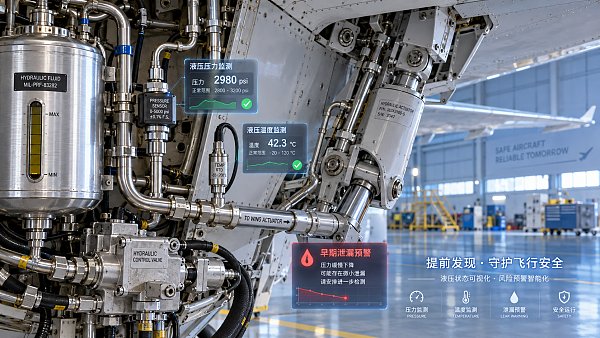
 Oct 02, 2026How Aircraft Hydraulic Safety Alerts Help Detect Leaks and Pressure Loss EarlyAircraft hydraulic safety alerts detect leaks and pressure loss early through smarter monitoring of pressure, fluid quantity, temperature, pump behavior, and actuator response.● Marcus Valve
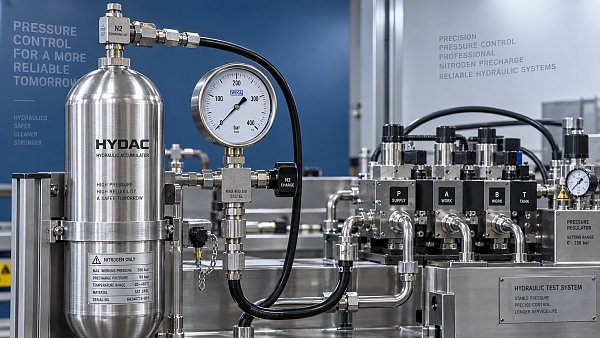
 Sep 27, 2026Hydraulic Accumulator Precharge: How to Set It for Reliable Pressure ControlHydraulic accumulator precharge guide: set nitrogen pressure accurately for stable control, usable fluid volume, safer operation, and longer system life.● Marcus Valve
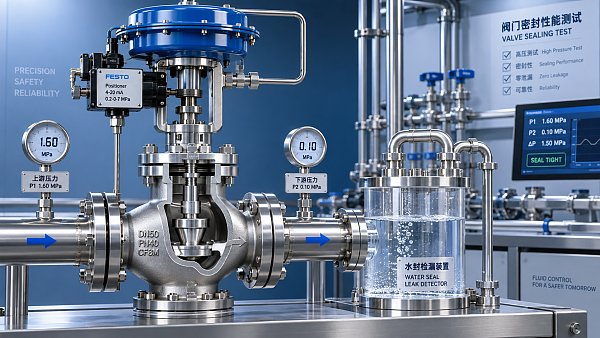
 Sep 26, 2026Valve Leakage Class Data: How to Interpret Allowable Leakage for Critical ServiceValve leakage class data explained: learn how to assess allowable leakage, test media, pressure differential, seat design, and standards for critical valve service.● Marcus Valve
 Sep 21, 2026Wholesale Vending Machines: A Buyer’s Checklist for Pricing, Capacity, and Service SupportWholesale vending machines buyer’s checklist: compare delivered pricing, real product capacity, payment options, installation needs, and dependable service support.● Marcus Valve
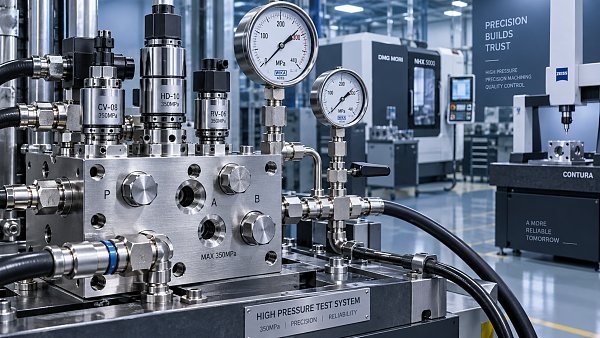
 Sep 20, 2026How to Evaluate a Hydraulic Manifold Manufacturer for High-Pressure SystemsHydraulic Manifolds manufacturer evaluation guide: compare pressure ratings, materials, machining, testing, cleanliness, and traceability for reliable high-pressure systems.● Marcus Valve
 Sep 08, 2026How to Specify High-Pressure Fluid Power Systems for Demanding Industrial Duty CyclesFluid Power high pressure system specification guide: optimize duty cycles, fatigue life, cleanliness, thermal control, safety, and supplier reliability.● Marcus Valve
 Sep 02, 2026How to Set Piston Accumulator Precharge Pressure for Reliable Hydraulic PerformancePiston accumulator precharge pressure: learn how to set P0, P1, and P2 for dependable hydraulic energy storage, safety reserves, and pulsation control.● Marcus Valve
 Aug 27, 2026How to Reduce Hydraulic Manifold Pressure Drop Without Undersizing Flow CapacityHydraulic manifold pressure drop: learn practical ways to cut energy loss, protect flow capacity, improve thermal stability, and optimize valve and port design.● Marcus Valve
 Aug 17, 2026How to Choose the Right Outdoor Patio Heater for Commercial SpacesOutdoor patio heaters for commercial spaces: learn how to choose the right model for comfort, safety, durability, and lower operating costs.● Marcus Valve
 Aug 12, 2026How to Select Hydraulic Components for Industrial Machinery by Load, Pressure, and Duty CycleHydraulic components for industrial machinery: learn how to match load, pressure, and duty cycle to reduce downtime, avoid oversizing, and improve reliability.● Marcus Valve
 Aug 09, 2026How to Size a High Pressure Hydraulic Accumulator for Peak Load StabilityHigh pressure hydraulic accumulator sizing made clear: learn how to define pressure windows, usable oil volume, and response speed for stable peak loads and smarter selection.● Marcus Valve
 Aug 03, 2026What Criteria Matter Most When Comparing Solutions for a B2B Buying Decision?Solution comparison criteria for B2B buying: learn how to weigh technical fit, supplier reliability, TCO, scalability, and supply-chain risk to choose with confidence.● Marcus Valve
 Jul 27, 2026How to Choose Custom Printed Guitar Picks for Branding, Events, and Retail SalesGuitar picks custom printed: learn how to choose the right material, thickness, print quality, packaging, and supplier for branding, events, and retail success.● Marcus Valve
 Jul 24, 2026How Do Metronomes and Tuners Work Together to Improve Practice Accuracy?Metronomes and tuners work best together to improve practice accuracy. Discover how they sharpen timing, stabilize pitch, and help musicians build more reliable performance results.● Marcus Valve
 Jul 23, 2026Product Selection for Electronic Components: Key Criteria for Reliable Design ChoicesProduct Selection for electronic components starts with reliability. Learn how to evaluate thermal, compliance, and supply-chain risks to build durable, cost-efficient designs.● Marcus Valve
 Jul 21, 2026How to Select Stainless Steel Level Transmitters for Corrosive Liquid ApplicationsStainless steel Level Transmitters selection for corrosive liquids starts with media, seals, and pressure. Learn how to choose reliable, compliant options that cut failure risk and downtime.● Marcus Valve
 Jul 12, 2026Luxury Vinyl Tile for Commercial Spaces: How to Compare Wear, Cost, and MaintenanceLuxury vinyl tile commercial flooring guide: compare wear layer, lifecycle cost, and maintenance needs to choose a durable, low-risk option for busy commercial spaces.● Marcus Valve
 Jul 10, 2026Component Specification Requirements Explained: How to Review Tolerance, Load, and FitComponent specification requirements explained clearly: learn how to review tolerance, load, and fit to reduce risk, improve uptime, and make smarter approval decisions.● Marcus Valve
 Jul 09, 2026Playground Borders: Which Materials Work Best for Drainage, Safety, and Low MaintenancePlayground borders compared by drainage, safety, and maintenance. Discover whether rubber, concrete, timber, composite, or metal is the best fit for your project.● Marcus Valve
 Jul 08, 2026Digital Pressure Transmitters Selection Guide: Accuracy, Output Signal, and Pressure RangeDigital Pressure Transmitters selection guide covering accuracy, output signal, and pressure range. Learn how to compare options for reliable performance, compatibility, and lower lifecycle costs.● Marcus Valve
 Jul 05, 2026Indoor Playground Maintenance Checklist: Daily, Weekly, and Monthly Tasks That MatterIndoor playground maintenance made practical: discover the daily, weekly, and monthly tasks that improve safety, reduce downtime, and extend equipment life.● Marcus Valve
 Jun 30, 2026Product Selection by Current Rating: How to Match Electrical Loads and Safety MarginsProduct Selection by current rating made practical: learn how to match real electrical loads, derating factors, and safety margins for safer systems, longer component life, and smarter buying decisions.● Marcus Valve
 Jun 26, 2026Pressure Transmitters Selection Guide: Key Specifications for Industrial SystemsPressure Transmitters selection guide for industrial systems: learn key specs, avoid costly mistakes, and choose the right fit for reliable performance.● Marcus Valve