Hot Articles
Popular Tags
Why High-Pressure Hydraulic Cylinders prices vary so much
Why do High-Pressure Hydraulic Cylinders prices vary so much? In most cases, the gap is not random and it is not explained by supplier margin alone. Price differences usually reflect a mix of design pressure, material grade, sealing technology, machining precision, testing standards, certification requirements, order volume, and after-sales risk. For researchers, commercial evaluators, and channel partners, the real question is not “Who offers the lowest quote?” but “What exactly is included in that quote, and what operational risk does it remove—or create?”
For industrial buyers, a low upfront price can become expensive if the cylinder fails early, leaks under load, causes downtime, or cannot meet compliance requirements in the destination market. On the other hand, not every high-priced unit is automatically better. The key is to understand which cost drivers are justified by application demands and which are simply commercial markups. This article explains the main reasons behind wide price variation in High-Pressure Hydraulic Cylinders and provides a practical framework for evaluating value, not just unit cost.
What buyers are really trying to understand when they compare High-Pressure Hydraulic Cylinders prices
The core search intent behind this topic is commercial and technical comparison. Readers want to know why similar-looking cylinders can have sharply different prices across manufacturers, countries, and distribution channels. They are usually trying to make one of three decisions:
- Whether a higher-priced cylinder is genuinely better or just branded differently
- How to compare quotations fairly across suppliers
- How to avoid hidden risk in procurement, resale, or project bidding
For information researchers, the priority is understanding the market logic. For business evaluators, it is supplier credibility, lifecycle cost, and compliance exposure. For distributors and agents, it is margin protection, product consistency, claim risk, and long-term account retention. That is why price analysis must go beyond catalog dimensions and look at the full technical-commercial package.
Pressure rating and application duty are major reasons for price gaps
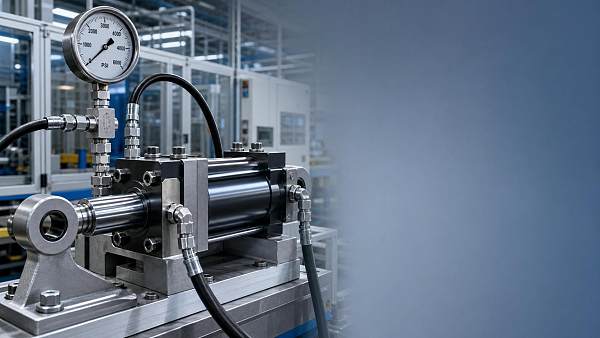
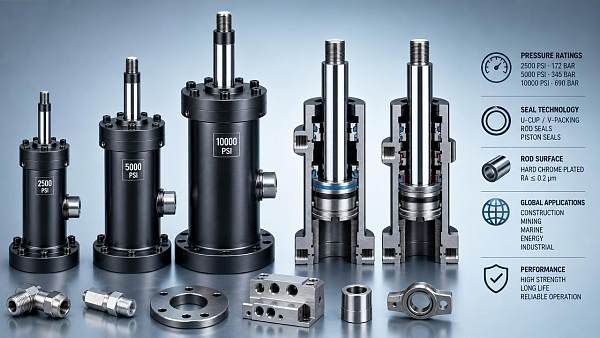
One of the biggest factors is the actual pressure requirement. A cylinder designed for intermittent medium-duty industrial use is not priced the same as one built for continuous high-pressure service in mining, offshore, heavy lifting, forging, or steel-processing environments.
Higher pressure ratings increase cost because they affect nearly every part of the product:
- Thicker barrel walls or higher-strength tubing
- Stronger piston rods with improved surface treatment
- More robust end-cap design and fastening method
- Tighter machining tolerances to manage sealing performance
- More extensive hydrostatic and fatigue testing
Duty cycle matters too. Two cylinders may share the same bore and stroke, yet one is designed for occasional use while the other is engineered for constant cycling under shock loads. The second will usually cost more because reliability requirements are significantly higher.
Material selection can change the cost structure dramatically
Material volatility is a direct and often underestimated pricing driver. Steel grade, alloy composition, rod material, seal compound, and corrosion protection all influence the final quote.
For example, pricing may rise when a supplier uses:
- High-tensile alloy steel instead of standard carbon steel
- Induction-hardened and hard-chrome-plated rods
- Stainless steel or corrosion-resistant coatings for marine or chemical environments
- Premium polyurethane, PTFE, or specialized sealing systems for temperature and media resistance
Global fluctuations in steel, nickel, chromium, and energy costs also affect production economics. That means a quote from one quarter may differ from another even when the drawing is unchanged. Regional sourcing conditions, tariffs, and freight volatility further widen the pricing spread between suppliers.
Engineering tolerances and manufacturing quality are not visible in a simple quote
Many buyers compare cylinders by external dimensions alone, but the hidden cost often sits in machining quality. Bore straightness, rod concentricity, surface finish, seal groove precision, weld quality, and thread accuracy all affect performance and service life.
A lower-cost supplier may still offer a functional product, but if tolerances are looser, the buyer may face:
- Premature seal wear
- Internal leakage
- Rod scoring
- Reduced efficiency under high load
- More frequent maintenance intervals
This is why two offers with similar technical descriptions can differ sharply in price. The more expensive option may include tighter process control, better inspection routines, and lower field failure probability. In industrial procurement, this difference can be commercially justified very quickly if downtime is costly.
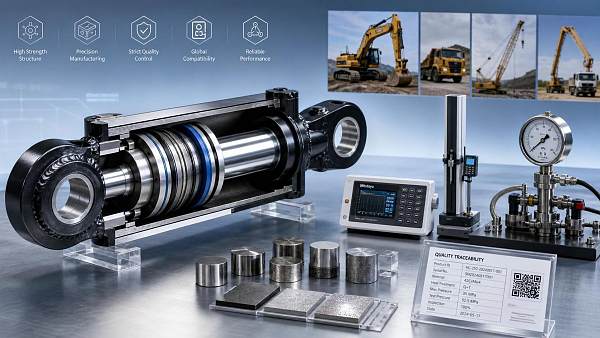
ISO compliance, testing, and traceability add real cost—but also reduce risk
Certification and documentation are a major dividing line in price. Buyers in regulated industries or export-driven projects often need more than a basic product. They may require ISO-aligned manufacturing processes, pressure test records, material certificates, dimensional inspection reports, or traceability by batch and serial number.
These requirements add cost because they demand:
- Documented quality systems
- Qualified inspection personnel
- Controlled raw material sourcing
- Testing equipment and reporting infrastructure
- Administrative discipline across production and shipment
From a sourcing perspective, this is one of the clearest reasons prices vary. A supplier selling into low-regulation replacement markets may operate with minimal documentation. A supplier serving OEMs, EPC contractors, or multinational plants must maintain a much heavier compliance burden. The price difference often reflects that institutional capability.
Customization versus standardization changes both manufacturing and commercial cost
Standard cylinders benefit from repeat production, stocked components, stable tooling, and shorter lead times. Custom cylinders, by contrast, often require design adaptation, non-standard mounting, unusual stroke lengths, special ports, application-specific seals, or modified rod ends.
That means higher prices may come from:
- Engineering review time
- Small-batch or one-off production
- Special raw material procurement
- Additional testing or validation
- Longer setup and lower manufacturing efficiency
For distributors and agents, this distinction matters commercially. Standardized products may deliver faster turnover and easier resale, while custom products may bring stronger margins but also greater warranty and specification risk.
Supplier type and region often explain as much as product design
Prices can differ not only because of the cylinder itself, but because of who is supplying it and from where. An OEM-focused manufacturer, an export trading company, a regional distributor, and a low-cost workshop may all quote the same general specification differently.
Regional price variation can be driven by:
- Labor cost differences
- Energy and utility costs
- Environmental and safety compliance burdens
- Import duties and trade policy
- Local availability of alloy steel and sealing components
- Shipping cost and packaging standards
Commercial structure matters too. A very low quote may exclude technical support, application review, field service, packaging upgrades, or claims responsiveness. A higher quote may include these elements implicitly. In B2B procurement, service architecture is often embedded in the price.
Order quantity, lead time, and inventory strategy affect the final number
High-Pressure Hydraulic Cylinders are not priced in a vacuum. MOQ, annual volume, forecast visibility, and delivery urgency all influence cost. Buyers requesting small quantities with urgent lead times usually receive higher prices because production planning becomes less efficient and air freight or premium scheduling may be required.
In contrast, strategic buyers can lower pricing by:
- Consolidating specifications
- Committing to annual volume frameworks
- Using forecast-based ordering
- Approving standard designs where possible
- Reducing frequent engineering changes
For channel partners, inventory strategy is especially important. A cheap source with unstable lead times can damage customer retention. A slightly more expensive source with predictable replenishment may generate better long-term profitability.
Low price can hide lifecycle costs that matter more than purchase cost
This is where many evaluations go wrong. Buyers focus on initial price but underweight the total cost of ownership. In high-load hydraulic systems, the real cost includes installation reliability, maintenance frequency, replacement intervals, production loss during failure, and warranty handling complexity.
A lower-cost cylinder may become a poor commercial choice if it leads to:
- Unexpected shutdowns
- Fluid leakage and safety exposure
- Frequent seal replacement
- Inconsistent stroke performance
- Customer claims for distributors and resellers
This is why experienced evaluators compare not only the selling price, but also expected service life, field failure rate, maintenance burden, and documentation quality. In many industrial environments, reliability has a measurable financial value.
How to evaluate quotations more accurately
To compare suppliers fairly, buyers should request a structured quotation breakdown rather than relying on a one-line price. The following checklist helps expose meaningful differences:
- Working pressure and test pressure
- Bore, stroke, rod diameter, and mounting type
- Barrel, rod, and end-cap material grades
- Rod surface treatment and corrosion resistance level
- Seal brand or seal material specification
- Manufacturing standard and quality certification
- Test reports, traceability, and inspection documentation
- Lead time, packaging standard, and shipping terms
- Warranty terms and after-sales support scope
If a supplier cannot clearly define these points, the price is harder to trust, whether it is low or high. In some sourcing workflows, buyers also review benchmark listings or archived technical references such as 无, but the more important step is validating specification equivalence before judging price competitiveness.
What distributors, agents, and commercial evaluators should prioritize
For channel partners, price variance should be viewed through the lens of account risk and market fit. The best-priced source is not always the best supply partner. A more useful evaluation model includes:
- Consistency across batches
- Claim rate and replacement responsiveness
- Support for customized customer requirements
- Brand reputation in the target market
- Documentation needed for industrial end users
- Margin stability under raw material volatility
For evaluators in larger organizations, the focus should be on supplier resilience: can the manufacturer maintain quality under scale, manage cross-border shipment reliability, and provide transparent traceability if a field issue emerges? Those capabilities often justify a higher quote because they reduce operational uncertainty.
The right question is not “Why is one cylinder cheaper?” but “What risk am I buying?”
Price variation in High-Pressure Hydraulic Cylinders is usually a signal, not an anomaly. It reflects differences in engineering standard, material integrity, process discipline, testing rigor, supply-chain structure, and service commitment. Some price gaps are justified by real performance and compliance value; others come from branding, channel layering, or inefficient commercial models.
The smartest approach is to compare suppliers on delivered value: technical fit, lifecycle reliability, documentation depth, lead-time stability, and support quality. For researchers, this improves market understanding. For commercial evaluators, it sharpens procurement decisions. For distributors and agents, it protects customer trust and long-term margin.
In short, the wide spread in High-Pressure Hydraulic Cylinders prices makes sense once the full specification and risk profile are visible. The most cost-effective option is rarely the cheapest unit—it is the one that meets performance demands with the lowest total commercial and operational risk.
Recommended News
 Sep 30, 2026How to Evaluate Electro-Hydraulic Servo Response for High-Speed Motion ControlEvaluate electro-hydraulic servo response for high-speed motion control with practical metrics for bandwidth, settling time, stability, and reliable supplier selection.● Marcus Valve
 Sep 22, 2026Selecting High-Pressure Hydraulic Cylinders for Press Force, Stroke, and Duty CycleHigh-Pressure Hydraulic Cylinders for presses: match force, stroke, mounting, and duty cycle for safer, more reliable performance and reduced downtime.● Marcus Valve
 Sep 03, 2026How ASTM Stainless Steel Standards Help Prevent Corrosion Failures in Hydraulic SystemsStainless corrosion ASTM standards help prevent hydraulic failures through verified material selection, passivation, traceability, and targeted corrosion testing. Learn how to specify reliable systems.● Marcus Valve
 Aug 20, 2026How to Calculate a Safe Cylinder Buckling Safety Factor Under Real Load ConditionsCylinder buckling safety factor explained: learn how to calculate a reliable margin under real load conditions, including stroke, end fixity, misalignment, and dynamic forces.● Marcus Valve
 Jul 14, 2026Hydraulic Market Forecast 2026: Demand Drivers, Price Pressure, and Supply Chain RisksHydraulic market forecast 2026 reveals key demand drivers, price pressure, and supply chain risks across industrial sectors. Discover actionable insights for smarter sourcing and planning.● Marcus Valve
 Jul 13, 2026How to Evaluate ISO-Certified Hydraulic Components for Supplier ApprovalHydraulic components ISO certified supplier approval requires more than checking certificates. Learn how to verify traceability, testing, and supplier reliability for safer sourcing.● Marcus Valve
 Jul 13, 2026Environmental Hydraulic Fluid Compliance Explained: Standards, Labels, and Approval StepsEnvironmental hydraulic fluid compliance explained in a practical guide covering ISO 15380, labels, OEM approvals, and approval steps to reduce risk, delays, and sourcing mistakes.● Marcus Valve
 Jul 10, 2026Hydraulic Components for Construction Equipment: Which Parts Matter Most in System Design?Hydraulic components for construction equipment determine efficiency, control, uptime, and lifecycle cost. Discover which parts matter most in system design and how to choose smarter.● Marcus Valve
 Jul 10, 2026How to Evaluate a Heavy Duty Hydraulic Cylinder Manufacturer for Construction ProjectsHeavy duty hydraulic cylinder manufacturer selection affects uptime, safety, and cost. Learn how to compare quality, testing, documentation, and delivery strength for construction projects.● Marcus Valve
 Jul 09, 2026Hydraulic Cylinder Pressure Ratings Explained: How to Read PSI, Burst, and Working LimitsHydraulic cylinder pressure ratings explained clearly: learn how to read PSI, working pressure, and burst limits to choose safer, longer-lasting cylinders and avoid costly system failures.● Marcus Valve
 Jul 08, 2026What Does Filter Beta Ratio Mean in Europe and How Is It Used in Hydraulic Filtration?Filter beta ratio Europe explained: learn how beta ratings measure hydraulic filtration efficiency, support ISO-based comparisons, and help buyers choose reliable filters with confidence.● Marcus Valve
 Jul 02, 2026Steel Cylinder Buckling Load Explained: Formula, End Conditions, and Design LimitsSteel cylinder buckling load explained clearly: learn the Euler formula, end conditions, and real design limits to compare options, reduce risk, and choose safer, more reliable cylinder solutions.● Marcus Valve
 Jul 01, 2026Fluid Power vs Electric Actuation: Key Differences in Force, Control, and MaintenanceFluid Power vs electric actuation: compare force, control, energy use, and maintenance to choose the right system for uptime, precision, and lower lifecycle risk.● Marcus Valve
![]() Jun 04, 2026Hydraulic Manifold Block Factory Guide: What to Review Before Requesting a QuoteHydraulic manifold block factory selection starts before the quote. Learn what to review on machining, pressure testing, cleanliness, traceability, and lead times to compare suppliers with confidence.● Marcus Valve
Jun 04, 2026Hydraulic Manifold Block Factory Guide: What to Review Before Requesting a QuoteHydraulic manifold block factory selection starts before the quote. Learn what to review on machining, pressure testing, cleanliness, traceability, and lead times to compare suppliers with confidence.● Marcus Valve May 30, 2026Why does hydraulic automation in construction news matter?Hydraulic automation in construction news reveals how smarter equipment boosts safety, productivity, energy efficiency, and reliability—see what trends matter now.● Marcus Valve
 May 28, 2026How Advanced Hydraulic systems cut downtime in heavy useAdvanced Hydraulic systems help cut downtime in heavy-use operations by improving pressure stability, reducing wear, and enabling faster fault detection for more reliable project delivery.● Marcus Valve
 May 27, 2026How Advanced Hydraulic systems cut downtime in heavy useAdvanced Hydraulic systems reduce downtime in heavy-use operations through better pressure stability, cleaner fluid control, and predictive maintenance for higher uptime and safer performance.● Marcus Valve
 May 26, 2026How Advanced Hydraulic systems cut downtime in high-load linesAdvanced Hydraulic systems cut downtime in high-load lines by improving pressure stability, durability, and maintenance planning. Discover smarter ways to boost uptime and control project risk.● Marcus Valve
 May 25, 2026How Advanced Hydraulic systems cut downtime in heavy useAdvanced Hydraulic systems cut downtime in heavy-use operations with stable pressure, durable components, and smarter maintenance insights. Learn how to improve uptime and lower lifecycle costs.● Marcus Valve
 May 24, 2026How Advanced Hydraulic systems cut downtime in heavy useAdvanced Hydraulic systems cut downtime in heavy-use operations by improving pressure stability, filtration, and component life. See how smarter hydraulic design boosts uptime and lowers service risk.● Marcus Valve
 May 23, 2026High-Pressure Hydraulic Cylinders selection mistakes to avoidHigh-Pressure Hydraulic Cylinders selection mistakes can cause downtime, leaks, and safety risks. Learn 10 buyer-focused pitfalls to avoid for smarter sourcing and longer service life.● Marcus Valve
 May 22, 2026How to compare high-pressure hydraulic cylindersHigh-Pressure Hydraulic Cylinders comparison guide: evaluate pressure ratings, seal reliability, fatigue life, compliance, and lifecycle cost to choose safer, longer-lasting solutions.● Marcus Valve
 May 21, 2026How to judge High-Pressure Hydraulic Cylinders for safetyHigh-Pressure Hydraulic Cylinders safety starts with more than rated pressure. Learn how to assess materials, seals, fatigue, testing, and compliance for safer, longer-lasting performance.● Marcus Valve
 May 21, 2026How Advanced Hydraulic designs cut downtime in harsh dutyAdvanced Hydraulic design helps cut downtime in harsh-duty industries through better sealing, fatigue resistance, corrosion protection, and predictive maintenance insights.● Marcus Valve