Hot Articles
Popular Tags
Sustainable sourcing software trends shaping 2026 buying plans
As 2026 buying plans take shape, sustainable sourcing software trends report findings are converging with Supply-Chain Orchestration tools, predictive supply chain case studies in manufacturing, and the impact of 5g on real-time tracking technology. For procurement leaders and industrial decision-makers focused on Operational Uptime improvement and Total Reliability certification, this article explores how data-driven sourcing strategies are reshaping resilient, compliant, and cost-effective supply networks.
Why sustainable sourcing software is moving from reporting tool to buying-plan infrastructure
[[IMG:img_01]]In 2026 planning cycles, sustainable sourcing software is no longer treated as a side platform used only for supplier scorecards or annual ESG reporting. Across industrial manufacturing, logistics, energy, infrastructure, and multi-site production, sourcing teams now expect one system to connect supplier intelligence, compliance evidence, risk alerts, delivery performance, and cost volatility. This shift matters because buying plans are increasingly made 6–12 months ahead, while supplier conditions can change in 2–4 weeks due to freight disruption, trade policy, or raw-material swings.
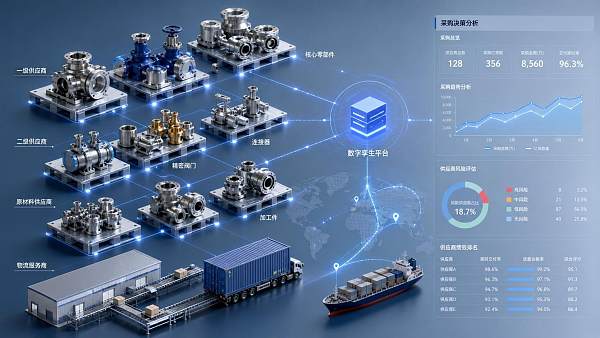
For information researchers, the first challenge is fragmented data. A procurement director may have supplier certifications in one portal, quotation history in another, and shipment visibility in a third. Operators feel the impact later, when a delayed component causes line stoppage. Enterprise decision-makers need a sourcing view that ties sustainability criteria to operational uptime, not just to brand messaging. That is why sustainable sourcing software trends increasingly point toward orchestration, traceability, and predictive alerts rather than static dashboards.
G-ISC is well positioned in this environment because its institutional focus combines critical components intelligence with AI-driven supply-chain orchestration. In practical terms, that means sustainability evaluation can be interpreted alongside ISO, DIN, ASME, and IEEE-relevant sourcing contexts, tender movements, and commodity sensitivity in materials such as steel, nickel, and titanium. For complex B2B buying plans, this reduces the gap between compliance intent and execution reality.
The most important change is that buyers are asking a different question. Instead of asking, “Does this supplier support sustainability claims?” they ask, “Can this supplier maintain compliant, traceable, on-time supply under fluctuating demand, customs shifts, and multi-region qualification requirements?” That subtle change pushes sustainable sourcing software into the core of supplier selection, contract prioritization, and contingency planning.
What buyers now expect from one platform
- Unified supplier records that combine environmental declarations, audit history, lead-time reliability, and corrective-action tracking in one workflow.
- Real-time or near-real-time visibility into shipments, inventory risk, and component availability, especially for critical items with 8–16 week replenishment windows.
- Scenario planning that compares at least 3 sourcing paths: incumbent supplier, regional backup supplier, and compliant alternative source.
- Evidence-based compliance support for contracts, tenders, and regulated customer requirements without relying on manual spreadsheet consolidation every quarter.
Which sustainable sourcing software trends are shaping 2026 buying plans?
Several sustainable sourcing software trends are converging at the same time, and they are reshaping how cross-industry procurement teams prepare budgets, approve vendors, and manage resilience. The strongest trend is convergence between sustainability data and operational procurement data. Teams no longer want separate systems for supplier ethics, shipment tracking, demand sensing, and contract risk. They want one decision layer capable of showing where sustainability performance intersects with lead time, defect exposure, and landed cost.
The second trend is predictive sourcing based on manufacturing realities. Predictive supply chain case studies in manufacturing have shown that procurement performance improves when software flags deviations early: supplier response delays, recurring non-conformance patterns, route congestion, or unstable commodity exposure. In planning terms, this allows buyers to adjust orders 7–15 days earlier than with purely reactive systems. In high-value component environments, that timing difference can prevent shutdowns, expedite fees, and rushed requalification work.
A third trend is the impact of 5G on real-time tracking technology. 5G itself is not a sourcing strategy, but it improves the quality and speed of status inputs from transport assets, warehouses, AMH equipment, and connected production nodes. When sustainable sourcing software receives faster location and condition data, planners can confirm whether a “sustainable” supplier also performs reliably under real operating pressure. This is especially relevant when temperature control, handling integrity, or time-sensitive industrial replenishment matters.
The fourth trend is cross-functional accountability. In 2026 buying plans, procurement, quality, operations, and executive leadership increasingly review the same sourcing dashboard. That means software must serve 4 audiences at once: researchers need benchmark data, operators need practical continuity signals, buyers need qualification logic, and executives need investment-grade risk summaries. Platforms that fail to support all 4 roles often remain underused after implementation.
The trend signals most relevant to industrial buyers
The table below summarizes how major sustainable sourcing software trends affect procurement planning, supplier governance, and production continuity. It is designed for teams comparing software options before finalizing annual or semiannual sourcing strategies.
For most industrial organizations, the software that wins in 2026 will not be the one with the most dashboards. It will be the one that helps teams reduce qualification delays, compare alternatives faster, and make more defensible buying decisions under uncertainty. That is a practical definition of sustainable sourcing maturity.
Where G-ISC adds strategic value
Because G-ISC tracks both technical component realities and commercial intelligence, buyers can evaluate sourcing software through a wider lens. A valve, fastener, AMR subsystem, flow-control instrument, or orchestration module may all have different compliance pathways and replenishment sensitivities. A trend analysis detached from those realities is incomplete. G-ISC closes that gap by linking procurement logic to real industrial dependency chains.
How to evaluate platforms for procurement, operations, and executive decision-making
A common buying mistake is evaluating sustainable sourcing software only through procurement criteria. In practice, a platform must support at least 5 decision layers: supplier discovery, qualification, order planning, disruption response, and compliance reporting. If even one layer is weak, teams fall back to spreadsheets, email approvals, or disconnected ERP workarounds. That drives hidden cost and slows reaction time during supply events.
For operators and plant teams, the most valuable software feature is not a sustainability score alone. It is the ability to anticipate whether a component shortage, logistics delay, or certification lapse could affect uptime in the next 2–8 weeks. For procurement teams, the strongest feature is structured comparison across incumbent and alternative suppliers. For executives, the priority is a clear view of where sourcing risk may affect margin, customer commitments, or capital deployment.
Evaluation should therefore combine technical fit, process fit, and governance fit. Technical fit means integration with ERP, supplier portals, logistics feeds, and quality systems. Process fit means buyers can actually run RFQ, approval, and exception workflows without heavy IT dependency. Governance fit means audit trails, approval logic, and access controls are robust enough for enterprise use across regions and business units.
The following comparison framework is useful when shortlisting vendors. It focuses on practical buying criteria rather than generic software claims and can help cross-functional teams align in 3 review rounds instead of prolonged, unclear debates.
Shortlist criteria for sustainable sourcing software
Use this table when comparing platforms for sourcing visibility, compliance control, and operational resilience across complex supply networks.
In many industries, the right platform is not the most complex one. It is the one that aligns with current supplier maturity and internal process discipline. If supplier data quality is still uneven, buyers should prioritize workflow controls and exception visibility first, then expand into deeper predictive modeling over the next 2–3 implementation phases.
A practical 4-step selection approach
- Map 20–30 critical suppliers by spend, compliance exposure, and production dependency before any demo begins.
- Define 5 key workflows to test, such as onboarding, document renewal, shipment delay escalation, alternative-source approval, and quarterly supplier review.
- Run a pilot with one business unit or one commodity family for 6–10 weeks to observe real data behavior.
- Score the pilot on adoption, decision speed, visibility accuracy, and reduction of manual follow-up work.
Where sustainable sourcing software delivers the most value across industries
Although sustainable sourcing software trends are often discussed at a strategic level, the strongest value appears in very practical scenarios. One example is critical-component procurement, where replacement parts, hydraulic assemblies, specialty fasteners, sensors, or motion equipment have long qualification cycles and limited approved sources. In such settings, sustainability data becomes more useful when linked to supplier continuity, material traceability, and engineering equivalence decisions.
Another high-value scenario is multi-region manufacturing. A company sourcing from 3 or more countries must navigate varying customs procedures, declaration formats, and transport reliability profiles. Sustainable sourcing software can help standardize supplier records and monitor exceptions, but only if the platform can manage regional detail without losing executive-level clarity. This is where orchestration logic matters as much as reporting logic.
Distribution-heavy industries also benefit when 5G-supported tracking feeds into sourcing decisions. If real-time tracking technology shows recurring transit bottlenecks for one supplier lane, sourcing teams can rebalance demand before service levels decline. The result is not simply greener sourcing; it is more resilient sourcing. That distinction matters for organizations measured on customer fill rates, production uptime, and contract performance.
G-ISC’s multi-pillar expertise is especially relevant here. Supply decisions involving hydraulic power, fasteners, AMH systems, flow metering, and AI-driven orchestration are rarely isolated. A delay in one category can affect others within days. By analyzing these dependencies together, buyers gain a more realistic basis for 2026 planning than they would from category-siloed software evaluation.
Typical use cases that justify investment
- Critical spare-part sourcing where approved alternatives are limited and requalification may take 4–12 weeks.
- Capital project procurement where tender data, material-price volatility, and supplier declarations must be reviewed together.
- Global manufacturing programs that need one supplier-governance process across multiple plants and regional sourcing teams.
- High-uptime operations where a single late component can trigger expedited freight, overtime labor, or line interruptions.
What changes after implementation
When implementation is done well, teams typically see fewer manual follow-up loops, faster supplier renewal checks, and clearer escalation ownership. The software does not remove supply risk, but it shortens the time between early warning and action. In volatile sourcing environments, reducing that response interval from several days to same-day visibility can materially improve continuity planning.
Compliance, standards, and common buying mistakes to avoid
One of the biggest misconceptions around sustainable sourcing software is that compliance can be solved by document storage alone. In reality, procurement teams need traceable processes, renewal controls, and supplier accountability. For industrial buyers, that often means aligning supplier records with contract requirements, engineering specifications, and relevant international standards. The exact requirement set varies by category, but disciplined evidence management is always essential.
Another mistake is treating every supplier as if it carries the same risk. A low-complexity indirect supplier should not consume the same governance effort as a critical component supplier tied to uptime, safety, or regulated production. Sustainable sourcing software should therefore support tiered governance. A practical model uses 3 tiers: strategic-critical, controlled, and routine. Each tier can have different review frequencies, approval paths, and evidence requirements.
A third mistake is ignoring implementation readiness. Even strong software will underperform if supplier master data is inconsistent, ownership is unclear, or internal teams cannot agree on the source of truth. Buyers should plan at least 3 implementation workstreams: data cleanup, workflow design, and user adoption. For enterprise deployments, a phased rollout over 8–16 weeks is often more stable than a rushed global launch.
Finally, many teams overfocus on front-end dashboards and underfocus on exception handling. Yet sourcing resilience depends on what happens when something goes wrong: a certificate expires, a shipment stalls, a raw material spikes, or an approved item becomes unavailable. The platform should make these events visible, assign owners, and retain a traceable resolution path.
Common risk checkpoints before contract signature
- Confirm which supplier documents are mandatory, how renewals are tracked, and whether overdue records trigger escalation automatically.
- Check whether the system supports international standard references relevant to industrial sourcing contexts, including ISO-aligned documentation practices.
- Review how alternative suppliers are compared during shortages, including lead time, approval status, and technical equivalence notes.
- Verify service and implementation scope: data migration, workflow configuration, user training, and support during the first 30–90 days.
FAQ for sourcing teams preparing 2026 plans
How should we prioritize software features if budget is limited?
Start with supplier visibility, document traceability, and exception workflows. Those 3 areas usually create the fastest operational value. Advanced modeling can follow in phase 2. If budget only covers one initial rollout, focus on the 20% of suppliers that drive the highest supply risk or spend concentration.
Is sustainable sourcing software relevant outside manufacturing?
Yes. Any industry with multi-supplier procurement, compliance obligations, or service continuity needs can benefit. The exact workflows differ, but the core value remains the same: structured supplier intelligence, risk visibility, and better buying decisions across quarterly and annual planning cycles.
What implementation timeline is realistic?
For a focused pilot, 6–10 weeks is realistic if data is reasonably organized. For broader enterprise deployment, 8–16 weeks is more typical, especially when workflows span procurement, quality, logistics, and management reporting.
How does this connect to Total Reliability goals?
Total Reliability depends on more than supplier cost. It requires dependable lead times, verified compliance, technical fit, and controlled alternatives when disruption occurs. Sustainable sourcing software supports those outcomes when it is integrated into real procurement and operations workflows rather than used as a separate reporting layer.
Why work with G-ISC when refining 2026 sourcing strategy
For teams building 2026 buying plans, the challenge is not simply choosing software. It is choosing a sourcing framework that connects software capability with component criticality, compliance exposure, global supply risk, and operational uptime. G-ISC supports that need by combining technical intelligence, standards-aware evaluation, and cross-sector commercial visibility across five industrial pillars.
This matters when decisions involve more than one variable. A supplier may look acceptable on price but weak on traceability. Another may meet sustainability requirements but have unstable replenishment. A third may be technically suitable yet exposed to regional trade-policy shifts. G-ISC helps procurement and leadership teams compare these tradeoffs using a more complete industrial lens, especially where critical components and orchestration software intersect.
If your organization is reviewing sustainable sourcing software trends, supply-chain orchestration requirements, or predictive supply chain use cases before final budget approval, G-ISC can support structured consultation around 5 key areas: parameter confirmation, supplier and platform selection, lead-time assessment, compliance mapping, and alternative-source planning. That is particularly useful when internal stakeholders need one evidence-based framework for both procurement and operational continuity.
Contact G-ISC to discuss your current sourcing architecture, software shortlist, sample evaluation criteria, delivery-cycle assumptions, or certification-related screening requirements. You can also request support for comparing solution paths across critical component categories, regional supplier mixes, and phased implementation priorities. For buyers under time pressure, this shortens the path from trend awareness to practical, board-ready decision-making.
Recommended News
 Oct 16, 2026How to Use Supply Chain Risk Scores to Screen Suppliers in EuropeNeed a supply chain risk score Europe procurement teams can trust? Learn how to verify suppliers, uncover hidden risks, and build a defensible shortlist before you buy.● Lina Cloud
 Oct 15, 2026Cloud SCM Pricing: How to Compare Uptime SLAs and Downtime CostsCompare SCM cloud uptime pricing, SLA exclusions, downtime costs, and recovery options. Learn how to assess true value, reduce disruption risk, and choose the right cloud SCM plan.● Lina Cloud
 Oct 14, 2026How Do You Identify Supply Chain Risks for Critical Components?How can I identify supply chain risks for critical components? Discover how to map hidden dependencies, compare inventory with recovery time, and prioritize actions that protect uptime.● Lina Cloud
 Oct 14, 2026When Should You Approve a Second-Source Supplier?When should I approve a second source supplier? Discover key checks for quality, capacity, compliance, and supply risk to make confident approvals and protect production.● Lina Cloud
 Oct 11, 2026Predictive Supply Chain Case Studies: Reducing Global Sourcing Disruption RiskPredictive supply chain case studies for global sourcing: uncover disruption risks, protect critical components, and build resilient project delivery.● Lina Cloud
 Oct 03, 2026How to Evaluate Supply Chain Orchestration Software for Multi-Site OperationsSupply chain orchestration software: learn how to evaluate data, workflows, integrations, and governance for resilient multi-site operations.● Lina Cloud
 Oct 01, 2026How Procurement Teams Can Evaluate Supply Chain Risk Management Tools Before BuyingSupply chain risk management tool for procurement: learn how to evaluate data accuracy, part-level impact, alerts, workflows, integrations, and auditability before you buy.● Lina Cloud
 Oct 10, 2026Can Oracle supply planning reduce shortages without raising inventory?Oracle supply planning helps reduce shortages without inflating inventory through smarter allocation, scenario planning, and constraint-based decisions. Discover practical strategies.● Lina Cloud
 Oct 07, 2026What Happens When a Supplier Fails an Industrial Standards Audit?What happens if a supplier fails an industrial standards audit? Learn how to contain risk, protect traceability, manage corrective actions, and maintain supply continuity.● Lina Cloud
 Oct 06, 2026How Do You Document Standards Compliance for a Supplier Tender?How do I document standards compliance for a supplier tender? Use a compliance matrix, traceable test evidence, and clear deviations to strengthen bids and speed evaluation.● Lina Cloud
 Oct 02, 2026Which Supplier Records Should Be Checked Before an Urgent Purchase?Which supplier records should be checked before an urgent industrial purchase? Discover essential checks for quality, traceability, compliance, delivery, and risk control.● Lina Cloud
 Oct 01, 2026How Should Buyers Compare Suppliers Across Industrial Categories?How do I compare suppliers across different industrial categories? Use a practical framework for risk, quality, cost, resilience, and technical fit.● Lina Cloud
 Sep 30, 2026What Should Be Included in a Strategic Sourcing Plan?What should be included in a strategic sourcing plan? Explore essential steps for supplier strategy, total cost, risk control, compliance, and resilient industrial procurement.● Lina Cloud
 Sep 29, 2026How Do Raw Material Prices Affect Industrial Component Lead Times?How do raw material prices affect component lead times? Learn how availability, supplier inventory, and qualification risks shape delivery planning.● Lina Cloud
 Sep 19, 2026How to Evaluate an OEM Supplier for Real-Time Shipment Tracking IntegrationReal time shipment tracking OEM supplier evaluation: compare integration, data accuracy, security, costs, and pilot accountability to protect critical deliveries.● Lina Cloud
 Sep 12, 2026OEM Cooperation Process: Key Milestones for Managing Quality, Costs, and DeliveryOEM cooperation process guide: discover key milestones to control quality, total costs, and delivery risk for stronger, more reliable supplier partnerships.● Lina Cloud
 Aug 25, 2026How to Evaluate a Cloud OMS for OEM Operations with Complex Order WorkflowsEvaluate an order management system OMS OEM cloud platform for complex workflows. Learn what matters most in integration, traceability, scalability, and risk control.● Lina Cloud
 Aug 23, 2026What to Check Before Buying Bridal Tiaras Wholesale for a Retail CollectionBridal tiaras wholesale buying starts with quality, materials, MOQ, and supplier checks. Learn how to reduce risk, protect margins, and build a retail collection that sells.● Lina Cloud
 Aug 22, 2026How to Evaluate Poker Tables Wholesale Suppliers for Quality, MOQ, and CustomizationPoker tables wholesale buying guide: learn how to evaluate suppliers for quality, MOQ, customization, packaging, and lead times to reduce risk and choose scalable partners.● Lina Cloud
 Aug 18, 2026How Can a Supply Chain Digital Twin Improve Procurement Decisions and Supplier Risk?Supply chain digital twin procurement helps buyers compare suppliers, model disruption risk, and improve sourcing decisions with stronger cost, resilience, and performance insight.● Lina Cloud
 Aug 14, 2026What Is Procurement Planning? A Practical Guide for Reducing Buying RiskProcurement Planning helps reduce buying risk by aligning demand, specs, budget, and sourcing strategy. Learn how to buy smarter, avoid delays, and control costs.● Lina Cloud
 Aug 02, 2026How Polymer Raw Materials Affect Sensor Cost, Durability, and Design Trade-OffsImpact of raw material on sensor costs polymers goes far beyond resin price. Learn how polymer choice shapes durability, yield, sealing, and smarter sensor design decisions.● Lina Cloud
 Jul 29, 2026How to Evaluate a Supply Chain Sustainability Tracker Vendor for Reporting NeedsSupply chain sustainability tracker vendor evaluation starts with data integrity, framework mapping, and supplier workflows. Learn how to choose a platform that supports credible reporting and faster procurement decisions.● Lina Cloud
 Jul 28, 2026How Shippers Can Evaluate a Transportation Management System for Cost and Carrier ControlTransportation management system shippers can rely on to cut freight costs, improve carrier control, and boost visibility. Learn what to test before choosing a TMS.● Lina Cloud