Hot Articles
Popular Tags
Why supply-chain orchestration beats siloed planning
For project delivery across complex industrial networks, siloed planning creates delay by design. Procurement sees price, production sees capacity, logistics sees transit, and quality sees compliance, yet none sees the whole system. Supply-Chain Orchestration closes those gaps by connecting demand, inventory, suppliers, transport, engineering changes, and risk signals in one operating model. The result is faster response, tighter control, and more reliable execution when uptime, regulation, and cost discipline matter at the same time.
Why siloed planning fails under industrial complexity
Siloed planning worked when lead times were stable, product changes were slow, and regional supply chains were predictable. That environment no longer exists in most industries.
A hydraulic cylinder delay can stop a machine build. A fastener certification gap can block shipment. A missed flow-meter component can postpone commissioning. Each issue starts locally but expands system-wide.
Supply-Chain Orchestration outperforms siloed planning because it manages dependencies instead of isolated tasks. It aligns suppliers, materials, capacity, logistics, and compliance around one shared execution picture.
This matters even more in global operations where steel, nickel, freight, customs rules, and engineering revisions change faster than quarterly planning cycles can absorb.
The core Supply-Chain Orchestration checklist
Use this checklist to evaluate whether current planning can support resilient execution or whether orchestration capabilities need immediate strengthening.
- Map cross-functional dependencies before scheduling milestones, including tooling, certification, transport mode, raw material exposure, and alternate-source readiness for every critical component.
- Connect demand, procurement, production, inventory, and logistics data into one live planning environment so exceptions appear early instead of after delivery dates slip.
- Prioritize parts by operational criticality, not only by spend, because low-cost items such as seals, connectors, or specialty bolts often stop high-value assemblies.
- Standardize supplier performance metrics across quality, lead-time reliability, responsiveness, and compliance evidence rather than relying on unit price as the main signal.
- Trigger scenario planning when engineering changes, policy shifts, or commodity volatility exceed thresholds, then compare cost, lead time, and service impact before committing.
- Synchronize inventory policy with actual risk by separating buffer stock for long-lead, high-certification, and single-source components from routine replenishment items.
- Integrate logistics visibility with production priorities so port delays, capacity shortages, and customs holds can be escalated according to business impact.
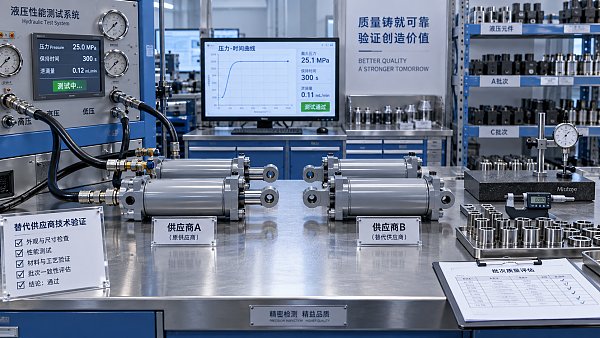
- Validate technical equivalence before switching sources, especially for hydraulic assemblies, precision fasteners, valves, sensors, and metering devices governed by strict standards.
- Build alert rules for late drawings, missing approvals, supplier deviations, and forecast anomalies, then assign owners with clear response windows.
- Review orchestration performance weekly using exception trends, recovery speed, schedule adherence, and avoided downtime rather than static planning accuracy alone.
Where Supply-Chain Orchestration creates the biggest advantage
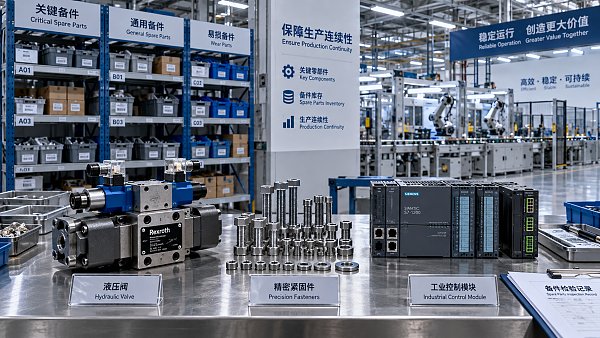
Critical components and engineered parts
Complex components rarely fail because one team makes a bad choice. They fail because specifications, sourcing, quality evidence, and shipping priorities are disconnected.
Supply-Chain Orchestration links technical documentation, approved vendors, inspection status, and delivery sequencing. That reduces rework, line-side shortages, and last-minute substitutions with hidden reliability risks.
Automated material handling and facility upgrades
AMR deployments, conveyor retrofits, and warehouse automation programs depend on hardware, software, site readiness, and commissioning teams moving in sync.
Siloed planning often books installers before controls are cleared or ships equipment before the site can receive it. Supply-Chain Orchestration prevents those sequence errors.
Flow metering, control, and regulated operations
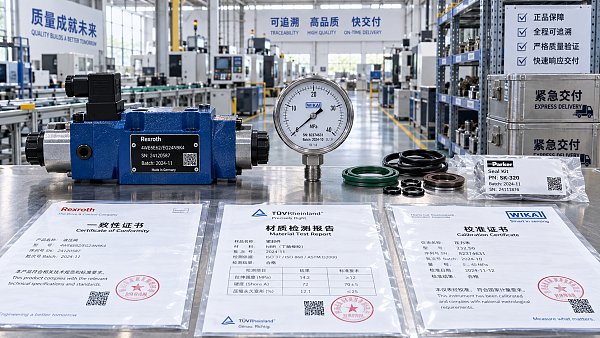
Metering systems and control devices often carry calibration, traceability, and regulatory documentation requirements. A physically available item may still be operationally unusable.
An orchestrated model tracks not only material movement but also certificate completeness, firmware status, test results, and installation prerequisites across the project timeline.
Commodity volatility and cross-border sourcing
When steel, titanium, or nickel moves sharply, the impact spreads through quotes, contract exposure, substitution requests, and production sequencing.
Supply-Chain Orchestration helps compare options quickly: delay purchase, pull forward commitments, rebalance suppliers, or redesign around available materials without losing control of compliance.
Common blind spots that weaken execution
Treating all shortages as equal
A shortage only matters in context. The missing part that blocks final test should rank above the expensive item not needed for three weeks.
Separating compliance from planning
Certificates, standards alignment, and document packages are often managed outside the main schedule. That creates false availability and late-stage shipment holds.
Ignoring engineering change propagation
A drawing revision can affect sourcing, tooling, test methods, packaging, and customs codes. Without orchestration, one update triggers several hidden delays.
Overvaluing forecast precision
Perfect forecasts are rare. Faster exception handling usually creates more value than marginal gains in forecast accuracy within unstable supply conditions.
Using price as the main sourcing signal
The cheapest source can become the most expensive when expediting, scrap, downtime, or non-compliance is included. Supply-Chain Orchestration measures total execution risk.
How to put Supply-Chain Orchestration into practice
Start with a narrow but high-impact scope. Choose one product family, one facility upgrade, or one set of critical components with recurring delays.
Define a shared control tower view. Include demand changes, supplier confirmations, incoming quality status, transport milestones, engineering revisions, and document readiness.
Create exception rules instead of watching every transaction. Escalate only events that threaten schedule, compliance, cost thresholds, or uptime-critical deliveries.
Assign one owner per exception path. Orchestration fails when alerts exist but no decision authority is attached to them.
Measure outcomes that matter operationally. Track schedule recovery, shortage prevention, expedited freight reduction, supplier response time, and avoided commissioning delays.
Expand only after the first workflow is stable. Scaling poor process visibility simply spreads confusion faster across more sites and suppliers.
Conclusion and next action
Supply-Chain Orchestration beats siloed planning because modern execution risk is interconnected. Materials, compliance, engineering, logistics, and supplier performance no longer move independently.
The practical next step is simple: identify the last three major delays, trace the missing cross-functional signal in each case, and build one orchestration workflow around that pattern.
That approach turns Supply-Chain Orchestration from a software idea into an operating discipline. In volatile industrial environments, that discipline is what protects uptime, predictability, and long-term competitiveness.
Recommended News
 Oct 16, 2026How to Use Supply Chain Risk Scores to Screen Suppliers in EuropeNeed a supply chain risk score Europe procurement teams can trust? Learn how to verify suppliers, uncover hidden risks, and build a defensible shortlist before you buy.● Lina Cloud
 Oct 15, 2026Cloud SCM Pricing: How to Compare Uptime SLAs and Downtime CostsCompare SCM cloud uptime pricing, SLA exclusions, downtime costs, and recovery options. Learn how to assess true value, reduce disruption risk, and choose the right cloud SCM plan.● Lina Cloud
 Oct 14, 2026How Do You Identify Supply Chain Risks for Critical Components?How can I identify supply chain risks for critical components? Discover how to map hidden dependencies, compare inventory with recovery time, and prioritize actions that protect uptime.● Lina Cloud
 Oct 14, 2026When Should You Approve a Second-Source Supplier?When should I approve a second source supplier? Discover key checks for quality, capacity, compliance, and supply risk to make confident approvals and protect production.● Lina Cloud
 Oct 11, 2026Predictive Supply Chain Case Studies: Reducing Global Sourcing Disruption RiskPredictive supply chain case studies for global sourcing: uncover disruption risks, protect critical components, and build resilient project delivery.● Lina Cloud
 Oct 03, 2026How to Evaluate Supply Chain Orchestration Software for Multi-Site OperationsSupply chain orchestration software: learn how to evaluate data, workflows, integrations, and governance for resilient multi-site operations.● Lina Cloud
 Oct 01, 2026How Procurement Teams Can Evaluate Supply Chain Risk Management Tools Before BuyingSupply chain risk management tool for procurement: learn how to evaluate data accuracy, part-level impact, alerts, workflows, integrations, and auditability before you buy.● Lina Cloud
 Oct 10, 2026Can Oracle supply planning reduce shortages without raising inventory?Oracle supply planning helps reduce shortages without inflating inventory through smarter allocation, scenario planning, and constraint-based decisions. Discover practical strategies.● Lina Cloud
 Oct 07, 2026What Happens When a Supplier Fails an Industrial Standards Audit?What happens if a supplier fails an industrial standards audit? Learn how to contain risk, protect traceability, manage corrective actions, and maintain supply continuity.● Lina Cloud
 Oct 06, 2026How Do You Document Standards Compliance for a Supplier Tender?How do I document standards compliance for a supplier tender? Use a compliance matrix, traceable test evidence, and clear deviations to strengthen bids and speed evaluation.● Lina Cloud
 Oct 02, 2026Which Supplier Records Should Be Checked Before an Urgent Purchase?Which supplier records should be checked before an urgent industrial purchase? Discover essential checks for quality, traceability, compliance, delivery, and risk control.● Lina Cloud
 Oct 01, 2026How Should Buyers Compare Suppliers Across Industrial Categories?How do I compare suppliers across different industrial categories? Use a practical framework for risk, quality, cost, resilience, and technical fit.● Lina Cloud
 Sep 30, 2026What Should Be Included in a Strategic Sourcing Plan?What should be included in a strategic sourcing plan? Explore essential steps for supplier strategy, total cost, risk control, compliance, and resilient industrial procurement.● Lina Cloud
 Sep 29, 2026How Do Raw Material Prices Affect Industrial Component Lead Times?How do raw material prices affect component lead times? Learn how availability, supplier inventory, and qualification risks shape delivery planning.● Lina Cloud
 Sep 19, 2026How to Evaluate an OEM Supplier for Real-Time Shipment Tracking IntegrationReal time shipment tracking OEM supplier evaluation: compare integration, data accuracy, security, costs, and pilot accountability to protect critical deliveries.● Lina Cloud
 Sep 12, 2026OEM Cooperation Process: Key Milestones for Managing Quality, Costs, and DeliveryOEM cooperation process guide: discover key milestones to control quality, total costs, and delivery risk for stronger, more reliable supplier partnerships.● Lina Cloud
 Aug 25, 2026How to Evaluate a Cloud OMS for OEM Operations with Complex Order WorkflowsEvaluate an order management system OMS OEM cloud platform for complex workflows. Learn what matters most in integration, traceability, scalability, and risk control.● Lina Cloud
 Aug 23, 2026What to Check Before Buying Bridal Tiaras Wholesale for a Retail CollectionBridal tiaras wholesale buying starts with quality, materials, MOQ, and supplier checks. Learn how to reduce risk, protect margins, and build a retail collection that sells.● Lina Cloud
 Aug 22, 2026How to Evaluate Poker Tables Wholesale Suppliers for Quality, MOQ, and CustomizationPoker tables wholesale buying guide: learn how to evaluate suppliers for quality, MOQ, customization, packaging, and lead times to reduce risk and choose scalable partners.● Lina Cloud
 Aug 18, 2026How Can a Supply Chain Digital Twin Improve Procurement Decisions and Supplier Risk?Supply chain digital twin procurement helps buyers compare suppliers, model disruption risk, and improve sourcing decisions with stronger cost, resilience, and performance insight.● Lina Cloud
 Aug 14, 2026What Is Procurement Planning? A Practical Guide for Reducing Buying RiskProcurement Planning helps reduce buying risk by aligning demand, specs, budget, and sourcing strategy. Learn how to buy smarter, avoid delays, and control costs.● Lina Cloud
 Aug 02, 2026How Polymer Raw Materials Affect Sensor Cost, Durability, and Design Trade-OffsImpact of raw material on sensor costs polymers goes far beyond resin price. Learn how polymer choice shapes durability, yield, sealing, and smarter sensor design decisions.● Lina Cloud
 Jul 29, 2026How to Evaluate a Supply Chain Sustainability Tracker Vendor for Reporting NeedsSupply chain sustainability tracker vendor evaluation starts with data integrity, framework mapping, and supplier workflows. Learn how to choose a platform that supports credible reporting and faster procurement decisions.● Lina Cloud
 Jul 28, 2026How Shippers Can Evaluate a Transportation Management System for Cost and Carrier ControlTransportation management system shippers can rely on to cut freight costs, improve carrier control, and boost visibility. Learn what to test before choosing a TMS.● Lina Cloud