Hot Articles
Popular Tags
Which Strategic Sourcing Best Practices Still Work?
Which Strategic Sourcing Best Practices Still Work?
In a volatile market shaped by supply disruptions, price swings, and rising compliance demands, organizations need more than legacy cost-cutting tactics.
Strategic Sourcing best practices still work when adapted to supplier risk visibility, technical validation, total cost analysis, and resilient category strategies.
For critical components and complex industrial supply chains, the question is not whether strategic sourcing matters, but which practices still create measurable value.
What Makes Strategic Sourcing Best Practices Still Relevant?
Strategic Sourcing best practices remain relevant because industrial supply decisions still depend on structured analysis, verified data, and disciplined supplier comparison.
The difference is context. Cost pressure now intersects with geopolitical risk, lead-time instability, cyber exposure, and stricter sustainability requirements.
A useful sourcing model no longer asks only who offers the lowest quote. It asks who can protect uptime under pressure.
That matters for hydraulic cylinders, aerospace-grade fasteners, flow meters, AMR systems, and AI-enabled supply-chain software.
In each case, failure can create production delays, safety exposure, warranty claims, or regulatory nonconformance.
Strategic Sourcing best practices therefore work best when they connect commercial terms with engineering requirements and operational reliability.
The strongest practices share three traits
- They convert fragmented supplier data into comparable decision evidence.
- They evaluate lifecycle cost, not only unit price.
- They align technical validation with business continuity planning.
This is why Strategic Sourcing best practices are still essential across diversified industrial categories.
Which Strategic Sourcing Best Practices Work Across Industries?
The most durable Strategic Sourcing best practices are not tied to one category. They apply wherever quality, continuity, and compliance matter.
1. Category strategy based on technical segmentation
A category strategy should separate standard items from critical components. The same sourcing logic cannot fit every part number.
For example, commodity fasteners may support competitive bidding. High-tensile vibration-resistant bolts require qualification depth and traceability.
Strategic Sourcing best practices recommend segmentation by criticality, availability, specification complexity, and switching risk.
2. Total cost of ownership analysis
A low quote can hide freight premiums, inspection costs, downtime risk, tooling changes, and warranty exposure.
Total cost analysis remains one of the Strategic Sourcing best practices with the clearest financial impact.
It is especially valuable where titanium, steel, nickel, electronics, or precision-machined subassemblies drive price volatility.
3. Supplier qualification beyond paperwork
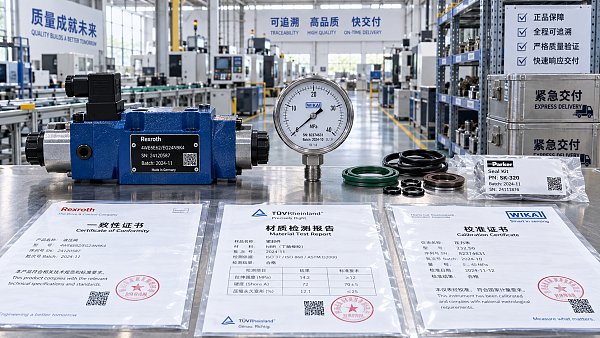
Certificates matter, but they are not enough. Qualification should verify process control, testing capability, corrective-action discipline, and capacity resilience.
For ISO, DIN, ASME, IEEE, or application-specific standards, evidence must match actual production behavior.
Strategic Sourcing best practices treat supplier approval as an ongoing control system, not a one-time checklist.
4. Dual sourcing with controlled complexity
Dual sourcing can reduce disruption risk, but unmanaged duplication can raise cost and quality variation.
The stronger approach is qualified redundancy. Secondary suppliers should meet the same technical, compliance, and delivery standards.
Strategic Sourcing best practices support dual sourcing where the item is critical, lead times are unstable, or geographic exposure is concentrated.
How Should Risk Change Strategic Sourcing Best Practices?
Risk has moved from a background concern to a core sourcing variable. Price without resilience is often a false saving.
Strategic Sourcing best practices now require visibility into supplier tiers, raw material dependencies, trade policies, and logistics bottlenecks.
This is especially true for advanced hydraulic systems, automated material handling, flow control devices, and embedded electronics.
Risk signals worth tracking
- Single-region production for critical components.
- Limited visibility beyond tier-one suppliers.
- Frequent engineering deviations or late concessions.
- Dependence on volatile metals or constrained electronic parts.
- Weak cybersecurity controls in digital supply-chain platforms.
Risk scoring should not become a decorative dashboard. It must influence award decisions, contract structure, and contingency planning.
Strategic Sourcing best practices work when risk scores trigger actions, such as inventory buffers, alternate tooling, or supplier development plans.
Is Cost Reduction Still a Valid Strategic Sourcing Goal?
Cost reduction remains valid, but it must be interpreted carefully. The best savings are repeatable, auditable, and operationally safe.
Strategic Sourcing best practices distinguish between real savings and cost transfer. A cheaper component may shift losses into maintenance or downtime.
For industrial components, cost decisions should include performance tolerance, service life, energy efficiency, inspection frequency, and failure consequences.
Cost levers that still work
- Demand consolidation across compatible specifications.
- Should-cost modeling for machined, cast, or assembled parts.
- Index-based pricing for metals and energy-sensitive categories.
- Value engineering without weakening safety or compliance.
- Longer-term agreements tied to verified performance metrics.
Strategic Sourcing best practices are strongest when savings are linked to transparency and measurable supplier performance.
This approach protects cost competitiveness while avoiding the hidden expense of poor quality or unstable delivery.
How Do Digital Tools Improve Strategic Sourcing Best Practices?
Digital tools improve sourcing only when they enhance judgment. Automation cannot replace technical validation or commercial discipline.
Strategic Sourcing best practices now use analytics to compare suppliers, monitor markets, and identify early warning signals.
AI-driven platforms can support predictive demand analysis, tender intelligence, raw material monitoring, and contract compliance tracking.
However, data quality remains the limiting factor. Incomplete specifications produce misleading comparisons and weak recommendations.
Where digital sourcing adds value
- Supplier discovery across verified industrial categories.
- Spend classification by technical family and business risk.
- Market alerts for metals, freight, and trade policy changes.
- Scenario modeling for lead-time and price sensitivity.
- Performance tracking against delivery, quality, and compliance targets.
Strategic Sourcing best practices do not become obsolete through digitalization. They become more evidence-driven and faster to execute.
Which Strategic Sourcing Mistakes Still Cause Poor Results?
Many sourcing failures come from familiar mistakes. The market has changed, but weak decisions still follow predictable patterns.
Strategic Sourcing best practices fail when organizations treat them as templates instead of decision systems.
Mistakes to avoid
- Running auctions for highly engineered components without technical gates.
- Ignoring raw material indices in long-term contracts.
- Approving suppliers without production-capacity evidence.
- Using generic scorecards for safety-critical parts.
- Separating engineering input from commercial negotiation.
These errors reduce the value of Strategic Sourcing best practices and increase avoidable exposure.
How Can Strategic Sourcing Best Practices Be Implemented Now?
Implementation should begin with categories that combine high spend, supply risk, and operational consequence.
Examples include hydraulic components, precision fasteners, automated handling systems, flow measurement devices, and critical software platforms.
Strategic Sourcing best practices should then be translated into practical steps with clear ownership and measurable outputs.
A practical implementation sequence
- Map spend by category, specification, supplier, region, and contract status.
- Rank categories by criticality, volatility, and switching difficulty.
- Define technical qualification requirements before commercial comparison.
- Build a supplier scorecard covering cost, quality, delivery, risk, and compliance.
- Use market intelligence to test timing, negotiation leverage, and sourcing options.
- Create contracts with performance metrics, review cycles, and escalation routes.
This sequence keeps Strategic Sourcing best practices actionable rather than theoretical.
It also supports faster decisions when disruptions, tenders, price changes, or compliance events appear.
Conclusion: What Still Works, and What Comes Next?
Strategic Sourcing best practices still work when they are updated for modern supply-chain complexity.
The strongest practices include category segmentation, total cost analysis, supplier validation, risk visibility, digital intelligence, and controlled redundancy.
They are most valuable where critical components, regulatory standards, and uptime requirements define business performance.
A practical next step is to review one high-risk category against technical, financial, and continuity criteria.
From there, Strategic Sourcing best practices can become a repeatable operating model for resilient industrial growth.
Recommended News
 Oct 16, 2026How to Use Supply Chain Risk Scores to Screen Suppliers in EuropeNeed a supply chain risk score Europe procurement teams can trust? Learn how to verify suppliers, uncover hidden risks, and build a defensible shortlist before you buy.● Lina Cloud
 Oct 15, 2026Cloud SCM Pricing: How to Compare Uptime SLAs and Downtime CostsCompare SCM cloud uptime pricing, SLA exclusions, downtime costs, and recovery options. Learn how to assess true value, reduce disruption risk, and choose the right cloud SCM plan.● Lina Cloud
 Oct 14, 2026How Do You Identify Supply Chain Risks for Critical Components?How can I identify supply chain risks for critical components? Discover how to map hidden dependencies, compare inventory with recovery time, and prioritize actions that protect uptime.● Lina Cloud
 Oct 14, 2026When Should You Approve a Second-Source Supplier?When should I approve a second source supplier? Discover key checks for quality, capacity, compliance, and supply risk to make confident approvals and protect production.● Lina Cloud
 Oct 11, 2026Predictive Supply Chain Case Studies: Reducing Global Sourcing Disruption RiskPredictive supply chain case studies for global sourcing: uncover disruption risks, protect critical components, and build resilient project delivery.● Lina Cloud
 Oct 03, 2026How to Evaluate Supply Chain Orchestration Software for Multi-Site OperationsSupply chain orchestration software: learn how to evaluate data, workflows, integrations, and governance for resilient multi-site operations.● Lina Cloud
 Oct 01, 2026How Procurement Teams Can Evaluate Supply Chain Risk Management Tools Before BuyingSupply chain risk management tool for procurement: learn how to evaluate data accuracy, part-level impact, alerts, workflows, integrations, and auditability before you buy.● Lina Cloud
 Oct 10, 2026Can Oracle supply planning reduce shortages without raising inventory?Oracle supply planning helps reduce shortages without inflating inventory through smarter allocation, scenario planning, and constraint-based decisions. Discover practical strategies.● Lina Cloud
 Oct 07, 2026What Happens When a Supplier Fails an Industrial Standards Audit?What happens if a supplier fails an industrial standards audit? Learn how to contain risk, protect traceability, manage corrective actions, and maintain supply continuity.● Lina Cloud
 Oct 06, 2026How Do You Document Standards Compliance for a Supplier Tender?How do I document standards compliance for a supplier tender? Use a compliance matrix, traceable test evidence, and clear deviations to strengthen bids and speed evaluation.● Lina Cloud
 Oct 02, 2026Which Supplier Records Should Be Checked Before an Urgent Purchase?Which supplier records should be checked before an urgent industrial purchase? Discover essential checks for quality, traceability, compliance, delivery, and risk control.● Lina Cloud
 Oct 01, 2026How Should Buyers Compare Suppliers Across Industrial Categories?How do I compare suppliers across different industrial categories? Use a practical framework for risk, quality, cost, resilience, and technical fit.● Lina Cloud
 Sep 30, 2026What Should Be Included in a Strategic Sourcing Plan?What should be included in a strategic sourcing plan? Explore essential steps for supplier strategy, total cost, risk control, compliance, and resilient industrial procurement.● Lina Cloud
 Sep 29, 2026How Do Raw Material Prices Affect Industrial Component Lead Times?How do raw material prices affect component lead times? Learn how availability, supplier inventory, and qualification risks shape delivery planning.● Lina Cloud
 Sep 19, 2026How to Evaluate an OEM Supplier for Real-Time Shipment Tracking IntegrationReal time shipment tracking OEM supplier evaluation: compare integration, data accuracy, security, costs, and pilot accountability to protect critical deliveries.● Lina Cloud
 Sep 12, 2026OEM Cooperation Process: Key Milestones for Managing Quality, Costs, and DeliveryOEM cooperation process guide: discover key milestones to control quality, total costs, and delivery risk for stronger, more reliable supplier partnerships.● Lina Cloud
 Aug 25, 2026How to Evaluate a Cloud OMS for OEM Operations with Complex Order WorkflowsEvaluate an order management system OMS OEM cloud platform for complex workflows. Learn what matters most in integration, traceability, scalability, and risk control.● Lina Cloud
 Aug 23, 2026What to Check Before Buying Bridal Tiaras Wholesale for a Retail CollectionBridal tiaras wholesale buying starts with quality, materials, MOQ, and supplier checks. Learn how to reduce risk, protect margins, and build a retail collection that sells.● Lina Cloud
 Aug 22, 2026How to Evaluate Poker Tables Wholesale Suppliers for Quality, MOQ, and CustomizationPoker tables wholesale buying guide: learn how to evaluate suppliers for quality, MOQ, customization, packaging, and lead times to reduce risk and choose scalable partners.● Lina Cloud
 Aug 18, 2026How Can a Supply Chain Digital Twin Improve Procurement Decisions and Supplier Risk?Supply chain digital twin procurement helps buyers compare suppliers, model disruption risk, and improve sourcing decisions with stronger cost, resilience, and performance insight.● Lina Cloud
 Aug 14, 2026What Is Procurement Planning? A Practical Guide for Reducing Buying RiskProcurement Planning helps reduce buying risk by aligning demand, specs, budget, and sourcing strategy. Learn how to buy smarter, avoid delays, and control costs.● Lina Cloud
 Aug 02, 2026How Polymer Raw Materials Affect Sensor Cost, Durability, and Design Trade-OffsImpact of raw material on sensor costs polymers goes far beyond resin price. Learn how polymer choice shapes durability, yield, sealing, and smarter sensor design decisions.● Lina Cloud
 Jul 29, 2026How to Evaluate a Supply Chain Sustainability Tracker Vendor for Reporting NeedsSupply chain sustainability tracker vendor evaluation starts with data integrity, framework mapping, and supplier workflows. Learn how to choose a platform that supports credible reporting and faster procurement decisions.● Lina Cloud
 Jul 28, 2026How Shippers Can Evaluate a Transportation Management System for Cost and Carrier ControlTransportation management system shippers can rely on to cut freight costs, improve carrier control, and boost visibility. Learn what to test before choosing a TMS.● Lina Cloud