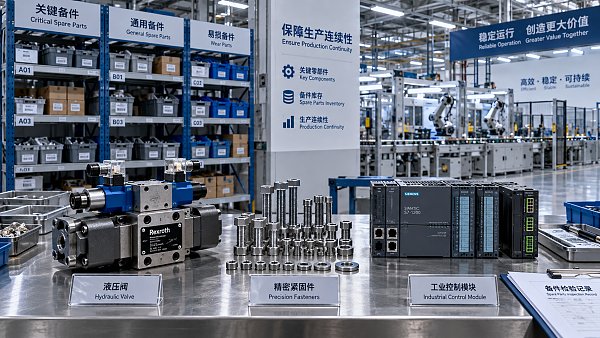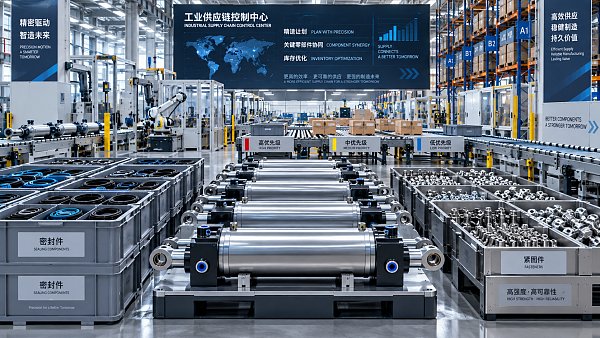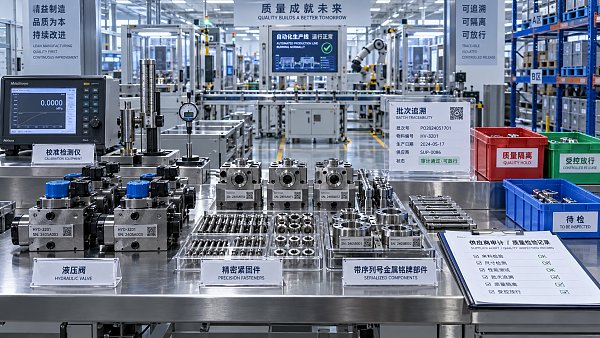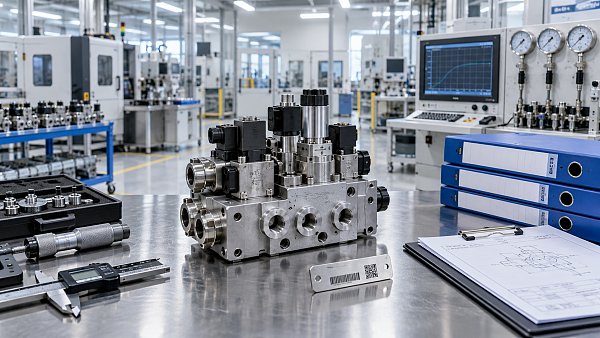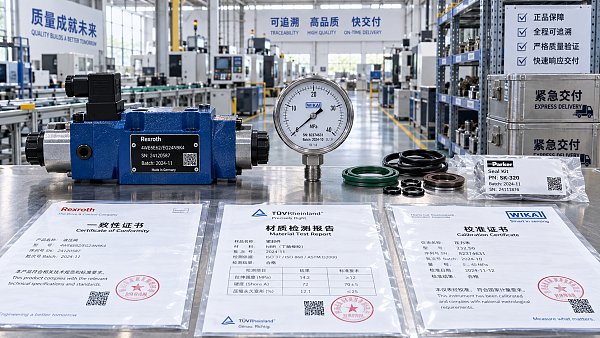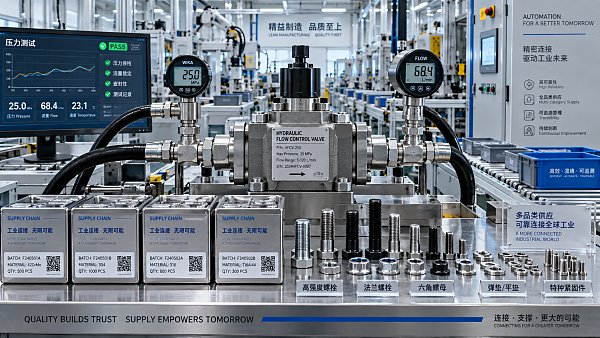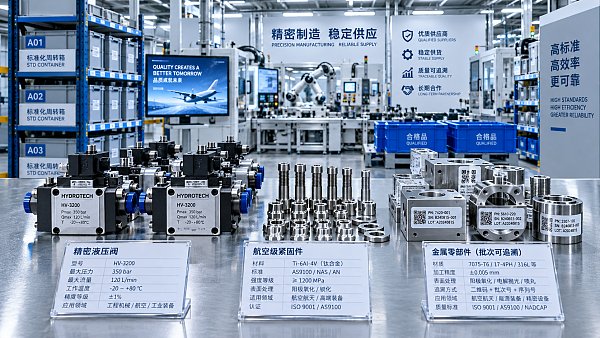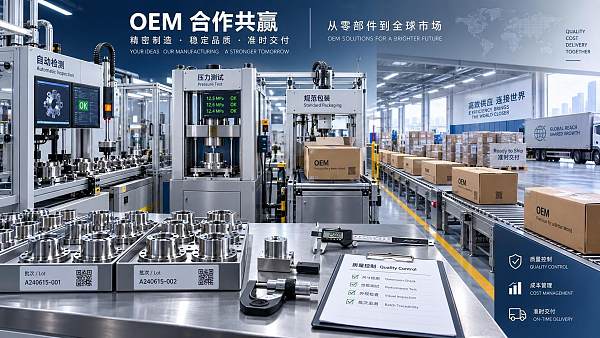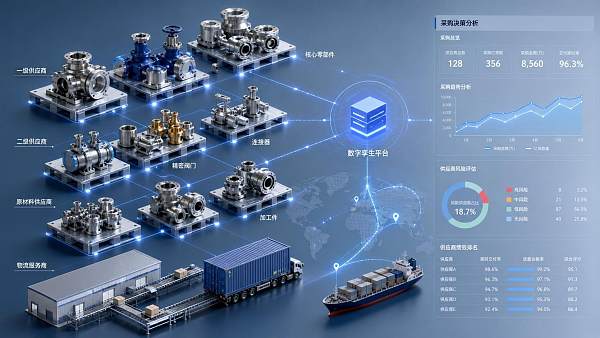
For technical evaluators, multi-tier supplier visibility data often promises a complete map of risk across components, materials, and production dependencies—but in practice, it still fails when signals are fragmented, unaudited, or detached from engineering reality.
Visibility alone does not guarantee traceability, resilience, or decision-grade intelligence. As global manufacturers depend on critical components across hydraulics, fasteners, automation, flow control, and AI-driven orchestration, the real challenge is converting supplier data into verified, standardized, and operationally useful insight.
Search Intent and Editorial Focus
Users searching this topic are usually not asking whether supplier visibility matters. They already know it matters, and want to understand why it underperforms.
Technical evaluators care most about data reliability, tier mapping accuracy, component-level traceability, audit evidence, and whether visibility tools support engineering decisions.
The most useful discussion therefore compares promised visibility with operational failure points, especially where supplier declarations conflict with specifications, standards, or production reality.
This article focuses on verification, engineering context, data governance, and decision workflows. It avoids generic supply-chain slogans that do not help technical assessment.
The Core Problem: Visibility Is Not the Same as Verifiable Knowledge
Multi-tier supplier visibility data fails because many systems collect relationships without proving technical truth. They identify who supplies whom, but not what risk exists.
For critical components, the question is rarely limited to supplier identity. Evaluators need material provenance, process capability, tolerance control, certification validity, and change history.
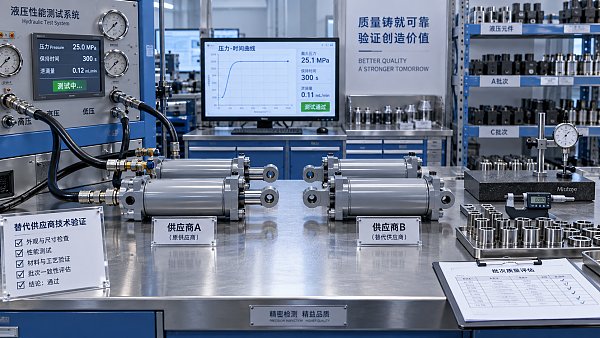
A hydraulic cylinder supplier may appear stable in a tier map, while its seal compound, plating source, or precision machining subcontractor remains poorly verified.
Similarly, an aerospace-grade fastener may have visible sourcing records, yet still carry hidden risk through heat-treatment variation or unqualified coating processes.
Multi-tier supplier visibility data becomes weak when it treats every supplier node as equivalent, rather than weighting each dependency by engineering criticality.
Why Supplier Declarations Often Create a False Sense of Control
Many visibility programs depend heavily on supplier self-reporting. That approach can be useful, but it is rarely sufficient for technical risk evaluation.
Suppliers may provide incomplete tier disclosures because they lack visibility into their own upstream dependencies, especially for raw materials, tooling, and outsourced processes.
In some sectors, commercial sensitivity also limits disclosure. Suppliers may resist naming sub-tier vendors that represent proprietary networks or pricing advantages.
The result is a visibility map that looks complete in software, but contains untested assumptions, outdated entries, and unverified claims.
For evaluators, the warning sign is simple: if the data cannot be traced to objective evidence, it should not be treated as decision-grade intelligence.
Engineering Context Is Usually Missing from the Data Model
Most visibility platforms are designed around supplier relationships, transactions, and locations. They are weaker at representing engineering dependencies inside complex industrial products.
A component’s real risk often sits inside material grade, surface finish, cleanliness requirement, pressure rating, fatigue life, or firmware compatibility.
Without this context, the system may flag a low-value packaging supplier while missing a single-source valve spool supplier affecting machine uptime.
Technical evaluators need visibility data connected to bills of materials, drawings, standards, process routes, inspection plans, and approved vendor lists.
When that linkage is absent, teams can see supplier networks but cannot judge whether those networks threaten performance, compliance, or continuity.
Data Fragmentation Breaks the Chain from Tier Map to Action
Supplier data usually lives across procurement platforms, quality systems, ERP records, engineering databases, logistics feeds, and external risk intelligence tools.
Each system may use different naming conventions, part numbers, site identifiers, commodity codes, and supplier hierarchy structures.
This fragmentation creates duplicated suppliers, orphaned records, conflicting lead times, and unclear ownership of corrective actions.
For example, one system may track a supplier group globally, while another tracks a manufacturing site producing a specific precision connector.
Technical assessment requires site-level and part-level precision. Corporate-level visibility is often too broad to expose real production risk.
Auditing Gaps Turn Visibility into an Unverified Dashboard
A visibility dashboard can show tier relationships, geographic exposure, and disruption alerts, but still fail if the underlying data is not audited.
Auditing should test whether declared suppliers match purchase orders, certificates, shipping records, inspection results, and approved process documentation.
For critical components, evidence must extend beyond commercial paperwork. Evaluators need metallurgical reports, calibration records, process qualifications, and nonconformance histories.
The strongest programs sample high-risk chains and verify them physically or digitally, rather than accepting every supplier statement at face value.
Without audit discipline, multi-tier supplier visibility data becomes a reporting asset, not a resilience asset.
Risk Scores Fail When They Ignore Component Criticality
Many systems generate risk scores from geography, financial health, news alerts, cyber exposure, and logistics disruption probability.
Those inputs are useful, but they do not automatically reveal how a disruption affects a specific machine, plant, or customer commitment.
A high-risk supplier may provide a replaceable commodity, while a low-risk supplier may produce an irreplaceable metering element.
Technical evaluators should therefore challenge any risk score that is not tied to part criticality, substitution feasibility, qualification time, and safety impact.
The better question is not “Which supplier is risky?” but “Which dependency can stop production, violate compliance, or degrade performance?”
Standards Alignment Is Often Too Shallow
Industrial buyers frequently reference ISO, DIN, ASME, IEEE, or sector-specific requirements, but supplier visibility tools often store them as labels.
A label stating compliance does not prove that the component, process, site, and certificate scope actually satisfy the required standard.
Fasteners, hydraulic components, flow meters, and automated handling systems each require different evidence structures and acceptance criteria.
For example, pressure boundary components demand traceable material and test records, while automation systems require software, safety, and interoperability evidence.
Visibility data fails when standards are reduced to checkbox compliance rather than embedded into qualification and surveillance logic.
Change Management Is the Hidden Failure Point
Even accurate visibility data degrades quickly when suppliers change facilities, processes, materials, tooling, or sub-tier sources without proper notification.
In critical component supply chains, small changes can have large consequences, especially in fatigue behavior, sealing reliability, corrosion resistance, or measurement accuracy.
Technical evaluators should examine whether visibility systems capture engineering change notices, supplier process changes, and deviations from approved sourcing routes.
If the platform only updates supplier relationships annually, it cannot support fast-moving operational risk decisions.
Effective visibility requires continuous monitoring of change events, not only periodic supplier surveys.
Why AI Does Not Automatically Fix Supplier Visibility
AI-driven supply-chain orchestration can detect patterns, reconcile datasets, and forecast disruption impacts faster than manual teams.
However, AI models amplify weak inputs when supplier records are incomplete, inconsistent, or disconnected from engineering validation.
A model may confidently predict risk exposure while missing an unreported subcontractor responsible for a critical machining operation.
AI is most valuable when paired with governed master data, technical taxonomies, audit trails, and human review for high-consequence decisions.
For evaluators, the issue is not whether AI is used, but whether its recommendations are explainable, evidence-linked, and technically defensible.
What Decision-Grade Multi-Tier Visibility Should Include
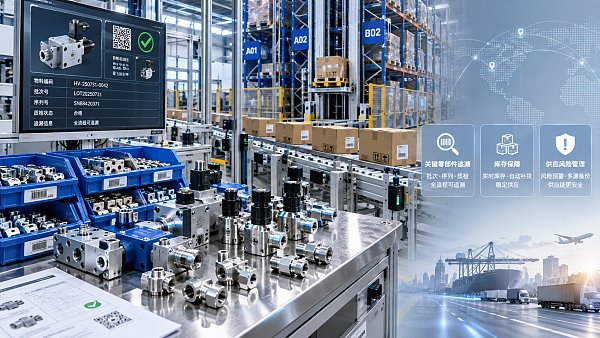
Decision-grade visibility begins with a structured supplier hierarchy that distinguishes legal entity, manufacturing site, process owner, and material source.
It must connect those entities to specific parts, drawings, approved materials, inspection requirements, and production or service applications.
Every high-risk dependency should have evidence metadata, including certificate source, audit date, document validity, and responsible owner.
The system should also show substitutability, qualification lead time, inventory buffer, tooling constraints, and customer approval requirements.
When these elements are present, multi-tier supplier visibility data becomes a practical decision tool rather than a static network diagram.
How Technical Evaluators Should Test a Visibility Program
A practical evaluation starts by selecting several critical components and tracing them through all known supplier tiers.
The test should include one complex engineered part, one material-sensitive item, one electronics or automation component, and one high-volume commodity.
For each item, evaluators should compare platform data with purchase records, quality files, certificates, engineering approvals, and supplier communications.
They should record where the chain breaks, where evidence is missing, and where supplier identity differs across systems.
This controlled test reveals whether the visibility program can support real decisions during shortages, recalls, audits, or geopolitical disruptions.
Common Red Flags in Multi-Tier Supplier Visibility Data
A major warning sign is a high completion percentage without documented verification. Completeness means little if records are self-declared and unaudited.
Another red flag is excessive reliance on country-level exposure while ignoring site-level production dependencies and alternative capacity.
Generic commodity classifications can also hide risk, especially when precision components are grouped with noncritical standard purchases.
Technical evaluators should be cautious when dashboards provide risk scores but cannot explain which evidence supports each score.
The strongest visibility systems allow users to move from alert to supplier, part, standard, document, and mitigation action without manual reconstruction.
Building a Better Visibility Framework for Critical Components
A better framework starts with criticality segmentation. Not every supplier requires the same depth of mapping, auditing, or monitoring.
Components affecting safety, uptime, regulatory compliance, or unique performance should receive deeper tier mapping and stronger evidence requirements.
The framework should define mandatory data fields for each category, including material origin, process ownership, site qualification, and standard-specific proof.
It should also define escalation rules when data is missing, disputed, expired, or inconsistent across enterprise systems.
Visibility becomes valuable when it supports clear decisions: qualify an alternate, increase buffer stock, audit a site, redesign a part, or renegotiate sourcing.
Conclusion: Visibility Must Become Verified Industrial Intelligence
Multi-tier supplier visibility data still fails because it often stops at mapping relationships and does not reach verified technical understanding.
For technical evaluators, the value is not in seeing more supplier nodes, but in knowing which dependencies are real, critical, and controllable.
The most reliable programs integrate engineering context, audited evidence, standards alignment, change control, and operational consequence analysis.
In complex industrial supply chains, visibility should be treated as the starting point, not the final answer.
Only when supplier data becomes verified, standardized, and tied to component performance can it support resilient sourcing and total reliability.